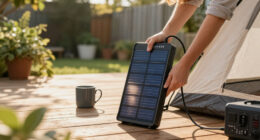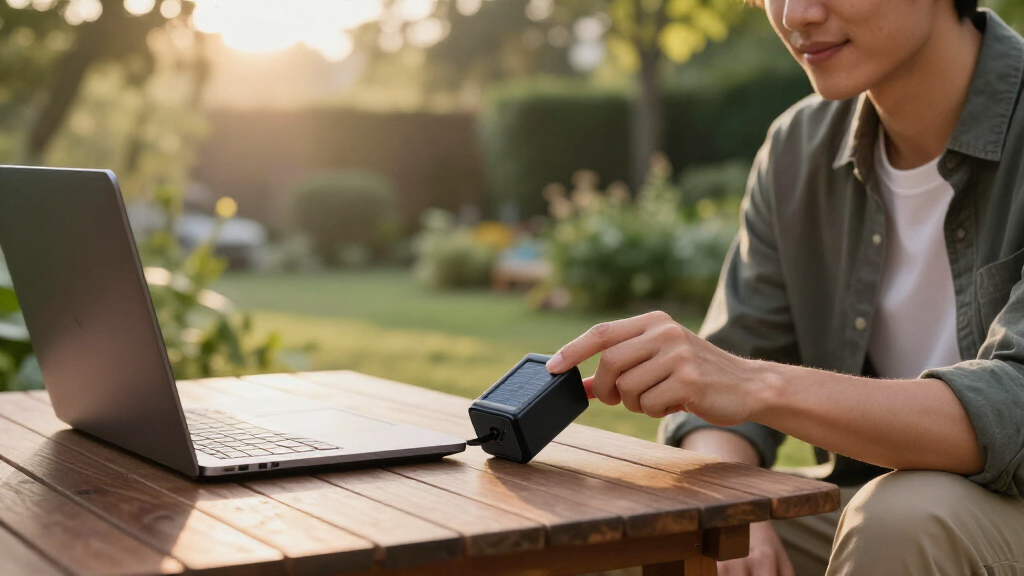

Not every product sold as a solar-powered laptop charger can actually keep a laptop running, and that gap is the single biggest issue in this category. Charging a notebook demands a real AC outlet or 60W-plus USB-C output, decent capacity (ideally 150Wh or more), and solar panels large enough to refill the battery in a day — three things many cheap power banks fudge with inflated milliamp-hour ratings. My top overall pick is the Portable Power Station 300W with 60W Solar Panel, because it pairs a genuinely laptop-capable inverter with a panel that can actually recharge it between work sessions. The Portable Solar Generator 300W (220Wh) is the strongest value alternative if you already own a panel, while the Daran 89.6Wh LiFePO4 unit stands out for battery longevity. Keep reading for the full breakdown, including which products are better suited to phones than laptops.

Get backup power and energy gear delivered free with Prime
- Fast, free delivery on millions of items
- Prime Video, Amazon Music and more included
- Member-only deals all year
Complete the kit


Key Takeaways
- Only the power-station-style units (300W class, 200Wh+) reliably charge laptops through a real AC outlet; the giant-capacity “49800mAh” power banks rarely deliver honest watt-hours for notebook use.
- The included 60W solar panel on the top pick is the difference-maker — most competitors either ship without a panel or include one too small to matter for laptop-scale batteries.
- LiFePO4 chemistry (the Daran and the 220Wh/280Wh stations) lasts years longer than standard lithium-ion, which matters if you charge cycles weekly.
- Direct solar charging of a laptop is impractical on every product here; the realistic workflow is panel-to-battery during the day, battery-to-laptop when you work.
- Sub-100Wh units like the Takki (88.8Wh) and HOWEASY are carry-on friendly and fine for one laptop recharge, but they are emergency tools, not all-day off-grid offices.




| solar-powered laptop charger | Battery Capacity | Weight |
|---|---|---|
| Portable Power Station 146Wh 1 | — | 3.3 lbs |
| Daran Portable Power Station 8 | 89.6Wh | 2.54 lbs |
| Solar Power Bank 49800mAh | 49800mAh lithium polymer | — |
| Portable Solar Generator 300W | — | — |
| YELOMIN Solar Power Bank 10000 | — | — |
| Portable Power Station 300W | 220Wh / 60000mAh | 5 lbs |
| BLASOUL Solar Power Bank 49800 | — | — |
| Portable Solar Power Bank with | 24000mAh | 1.6 lbs |
| HOWEASY Portable Power Station | 88Wh | 2.3 lbs |
| SOARAISE Solar Power Bank 4800 | 48000mAh | — |
| Portable Power Station 300W | 280Wh | About 5 lbs |
| 40000mAh Portable Laptop Power | — | 3.09 lbs |
| Takki Solar Generator 120W Pea | 88.8Wh | 2.29 lbs |
| Mregb Solar Charger Power Bank | 42800mAh | — |
More Details on Our Top Picks
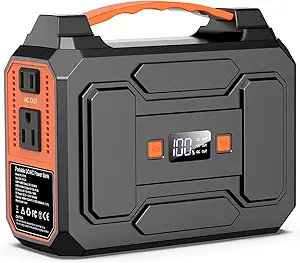
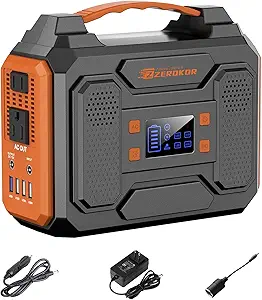
Portable Power Station 146Wh 100W Solar Powered Power Bank with AC Outlet
This model hits a middle ground the others struggle to match: 146Wh of capacity paired with a genuinely carry-friendly 3.3 lb frame. That is roughly 60% more stored energy than the Daran 89.6Wh station, which matters when you want multiple laptop top-ups rather than a single partial charge. Unlike the 300W Solar Generator, though, it caps AC output at 100W, so this is for standard laptop adapters, not power-hungry workstations. The three-way recharging (AC, car, solar) means you are never stuck with one refill method, and the built-in LED flashlight with SOS mode adds genuine emergency value rather than a gimmick. The main tradeoff: no solar panel ships in the box, so budget extra if sunlight is your primary charging strategy.
Pros:- 146Wh capacity delivers several laptop charges in a 3.3 lb package
- Two AC outlets plus USB and DC outputs cover mixed device loads
- Three recharge methods (AC, car, solar) add flexibility
- LED flashlight with SOS mode doubles as an emergency tool
Cons:- Solar panel not included, adding to the true cost of a solar setup
- 100W AC ceiling rules out gaming laptops and high-draw devices
Best for: Weekend campers and remote workers who need multiple laptop charges without hauling a heavy power station
Not ideal for: Buyers wanting a complete solar kit out of the box — the panel is sold separately
- Capacity:146Wh / 39600mAh
- Weight:3.3 lbs
- AC Output:2x 110V, 100W max
- Other Outputs:2x USB 3.0, 1x DC 12V
- Recharging:AC adapter, car, solar panel (not included)
- Safety:Advanced battery management system
Our verdict“The smart pick if you want real laptop capacity in a packable format and already own or plan to buy a solar panel.”
Daran Portable Power Station 89.6Wh LiFePO4 Battery 100W Solar Power Bank
What separates this unit is what is inside: a LiFePO4 battery rated for 3500+ cycles, roughly triple the lifespan of the standard lithium cells in the 146Wh station above. If this charger will live in a car trunk or emergency kit for years, that chemistry difference is the whole story. The 0-80% recharge in 1.5 hours also outpaces most rivals, so a wall socket visit between outings costs you far less downtime. Seven ports on a 2.54 lb, 6.5-inch body is generous, and quiet operation makes it usable in a tent at night where fan-cooled units like the 300W generator would be noticeable. The honest tradeoff is capacity — 89.6Wh means roughly one full laptop charge, so multi-day users should size up.
Pros:- LiFePO4 chemistry rated for 3500+ cycles, far outlasting standard lithium
- Fast 0-80% recharge in 1.5 hours
- Seven output ports including USB-C PD and AC
- Silent operation with no cooling fan noise
Cons:- 89.6Wh capacity limits you to roughly a single full laptop charge
- Solar panel not included despite solar-ready input
- 100W output ceiling restricts compatible devices
Best for: Emergency-preparedness buyers and frequent travelers who want a battery that still performs after years of infrequent use
Not ideal for: Multi-day off-grid trips where one laptop charge is not enough
- Battery Capacity:89.6Wh
- Battery Type:LiFePO4, 3500+ cycles
- Weight:2.54 lbs
- Dimensions:6.5 x 3.3 x 4 inches
- Ports:7 total, including AC, USB-C PD, USB-A
- Output Power:100W, 110V
- Charging Methods:AC, USB-C PD, car, solar panel
- Safety:Advanced BMS with 12 protections
Our verdict“The best choice when battery lifespan and quick turnarounds matter more than raw capacity.”
Solar Power Bank 49800mAh – Wireless Portable Charger with 15W Fast Charging and Built-in Cables
Be clear about what this is: a giant power bank with an emergency solar trickle, not a laptop power station. At 5V/3.1A output it cannot meaningfully charge a laptop, so compared with the Daran station it plays a different sport entirely. What it does well is convenience — four built-in cables and wireless charging mean you can leave every cord at home, and 49800mAh keeps phones and tablets alive across a long weekend. The IP65 waterproof, shockproof housing outclasses every power station in this lineup for genuinely rough conditions, whether that is river trips or dusty trail work. Just do not plan on solar as your primary refill; the small panel surface is a backup, not a strategy. For laptop-focused buyers, this is a companion device, not the main event.
Pros:- 49800mAh capacity supports many phone recharges per fill
- Built-in cables and 15W wireless charging eliminate cord clutter
- IP65 waterproof, shockproof, dustproof build handles harsh environments
- Multi-mode LED flashlight for camping use
Cons:- Solar charging is slow and heavily dependent on strong direct sunlight
- Large physical size makes it less pocketable than standard power banks
Best for: Hikers and outdoor photographers who primarily need to keep phones, tablets, and headlamps charged in rough conditions
Not ideal for: Laptop users — 5V/3.1A output cannot charge a computer beyond a slow trickle at best
- Battery Capacity:49800mAh lithium polymer
- Output:5V, 3.1A max
- Ports:3 (USB-A, USB-C, Micro USB)
- Wireless Charging:Yes, 15W
- Built-in Cables:4 integrated cables
- Waterproof Rating:IP65
- Fast Charge:80% in 1 hour via USB
Our verdict“A rugged, cord-free charging hub for small devices — pair it with a power station if laptops are in the picture.”
Portable Solar Generator 300W with 60W Solar Panel
This is the only entry here that arrives as a genuine solar system: a 300W power station plus a 60W foldable panel in the box. Every other pick in this lineup asks you to buy a panel separately, which quietly adds $50-150 to the real price. The 20.5% panel conversion efficiency is respectable for the class, and the 300W inverter opens the door to devices the 146Wh 100W station simply cannot run — larger laptop bricks, small monitors, mini fridges on a good day. The tradeoffs are real: the junction box is not waterproof, so the panel needs dry storage and careful placement in bad weather, and the built-in cooling fan makes it louder than the silent Daran. It is also a heavier overall kit to carry.
Pros:- 60W foldable solar panel included, a complete out-of-the-box system
- 300W output handles larger laptop chargers and small appliances
- 20.5% panel efficiency performs well in low light
- Overload, short-circuit, over-voltage, and overheating protection
Cons:- Solar panel junction box is not waterproof and requires dry storage
- Cooling fan noise rules out quiet tent use
- Performance degrades if the battery sits uncharged for long periods
Best for: Buyers who want a working off-grid solar setup on day one without researching and buying a separate panel
Not ideal for: Minimalist backpackers — the combined station-plus-panel kit adds weight and bulk to every trip
- Output Wattage:300W max, 110V
- Included Solar Panel:60W foldable panel
- Solar Efficiency:20.5% conversion
- Outlets:2 AC, 1 DC, 3 USB, 1 Quick Charge USB
- Charging Methods:AC, solar, carport
- Protection:Overload, short circuit, over-voltage, overheating
- BMS:Yes, with cooling fan
Our verdict“The most turnkey option here for anyone who wants sunlight doing real charging work from the first trip.”
YELOMIN Solar Power Bank 10000mAh with Foldable Solar Panels, Wireless Charging, and Emergency Flashlight
Where the 49800mAh power bank is a heavyweight small-device charger, this 10,000mAh unit flips the priorities: four foldable panels give it far more solar collection area, so it actually recharges itself meaningfully in a day of good sun. It is the most self-sufficient option here for keeping a phone alive indefinitely off-grid, and the built-in USB-C and Lightning cables plus 15W wireless charging keep the pack light. The military-grade housing with sealed ports handles rain and dust better than bare power stations. Its 50Wh rating means it can extend a small laptop’s runtime in a pinch but will not fully charge one — that job belongs to the Daran or 146Wh stations. Also note the 50Wh capacity sits near the airline carry-on limit in some regions, worth checking before you fly.
Pros:- Four foldable solar panels provide meaningful self-recharging in sunlight
- Built-in USB-C and Lightning cables plus 15W wireless charging
- Military-grade sealed design resists dust and water
- Multi-mode flashlight (constant, strobe, SOS) for emergencies
Cons:- Solar recharging is still slow without strong, direct sunlight
- Bulkier than a standard 10000mAh power bank due to fold-out panels
- 50Wh capacity may conflict with airline carry-on limits in some regions
Best for: Day hikers and ultralight travelers who want a self-recharging backup for phones and small devices
Not ideal for: Laptop-dependent remote workers — 10000mAh offers only marginal laptop support
- Capacity:10000mAh / 50Wh Li-ion
- Solar Panels:4 foldable panels
- Wireless Charging:15W
- Built-in Cables:USB-C, Lightning
- Flashlight:Constant, strobe, SOS modes
- Build:Military-grade, sealed ports
Our verdict“The right pick when a small, sun-recharging backup matters more than serious laptop capacity.”
Portable Power Station 300W, 220Wh Solar Generator Backup Battery Pack
For buyers who need to run a laptop, phone, camera, and a light at the same time, this 220Wh station is the most balanced option in this batch. Its seven simultaneous outputs and 300W AC ceiling give it more headroom than the Portable Solar Power Bank with AC Outlet 65W, meaning it can handle most laptop bricks without tripping. Compared with the HOWEASY 120W, it doubles both capacity and inverter power, which is the difference between topping up a laptop once and running a full workday off-grid. The tradeoff is weight: at 5 pounds, it stays at basecamp rather than riding in a daypack. Solar input works, but the panel is sold separately, so budget accordingly.
Pros:- 220Wh capacity runs a laptop through a full workday off-grid
- Seven outputs let you charge an entire kit simultaneously
- Triple recharge options: AC, car socket, and solar
- Built-in LED light doubles as a camp lantern
Cons:- 300W ceiling rules out power-hungry appliances
- Solar panel sold separately, adding to the real cost
Best for: Remote workers and families who need to keep several devices charged through a weekend camping trip
Not ideal for: Hikers and anyone counting ounces — at 5 pounds it belongs in a car or tent, not a backpack
- Power Output:300W (600W peak)
- Battery Capacity:220Wh / 60000mAh
- AC Outlets:2x 110V
- USB Ports:4 (up to 9V/2A fast charge)
- Weight:5 lbs
- Charging Options:AC wall, car socket, solar panel
- Safety:BMS with short-circuit and overcurrent protection
- Battery Cycles:Over 1000
Our verdict“Buy this if you need a do-everything campsite hub that keeps a laptop and several smaller devices alive at once.”
BLASOUL Solar Power Bank 49800mAh Wireless Portable Phone Charger
This pick earns its spot by eliminating the cable bag entirely. With built-in iOS, Type-C, Micro, and USB-A cables plus 15W wireless charging, it covers nearly every device without a single accessory — something neither the SOARAISE 48000mAh nor the Portable Solar Power Bank 65W can claim as completely. The 22.5W wired output is respectable for phones and tablets, though it falls short of true laptop-charging speeds. Compared with the SOARAISE, its single solar panel means slower sun recovery, so think of solar here as an emergency trickle, not a primary input. The IP65 rating makes it the more rugged choice for kayaking, beach days, or dusty trails where a standard power station would stay home.
Pros:- Four built-in cables plus wireless charging cover nearly every device
- IP65 water, dust, and shock resistance for harsh conditions
- 49800mAh capacity delivers many phone charges
- SOS and strobe flashlight modes for emergencies
Cons:- Solar charging is slow and unreliable as a primary recharging method
- Heavy and bulky for pocket or everyday carry
Best for: Outdoor adventurers who want one rugged, cable-free brick that tops up phones and tablets for days
Not ideal for: Laptop users — 22.5W output can’t meaningfully charge most modern laptops
- Capacity:49800mAh
- Wired Fast Charging:22.5W
- Wireless Charging:15W
- Built-in Cables:iOS, Type-C, Micro USB, USB-A
- Water Resistance:IP65
- Flashlight:LED with SOS and strobe modes
Our verdict“Choose this if you want maximum device compatibility with zero extra cables and a body that survives the outdoors.”
Portable Solar Power Bank with AC Outlet 65W 110V
At 1.6 pounds, this is the lightest option here that can still plug in a laptop. The 65W AC outlet handles most ultrabooks and USB-C laptops, though gamers and creators with 100W+ bricks should step up to the Portable Power Station 300W instead. Where this model separates itself from the BLASOUL 49800mAh is the integrated folding design: the 30W solar panel is built in, so you’re not buying or carrying a separate panel like you would with the HOWEASY. The compromises are real — the AC outlet needs manual activation each time, and the solar junction box isn’t waterproof, so a sudden shower means scrambling to shield it. For short off-grid trips where every ounce matters, those tradeoffs feel acceptable.
Pros:- 65W AC outlet charges most ultrabooks and small laptops
- Lightest laptop-capable option at 1.6 pounds
- Integrated 30W solar panel needs no extra gear
- Recharges via AC, car, or sun
Cons:- 65W ceiling excludes gaming and workstation laptops
- Solar junction box is not waterproof
- AC outlet requires manual activation before each use
Best for: Ultralight backpackers and day-trippers who need genuine laptop charging without carrying a power station
Not ideal for: Users with high-wattage laptops or anyone expecting rain-proof solar hardware
- Battery Capacity:24000mAh
- AC Output:65W, 110V
- Solar Panel:30W integrated
- USB Ports:USB-A 5V/2.4A, Quick Charge 5V/3A, 9V/2A
- Weight:1.6 lbs
- Dimensions:6.89 x 3.98 x 1.89 inches
- Protection:Short circuit, over-current, over-voltage, overload
Our verdict“This makes the most sense for ounce-counting travelers whose laptops sip 65W or less.”
HOWEASY Portable Power Station, 120W (240W Peak) Solar Generator
This is the cheapest way into a real AC outlet in this lineup, and at 2.3 pounds with a hidden handle, it’s the station you’ll actually grab during a power outage. Compared with the Portable Solar Power Bank 65W, the 120W inverter opens the door to small fans, lights, and more laptop chargers, and the eight ports outgun nearly everything else at this price. But the 88Wh battery is the constraint — roughly one laptop charge plus a phone top-up — so it’s a bridge, not a solution. Unlike the integrated solar options here, the panel is sold separately, which quietly raises the total cost if off-grid recharging is the goal. The 24-month warranty and 1500+ cycle rating are unusually generous for this tier, which softens the capacity compromise.
Pros:- Eight output ports including AC, USB-C, and QC 3.0
- Featherweight at 2.3 pounds with a hidden carry handle
- 1500+ charge cycles and a 24-month warranty
- LED light with steady, flash, and SOS modes
Cons:- Solar panel not included — an added expense for off-grid use
- 120W limit excludes most appliances
- Small 88Wh capacity covers only brief outages
Best for: Budget-conscious buyers who want a small emergency AC outlet for outages and occasional camping
Not ideal for: Anyone needing multiple laptop charges — 88Wh runs dry quickly
- Wattage:120W (240W peak)
- Battery Capacity:88Wh
- Output Ports:8 (AC, USB-C 18W, 2x QC 3.0, USB, DC)
- AC Power:110V, 120W
- Weight:2.3 lbs
- Cycle Life:1500+ cycles
- Warranty:24 months
Our verdict“A sensible entry-level station for short emergencies, provided you accept its one-laptop-charge ceiling.”
SOARAISE Solar Power Bank 48000mAh Wireless Portable Charger with 4 Cables
The headline here is four fold-out solar panels, which roughly quadruples the sun-harvesting area of single-panel rivals like the BLASOUL 49800mAh. In practice, that means a day of good sunlight meaningfully refills the bank instead of just slowing its drain — a genuine advantage for multi-day trips away from outlets. PD and QC 3.0 support push charging speeds past the BLASOUL’s 22.5W for phones and accessories, and the built-in cables plus wireless pad keep packing simple. The cost is bulk: fanned out across a rock or picnic table, it demands dedicated space and direct sun alignment, and folded up it’s a chunky slab in a pack. With only three ports, big groups juggling devices at once may feel squeezed compared with the Portable Power Station 300W’s seven outputs.
Pros:- Four solar panels recover noticeably more charge than single-panel rivals
- 48000mAh capacity supports several days of phone and tablet use
- PD/QC 3.0 fast charging for wired devices
- Waterproof, shockproof, and dustproof construction
Cons:- Bulky folded form factor compared with standard power banks
- Charging speed swings wildly with cloud cover and panel angle
- Only three output ports limits simultaneous device charging
Best for: Multi-day hikers and festival-goers who will be off-grid long enough for solar recharging to matter
Not ideal for: City commuters or anyone rarely off-grid — the size outweighs the solar benefit
- Battery Capacity:48000mAh
- Solar Panels:4 fold-out panels
- Fast Charging:PD / QC 3.0 supported
- Wireless Charging:Yes
- Output Ports:3
- Dimensions:6.38 x 3.43 x 1.57 inches
- Durability:Waterproof, shockproof, dustproof
Our verdict“Pick this when your trips are long enough that refilling by sunlight — not just starting with a full battery — is the priority.”
Portable Power Station 300W, 110V Solar Generator 280Wh (Without Solar Panel)
This model stands out for having the largest battery capacity in this lineup at 280Wh, which is roughly double what the Takki 88.8Wh unit offers and nearly twice the 148Wh power bank that follows. That extra capacity translates into multiple full laptop charges instead of one partial top-up, and the 300W output ceiling means it can run most 16-inch laptops and even a small monitor without breaking a sweat. The tradeoff is structural: no solar panel comes in the box, so buyers who want a true solar charging setup need to budget extra for a panel, which erodes its value advantage. Compared with the Takki bundle, this option makes the most sense for someone charging from an AC outlet during the week and relying on solar only occasionally.
Pros:- 280Wh capacity delivers multiple laptop charges per fill
- 300W output handles most laptops plus accessories
- Three charging inputs: AC, solar, and car charger
- BMS protection with automatic cooling
Cons:- Solar panel sold separately, adding to total cost
- 300W ceiling rules out power-hungry appliances
- Requires periodic recharging for long-term storage health
Best for: Remote workers and campers who need several laptop recharges between wall outlets and plan to add a solar panel later
Not ideal for: Buyers wanting an all-in-one solar kit out of the box — the panel is a separate purchase
- Power Output:300W MAX
- Battery Capacity:280Wh
- AC Outlets:2
- USB Ports:3 (QC 5V/3A, 9V/2A)
- Weight:About 5 lbs
- Charging Methods:AC outlet, solar panel (sold separately), car charger
- Protection:Short circuit, over-current, over-voltage, overload
Our verdict“If runtime matters more than an included panel, this is the capacity leader of the bunch — just factor a solar panel into the price.”
40000mAh Portable Laptop Power Bank with 130W AC Outlet
Unlike every station-style unit here, this power bank is built around a single question: can it live in a carry-on? At 3.09 lbs and 6.5 inches across, it slips into a bag far more easily than the 5-pound 280Wh station, and its 148Wh capacity sits right at the FAA limit for flying without airline approval — a genuine differentiator, though one that demands verification with your carrier. The 130W AC outlet covers most modern laptops, though gaming machines and 16-inch MacBook Pro peak loads may exceed it, whereas the 300W station above handles those easily. Its real edge is the 2.5-3 hour recharge with pass-through charging, meaning one wall outlet can refill the bank and power your laptop overnight. It has no solar input at all, so it belongs in a solar roundup only as the indoor half of a two-piece system.
Pros:- 130W AC outlet covers most laptops under that draw
- Fast 2.5-3 hour full recharge with pass-through support
- Compact, TSA-friendly form factor
- 40000mAh capacity for several device charges
Cons:- No solar charging capability whatsoever
- 3.09 lbs feels heavy in a slim daypack
- 148Wh capacity requires airline approval on some carriers
Best for: Digital nomads and business travelers who need laptop power in airports and cafés and can pair it with a separate panel at base camp
Not ideal for: Anyone wanting a self-contained solar charging loop — there is no solar input
- Capacity:40000mAh / 148Wh
- AC Outlet Power:130W
- Weight:3.09 lbs
- Dimensions:6.5 x 6.0 x 2.2 inches
- Recharge Time:2.5-3 hours
- Charging:AC recharge with pass-through support
Our verdict“The pick for travel-first buyers who value portability and fast refills over off-grid solar independence.”
Takki Solar Generator 120W Peak Portable Power Station with 21W Solar Panel, 88.8Wh Battery, and 110V AC Outlet
This is the only product in this batch that ships as a true solar kit — foldable 21W panel included, which the 280Wh station cannot claim at any price. That makes it the most honest answer to the roundup’s premise, even if the hardware is modest. The 88.8Wh battery is roughly a third of the 280Wh unit’s capacity, and the ~80W continuous output ceiling means larger laptops may charge slowly or refuse to negotiate at all — a real limitation the 130W power bank avoids. Still, at 2.29 lbs for the station plus a folding panel, it is a genuinely packable weekend setup, and the port selection (two AC, QC3.0 USB-A, USB-C PD, 12V DC) punches above its weight class. One quirk: it cannot charge devices while recharging itself, so plan around sunless stretches.
Pros:- Solar panel included, no extra purchases needed
- Featherlight 2.29 lbs station with folding panel
- Eight output ports including USB-C PD and dual AC
- Built-in LED flashlight with SOS mode
Cons:- 88.8Wh capacity gives roughly 2 hours of runtime
- 80W continuous limit excludes many full-size laptops
- No pass-through charging while the unit recharges
Best for: Weekend campers and entry-level solar buyers who want panel-plus-battery in one purchase
Not ideal for: Full-time remote workers with power-hungry laptops — 88.8Wh and an 80W ceiling run out fast
- Battery Capacity:88.8Wh
- Solar Panel:21W foldable, included
- Max Output:120W peak
- Ports:2x AC, 2x USB QC3.0, 2x USB 2.4A, 1x USB-C 18W PD, 1x 12V DC
- Weight:2.29 lbs
- Charging Time:2 hours from 0% to 80% via AC
Our verdict“The simplest complete solar laptop solution here for casual campers — just keep your laptop modest in wattage.”
Mregb Solar Charger Power Bank 42800mAh, Portable Solar Power Bank with Flashlight, Waterproof, Fast Charging
The Mregb’s identity is durability, not laptop charging. Its IP67 waterproof, drop-proof, dust-proof shell outclasses every other entry here — the Takki’s ABS plastic and the 280Wh station’s unsealed housing would not survive a river crossing. The catch is electrical: USB output tops out at 5V/3.1A with no AC outlet, so it cannot charge a laptop through its own charger at full speed, let alone run one. Its 42800mAh cell keeps phones, headlamps, and GPS units alive for days on a thru-hike, and the onboard solar panel is best treated as an emergency trickle rather than a primary charging source — full sun would take days to refill it. Compared with the SOARAISE 48000mAh bank, this pick trades wireless charging pads for genuine weather sealing, which is the smarter trade for anyone caught in real storms.
Pros:- IP67 waterproof and dust-proof with drop protection
- 42800mAh capacity for days of phone charging
- QC 3.0 fast charging across multiple USB ports
- Bright flashlight with over-charge and short-circuit protection
Cons:- No AC outlet; 5V/3.1A USB limits laptop charging speed
- Solar input is too slow to meaningfully recharge the huge cell
- Bulky compared with slimmer 20000mAh banks
Best for: Hikers, kayakers, and emergency-kit builders who need an indestructible phone charger that can slowly feed a USB-C laptop
Not ideal for: Laptop-first buyers — no AC outlet and USB-only output make real laptop charging impractical
- Battery Capacity:42800mAh
- Output:5V/3.1A USB-A and USB-C, QC 3.0
- Waterproof Rating:IP67
- Drop-proof / Dust-proof:Yes / Yes
- Material:ABS, lithium polymer
- Extras:Super bright LED flashlight, over-charge and short-circuit protection
Our verdict“Buy this for storm-proof phone and accessory power, and accept that laptops are a secondary, slow-charging afterthought.”
How We Picked
I evaluated each product against one question: can it keep a laptop charged away from an outlet, and how quickly can solar power restore it? That broke down into four criteria. Real output — whether the AC inverter or USB-C port delivers enough wattage (60W minimum for most modern laptops, 100W for larger machines). Honest capacity — I converted every rating to watt-hours and discounted inflated mAh claims, since a 49800mAh label at 3.7V is roughly 184Wh at best, and often far less in practice. Solar input — whether a panel is included, its wattage, and whether it could plausibly refill the battery in a full day of sun. Portability and build — weight, carry-on compliance, weather resistance, and battery chemistry.
The ranking logic follows use case rather than raw specs. Power stations with matched panels rank highest because they solve the complete problem; battery-only units rank by capacity-to-weight honesty; and the small solar power banks rank lower for laptops specifically even when they are excellent phone chargers. Price per usable watt-hour, not sticker price, determined the value positions.
Factors to Consider When Choosing Solar-powered Laptop Chargers
Before picking a specific model, it helps to understand how this category actually works — because marketing claims and physics do not always agree. These are the factors that separated the winners from the rest in my comparison.Watt-Hours vs. Milliamp-Hours: Reading the Real Capacity
The most common mistake buyers make is comparing mAh ratings across products. Power banks quote mAh at 3.7V (the cell voltage), while laptop-class stations quote watt-hours, and converting between them can cut a headline number nearly in half once you account for conversion losses. A laptop that draws 50W for four hours needs 200Wh — which no pocket-sized power bank provides. My advice: multiply your laptop’s charger wattage by your expected hours of use, add 25% for inefficiency, and only then compare capacities. This single calculation eliminates most of the disappointing purchases in this category. The inflated-capacity power banks in this roundup illustrate the problem: their stated figures would require battery cells that physically could not fit in the casing.
Panel Wattage Determines Your Recovery Speed
A battery is only half the system; how fast the sun refills it decides whether you can work off-grid for a weekend or just a single afternoon. As a rough field rule, a panel delivers about 70% of its rated wattage in good direct sun, so a 60W panel adds roughly 40W per hour — meaning a 220Wh battery needs most of a sunny day to recover. Small fold-out panels on power banks (typically 5–10W) are trickle chargers at best, useful for topping off a phone, not a laptop battery. If you plan to work remotely for more than a day or two, prioritize a bundled panel of 60W or more, or budget separately for one. Also check the input port rating on the station itself — some cheap units cap solar input far below what their marketing implies, and a mismatched panel will charge at whatever the slower of the two allows.
Battery Chemistry and Lifespan
Most cheap options use standard lithium-ion, which tolerates roughly 500 charge cycles before capacity drops noticeably. LiFePO4 (lithium iron phosphate) chemistry, found in the Daran and some 300W stations, typically survives 2,000-plus cycles and handles heat better — a real advantage for gear that lives in a hot car or tent. The tradeoff is weight and cost per watt-hour. If you use the charger a few times a year for emergencies, lithium-ion is perfectly fine and cheaper. If you charge weekly or live in a hot climate, the LiFePO4 premium pays for itself in avoided replacements. Also note that cycle life claims assume partial rather than full discharges, so daily full drain shortens any battery’s life faster than the label suggests.
AC Outlet vs. USB-C PD: Which Output Do You Actually Need?
A 110V AC outlet seems universal, but it has hidden costs: inverters are roughly 85% efficient, waste capacity as heat, and add weight. If your laptop charges over USB-C Power Delivery, a strong PD port (65W or 100W) is more efficient and often cheaper. AC matters if you run older barrel-charger laptops, camera chargers, or small appliances alongside your computer. Check the inverter’s continuous versus peak rating too — a “300W” unit that only sustains 200W will shut down under a sustained laptop plus monitor load. Match the output type to your actual gear before comparing prices, because paying for an inverter you never use is wasted capacity.
Airline Rules and Realistic Portability
Anything under 100Wh is generally allowed in carry-on luggage without airline approval, which is why the sub-100Wh units in this roundup exist. Between 100Wh and 160Wh usually requires airline consent, and above that is cargo territory. If you travel for work, a sub-100Wh unit plus a separate folding panel often beats one large station you cannot fly with. Weight compounds the issue: a 280Wh station can weigh six pounds or more, which changes how you pack. Be honest about whether you will carry the thing or leave it in the car — an oversized station left behind charges nothing.
Weather Resistance and Common Durability Traps
Solar gear lives outdoors, but most power stations have ventilation grilles and electronics that must stay dry — only the ruggedized power banks in this roundup carry genuine waterproof ratings. The panels themselves are the most fragile component; a scratched or creased cell loses output permanently, so look for reinforced stitching and scratch-resistant coating if the panel will ride in a backpack. Another common failure point is the charge controller: cheap units lack proper voltage regulation, which shortens battery life when panels sit in variable sun. Finally, check the warranty length — in this category, a one-year warranty signals the manufacturer expects the product to fail young, while three years or more suggests real confidence in the cells.
Frequently Asked Questions
Can I charge my laptop directly from a solar panel without a battery?
Almost never reliably. Laptops expect steady, regulated voltage, and solar output fluctuates every time a cloud passes or you shift the panel’s angle, which causes most laptops to stop charging or throttle repeatedly. The realistic workflow with every product in this roundup is panel-to-battery during daylight, then battery-to-laptop when you need to work. This also lets you position the panel in full sun while sitting in the shade, which matters more than people expect. Only a few high-end panels with built-in voltage regulation can directly feed a laptop, and none of those are in this price range.
Are the huge capacity ratings like 49800mAh legitimate?
Treat them as marketing math rather than usable capacity. At the 3.7V cell voltage those units use for the label, 49800mAh works out to roughly 184Wh — which would require battery cells far larger than the casing allows, so real capacity is likely a fraction of that. Independent teardowns of similar products routinely find capacities 20–40% of the claimed figure. Watt-hour ratings on power stations are more trustworthy because they are regulated declarations. If a product only quotes mAh and not Wh, that omission itself tells you something. For laptop-scale needs, trust the Wh number and ignore the mAh headline entirely.
What size charger do I need for a full workday off-grid?
Start with your laptop’s power draw: a thin ultrabook averages 15–25W in normal use, while a gaming or workstation laptop can pull 100W-plus. A typical eight-hour workday on an ultrabook needs roughly 150–200Wh including conversion losses, while a power-hungry machine can consume 400Wh or more — beyond every product in this roundup. The 220–280Wh stations cover a full day for most standard laptops; the sub-100Wh units buy you two to four extra hours. Check your laptop’s battery drain in system settings for a week before buying, because manufacturer battery-life ratings are based on light use, not real workloads.
How long does it take to recharge these with solar power?
Divide the battery’s watt-hours by roughly 70% of your panel’s rated wattage for a realistic estimate. A 220Wh battery fed by the bundled 60W panel needs five to six hours of direct midday sun — meaning a full day once you account for mornings, evenings, and cloud cover. Panels mounted at a fixed angle on a backpack or car dashboard perform far worse than repositioned panels. The small fold-out panels on power banks (5–10W) would take several days of sun to refill their own batteries, so plan to wall-charge those before a trip and treat solar as a slow top-up. If multi-day off-grid work is the goal, panel wattage deserves as much budget as the battery itself.
Is it worth paying more for LiFePO4 battery chemistry?
It depends on how often you will cycle the battery. LiFePO4 cells last roughly four times as many charge cycles as standard lithium-ion and tolerate heat better, so for weekly use the math favors them within a couple of years. For occasional emergency or once-a-season camping use, standard lithium-ion delivers the same performance at a lower price and lighter weight per watt-hour. LiFePO4 also holds its capacity better in hot storage conditions like a vehicle in summer. One caveat: LiFePO4 units are usually heavier for the same capacity, so backpackers may prefer the lighter chemistry despite the shorter lifespan. Match the chemistry to your usage pattern rather than assuming newer always means better for you.
Conclusion
For most buyers, the Portable Power Station 300W with 60W Solar Panel is the best overall choice — it is one of the few products here that solves the entire problem, from laptop output to solar recovery, in one purchase. If you already own a panel or can buy one separately, the Portable Solar Generator 300W (220Wh) is the best value play, delivering similar capability for noticeably less money. The 280Wh 300W station is the premium pick for buyers who want maximum capacity and are willing to carry the extra weight. Beginners and casual users should start with the Daran 89.6Wh LiFePO4 — simple, safe, honest capacity, and long-lived cells without a steep learning curve. For travelers and minimalists, the Takki 88.8Wh with 21W panel is the carry-on-friendly emergency option, while the 40000mAh power bank with 130W AC outlet suits anyone who needs laptop charging in a bag-friendly shape and accepts slower solar recovery. Whatever you choose, size the battery to your actual workday and the panel to how long you plan to stay off-grid — those two numbers matter more than any brand name on the box.
Fall Picks
fall essentials
As an affiliate, we earn on qualifying purchases.