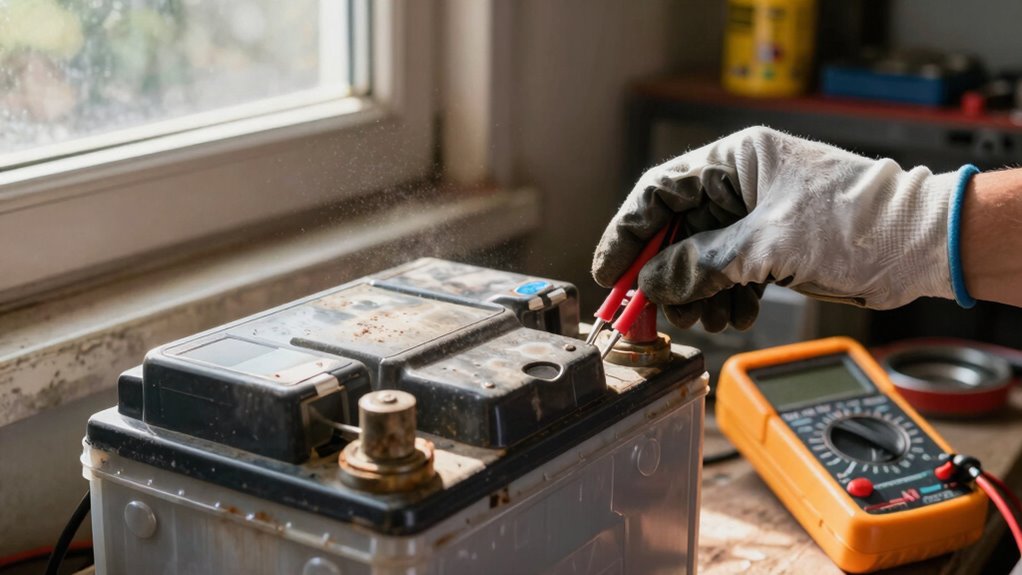

Before relying on your backup battery during a power outage, check its age and overall condition. Look for signs of wear, such as swelling, corrosion, or reduced capacity to hold a charge. Make sure it’s fully charged and stored properly in a cool, dry place. Conduct regular tests to confirm it’s working well. If you want to guarantee your system stays reliable, there’s more important info to take into account.

Get backup power and energy gear delivered free with Prime
- Fast, free delivery on millions of items
- Prime Video, Amazon Music and more included
- Member-only deals all year
Key Takeaways
- Verify the battery’s age and overall condition for signs of wear or damage.
- Ensure the battery is fully charged and capable of holding a proper charge.
- Check for swelling, corrosion, or other physical damage that may impair performance.
- Confirm the battery matches manufacturer specifications for voltage and current requirements.
- Test the battery’s performance regularly to ensure it will operate effectively during an outage.
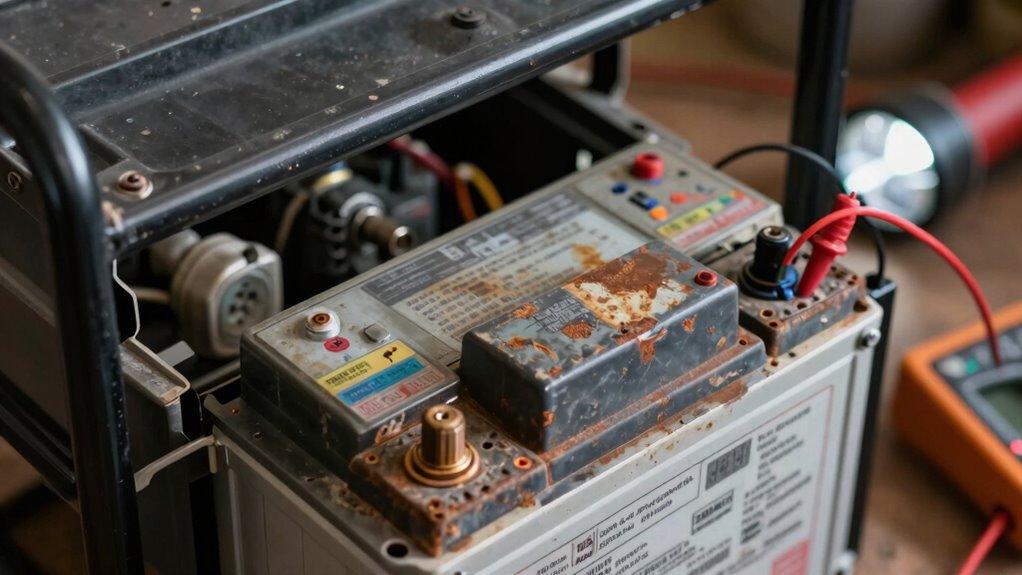
When a power outage strikes, it’s tempting to rely on your backup battery, but before you do, it’s essential to guarantee it’s ready to perform. A backup battery is only effective if it’s in good condition and fully prepared to support your needs. Start by checking the battery’s lifespan. Over time, batteries degrade, and their ability to hold a charge diminishes. If your battery is several years old or has been heavily used, it may not deliver reliable power when you need it most. Look for signs of wear, swelling, or corrosion, which can indicate reduced capacity and potential failure. If your battery’s lifespan has reached its limit, consider replacing it proactively to avoid surprises during an outage.
Next, verify the charging requirements for your backup battery. Different batteries have specific needs regarding voltage, current, and charging duration. Make sure you understand your battery’s specifications—consult the manufacturer’s instructions or labels on the unit. Proper charging is crucial to ensure your battery is at full capacity when the power goes out. If you’ve left the battery uncharged for an extended period, it might have discharged partially or completely, which can harm its performance. In some cases, batteries require a special charger or a slow, controlled charging process to optimize their lifespan and ensure they’re ready to supply power reliably. Additionally, understanding the battery’s lifespan can help you anticipate when it might need replacement, ensuring your backup power remains dependable. Keep your battery in a cool, dry place—extreme temperatures can affect both battery lifespan and charging requirements, decreasing efficiency and risking damage. Regular maintenance and battery testing can further help confirm your backup system’s readiness.
As an affiliate, we earn on qualifying purchases.
Frequently Asked Questions
How Long Will My Battery Last During an Outage?
Your battery will last based on its capacity and your device’s power consumption. If your battery has a high capacity, it can power your devices longer. However, if you use energy-intensive devices, your battery drains faster. To estimate how long it will last, divide the battery capacity by your device’s power consumption. Regularly monitor your usage to guarantee your battery can get you through the outage.
Can I Safely Store My Backup Batteries?
Ever wondered if you can safely store your backup batteries? Yes, you can, but it’s vital to take into account battery capacity and storage temperature. Keep batteries in a cool, dry place away from direct sunlight to prevent overheating or capacity loss. Are you ensuring your batteries are stored properly? Proper storage prolongs their lifespan and maintains readiness, so always follow manufacturer guidelines and regularly check their condition.
What Maintenance Is Required for Long-Term Battery Storage?
To maintain long-term battery storage, you should regularly check the battery capacity to guarantee it remains functional. Keep the batteries in proper storage conditions—cool, dry, and away from direct sunlight—to prevent degradation. Periodically recharge them according to the manufacturer’s recommendations, even if unused. This routine maintenance helps preserve battery health and readiness, ensuring your backup power is reliable when you need it most.
Are There Any Safety Risks With Using Backup Batteries?
Think of backup batteries as a double-edged sword—powerful yet potentially dangerous. Yes, there are safety risks like chemical hazards from battery acids and fire risks from overheating or short circuits. Always handle batteries with care, guarantee proper ventilation, and keep them away from flammable materials. Regular inspections and following manufacturer instructions will help you minimize these risks, so you can rely on your backup power safely when needed.
How Do I Properly Dispose of Old or Damaged Batteries?
To properly dispose of old or damaged batteries, you should follow specific disposal procedures. First, avoid throwing them in regular trash to prevent environmental harm. Instead, take them to a local battery recycling center or designated collection site. Many stores and municipal facilities offer battery recycling. Always handle batteries carefully to avoid leaks or fires, and check local guidelines for proper disposal methods to guarantee safety and environmental protection.
Conclusion
Before relying on your battery during a power outage, remember to give it a quick check-up—think of it as giving your safety net a thorough inspection. Ensuring it’s fully charged, in good condition, and properly maintained will keep it ready to catch you when the lights go out. Don’t let a faulty battery be the weak link in your emergency plan. With a little prep, you’ll be as prepared as a sailor with a sturdy lifeboat, ready for any storm.
Fall Picks
fall essentials
As an affiliate, we earn on qualifying purchases.