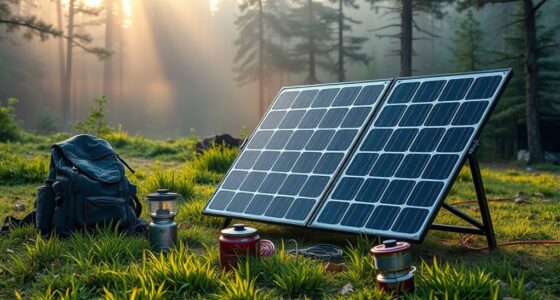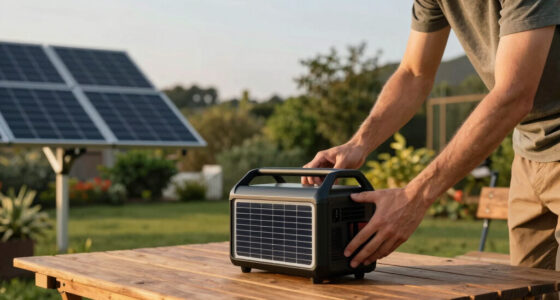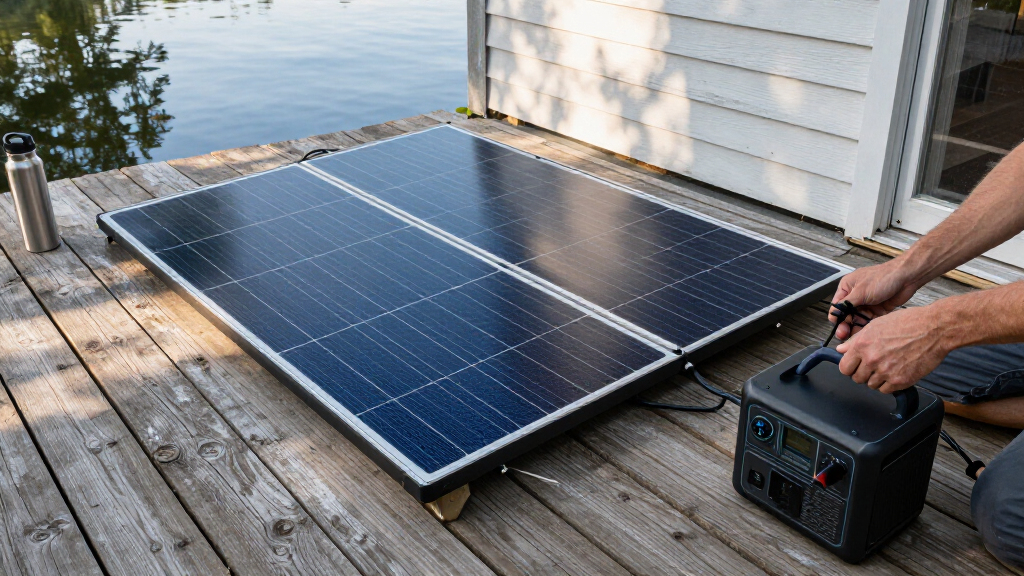
Portable solar panels can keep a power station topped up away from an outlet, but the right choice depends on how much power you need and how much panel you are willing to carry. I’d put the ZOUPW 350W N-Type in the best-overall conversation for its balance of output and portability, while the Renogy 400W suits buyers prioritizing higher output and the ZOUPW 100W 5-in-1 is a simpler fit for smaller setups. The main tradeoff is straightforward: larger panels can harvest more energy but take more space and effort to position, while compact models are easier to pack but charge more slowly. Connector compatibility, real-world sunlight, and panel setup also shape how useful the rated wattage will be. Read on for the full comparison, buying advice, and recommendations by use case.

Get backup power and energy gear delivered free with Prime
- Fast, free delivery on millions of items
- Prime Video, Amazon Music and more included
- Member-only deals all year
Key Takeaways
- The 350W ZOUPW stands out as a middle ground: it offers more rated capacity than the 100W and 200W panels without asking buyers to start with a 400W-plus model.
- High output is not automatically the best fit: the Renogy 400W, CTOLITY 400W, Ecosonique 400W, and several larger ZOUPW options suit buyers with compatible power stations and space to set panels out.
- Compact panels trade charging speed for easier handling: the ZOUPW and CTOLITY 100W models are better aligned with small power stations and lighter packing needs than extended off-grid use.
- Connector flexibility can matter as much as wattage: the ZOUPW 100W’s 5-in-1 connectors may simplify matching different power station inputs, but buyers still need to verify voltage and connector requirements.
- Bifacial and N-Type labels do not replace practical fit: ZOUPW’s bifacial 480W and Anker SOLIX’s bifacial 400W add distinct designs, yet usable output still depends on compatible equipment, placement, and available light.
| ZOUPW 350W Portable N-Type Solar Panel for Power Stations |  | Best High-Output Balance | Maximum power: 350 W | Cell type: N-Type monocrystalline, 16 busbars | Stated efficiency: 25% | VIEW LATEST PRICE | See Our Full Breakdown |
| Renogy 400W Portable Solar Panel |  | Best for Maximum Portable Output | Maximum power: 400 W | Efficiency: 23% | Amperage capacity: 12.1 A | VIEW LATEST PRICE | See Our Full Breakdown |
| ZOUPW 100W Foldable Portable Solar Panel with 5-in-1 Connectors |  | Best for Direct Device Charging | Maximum power: 100 W | Efficiency: 23.5% | Maximum voltage: 24.3 V | VIEW LATEST PRICE | See Our Full Breakdown |
| ECOBOSS 200W Foldable Portable Solar Panel |  | Best for a Simple 200W Setup | Maximum power: 200 W | Cell type: N-Type | Efficiency: 24% | VIEW LATEST PRICE | See Our Full Breakdown |
| SOKIOVOLA 200W Foldable Portable Solar Panel |  | Best for Compact Storage | Maximum power: 200 W | Conversion efficiency: Up to 25% | Cell type: Monocrystalline silicon | VIEW LATEST PRICE | See Our Full Breakdown |
| CTOLITY 400W Foldable Portable Solar Panel |  | Best for Straightforward 400W Charging | Maximum power: 400W | Output voltage: 40V DC | Conversion efficiency: 23.4% | VIEW LATEST PRICE | See Our Full Breakdown |
| BougeRV 200W Foldable N-Type Portable Solar Panel |  | Best for Durable Mid-Output Portability | Maximum power: 200W | Output voltage: 31.1V DC | Cell type: N-Type | VIEW LATEST PRICE | See Our Full Breakdown |
| Ecosonique 400W Foldable Portable Solar Panel |  | Best for Broad Adapter Compatibility | Maximum power: 400W | Output voltage and amperage: 40V; 10A | Conversion efficiency: 23.5% | VIEW LATEST PRICE | See Our Full Breakdown |
| ZOUPW 480W Bifacial Portable Solar Panel, N-Type 16BB |  | Best for Bifacial Output Potential | Maximum power: 480W | Cell type: N-Type 16BB monocrystalline | Conversion efficiency: 25%+ | VIEW LATEST PRICE | See Our Full Breakdown |
| ZOUPW 450W Portable N-Type 16BB Solar Panel for Power Stations |  | Best for Partial-Shade Flexibility | Maximum power: 450W | Cell type and busbar design: N-type monocrystalline; 16BB | Conversion efficiency: 25% | VIEW LATEST PRICE | See Our Full Breakdown |
| CTOLITY 100W Foldable Portable Solar Panel |  | Best for Expandable 12V Setups | Maximum power: 100 watts | Output voltage: 19.8 volts DC | Connector: XT60 | VIEW LATEST PRICE | See Our Full Breakdown |
| Anker SOLIX PS400 Bifacial 400W Foldable Portable Solar Panel |  | Best High-Output Bifacial Panel | Model: AS340 | Maximum power: 400 watts | Conversion efficiency: 25%+ | VIEW LATEST PRICE | See Our Full Breakdown |
| Renogy 200W Portable Solar Panel for Power Stations |  | Best for Direct Device Charging | Power: 200 watts | Cell type: 16BB N-Type monocrystalline silicon | Efficiency: 25% | VIEW LATEST PRICE | See Our Full Breakdown |
| portable solar panel | Maximum power | Weight | Cell type | Warranty |
|---|---|---|---|---|
| ZOUPW 350W Portable N-Type Sol | 350 W | 22.2 lb | N-Type monocrystalline, 16 busbars | 3 years |
| Renogy 400W Portable Solar Pan | 400 W | 30.2 lb | — | 3-year materials and workmanship coverage |
| ZOUPW 100W Foldable Portable S | 100 W | 9.5 lb | — | 12 months |
| ECOBOSS 200W Foldable Portable | 200 W | 15 lb | N-Type | 1 year |
| SOKIOVOLA 200W Foldable Portab | 200 W | 16.3 lb | Monocrystalline silicon | 12 months |
| CTOLITY 400W Foldable Portable | 400W | — | Monocrystalline | — |
| BougeRV 200W Foldable N-Type P | 200W | 13.8 pounds | N-Type | — |
| Ecosonique 400W Foldable Porta | 400W | Conflicting listings: 20.3 lb and 22.9 lb | — | — |
| ZOUPW 480W Bifacial Portable S | 480W | 22.5 pounds | N-Type 16BB monocrystalline | — |
| ZOUPW 450W Portable N-Type 16B | 450W | 29.5 pounds | — | — |
| CTOLITY 100W Foldable Portable | 100 watts | — | Monocrystalline | — |
| Anker SOLIX PS400 Bifacial 400 | 400 watts | 21.9 pounds | — | 5 years |
| Renogy 200W Portable Solar Pan | — | 13.9 lb | 16BB N-Type monocrystalline silicon | 2 years |
More Details on Our Top Picks
ZOUPW 350W Portable N-Type Solar Panel for Power Stations
The ZOUPW 350W hits a useful middle ground for campers who want substantial charging without stepping up to the heavier Renogy 400W panel. Its 22.2-pound foldable design is still a real carry, but it is lighter than that Renogy and has adjustable kickstands to help aim the panel as the sun shifts. N-Type cells, a stated 25% efficiency, and several included connector options make it a flexible match for compatible power stations. The IP68 rating and ETFE coating add weather protection, though the instructions caution against long-term fixed placement and shaded operation. Check your station’s input range before buying: this panel is not suited to 12–20V inputs. It makes more sense for campsite or RV setup than for frequent long-distance carrying.
Pros:- 350W maximum output offers a step up from 200W options without the Renogy 400W panel’s 30.2-pound weight.
- Multiple connector types and included cables support a range of compatible power stations.
- Adjustable kickstands help position the panel toward available sunlight.
- IP68 rating and ETFE coating suit outdoor use.
Cons:- At 22.2 pounds, it is cumbersome for hiking or frequent carrying.
- Not compatible with power stations that accept only 12–20V input.
- Instructions advise against long-term fixed installation and shaded operation.
Best for: Campers and RV travelers with a compatible high-voltage power station who want more output than a 200W panel without carrying a 400W model.
Not ideal for: Owners of power stations limited to 12–20V solar input, or hikers who need a light panel for long carries.
- Maximum power:350 W
- Cell type:N-Type monocrystalline, 16 busbars
- Stated efficiency:25%
- Open-circuit voltage:50.2 V
- Amperage capacity:8.1 A
- Weight:22.2 lb
- Folded size:23.82 × 33.15 × 3.44 in
- Connectors:XT60, Anderson, DC7909, DC8020
- Warranty:3 years
Our verdict“Choose this for campsite charging when your power station supports its voltage and you want a lighter alternative to a 400W panel.”
Renogy 400W Portable Solar Panel
When charging capacity matters more than easy carrying, the Renogy 400W is the strongest fit in this group. Its rated output exceeds the ZOUPW 350W, which can make it more appealing for larger power stations or longer off-grid stays, while its parallel wiring is designed to reduce the impact of partial shade. Reinforced construction, an ETFE surface, and IP67 waterproofing suit outdoor setups. The tradeoff is substantial: at 30.2 pounds, this is better moved from a vehicle to a campsite than packed along a trail. It also uses MC4 output cables, and the adapter cable and charge controller are not included. I’d pick it over the lighter 200W panels for a stationary camp setup, but only after checking compatibility and accounting for the extra gear.
Pros:- 400W rated output is higher than the ZOUPW 350W and the 200W panels in this batch.
- Parallel wiring helps limit the effect of partial shading.
- Fiberglass reinforcement and an ETFE surface are suited to outdoor handling.
- Includes a carry case and has IP67 waterproofing.
Cons:- At 30.2 pounds, it is the least convenient option here for carrying any distance.
- Adapter cable and solar charge controller are not included.
- Real-world output varies with sunlight, shading, and connected equipment limits.
Best for: RV owners and off-grid campers with compatible battery equipment who prioritize higher panel output and can transport the panel by vehicle.
Not ideal for: Backpackers or anyone seeking a ready-to-connect setup, since the panel weighs 30.2 pounds and adapter cables and a charge controller are not included.
- Maximum power:400 W
- Efficiency:23%
- Amperage capacity:12.1 A
- Maximum voltage:67.5 V DC
- Weight:30.2 lb
- Folded dimensions:33.7 × 27.95 in
- Output cables:MC4
- Warranty:3-year materials and workmanship coverage
Our verdict“Pick the Renogy for vehicle-based off-grid setups that can use its higher output and accommodate its weight and separate connection gear.”
ZOUPW 100W Foldable Portable Solar Panel with 5-in-1 Connectors
The ZOUPW 100W is the most approachable choice here for buyers who want a smaller panel and useful device outputs, rather than the higher capacity of the 200W SOKIOVOLA or ECOBOSS models. Its USB-C and USB-A ports allow direct charging of compatible devices, so a power station is not the only possible use. Five connector types also make it easier to pair with a range of supported power stations, though the station’s own input limit still governs charging speed. At 9.5 pounds, it is much easier to move than the larger panels in this roundup, but it is still a substantial item for a long hike. The 12-month warranty is shorter than the three-year coverage listed for the ZOUPW 350W and Renogy 400W.
Pros:- USB-C and USB-A ports can charge compatible devices directly.
- Five connector types provide flexibility with supported power stations.
- At 9.5 pounds, it is easier to move than the 200W and 400W panels in this batch.
- Adjustable kickstands and an IP67 rating support outdoor setup.
Cons:- 100W maximum output is below the 200W and higher-capacity options here.
- Charging speed depends on the connected power station’s input limit.
- The 12-month warranty is shorter than the coverage on the ZOUPW 350W and Renogy 400W.
Best for: Car campers and day-trip users who want a manageable panel for a small power station and direct USB charging for phones or other devices.
Not ideal for: Buyers who need faster, higher-capacity charging for a large power station, or hikers who want an especially light packable panel.
- Maximum power:100 W
- Efficiency:23.5%
- Maximum voltage:24.3 V
- Weight:9.5 lb
- Folded dimensions:24.13 × 21.06 × 1.77 in
- Connectors:DC8020, XT60, Anderson, DC7909/8 mm, DC5521
- USB ports:1 USB-C (PD 15 V/3 A), 2 USB-A (including QC3.0 12 V/1.5 A)
- Cable length:10 ft
- Warranty:12 months
Our verdict“Choose this compact-capacity option if direct USB charging and broad connector support matter more than fast charging for a large power station.”
ECOBOSS 200W Foldable Portable Solar Panel
The ECOBOSS 200W suits buyers who want a foldable panel with a handle, kickstands, and a 5-in-1 cable in the package. At 15 pounds, it is lighter than the SOKIOVOLA 200W, though neither is a comfortable choice for a long hike. Its stated 24% efficiency and N-Type cells are attractive on paper, and the IP68 rating, ETFE surface, and anti-crack construction address outdoor use. Compared with the ZOUPW 100W, it offers twice the rated output, but it lacks the listed direct USB ports that make that smaller model convenient for charging devices without a power station. The one-year warranty is also relatively short. Check your power station’s voltage and connectors before purchase, since the included cable is not a substitute for confirming compatibility.
Pros:- 200W output is a substantial step up from the ZOUPW 100W.
- Carry handle and adjustable kickstands help with transport and positioning.
- IP68 rating, ETFE surface, and anti-crack construction are intended for outdoor use.
- Includes a 5-in-1 cable for connecting to compatible power stations.
Cons:- At 15 pounds, it is still heavy for a long hike.
- The one-year warranty is shorter than the three-year coverage on the ZOUPW 350W and Renogy 400W.
- Actual charging output varies with sunlight and operating conditions.
Best for: Car campers and RV users seeking a 200W panel with a carry handle, adjustable stands, and included power-station cabling.
Not ideal for: Hikers who need low carry weight, or buyers who want direct USB device charging or longer stated warranty coverage.
- Maximum power:200 W
- Cell type:N-Type
- Efficiency:24%
- Amperage capacity:9.42 A
- Maximum voltage:21.24 V
- Output voltage:12 V
- Weight:15 lb
- Included components:Solar panel, 5-in-1 cable
- Warranty:1 year
Our verdict“Choose the ECOBOSS for vehicle-based setups that need 200W output and convenient included cabling, not for direct USB charging or long carries.”
SOKIOVOLA 200W Foldable Portable Solar Panel
The SOKIOVOLA 200W stands out for its compact folded footprint: at 21 × 23 inches, it is narrower to store than the ECOBOSS 200W, making it a sensible pick when vehicle or RV storage space is tight. It offers the same rated output as the ECOBOSS and claims up to 25% conversion efficiency, with an ETFE coating for outdoor use. The tradeoff is weight: at 16.3 pounds, it is heavier than the ECOBOSS and not a practical choice for carrying far on foot. A 5-in-1 extension cable supports compatibility with many power stations, but the station’s input ceiling can limit the panel’s actual charging rate. Its 12-month warranty is also shorter than the coverage on the ZOUPW 350W.
Pros:- Compact folded size fits storage spaces where a wider panel may be awkward.
- 200W rated output matches the ECOBOSS 200W.
- Up to 25% stated efficiency and an ETFE coating suit outdoor charging.
- Includes a 10.49-foot 5-in-1 cable for a range of compatible power stations.
Cons:- At 16.3 pounds, it is heavier than the ECOBOSS 200W and poorly suited to long hikes.
- A power station’s maximum solar input can limit charging output.
- The 12-month warranty is shorter than the ZOUPW 350W’s three-year coverage.
Best for: RV travelers and car campers with limited storage space who want a foldable 200W panel and already own a compatible power station.
Not ideal for: Backpackers or buyers who prioritize low weight, longer warranty coverage, or charging devices directly from built-in USB ports.
- Maximum power:200 W
- Conversion efficiency:Up to 25%
- Cell type:Monocrystalline silicon
- Output voltage:18 V
- Weight:16.3 lb
- Folded size:21 × 23 in
- Coating:ETFE
- Included cable:10.49-foot 5-in-1 extension cable
- Warranty:12 months
Our verdict“Pick the SOKIOVOLA when compact storage matters more than carry weight and your power station can accept its output.”
CTOLITY 400W Foldable Portable Solar Panel
The CTOLITY 400W makes sense for buyers who want a high-output folding panel with a conventional MC4 connection. Its stated 400W output and adjustable kickstands suit campsite or RV setups where the panel can be angled toward the sun, while the ETFE-laminated surface is described as weather resistant. Compared with the Ecosonique 400W, it offers the same headline wattage but gives less concrete buying information: no dimensions, weight, or bundled adapter details are provided. That makes it harder to judge transport and power-station fit before purchase. The broad compatibility description also means buyers should confirm connector and input requirements for their specific station. I’d choose it for a simple MC4-based setup, but not when portability details or a ready-made range of adapters are priorities.
Pros:- Stated 400W maximum output for higher-demand portable charging
- Adjustable kickstands help angle the panel toward available sunlight
- MC4 connectors work with compatible power stations
- ETFE-laminated surface is described as weather resistant
Cons:- No dimensions or weight are supplied, making transport planning difficult
- Specific compatible power-station models and input limits are not listed
Best for: RV and camping owners with an MC4-compatible power station who want a foldable panel rated at 400W.
Not ideal for: Buyers who need to verify packed size and carrying weight before a trip, or who want clearly listed power-station compatibility.
- Maximum power:400W
- Output voltage:40V DC
- Conversion efficiency:23.4%
- Cell type:Monocrystalline
- Connector:MC4
- Surface:ETFE laminated
- Design and features:Foldable; adjustable kickstands; described as dustproof and high-temperature resistant
- Model number:400W-NEW
Our verdict“Pick the CTOLITY if you want a 400W foldable panel with MC4 connectors and can confirm fit and carrying requirements separately.”
BougeRV 200W Foldable N-Type Portable Solar Panel
The BougeRV 200W favors manageable output and outdoor durability over the much higher capacity of the ZOUPW 480W bifacial panel. At 13.8 pounds, it is the easier of those two to carry, and built-in handles make that weight more practical on short walks from a vehicle to a campsite. Its N-Type cells are rated up to 25% efficiency, while the IP65 protection and fiberglass-reinforced layer are aimed at resisting dust, water exposure, abrasion, and cracking. The included XT60 and DC7909 connectors plus an 8.2-foot cable offer useful setup flexibility, but they do not guarantee compatibility: check your power station’s input limits and plug requirements. This is a sensible choice for users who value a sturdier, easier-to-handle 200W panel; buyers needing faster high-capacity charging should look at the 400W and 480W options instead.
Pros:- 13.8-pound weight and built-in handles support easier transport
- N-Type cells are rated up to 25% conversion efficiency
- Fiberglass-reinforced construction is designed to resist cracking and abrasion
- IP65 protection and included 8.2-foot extension cable suit outdoor setups
Cons:- 200W maximum output is well below the 400W and 480W panels in this group
- Device and power-station compatibility still depends on input requirements
Best for: Campers and day-trip users who want a carryable 200W panel with outdoor protection and common connector options.
Not ideal for: Owners seeking maximum charging capacity from one panel, or buyers whose power station does not accept XT60 or DC7909 connections.
- Maximum power:200W
- Output voltage:31.1V DC
- Cell type:N-Type
- Conversion efficiency:Up to 25%
- Connectors:XT60 and DC7909
- Extension cable:8.2 feet
- Water and dust resistance:IP65
- Weight:13.8 pounds
Our verdict“Choose the BougeRV for a comparatively easy-to-carry, rugged 200W panel rather than for the highest charging capacity.”
Ecosonique 400W Foldable Portable Solar Panel
The Ecosonique UC-400 is the more fully specified 400W choice here, especially for buyers who need cables to bridge different power-station inputs. Alongside MC4 leads, it includes an adapter cable for XT60, Anderson, and DC8020, whereas the CTOLITY 400W listing gives less detail about adapters and portability. The six-fold panel has adjustable kickstands, IP65 water resistance, and a stated operating range from -4°F to 158°F, making it suitable for varied outdoor conditions when used within its limits. Its 23.5% efficiency is close to CTOLITY’s stated 23.4%, so the key distinction is the richer accessory and specification list, not a major efficiency gap. There is a practical caveat: the product details list conflicting weights of 20.3 and 22.9 pounds. I’d favor it for adapter flexibility, but confirm weight and power-station input compatibility before setting out.
Pros:- 400W maximum output with 23.5% stated conversion efficiency
- Includes MC4 cable and adapters for XT60, Anderson, and DC8020
- Six-fold design and adjustable kickstands support portable positioning
- IP65 water resistance and a stated -4°F to 158°F operating range
Cons:- Product details conflict on weight, listing both 20.3 and 22.9 pounds
- The stated maximum output depends on suitable sunlight and conditions
Best for: Portable-power-station owners who want a 400W panel with multiple included adapter options and a defined operating-temperature range.
Not ideal for: Buyers who need a confidently verified carry weight or a lightweight panel for frequent long-distance carrying.
- Maximum power:400W
- Output voltage and amperage:40V; 10A
- Conversion efficiency:23.5%
- Cell material:Monocrystalline silicon
- Weight:Conflicting listings: 20.3 lb and 22.9 lb
- Dimensions:26.2 × 2.9 × 22.4 inches
- Operating temperature:-4°F to 158°F
- Connectors and included cables:MC4; 3 m MC4 cable; 0.5 m MC4-to-XT60/Anderson/DC8020 cable
- Water resistance and warranty:IP65; 12 months
Our verdict“Choose the Ecosonique if its included adapter range suits your power station and you can verify the panel’s actual listed weight.”
ZOUPW 480W Bifacial Portable Solar Panel, N-Type 16BB
The ZOUPW 480W bifacial panel is the capacity leader among these five, pairing a 480W rating with cells designed to collect light from both sides. Its stated bifacial gain of up to 30% gives it a different use case from the single-sided ZOUPW 450W: on a bright, open site with reflective ground, the rear face may contribute extra generation. That potential depends heavily on placement, so it is less compelling on grass, against a wall, or anywhere the back is blocked. At 22.5 pounds, it is lighter than the 450W model’s 29.5 pounds despite its higher stated output, and its IP68-rated construction and included stakes support outdoor setup. However, the panel is not recommended for long-term fixed, series, or parallel connections. Shading and surface obstruction can also reduce output and cause heat buildup, so I’d reserve it for temporary, carefully positioned charging.
Pros:- 480W stated maximum power is the highest among these five panels
- Bifacial design may capture additional sunlight from the rear side
- 22.5-pound weight is lower than the listed weight of the ZOUPW 450W
- IP68-rated construction and included storage bag, cables, and ground stakes
Cons:- Bifacial gain depends on clear rear-side exposure and suitable ground conditions
- Shading or surface obstruction can lower output and contribute to heat buildup
- Not recommended for long-term fixed, series, or parallel connections
Best for: Campers and backup-power users who can set up in open, bright locations and want the potential benefit of a bifacial panel.
Not ideal for: Buyers who usually charge in shaded or cramped sites, or who need a panel for permanent installation or long-term series or parallel connections.
- Maximum power:480W
- Cell type:N-Type 16BB monocrystalline
- Conversion efficiency:25%+
- Bifacial gain:Up to 30%
- Maximum voltage and amperage:42.5V; 11.3A
- Weight:22.5 pounds
- Dimensions:138.6 × 0.9 × 32.6 inches
- Protection and temperature limit:IP68; maximum temperature 140°F
- Included accessories:Storage bag, user manual, 2 ft 4-in-1 connector cable, 13 ft solar connector extension cable, 4 ground stakes
Our verdict“Pick the ZOUPW 480W bifacial panel for temporary open-site use where rear-side light can add value, not for shaded or permanent setups.”
ZOUPW 450W Portable N-Type 16BB Solar Panel for Power Stations
The ZOUPW 450W is a strong fit for users who want high output but cannot count on every panel section receiving full sun. Its bypass diodes are intended to help preserve output under partial shade, a useful distinction from the bifacial ZOUPW 480W, whose rear-side gain depends on clear exposure behind the panel. The 450W model also includes XT60, Anderson, DC7909, and DC8020 connectors, giving it several ways to connect to compatible power stations. That flexibility comes with a heavier carry: at 29.5 pounds, it is notably less convenient to move than the 22.5-pound 480W model. Check the power station’s input range too; this panel is not compatible with units requiring less than 30V input. Its IP68 rating and ground stakes favor outdoor use, but it is not intended for long-term fixed, series, or parallel connections.
Pros:- 450W maximum power with N-type monocrystalline cells and 25% stated efficiency
- Bypass diodes are designed to help maintain output under partial shade
- Includes XT60, Anderson, DC7909, and DC8020 connector options
- IP68-rated protection with adjustable kickstands, ground stakes, and a storage bag
Cons:- At 29.5 pounds, it is heavier than the ZOUPW 480W bifacial model
- Not compatible with power stations requiring less than 30V input
- Not recommended for long-term fixed, series, or parallel connections
Best for: Power-station owners who need a high-output foldable panel, multiple connector choices, and help managing occasional partial shade.
Not ideal for: Buyers with power stations requiring under 30V input, frequent long-distance carrying needs, or plans for permanent panel wiring.
- Maximum power:450W
- Cell type and busbar design:N-type monocrystalline; 16BB
- Conversion efficiency:25%
- Open-circuit voltage and output voltage:45.9V; 38.3V
- Amperage capacity:12.4A
- Weight:29.5 pounds
- Dimensions and folded size:121.85 × 34.57 × 0.79 inches; folded: 30.43 × 34.56 × 3.54 inches
- Connectors:XT60, Anderson, DC7909, DC8020
- Protection and warranty:IP68; 36 months
Our verdict“Choose the ZOUPW 450W if partial-shade handling and connector options matter more than minimizing carry weight.”
CTOLITY 100W Foldable Portable Solar Panel
The CTOLITY 100W is a practical fit for buyers building a compact 12V charging setup who may want to add panels later. Its XT60 output and stated 12A maximum for 12V battery charging make the intended use clearer than the Renogy 200W, which offers direct USB outputs alongside its power-station connection. Adjustable kickstands help aim the panel toward the sun, while series or parallel expansion leaves room to grow beyond a single 100W panel. ETFE lamination and IP65 water resistance suit outdoor use, though they do not remove the need to protect connections from exposure. Its main compromise is capacity: compared with the Anker SOLIX PS400, this panel offers far less rated power, so replenishing larger power stations can take longer. Actual output also depends on sunlight and setup.
Pros:- Foldable design and adjustable kickstands help with transport and sun positioning.
- Monocrystalline cells have a stated 23.7% efficiency.
- Supports series or parallel connections for expanding a setup.
- ETFE lamination and IP65 water resistance suit outdoor use.
Cons:- At 100W, it has less rated capacity than the Renogy 200W and Anker SOLIX PS400.
- The 12A maximum is specified for 12V battery charging, not as a universal output figure.
- Actual generation varies with sunlight and conditions.
Best for: Campers and owners of 12V batteries who want a foldable starter panel with XT60 output and the option to expand their array.
Not ideal for: Power-station users who need higher panel capacity or direct USB charging; its rated output is 100W and the listed 12A maximum applies to 12V battery charging.
- Maximum power:100 watts
- Output voltage:19.8 volts DC
- Connector:XT60
- Cell type:Monocrystalline
- Cell efficiency:23.7%
- Maximum 12V battery current:12A
- Water resistance:IP65
- Operating temperature:-10 to 70°C
Our verdict“Choose the CTOLITY 100W if you want a compact, expandable panel for a 12V battery setup, not fast charging for a large power station.”
Anker SOLIX PS400 Bifacial 400W Foldable Portable Solar Panel
The Anker SOLIX PS400 is the high-capacity choice here: its 400W rating is twice the Renogy 200W’s, making it better suited to power stations that can accept substantial solar input. Its bifacial design can use reflected light from behind the panel, with the stated rear-side gain reaching up to 10%; that benefit depends on the surface and surroundings, so it is not a guaranteed boost at every campsite. The stated 25%+ conversion efficiency and IP68 water-and-dust resistance add appeal for outdoor setups. Against the Renogy, however, the PS400 is heavier at 21.9 lb and does not list built-in USB charging outputs. It folds for transport, but its large unfolded dimensions still make it a less convenient choice for hikers or anyone prioritizing a small carry footprint.
Pros:- 400W rated output offers more capacity than the Renogy 200W and CTOLITY 100W.
- Bifacial construction can capture rear-side light and add up to 10% more power in suitable surroundings.
- Stated conversion efficiency is 25%+.
- IP68 water and dust resistance and a five-year warranty.
Cons:- At 21.9 lb, it is a substantial carry for a portable panel.
- The rear-side gain depends on reflective surroundings and sunlight.
- Its large unfolded dimensions require more setup space than the Renogy 200W.
Best for: Van campers and power-station owners who can use a 400W panel and have room to position a large bifacial array near reflective ground.
Not ideal for: Backpackers or buyers who need a light, compact panel, or anyone whose power station cannot accept its high solar input.
- Model:AS340
- Maximum power:400 watts
- Conversion efficiency:25%+
- Weight:21.9 pounds
- Dimensions:90.24 x 38.7 x 0.67 inches
- Water and dust resistance:IP68
- Warranty:5 years
- Included cables:Two 8.2 ft solar charging cables and one 1.6 ft XT-60i solar charging cable
Our verdict“Pick the PS400 for high-capacity power-station charging where weight and setup space matter less than its 400W bifacial output.”
Renogy 200W Portable Solar Panel for Power Stations
The Renogy 200W stands out for combining a useful midrange panel capacity with USB-C PD and dual USB-A outputs, so compatible devices can charge without routing power through a separate station. That makes it more versatile for camp setups than the CTOLITY 100W, which focuses on XT60 and 12V battery charging. Its 16BB N-Type cells have a stated 25% efficiency, and four kickstands provide several positioning angles; at 13.9 lb, it is also considerably lighter than the 21.9 lb Anker SOLIX PS400. The tradeoff is that it supplies half the Anker’s rated power, and its MC4 connection may need an adapter for a particular power station. The listed 4-in-1 adapter is sold separately, so buyers should check their station’s input requirements before choosing it.
Pros:- USB-C PD 45W and dual USB-A outputs allow direct charging of compatible devices.
- 16BB N-Type monocrystalline cells have a stated 25% efficiency.
- Four kickstands allow multiple positioning angles.
- At 13.9 lb, it is lighter than the Anker SOLIX PS400.
Cons:- The 4-in-1 adapter is sold separately.
- Power-station compatibility depends on the station’s input requirements.
- Its 200W rating is below the Anker SOLIX PS400’s 400W.
Best for: Car campers and power-station owners who want a 200W foldable panel plus direct USB charging for phones, tablets, and other compatible devices.
Not ideal for: Buyers seeking the highest panel capacity or a ready-to-connect setup for a power station that requires the separately sold 4-in-1 adapter.
- Power:200 watts
- Cell type:16BB N-Type monocrystalline silicon
- Efficiency:25%
- Amperage capacity:11.3 A
- Maximum voltage:21.6 V
- Weight:13.9 lb
- Folded dimensions:23.72 x 22.99 x 1.97 in
- Connectors:MC4, USB-C PD 45W, dual USB-A
- Warranty:2 years
Our verdict“Choose the Renogy 200W for a balance of portable power-station charging and direct USB device output, provided its connectors suit your gear.”
How We Picked
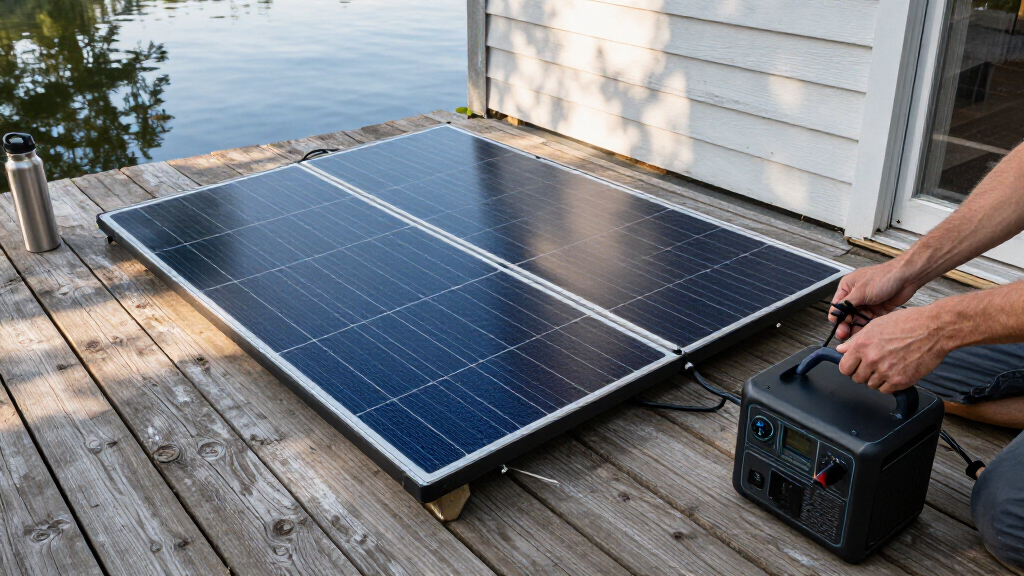
I compared these 13 portable panels by the factors that change day-to-day usefulness: rated wattage, carry and setup demands suggested by their portable or foldable formats, connector flexibility, and fit with portable power stations. I also treated features such as N-Type cells and bifacial construction as differentiators, not guarantees of better charging in every location. Since panel output varies with sunlight, angle, temperature, and the receiving power station, rated wattage alone does not determine real charging speed.
The ranking favors options with a clear role and a practical balance between output and portability, then recognizes models that serve more specific needs. Higher-wattage panels place lower when their added capacity may bring more bulk or require a larger compatible station; 100W models rank as focused compact choices, not all-purpose replacements. I avoid treating similar wattage as proof of equal value: buyers should confirm the panel’s electrical specifications and included connections against their own power station before choosing.
Factors to Consider When Choosing Portable Solar Panels
Before choosing a panel, start with the power station and the way you plan to travel. The most useful panel is not always the one with the highest number on its label; it is the one you can connect, position, and carry often enough to meet your charging needs.
Match Panel Output to Your Power Station
Check your power station’s maximum solar input wattage, voltage range, and connector before choosing a panel. A panel rated above the station’s input limit may not charge it faster, while an electrical mismatch can make the pairing unsuitable. Think about the capacity you need to replenish, too: a small station used for phones and lights has different demands from one running a fridge or other high-draw gear. Rated panel wattage describes a test condition, not a promise of the same output throughout the day. If you want to connect more than one panel later, verify how the station handles series or parallel wiring rather than assuming every setup is interchangeable.
Choose Wattage Around Your Carrying and Setup Limits
More wattage often means more panel area, more weight, and more time spent finding a stable sunny spot. That can be a fair trade for a base camp or vehicle trip, but less appealing if you move camp frequently or hike with your gear. A 100W panel can make sense for modest charging and easy packing, while a 200W or larger model better suits buyers who need to replenish a station faster. Consider where the panel will ride and how much clear ground you can give it when deployed. Buying the largest panel you can find can backfire if its size makes you leave it behind.
Read Cell and Bifacial Claims in Context
N-Type and bifacial designs can distinguish a panel, but their benefit depends on the full setup and surroundings. A bifacial panel can make use of light reaching its rear side, so ground surface, spacing, and panel placement may affect how much that design adds. On shaded ground or a surface that reflects little light, the extra collection potential may be limited. Cell type alone does not tell you how a panel performs through clouds, at low sun angles, or in heat. Compare construction and usable specifications alongside these labels instead of choosing by a technology name alone.
Check Connectors and Electrical Specifications Before Buying
Portable power stations do not all use the same solar input, and a connector that physically fits may still be the wrong electrical match. Confirm the panel’s open-circuit voltage and operating range against the station’s stated limits, then check which cables or adapters are included. Multi-connector kits can help when you own different devices, but they do not remove the need to check compatibility. If you plan to expand the system, review the panel’s connection options and the station’s limits before adding another unit. Sorting this out before purchase can prevent an otherwise capable panel from sitting unused.
Plan for Real Sun, Not Just Rated Wattage
Direct, unobstructed sunlight and good panel orientation have a larger effect on charging than many buyers expect. Clouds, tree shade, low winter sun, and hot panel surfaces can all reduce output, so a rated 400W panel will not deliver that figure continuously. A panel that can be repositioned easily may collect more energy over the day than a larger one left at a poor angle. If your campsite has limited sun, prioritize practical placement and shade management over maximum wattage. For longer trips, estimate your daily energy use and bring enough generation capacity to account for changing conditions.
Decide How Much Setup and Storage Work You Will Accept
Foldable panels reduce the challenge of transport, but the opened footprint can still be large and the panel needs a secure, well-lit position. Think through where it will be stored, how you will protect it during transport, and whether you can set it up without blocking your campsite or walkway. Repositioning a panel as the sun moves can improve collection, though it takes attention. A larger model may make sense for a vehicle-based setup where it can stay deployed for hours; a compact option can be easier for frequent stops. Choose for the routine you will actually follow, not only the strongest charging scenario.
Frequently Asked Questions
Will a 400W portable solar panel charge my power station faster than a 200W panel?
It can, but only if the power station accepts that much solar input and the panel receives enough direct sunlight. If the station’s solar input limit is below the panel’s rated output, extra panel capacity may not translate into a faster charge. Real output also changes with angle, shade, weather, and temperature. Compare the station’s input specifications with the panel’s voltage and current details before buying. If your station cannot use the extra capacity, a smaller panel may be easier to carry without giving up meaningful charging speed.
Can I connect a portable solar panel from one brand to a power station from another?
Often, but brand names alone do not confirm compatibility. Check the panel’s connector, operating voltage, and open-circuit voltage against the power station’s solar input requirements. Some setups need an adapter, and an adapter only changes the connection shape; it does not make an electrical mismatch safe. Multi-connector panels can simplify the cable side, though buyers still need to check the station’s limits. If the manufacturer’s specifications do not clearly support the pairing, ask the manufacturer before connecting them.
Is one large panel better than two smaller portable solar panels?
One large panel can simplify cabling and setup, while two smaller panels may be easier to position around partial shade or fit into separate storage spaces. The best arrangement depends on your power station’s input limit and whether it supports the planned series or parallel connection. Two panels are not automatically faster: their combined voltage or current can exceed the station’s permitted range. A single panel may be simpler for occasional use, while multiple panels offer flexibility for a fixed camp or vehicle setup. Check both the panel and station specifications before planning a combined array.
Do bifacial portable solar panels make sense for camping?
They can be useful when the rear of the panel has access to reflected light, such as over a bright surface with enough clearance beneath it. On dark ground, in close shade, or when the rear side is blocked, the extra collection potential may be modest. Bifacial construction does not remove the need to face the main side toward the sun or to reposition the panel. Compare the panel’s size, weight, output, and compatibility with a conventional model before paying for the added design feature. For many campers, a panel that is easier to place well can be more useful than one with a feature their site cannot support.
Is a 100W panel enough for a weekend trip?
It may be enough if your power needs are modest, your station is small, and you have several hours of good sunlight. Phones, lights, and small electronics generally demand less energy than a fridge, electric cooking gear, or repeated device charging. Cloud cover and shade can cut the energy collected, so a 100W panel may not replenish a larger station quickly. Add up the watt-hours you expect to use each day and compare that with realistic solar collection, not the panel’s peak rating. If you need more margin, a 200W panel or a compatible larger setup may suit the trip better.
Conclusion
For the broadest mix of everyday power-station use and portable handling, I’d start with the ZOUPW 350W N-Type as the best overall pick. Buyers seeking a value-oriented middle capacity should compare the 200W foldable options, choosing among them by connector fit and the storage space available. For a best-premium direction, the Anker SOLIX PS400 bifacial and ZOUPW 480W bifacial offer higher-output, feature-led designs for buyers who can use their capacity and accommodate their size. Beginners with a smaller station may find the ZOUPW 100W 5-in-1 easier to match across connections, while the CTOLITY 100W is another compact option to compare. For specific needs, choose a 400W-plus model for higher generation at a fixed camp, a 200W panel for a balance of output and portability, or a 100W panel when packing space matters most. Before deciding, confirm the panel’s electrical specifications against your power station and consider where you will set it up.
Halloween Picks
halloween
As an affiliate, we earn on qualifying purchases.