
TL;DR

Get backup power and energy gear delivered free with Prime
- Fast, free delivery on millions of items
- Prime Video, Amazon Music and more included
- Member-only deals all year
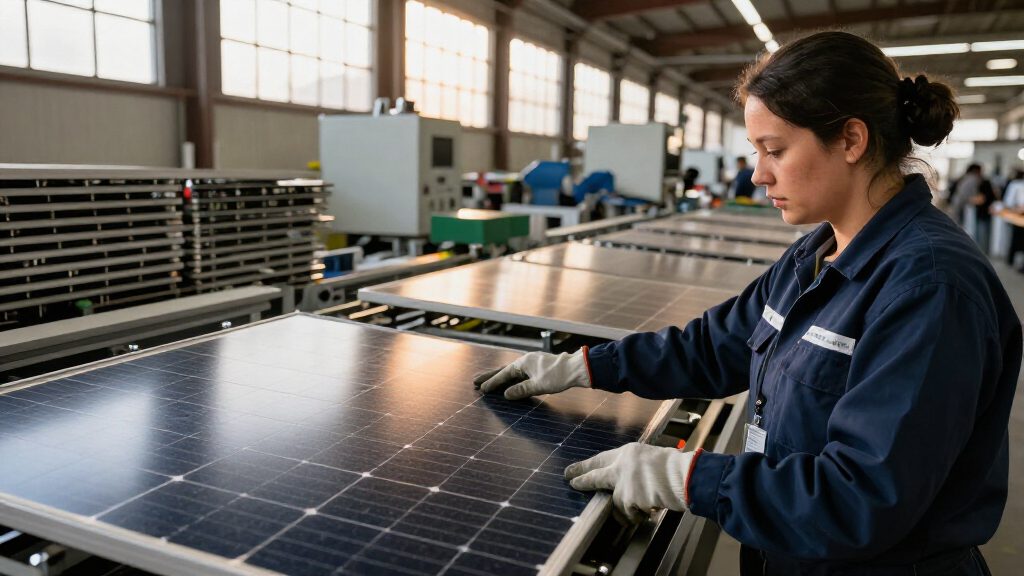
U.S. factories have enough capacity to produce more finished solar panels than the country installed last year, and domestic solar-cell production is expanding. Wafer and polysilicon manufacturing still lags, while uncertainty over future installations makes it difficult to judge how much capacity the supply chain will need.
U.S. solar module factories have the capacity to produce more than the 47.9 gigawatts of direct-current capacity installed in the country last year. Modules are finished panels, the final product in a chain that also requires photovoltaic cells, silicon wafers and processed polysilicon. If all announced projects and facilities under construction or commissioning are completed, module production capacity could rise by about 83%, Canary Media reported.
Cell manufacturing is expanding, too. Domestic factories can currently produce up to 19.5 gigawatts of solar cells annually, following several factory openings described in the report. If projects nearing completion come online, U.S. cell capacity would be enough to match the report’s level for 2025 deployments. That is a capacity projection, not a guarantee that factories will operate at full output or that all planned projects will be completed.
The report identifies silicon wafers and polysilicon as the more significant production gaps. Their manufacturing capacity is not on track to match the levels available for cells or modules. The source does not provide a single projected figure for the wafer and polysilicon shortfalls, so the scale of each gap cannot be quantified from the cited information.
The Upstream Parts Still Missing
Domestic panel capacity does not, on its own, amount to a fully domestic supply chain. Panel makers need cells, and cell production depends on wafers made from processed polysilicon. If those inputs are sourced abroad, the United States can assemble finished modules at home while still relying on overseas production for earlier manufacturing stages.
The distinction affects how much resilience the manufacturing buildout provides. More local production at each stage could reduce exposure to supply disruptions and create a broader domestic industrial base. But factories require customers and sustained operation: installing capacity is not the same as proving it can stay competitive and operate over time. Canary Media’s report says manufacturers still need to demonstrate that they can run sustainably in the United States over the long term.
Products Worth Considering

Jackery Solar Generator 1000 V2 with 200W Solar Panel, 1070Wh

Jackery Explorer 300 Portable Power Station, 292Wh

Samsung Galaxy Tab A11+ 11-Inch Tablet, 6GB RAM, 128GB Storage, Expandable, Gray
As an affiliate, we earn on qualifying purchases.
From Factory Decline to Expansion
U.S. solar manufacturing had nearly disappeared before growing again in recent years. The report attributes the revival to federal incentives and stiffer tariffs on foreign products. The expansion has been uneven across the supply chain: module plants are furthest along, with cells gaining capacity, while wafer and polysilicon production remains less developed.
The demand outlook complicates decisions about further investment. Solar installations in the United States reached 47.9 gigawatts of direct-current capacity last year, but the report says it is not guaranteed that annual installations will remain at 2025 levels after lucrative federal tax credits expire. Rhodium Group modeled post-2030 scenarios ranging from an average of 8 to 52 gigawatts of annual installations. That is a wide range of modeled outcomes, not a forecast of a single likely level.
Demand and Factory Output Remain Unclear
Several factors remain unresolved: whether announced and in-progress factories will be completed, how much they will produce once operating, and whether demand will support their output. The capacity figures describe what facilities can make, not necessarily actual annual production.
Future installations could fall or rise substantially relative to current levels. The Rhodium Group’s 8-to-52-gigawatt range covers modeled post-2030 scenarios, and the source does not identify one outcome as certain. The extent of the wafer and polysilicon shortfalls, the timing of additional projects and the ability of U.S. manufacturers to remain viable over the long term are also not specified.
Watch Projects and Post-2030 Demand
The next indicators are whether projects under construction or commissioning begin production and whether announced factories move beyond plans. Their actual output will show how much of the projected module and cell capacity becomes usable supply.
Policymakers and manufacturers will also face a demand test as federal tax credits expire and the market moves toward the post-2030 period. Future installation levels will help determine whether the current buildout can support domestic production and whether additional investment in wafer and polysilicon plants is commercially viable. The report does not give a timeline for closing those upstream gaps.
Key Questions
Can U.S. factories make enough solar panels for current installations?
According to the latest Clean Investment Monitor data cited by Canary Media, U.S. module capacity exceeds the 47.9 gigawatts installed last year. Capacity does not mean every factory is producing at its maximum.
Which parts of the solar supply chain are weakest?
Silicon wafers and polysilicon are the main gaps identified in the report. Domestic module and cell capacity is further along, while upstream production is not on track to match it.
Will U.S. solar installations stay at current levels?
That is uncertain. Rhodium Group modeled post-2030 annual averages from 8 to 52 gigawatts, and the report says installations may not hold at 2025 levels after federal tax credits expire.
Does announced factory capacity guarantee domestic supply?
No. Projects must be completed and factories must produce at meaningful levels. The report also says manufacturers still need to show they can operate sustainably in the United States over the long term.
Source: canarymedia.com