
TL;DR

Get backup power and energy gear delivered free with Prime
- Fast, free delivery on millions of items
- Prime Video, Amazon Music and more included
- Member-only deals all year
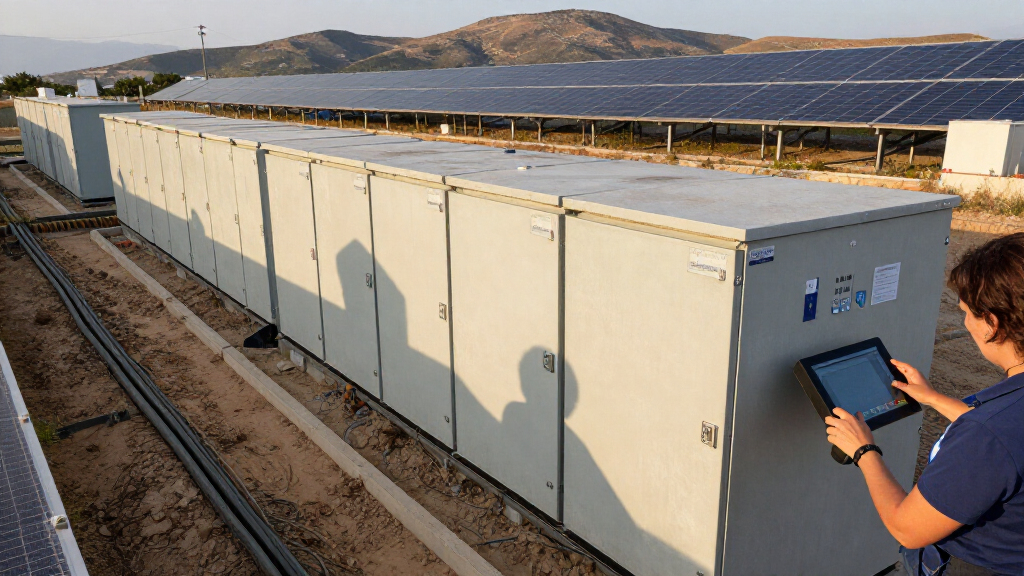
Metlen and Karatzis inaugurated a 330 MW / 790 MWh standalone battery storage facility in Larissa, Greece, on October 14. Energy Storage reported that the system uses Jinko ESS SunTera G2 equipment; the project’s grid connection limits maximum power injection to 330 MW.
Metlen and Karatzis Group inaugurated a 330 MW / 790 MWh battery energy storage system in Larissa, Thessaly, on October 14, opening a major standalone storage project intended to support Greece’s electricity system. The partners describe it as the country’s largest standalone battery project; Energy Storage reported that it uses Jinko ESS SunTera G2 equipment, although the inauguration announcements did not name the supplier.
The project was developed through a joint investment vehicle in which Karatzis Group owns 51% and Metlen owns 49%. Metlen said it was responsible for the facility’s construction, operation and maintenance, drawing on experience from storage projects in other markets. The inauguration took place in the presence of Prime Minister Kyriakos Mitsotakis, Environment and Energy Minister Stavros Papastavrou, and local and national officials.
The stated project rating is 330 MW of power and 790 MWh of storage capacity, equivalent to roughly two and a half hours at the full 330 MW output rating if operated continuously at that level. The supplier detail comes from Energy Storage, which said it had confirmation the project features Jinko ESS SunTera G2 batteries. Jinko had previously published a supply figure of 395 MW / 790 MWh, which differs from the 330 MW figure used for the inaugurated facility.
According to the report, the difference reflects the project’s grid connection agreement with Greece’s transmission system operator, ADMIE/IPTO. That agreement caps maximum active power injection at 330 MW at the local high-voltage substation. The report says the installed system is sized at 395 MW, creating an approximately 1.2-to-1 ratio between the DC-side rating and the grid-connected AC output. The project’s usable operating profile and any other limits were not detailed in the supplied report.
A Large Battery Joins Greece’s Grid
The facility adds substantial battery capacity to Greece’s power system, where storage can shift electricity across time and provide grid services. Its 790 MWh capacity is the amount of energy the system is rated to store, while the 330 MW connection cap limits the maximum active power it can inject at the Larissa substation. Those figures describe different aspects of the project and should not be treated as interchangeable.
At the inauguration, Mitsotakis said energy storage would be important to enabling greater use of renewable energy. The government’s stated ambition, as reported by Energy Storage, is to have 3–4 GW of storage projects operating or under development by 2028. The Larissa project is one contribution to that goal, but the announcement does not establish how much renewable generation it will absorb or what effect it will have on electricity prices, reliability or emissions.
The project also shows how a battery’s equipment rating can differ from the power it is authorized to deliver through a grid connection. That distinction matters when comparing project announcements: the 395 MW equipment figure cited in Jinko’s publication is not the same as the facility’s reported 330 MW maximum grid injection.
large capacity lithium battery for home
As an affiliate, we earn on qualifying purchases.
As an affiliate, we earn on qualifying purchases.
Ownership, Grid Limits and Supplier
The Larissa installation is presented by its partners as a standalone battery project, rather than a battery paired with a specific solar or wind plant. Metlen and Karatzis are the project’s investment partners, with Metlen handling construction and the facility’s ongoing operation and maintenance, according to the company’s statement.
The supplier information has a different sourcing status from the inauguration and ownership details. Jinko ESS was not named in the partners’ announcements, but Energy Storage said it confirmed the project uses Jinko’s SunTera G2 system. Jinko previously published a 395 MW / 790 MWh supply figure. The report links the 330 MW project rating to the grid connection limit, not to a change in the 790 MWh storage capacity.
The inauguration also sits within Metlen’s wider energy storage activity. Energy Storage reported that in August 2026 Metlen signed a balance-of-plant contract for the 129 MW / 362 MWh Penn BESS in England. The outlet also reported that Metlen agreed to sell the Tamarico II hybrid solar-and-battery project in Chile, comprising 165 MW of solar power and 725 MWh of storage, with potential expansion to 925 MWh. These separate projects provide corporate context but do not change the ownership or operating details of the Greek facility.
““I am particularly proud that today, here in Thessaly, we are inaugurating Greece’s largest standalone energy storage facility in Eastern Europe and one of the largest across the European Union.””
— Evangelos Mytilineos, Metlen executive chairman
Operating Details Still Pending
The supplied report does not provide a commissioning schedule, commercial operation date, battery duration under actual operating conditions, expected annual throughput or revenue arrangements. It also does not specify whether the system will provide services beyond electricity injection, or how frequently it is expected to charge and discharge.
The project partners’ announcements, as summarized in the report, did not identify Jinko ESS as the supplier. That attribution rests on Energy Storage’s reported confirmation and Jinko’s earlier publication of a matching 790 MWh supply figure; the provided material does not include a direct supplier statement naming this particular facility. The precise explanation for the 395 MW versus 330 MW figures is reported as the grid connection cap and associated overbuild, but the underlying connection agreement was not included.
The report calls the project Greece’s largest standalone battery facility based on the partners’ description. It does not provide a comparison of all Greek storage projects or an independent ranking. No detailed forecast of the battery’s contribution to renewable integration, grid reliability or consumer costs was supplied.
Watch for Operating and Grid Data
The next useful milestone will be confirmation of when the Larissa battery enters commercial operation and begins delivering power under its 330 MW grid injection limit. Operational disclosures could clarify its charging sources, dispatch pattern, services to the grid and actual performance against its 790 MWh capacity.
Further information from Metlen, Karatzis, Jinko ESS or ADMIE/IPTO could also clarify the project’s equipment configuration and the relationship between its reported 395 MW system rating and the 330 MW connection agreement. For the wider market, progress toward the government’s 3–4 GW storage ambition by 2028 will depend on additional projects reaching construction and operation; the supplied report does not give a timetable for those projects.
Key Questions
Where is the battery project?
It is in Larissa, Thessaly, Greece, and was inaugurated on October 14, 2026.
How large is the facility?
The project is reported as 330 MW / 790 MWh. Its grid agreement caps maximum active power injection at 330 MW at the local high-voltage substation.
Who owns and operates the project?
The joint investment vehicle is owned 51% by Karatzis Group and 49% by Metlen. Metlen said it handled construction and is responsible for operation and maintenance.
Did the partners confirm Jinko ESS supplied the batteries?
The inauguration announcements did not name the supplier. Energy Storage reported that it confirmed the system uses Jinko ESS SunTera G2 equipment, while Jinko had previously published a 395 MW / 790 MWh supply figure.
Why are 395 MW and 330 MW both reported?
Energy Storage attributed the difference to the project’s grid connection agreement, which caps output at 330 MW. The report says the larger installed rating reflects an approximately 1.2-to-1 DC-to-AC ratio.
Source: rss
Halloween Picks
halloween
As an affiliate, we earn on qualifying purchases.