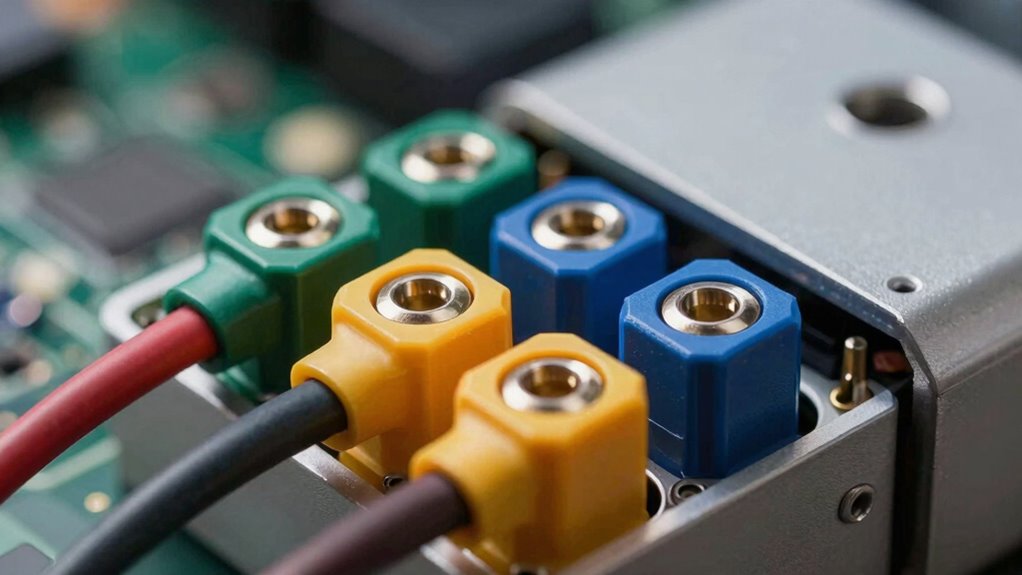

Quality cable crimping’s essential for your battery system’s reliability and performance. When you guarantee precise, strong connections, you minimize resistance and reduce the risk of failures. Different materials, like copper and aluminum, need specific crimping techniques to maintain integrity over time. Using the right tools can make all the difference, enhancing consistency and efficiency. Each meticulous connection boosts your system’s longevity. Stick around to discover more about the impact of quality crimping on performance and safety.

Get backup power and energy gear delivered free with Prime
- Fast, free delivery on millions of items
- Prime Video, Amazon Music and more included
- Member-only deals all year
Key Takeaways
- Quality crimping minimizes resistance, ensuring optimal performance and safety in battery systems.
- Different materials, like copper and aluminum, require specific crimping techniques for reliable connections.
- High-quality crimping tools provide consistent pressure, enhancing the reliability of connections.
- Proper insulation maintenance during crimping prevents short circuits and contributes to overall system safety.
- Effective crimping practices lead to improved system efficiency and longevity, reinforcing battery performance.
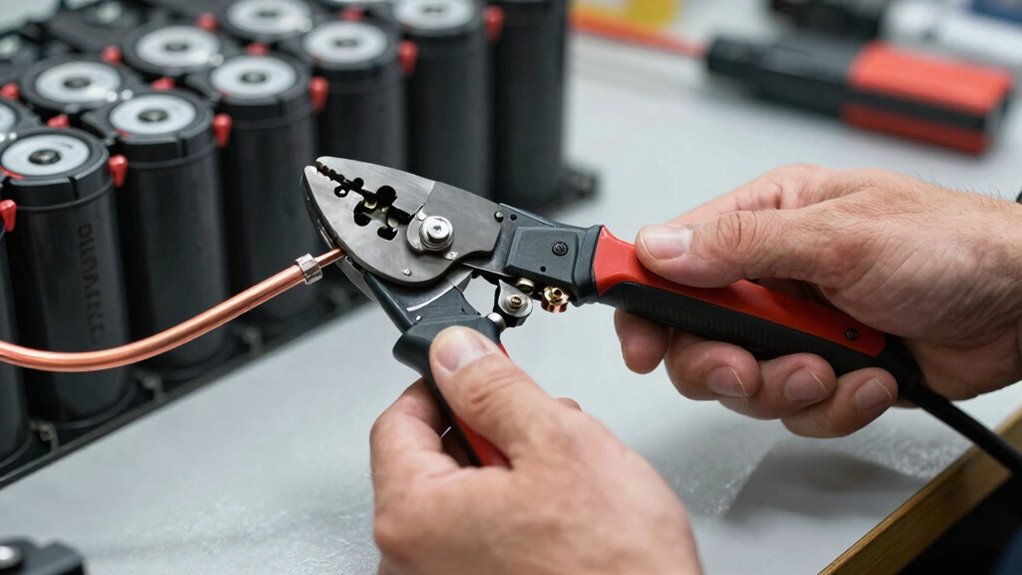
When you crimp cables in battery systems, precision is key. The connection you create can greatly affect the performance and safety of the entire system. Using effective crimping techniques guarantees that the cables are firmly attached to connectors, minimizing resistance and preventing potential failures. It’s not just about squeezing two pieces of metal together; it’s about achieving a reliable, long-lasting bond that can handle the demands of battery operation.
Understanding the various cable materials you’re working with is vital. Different materials respond differently to crimping. For instance, copper and aluminum are common choices, each requiring specific techniques to guarantee a solid connection. Copper, known for its excellent conductivity, often needs a tighter crimping technique to ensure no air gaps exist. On the other hand, aluminum, while lighter and more cost-effective, can be more prone to corrosion, requiring additional attention during the crimping process to maintain integrity over time.
Using the right crimping tools is also essential. A quality crimper can make all the difference. It’s not enough to rely on your hands; a good tool guarantees uniform pressure across the connection, leading to a more consistent and reliable crimp. If you’re using a manual crimper, make sure you’re applying enough force to get a proper seal without damaging the cable materials. Electric or hydraulic crimpers can offer a more uniform crimping pressure, which can be especially beneficial in high-volume applications.
You should also pay attention to the insulation of the cables. While the crimping process focuses on the metal connection, the insulation plays an important role in protecting against environmental factors. Make sure your crimp doesn’t damage the insulation, as this can lead to short circuits or other failures down the line.
In the end, the hidden value of quality cable crimping in battery systems is evident. A well-executed crimp can enhance the efficiency of the system while guaranteeing safety and longevity. By applying the right crimping techniques and understanding the cable materials you’re working with, you create a robust foundation for your battery systems. Each connection you make is a step toward reliability, and that’s what keeps your systems running smoothly. Take pride in your crimping process, because quality workmanship leads to quality performance.
As an affiliate, we earn on qualifying purchases.
Frequently Asked Questions
What Tools Are Essential for Quality Cable Crimping?
For quality cable crimping, you’ll need a reliable crimping tool, wire strippers, and a set of appropriate connectors. Start by selecting tools based on your specific crimping techniques and connector types. A good crimping tool guarantees a secure connection, while wire strippers help you prepare the cable properly. Always check for compatibility between your tools and materials to achieve the best results. Invest in quality tools, and you won’t regret it!
How Can I Identify a Poorly Crimped Connection?
To identify a poorly crimped connection, start with a visual inspection. Look for signs of damage like frayed wires or uneven crimping. Next, perform electrical testing; check for resistance and continuity. If the connection shows high resistance or intermittent connectivity, it’s likely a bad crimp. Addressing these issues early can prevent bigger problems down the line, so it’s essential to guarantee every crimp meets quality standards.
What Materials Are Best for Battery Cables?
You’d think all battery cables are created equal, right? Well, not quite. For the best performance, you should stick with copper conductors—they’re excellent for conductivity and durability. As for insulation types, choose either PVC or cross-linked polyethylene (XLPE) for their heat resistance and flexibility. These materials not only enhance your system’s efficiency but also guarantee longevity. So, don’t settle for anything less; quality cables make all the difference!
How Often Should Crimped Connections Be Inspected?
You should inspect crimped connections every six months, especially in high-use environments. Regular inspection helps you catch potential issues early. Follow inspection guidelines that emphasize checking for corrosion, loose connections, and any signs of wear. If you notice any problems, address them immediately to maintain peak performance. By staying on top of crimping frequency, you guarantee your battery system runs efficiently and safely, reducing the risk of unexpected failures.
Can Crimping Techniques Vary by Battery Type?
Yes, crimping techniques can vary by battery type. You should always follow specific crimping standards to guarantee battery compatibility. Different batteries, like lithium-ion or lead-acid, may require unique crimp sizes or materials for peak performance. By using the right technique, you can improve connection reliability and system efficiency. Regularly reviewing these standards keeps you informed about the best practices for your specific battery type, assuring long-lasting and safe connections.
Conclusion
In the world of battery systems, remember, “a stitch in time saves nine.” By investing in quality cable crimping, you’re not just ensuring reliable connections; you’re safeguarding the entire system’s performance and longevity. Cutting corners can cost more in the long run, leading to failures and downtime. So, prioritize those crimping techniques—your batteries (and your peace of mind) will thank you for it!
Halloween Picks
halloween
As an affiliate, we earn on qualifying purchases.

![The GNU Emacs Architecture: Unlocking The Core [Pdf]](https://energylast.com/wp-content/uploads/2026/07/the-gnu-emacs-architecture-unlocking-the-core-pdf-featured-560x300.jpg)