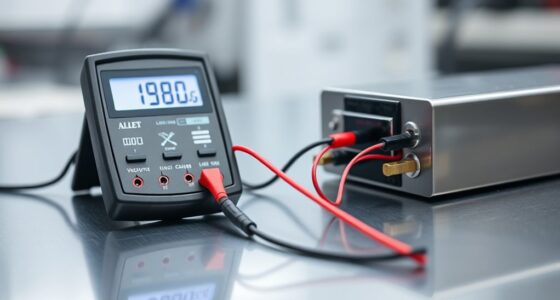
Voltage charts can be misleading because they rely solely on voltage readings to estimate your battery’s capacity. Factors like temperature, aging, and load cause the voltage to fluctuate, making it hard to know the true state of charge. LiFePO4 batteries have flat discharge curves, so voltage doesn’t accurately reflect remaining power. Continuing with this info will help you understand why voltage alone isn’t enough to gauge your battery’s health and range.
Key Takeaways
- Voltage readings are affected by temperature, aging, and load, making them unreliable indicators of true battery capacity.
- LiFePO4 batteries have flat discharge curves, causing voltage to remain constant across different charge levels.
- Aging and external conditions can cause voltage to misrepresent actual remaining capacity.
- Proper calibration is necessary to align voltage readings with real battery capacity.
- Relying solely on voltage charts can lead to inaccurate state of charge estimates and unexpected power loss.
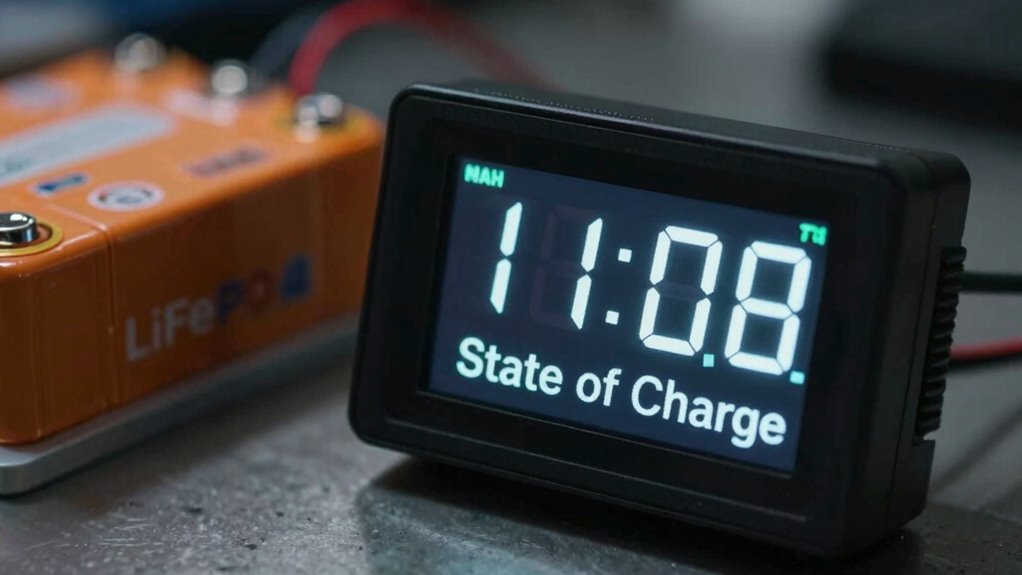
Many electric vehicle owners trust the displayed “state of charge” to tell them how much battery life remains, but the truth is often far from accurate. The reason lies in how the vehicle estimates remaining capacity, which relies heavily on voltage readings and calibration methods. If you’ve ever watched your battery gauge suddenly drop or stay high despite heavy use, you’ve experienced the limitations of voltage-based estimations. Voltage accuracy can fluctuate based on temperature, load conditions, and battery aging, making it an unreliable indicator of actual charge. This is especially true for LiFePO4 batteries, which have a relatively flat discharge curve, meaning their voltage doesn’t change dramatically until they’re nearly depleted. As a result, voltage charts can mislead you into thinking your battery is healthier or more depleted than it truly is.
To get a more precise understanding of your battery’s capacity, you need to perform proper battery calibration. Calibration involves fully charging your battery to 100% and then discharging it to a safe cutoff point, all while recording the voltage and capacity data. This process helps the vehicle’s management system learn the true relationship between voltage and remaining capacity for your specific battery. Without calibration, the system might rely on generic voltage curves that don’t account for your battery’s unique wear or temperature conditions. Over time, batteries lose some of their precise voltage-to-capacity correlation, causing the state of charge indicator to become increasingly inaccurate. Regular calibration guarantees that your vehicle’s readings stay aligned with the actual energy stored, preventing you from being caught off guard with unexpectedly low range. Additionally, integrating proper calibration practices into your maintenance routine can help extend the effective lifespan of your battery and improve overall reliability.
Another essential factor is understanding the difference between voltage-based estimates and real capacity. While voltage provides a quick snapshot, it doesn’t tell the full story of how much energy remains. A high voltage reading might suggest a full battery, but if your battery is aging or cold, that voltage might not reflect the true state of charge. Conversely, a low voltage might appear to indicate a near-empty battery, even if there’s still usable energy left. This discrepancy underscores the importance of proper battery calibration and recognizing that voltage accuracy alone isn’t sufficient. To avoid misleading information, consider using tools or procedures recommended by your battery manufacturer, and don’t rely solely on the gauge. Instead, combine voltage readings with calibration data and real-world driving patterns to better estimate your battery’s health and remaining range.
Frequently Asked Questions
How Can I Accurately Monitor My Lifepo4 Battery’s Charge Level?
To accurately monitor your LiFePO4 battery’s charge level, avoid relying solely on voltage charts, as they can be misleading due to voltage stability in this battery chemistry. Instead, use a high-quality battery management system (BMS) with a built-in state of charge indicator. Regularly check the BMS readings, and consider integrating a dedicated Coulomb counter for precise, real-time monitoring of your battery’s actual charge, ensuring reliable performance.
Do Temperature Changes Affect Voltage-Based State of Charge Readings?
Temperature effects do impact voltage-based state of charge readings in your LiFePO4 battery. When the temperature drops, voltage stability decreases, causing the voltage to read lower than the actual charge level. Conversely, high temperatures can temporarily boost voltage, misleading you about the true charge. Always account for temperature changes, and consider using a temperature-compensated monitor for more accurate readings, especially in extreme conditions.
Are There Better Methods Than Voltage Charts for Estimating Battery Capacity?
Think of the Smart Battery as a vigilant guardian, constantly monitoring and adjusting for Voltage Deviation. Unlike simple voltage charts, it provides more accurate state of charge estimates by analyzing real-time data and internal resistance. This tech-savvy approach takes the guesswork out of capacity estimation, giving you a clearer picture of your battery’s health. So, yes, investing in a Smart Battery offers a smarter way to gauge your power’s true strength.
How Often Should I Calibrate My Lifepo4 Battery for Accurate Readings?
You should calibrate your LiFePO4 battery every 3 to 6 months to maintain voltage accuracy. Regular battery calibration ensures that your voltage readings stay reliable, helping you better estimate capacity and prevent unexpected shutdowns. Keep in mind, consistent calibration accounts for aging and usage, so don’t skip it. By doing this, you’ll improve your understanding of your battery’s true state of charge, maximizing its lifespan and performance.
What Are the Risks of Relying Solely on Voltage Charts for Battery Management?
Relying solely on voltage charts can mislead your battery management because voltage accuracy varies with temperature and load. If you don’t regularly check calibration frequency, your readings may be off, causing you to overcharge or discharge improperly. This risks reducing your battery’s lifespan or damaging it. To avoid this, combine voltage charts with periodic calibration to ensure precise state of charge readings and safer, more efficient battery use.
Conclusion
Don’t rely solely on voltage charts to gauge your LiFePO4 battery’s state of charge. Studies show these charts can be off by up to 10%, risking over-discharge or unnecessary recharging. Instead, consider using a proper state-of-charge meter for accuracy. Remember, accurate monitoring extends your battery’s lifespan and performance. Stay informed, question simple voltage readings, and you’ll get the most out of your LiFePO4 investment. Proper care truly makes all the difference.