Your Level 2 EV charging speed mainly depends on your electrical circuit’s capacity and wiring setup. If your circuit provides a higher amperage—say 40 or 50 amps—you’ll charge faster because more power flows to your vehicle. Proper wiring and a dedicated, upgraded electrical panel ensure safety and ideal performance. To maximize charging speed and keep safe, it’s important your setup meets all electrical standards. Keep exploring to find out how these details can make a real difference.
Key Takeaways
- Circuit capacity (amperage) determines the maximum charging speed; higher amps enable faster charging.
- Proper wiring gauge and grounding are essential to safely handle high current loads.
- Circuit breaker ratings must match the charger’s requirements to prevent trips and overloads.
- Electrical system upgrades may be necessary for existing panels to support Level 2 charging speeds.
- Correct placement and professional installation ensure optimal power flow and consistent charging performance.

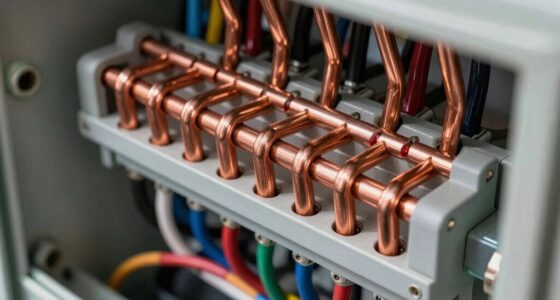
Have you ever wondered how electric vehicle owners manage to charge their cars quickly and efficiently? The secret often lies in the setup of the charging station itself, particularly how it’s positioned and the electrical circuit requirements it meets. When it comes to Level 2 charging, these factors play a pivotal role in determining how fast your vehicle gets back on the road. Proper charging station placement isn’t just about convenience; it’s about maximizing power flow and ensuring safety. You want to install your charger where it’s accessible, close to your electrical panel, and away from potential hazards. This placement minimizes the length of wiring needed, reducing voltage drops that could slow down charging or cause electrical issues. A well-thought-out location also makes daily charging easier, encouraging consistent use, which is essential for maintaining your EV’s battery health. Additionally, understanding the contrast ratio of your electrical setup can help optimize performance and safety. Beyond placement, understanding electrical circuit requirements is fundamental. Level 2 chargers typically operate at 240 volts, similar to a home dryer outlet, but they draw considerably more current—often between 30 and 80 amps. This means your electrical system must be capable of handling this load without tripping circuit breakers or causing overloads. If your current wiring isn’t sufficient, you might need to upgrade your electrical panel or add dedicated circuits for the charger. This guarantees your car charges at ideal speeds without risking damage to your home’s electrical infrastructure. It’s important to work with a qualified electrician who can assess your existing setup and make the necessary adjustments, whether that’s installing new circuits or upgrading your panel. In addition, the circuit’s wiring needs to meet specific standards for safety and efficiency. Using the right gauge wire is critical, as undersized wiring can lead to overheating and potential fire hazards. Proper grounding and adherence to local electrical codes aren’t optional—they’re essential for safe operation. When your circuit requirements are properly addressed, your Level 2 charger can deliver faster charging times reliably. This not only saves you time but also helps extend your EV’s battery lifespan by avoiding improper charging conditions.
Frequently Asked Questions
Can Level 2 Chargers Charge Multiple Vehicles Simultaneously?
Yes, level 2 chargers can charge multiple vehicles simultaneously if they have enough charger capacity and power sharing features. When multiple cars are connected, the charger distributes power based on its design, ensuring each vehicle gets an appropriate charge rate. You should verify the charger’s capacity and whether it supports power sharing to guarantee efficient charging for all connected vehicles.
What Maintenance Is Required for Level 2 EV Chargers?
You need to regularly inspect your charger for wear, corrosion, or damage to guarantee peak performance. Keep the charger compatible with your vehicle’s charging port and verify the power output matches manufacturer recommendations. Clean connectors and vents to prevent overheating and ensure safe operation. Additionally, schedule professional inspections periodically to check electrical connections and guarantee everything functions correctly, so your charger remains reliable and efficient for all your charging needs.
Are There Different Types of Level 2 Chargers?
Yes, there are different types of Level 2 chargers. You need to take into account charger compatibility with your vehicle and the power output, which affects charging speed. Some chargers are designed for residential use, offering lower power output, while others are commercial-grade with higher output for faster charging. Choosing the right charger depends on your vehicle’s needs and your electrical system capabilities, ensuring safe and efficient charging.
How Does Ambient Temperature Affect Charging Speed?
Ambient temperature impacts your charging speed through thermal effects, where extreme heat or cold can slow down the process. When it’s too cold, your charger may struggle with temperature regulation, reducing efficiency. Conversely, excessive heat can cause overheating, prompting safety mechanisms to limit power. Maintaining moderate temperatures helps guarantee consistent charging speeds by optimizing thermal effects, so your EV charges efficiently regardless of weather conditions.
Is Professional Installation Necessary for Level 2 Chargers?
Think of installing a Level 2 charger like building a sturdy bridge—you need expert help. Yes, professional installation is necessary because it guarantees the installation requirements are met and safety considerations are prioritized. A licensed electrician assesses your electrical system, prevents hazards, and guarantees proper setup. Skipping this step could lead to safety risks or damage, so always rely on a professional to keep your charging safe and efficient.
Conclusion
Understanding the electrical details behind Level 2 EV charging reveals why some chargers fill your battery faster than others. It’s not just about wattage; voltage and current play vital roles in determining speed. When you know how these elements work together, you can choose the right charger for your needs. So, next time you plug in, remember: the right electrical setup makes all the difference—faster charging isn’t just a myth, it’s science in action.