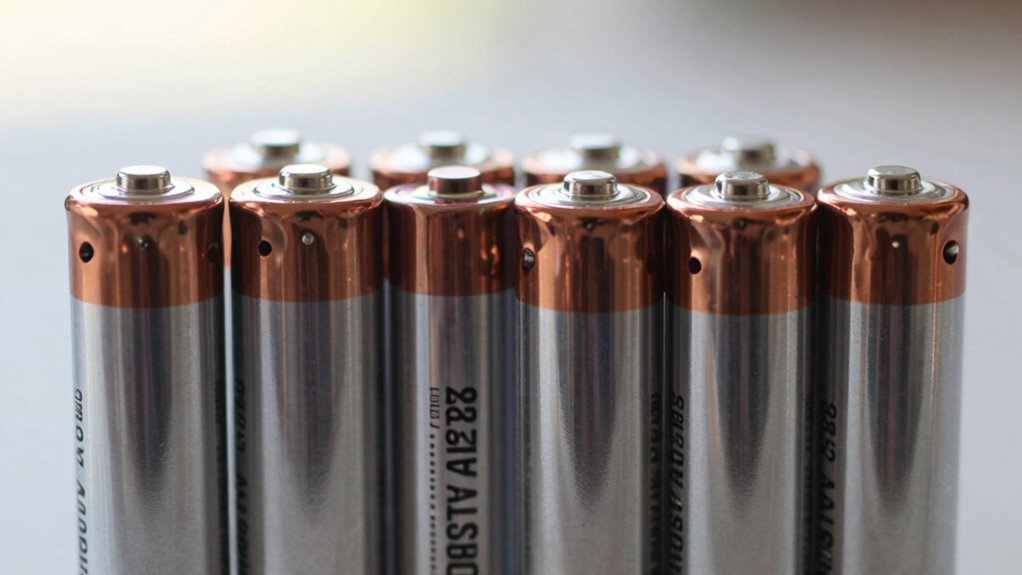

When choosing between series or parallel batteries, consider your power needs: series increases voltage for high-demand devices, while parallel boosts capacity for longer runtimes. Connecting in series stacks voltages but risks affecting all batteries if one fails, whereas parallel keeps voltage stable and adds redundancy. To avoid costly mistakes, evaluate your system’s voltage and capacity requirements carefully. Keep exploring, and you’ll discover how to make the best choice for your setup.

Get backup power and energy gear delivered free — and shop member deals
- Fast, free delivery on millions of items
- Access to Prime Big Deal Days deals on October 6–7
- Prime Video, Amazon Music and more included
Key Takeaways
- Use series wiring when higher voltage is needed; ensure batteries are of equal voltage and health.
- Choose parallel wiring for increased capacity and longer runtime; batteries should have similar capacity and age.
- Avoid mixing series and parallel configurations without proper planning to prevent voltage and current issues.
- Regularly monitor and maintain batteries to prevent uneven wear, especially in parallel setups.
- Select series for high-voltage applications; opt for parallel for extended runtime and system redundancy.
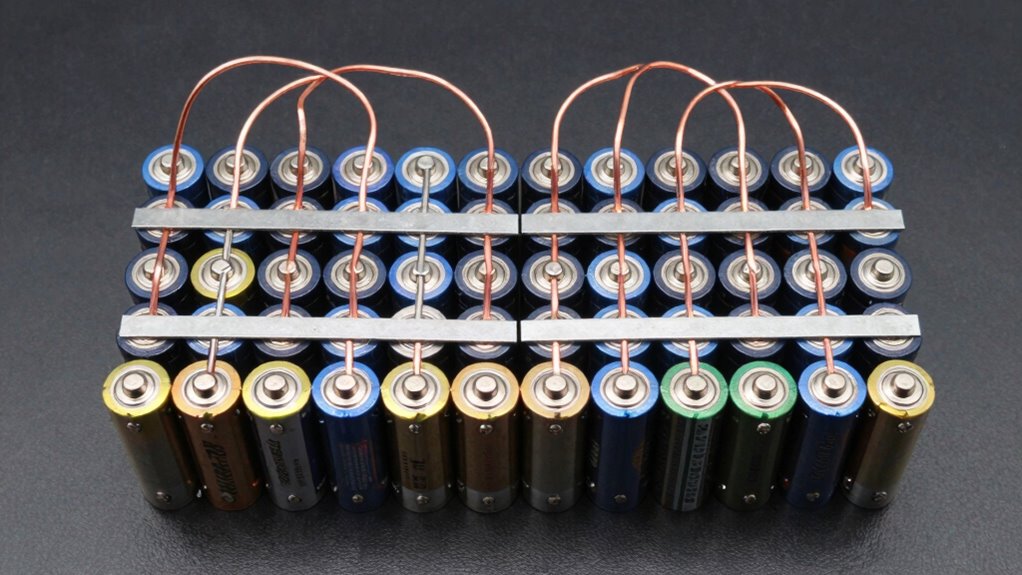
When choosing how to connect batteries, understanding the differences between parallel and series configurations is vital. Your decision impacts not only how much power your system can deliver but also how long your batteries last and how well they regulate voltage. If you’re aiming for longevity and stable performance, knowing what each setup offers is indispensable. Proper ventilation and maintenance can also influence battery health and safety over time. In a series configuration, you connect the positive terminal of one battery to the negative terminal of another. This setup increases the total voltage while keeping the capacity (amp-hours) the same as a single battery. For example, two 12V batteries wired in series will provide 24V. This higher voltage can be beneficial for powering equipment that requires more power without needing larger batteries. However, one downside is that if one battery begins to fail or degrade, it can affect the entire string’s performance, potentially reducing your overall battery lifespan. Voltage regulation in series setups can be trickier; as the voltage increases, you need to guarantee your system can handle the higher voltage levels without risking damage or instability.
On the other hand, connecting batteries in parallel involves linking all the positive terminals together and all the negative terminals together. This configuration keeps the voltage the same as one battery but increases capacity. So, two 12V batteries in parallel still deliver 12V but double the amp-hours, extending how long your system can run before needing a recharge. Parallel setups are generally more forgiving when it comes to maintaining battery health; if one battery starts to weaken, the others can help compensate, which can lead to a longer, more reliable battery lifespan overall. Additionally, voltage regulation is often simpler in parallel arrangements because the voltage remains consistent, making it easier to stabilize and control.
Your choice depends on your specific needs. If you require higher voltage for your device, series is the way to go, but keep in mind the importance of monitoring each battery’s health to maximize lifespan and guarantee stable voltage regulation. If you need longer runtime and easier maintenance, parallel wiring offers a safer, more flexible option, helping you avoid costly mistakes down the line. Understanding these differences allows you to design a system that’s both efficient and durable, saving you money and hassle in the long run.
12V deep cycle batteries for solar system
As an affiliate, we earn on qualifying purchases.
As an affiliate, we earn on qualifying purchases.
Frequently Asked Questions
How Do Temperature Variations Affect Battery Configurations?
Temperature variations can considerably impact your battery configurations by causing thermal expansion, which affects the size and internal pressure of the cells. This can lead to uneven performance or damage if not managed properly. To prevent this, you should use temperature compensation, adjusting charging and discharging processes based on the ambient temperature. This helps maintain ideal performance and prolongs your batteries’ lifespan, regardless of whether they’re wired in series or parallel.
Can Different Battery Types Be Mixed in Series or Parallel?
You shouldn’t mix different battery types in series or parallel because it can cause serious issues. Battery compatibility is vital, and mismatched batteries often have different voltage levels, making voltage matching impossible. When you connect incompatible batteries, it can lead to uneven charging, reduced lifespan, or even safety hazards. Always use the same battery type and guarantee they have similar voltage ratings to keep your system safe and functioning efficiently.
What Safety Precautions Are Necessary for Large Battery Banks?
You must follow strict safety protocols when handling large battery banks. Always wear protective gear like gloves and goggles, guarantee proper ventilation, and keep the area dry. Regular battery maintenance is essential to prevent leaks, corrosion, or overheating. Before working on the batteries, disconnect power and use insulated tools. Keep fire extinguishers nearby, and never short-circuit or overcharge batteries. These precautions help protect you and extend your battery bank’s lifespan.
How Does Aging Impact Series Versus Parallel Batteries?
Aging affects series and parallel batteries differently. In series setups, aging effects cause voltage imbalance, reducing overall battery lifespan and risking damage to remaining cells. In parallel configurations, individual cell degradation can lead to uneven charging and discharging, shortening battery life. You should regularly monitor cell health in both setups, as aging impacts their performance and lifespan. Proper maintenance helps mitigate aging effects, ensuring your battery bank stays reliable longer.
Are There Specific Applications Better Suited for Each Configuration?
Imagine your battery setup as a powerful river flowing smoothly—each application needs the right course. For high voltage needs like solar inverters, series configurations are ideal, following proper installation guidelines. Parallel setups suit applications requiring increased capacity, like backup power banks. Understanding battery chemistry helps you choose wisely, ensuring safety and efficiency. You’ll prevent costly mistakes by matching your battery configuration to your specific application’s demands.
Conclusion
Choosing between parallel and series batteries is like steering a river’s twists and turns—you need the right map. When you understand your power needs, you steer clear of costly whirlpools and dead ends. Remember, parallel keeps your voltage steady while boosting capacity, like filling a reservoir, whereas series raises voltage, like climbing a ladder. With this decision tree as your compass, you’ll sail smoothly, avoiding costly storms and reaching your energy destination with confidence.
Fall Picks
fall essentials
As an affiliate, we earn on qualifying purchases.