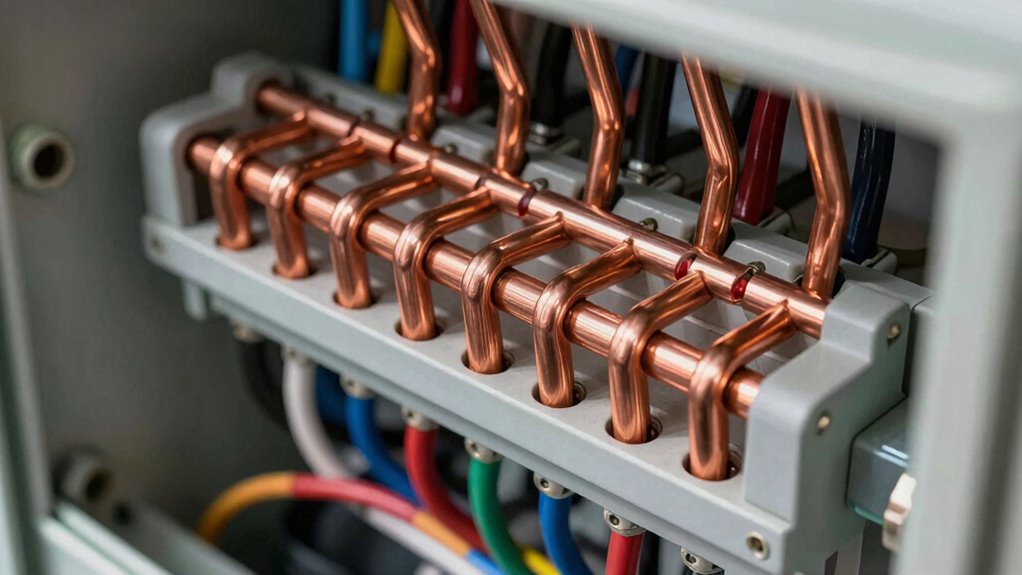

Installing a busbar can be a simple upgrade that transforms a messy, cluttered electrical setup into a neat, efficient system. Busbars help organize connections by consolidating multiple circuits into a single, centralized hub, which improves safety and makes troubleshooting easier. They also distribute power reliably and reduce wiring chaos. If you want to learn how this small addition can make a big difference in your install, there’s more to discover below.
Key Takeaways
- Installing busbars organizes multiple electrical connections into a single, neat, and accessible component.
- Upgrading to busbars simplifies wiring, reduces clutter, and enhances overall system reliability.
- Proper grounding of busbars protects equipment and personnel from electrical faults and stray voltages.
- Regular inspection and maintenance ensure secure connections and prevent corrosion or safety issues.
- Using busbars can streamline troubleshooting and future upgrades, making electrical systems safer and more efficient.
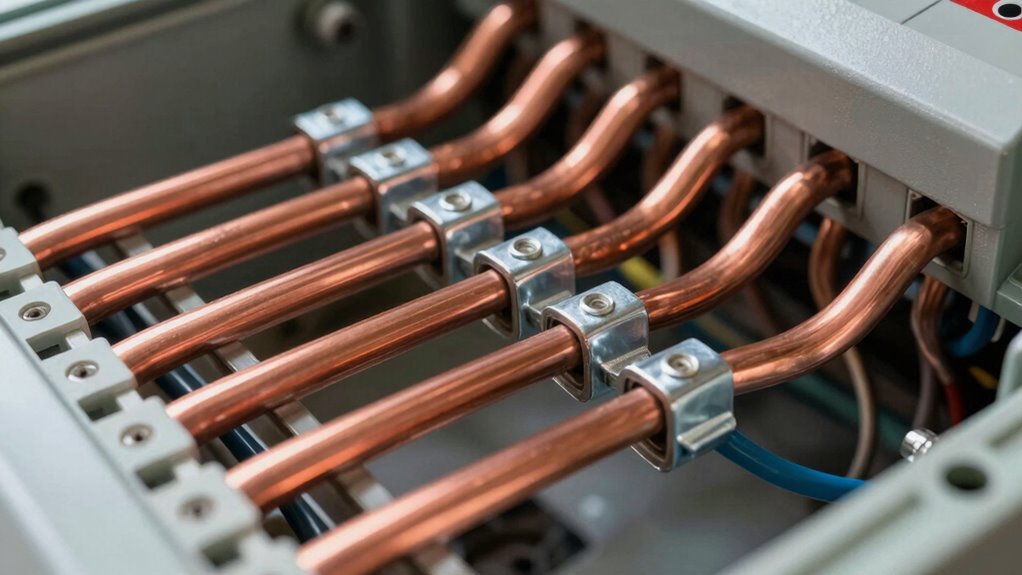
Busbars are indispensable components in electrical systems that distribute power efficiently and reliably. They act as central hubs, connecting multiple circuits and ensuring smooth power flow within panels or switchgear. When you upgrade to busbars, you’re not just improving capacity—you’re also creating a cleaner, more organized setup that simplifies troubleshooting and maintenance. But before you get started, it’s essential to understand grounding techniques and safety precautions to prevent accidents and ensure proper operation.
Grounding techniques are critical when installing or upgrading busbars. Proper grounding helps protect equipment and personnel from electrical faults. You should connect the busbar to a solid grounding system, using the recommended grounding conductors and ensuring tight, corrosion-free connections. This reduces the risk of stray voltages or electrical shocks. Additionally, ensure that the busbar itself is properly grounded to the enclosure or panel, providing a safe path for fault currents. Follow local electrical codes and manufacturer instructions to verify that your grounding techniques are compliant, and double-check all connections before energizing the system. Proper grounding is a fundamental safety measure to ensure reliable operation and personal safety.
Proper grounding of busbars ensures safety and prevents electrical faults.
Safety precautions are non-negotiable when working with busbars. Always turn off power and lock out/tag out the circuit to prevent accidental energization. Wear appropriate personal protective equipment, such as insulated gloves, safety glasses, and flame-resistant clothing, especially when handling large or high-current busbars. Use insulated tools and confirm that the work area is dry and free of conductive debris. When installing or making adjustments, keep a safe distance from energized components, and never bypass safety devices or grounding. If you’re uncertain about any step, consult a qualified electrician. Remember, rushing or neglecting safety measures can lead to serious injuries or equipment damage. Regular maintenance and inspection are also crucial for ongoing safety and optimal performance of busbar systems.
As an affiliate, we earn on qualifying purchases.
Frequently Asked Questions
What Are the Main Safety Considerations When Installing Busbars?
When installing busbars, you should prioritize grounding requirements to prevent electrical shocks and guarantee safety. Always follow insulation standards to protect against accidental contacts and short circuits. Make sure connections are tight and secure, and verify all components are properly insulated. Additionally, double-check that the busbars are correctly rated for your system’s current and voltage, reducing risks of overloads or fires. Safety always comes first in electrical installations.
How Do Busbars Compare to Traditional Wiring Methods?
Think of busbars as the streamlined highway compared to traditional wiring’s tangled backroads. They simplify circuit complexity with a clean, organized design, reducing clutter and potential errors. Plus, their installation flexibility allows you to adapt easily to space constraints and system upgrades. Unlike traditional wiring, busbars offer a neater, more efficient solution, making your setup safer, more reliable, and easier to maintain.
What Are the Cost Implications of Upgrading to Busbars?
Upgrading to busbars can lead to significant cost savings over time by reducing installation complexity and minimizing wiring errors. While the initial investment might be higher, you’ll save on labor costs and maintenance because busbars streamline connections and improve reliability. Plus, they require less space and are easier to modify, making future upgrades more affordable. Overall, busbars can be a cost-effective choice for cleaner, more efficient electrical setups.
Can Busbars Be Customized for Specific Applications?
Yes, busbars can be customized for specific applications. You have a range of customization options, including size, shape, and material, to suit your unique needs. Manufacturers offer application-specific designs that optimize space, improve safety, and enhance performance. By tailoring busbars to your setup, you guarantee efficient power distribution and easier installation, making your system more reliable and easier to maintain.
How Long Do Busbars Typically Last in an Installation?
You might wonder how long your busbars will last. With proper material durability and minimal maintenance requirements, they typically serve well for 20 to 40 years. But beware—exposure to harsh conditions or corrosion can shorten this lifespan. Regular inspections help guarantee longevity, preventing unexpected failures. So, while they’re built to last, your busbars’ true endurance depends on their environment and your upkeep.
Conclusion
Think of busbars as the unsung heroes in your electrical setup—quietly organizing your power flow like a conductor guiding an orchestra. Upgrading to busbars is a small change with the power to transform a chaotic install into a well-orchestrated symphony. Don’t let messy wiring hold you back; a simple upgrade can turn chaos into clarity. Embrace this small change and watch your system run smoother than ever before.