To avoid costly electrical panel upgrades, you should implement smart load balancing for your EV chargers. Use advanced software that communicates with your energy source to control and distribute power efficiently, shifting charging to off-peak hours. Monitoring real-time demand helps prevent overloads, while controlling charging rates ensures your electrical system stays within safe limits. Keeping this balance in place can save you money and extend your system’s lifespan—if you continue exploring, you’ll find practical ways to optimize your setup.

Get backup power and energy gear delivered free with Prime
- Fast, free delivery on millions of items
- Prime Video, Amazon Music and more included
- Member-only deals all year
Key Takeaways
- Implement smart grid technology to dynamically adjust charging loads based on real-time demand.
- Use power management systems to monitor and control charging rates, preventing overloads.
- Prioritize off-peak charging times through scheduling to reduce peak load stress.
- Distribute power intelligently among multiple chargers to balance demand across the system.
- Set system parameters and alerts to proactively manage loads and extend electrical panel lifespan.
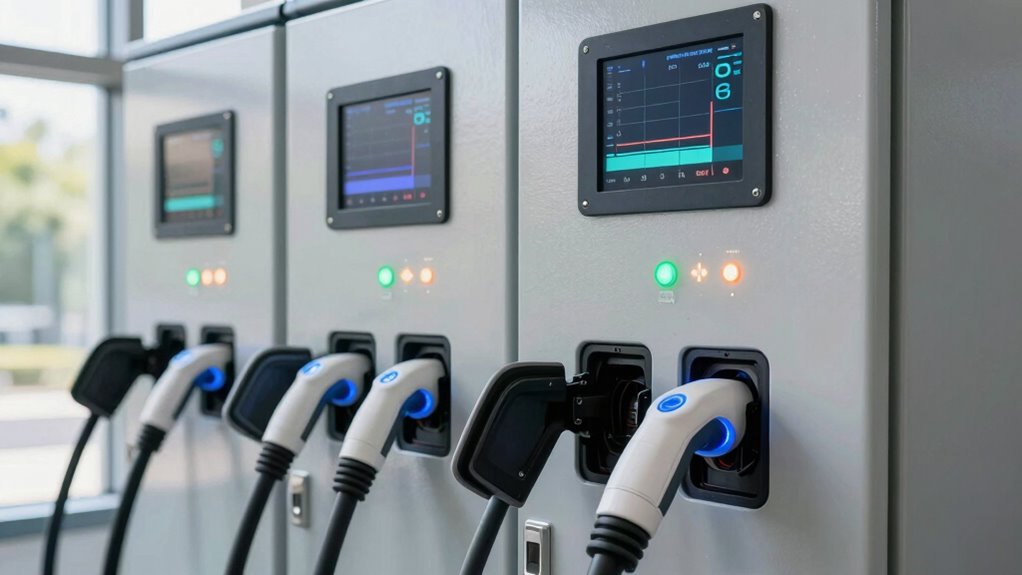
As electric vehicle (EV) adoption accelerates, managing the demand on charging infrastructure becomes increasingly essential. You need effective strategies to prevent overwhelming your electrical system, especially as more EVs hit the road. One key approach is leveraging a smart grid, which uses advanced communication and control technologies to optimize power distribution. Instead of relying solely on traditional electrical systems that can become overloaded, a smart grid dynamically adjusts energy flow, ensuring that charging loads are balanced across the network. This not only prevents the need for costly panel upgrades but also enhances the reliability of your entire electrical system. Power management, within this context, plays a critical role. It involves monitoring and controlling the flow of electricity to EV chargers in real-time, allowing for smarter decisions about when and how much to charge each vehicle. Additionally, understanding heat distribution in electrical components can help prevent overloads and prolong the lifespan of your system.
Implementing smart grid technology means integrating sophisticated software that communicates with your energy sources, storage, and charging stations. You can set parameters to prioritize certain loads or times of day, shifting charging sessions to off-peak hours. This reduces stress on your electrical panels and can greatly cut costs associated with capacity upgrades. Power management systems can automatically adjust charging rates based on current demand, ensuring that your electrical infrastructure isn’t pushed beyond its limits. For example, if your home or business has multiple EV chargers, the system can distribute power intelligently—delaying or throttling some charging sessions while allowing others to proceed—so all vehicles get charged without risking overload.
EV charger load management system
As an affiliate, we earn on qualifying purchases.
As an affiliate, we earn on qualifying purchases.
Frequently Asked Questions
Can Load Balancing Be Applied to Existing EV Charger Setups?
Yes, you can apply load balancing to your existing EV charger setup. Make sure your chargers are compatible with load management systems, which can often be integrated without extensive upgrades. This approach enhances system scalability by distributing power evenly, preventing overloads and avoiding costly panel upgrades. With proper charger compatibility and a flexible load balancing solution, you improve efficiency and can easily expand your charging network as needed.
What Are the Cost Differences Between Load Balancing and Panel Upgrades?
The cost comparison shows load balancing is generally much cheaper than panel upgrades. Load balancing involves installing smart systems that distribute power efficiently, costing a few hundred dollars to a thousand. In contrast, upgrade expenses for panels can reach several thousand dollars, including labor and permits. By choosing load balancing, you save money and avoid the hefty expenses and disruptions associated with panel upgrades.
How Does Load Balancing Impact Charging Speed and Efficiency?
Load balancing boosts your charging speed and efficiency by optimizing power distribution across multiple chargers. While it might seem like a slowdown, it actually guarantees consistent energy flow, preventing overloads and maximizing your electrical system’s capacity. Think of it as a smart traffic controller, directing energy where needed most. This approach improves charging performance and energy optimization, so your EV charges faster without risking panel strain or costly upgrades.
Are There Limitations to Load Balancing for Different Charger Types?
Yes, there are limitations to load balancing for different charger types. You need to take into account charger compatibility, as some chargers may not support advanced load management features. Additionally, system scalability can be affected; adding more chargers might require upgrades or adjustments to the load balancing system. To guarantee ideal performance, choose chargers that seamlessly integrate and support your system’s capacity, avoiding potential bottlenecks and maintaining efficient charging.
What Maintenance Is Required for Load Balancing Systems?
Think of your load balancing system like a vintage radio needing tuning. You should regularly check energy storage levels, guarantee software updates are installed, and clean any hardware components. Keep an eye on system alerts and perform routine diagnostics to spot issues early. Proper maintenance helps optimize performance, prevents downtime, and ensures your EV chargers stay balanced and efficient over time.
Conclusion
Think of your electrical panel as a busy highway. Without proper load balancing, traffic—your EV chargers—causes congestion, risking costly upgrades. But with smart planning, you become the traffic controller, guiding cars smoothly and efficiently. By balancing your load, you keep the flow steady, avoiding gridlock and unnecessary expenses. Remember, you’re the captain of this journey—navigate wisely to make certain your EV charging future stays seamless and upgrade-free.
Halloween Picks
halloween
As an affiliate, we earn on qualifying purchases.