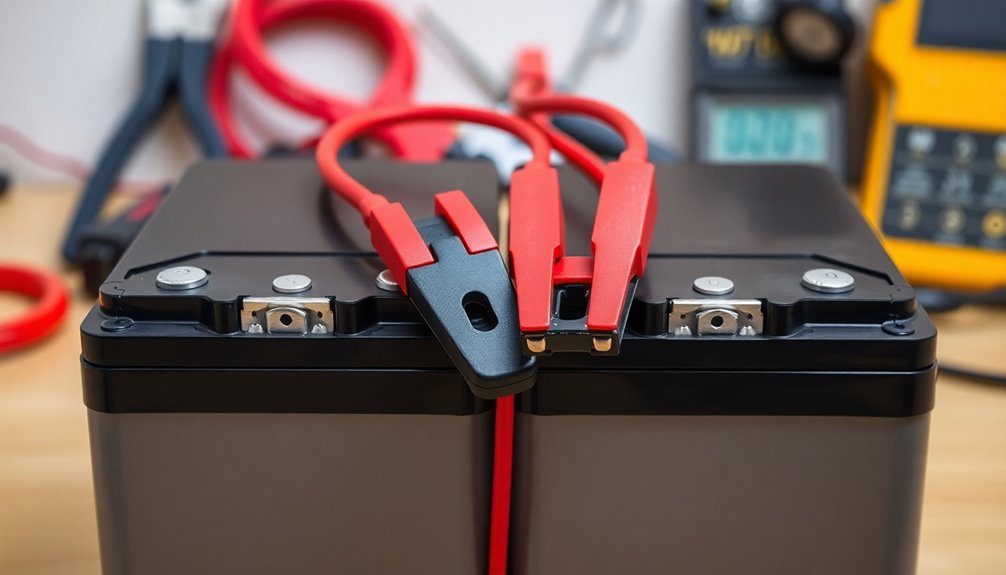
When discussing battery problems, focus on how your device acts rather than technical details. For example, say it “doesn’t hold a charge,” “turns off unexpectedly,” or “takes longer to recharge.” Mention if the battery drains quickly or if it needs frequent charging. Explaining your routine can also help, like “I leave it plugged in overnight” or “it drains faster now.” If you want to get better at explaining these issues, there’s more to learn ahead.

Get backup power and energy gear delivered free — and shop member deals
- Fast, free delivery on millions of items
- Access to Prime Big Deal Days deals on October 6–7
- Prime Video, Amazon Music and more included
Key Takeaways
- Use simple language to describe how the device behaves, like “turns off suddenly” or “doesn’t hold a charge.”
- Explain that batteries naturally get weaker over time, so they don’t last as long.
- Mention habits like leaving the device plugged in too long or draining the battery completely.
- Share personal experiences, such as “it takes longer to charge” or “battery drains quickly now.”
- Avoid technical terms; focus on how the device’s performance and battery life feel in everyday use.

Battery problems can be frustrating, but knowing how to discuss them effectively makes resolving issues easier. When talking about a battery’s condition, it’s helpful to focus on clear, straightforward language rather than technical jargon. For example, instead of saying, “My battery’s voltage is dropping,” you might say, “My device isn’t holding a charge like it used to.” This makes it easier for others to understand the problem without needing to interpret complex terms.
One common issue people face is a reduced battery lifespan. Over time, batteries naturally degrade, leading to shorter periods between charges. When discussing this, you could say, “My battery doesn’t last as long as it did when it was new,” or “It drains faster now, even after a full charge.” This direct language helps others grasp that the battery’s performance has declined, which might be due to age or usage patterns. Explaining your charging habits also plays a role here. If you tend to leave your device plugged in for long periods or frequently drain it completely, these habits can impact the battery’s health. You might mention, “I usually keep my phone plugged in overnight,” or “I often let the battery run completely before recharging.” Sharing this information helps identify if your charging routine is affecting the battery’s longevity.
My battery drains faster and doesn’t last as long, possibly due to my charging habits.
When discussing issues with someone else, avoid technical terms like “cycle count” or “voltage dips” unless they’re familiar with them. Instead, describe what you experience—say, “My phone turns off suddenly even though it says it has some battery left,” or “It takes longer than usual to charge fully.” This way, you’re providing relatable descriptions that make troubleshooting easier. It’s also useful to mention how your charging habits might influence the problem. For example, “I’ve noticed that charging it too often or leaving it plugged in for hours might be affecting how well it holds a charge.” This offers context that can open up solutions, like adjusting your charging routine. Recognizing battery degradation factors can further help in understanding the root causes of these issues.
Understanding battery degradation can help you better explain the issue and seek appropriate solutions. Being aware of battery health indicators can also give you insights into how your device is performing over time. In essence, talking about battery issues is about clarity. Focus on how the device behaves rather than technical specs, and explain your habits and experiences in simple terms. This approach makes it easier for others to understand what’s happening and suggest practical solutions. Whether you’re describing a declining battery lifespan or how your charging habits might be impacting performance, clear communication puts you on the right track to fixing the problem efficiently.
smartphone battery health monitor
As an affiliate, we earn on qualifying purchases.
As an affiliate, we earn on qualifying purchases.
Frequently Asked Questions
How Can I Tell if My Battery Needs Replacing?
You can tell your battery needs replacing if it drains quickly or your device shuts down unexpectedly, even when there’s charge. Try battery calibration by fully charging and then discharging it to see if performance improves. Poor charging habits, like using unapproved chargers, can harm your battery over time. If these steps don’t help, it’s likely time to replace your battery for reliable performance and to avoid further damage.
What Are Common Signs of a Failing Battery?
Imagine your car struggling to start on cold mornings—that’s a sign your battery’s near the end of its lifespan. You might notice dimming headlights or slow engine cranks, especially if your charging habits haven’t been consistent. A failing battery often shows these signs as it can’t hold a charge as well as it used to. Keep an eye on these clues to prevent unexpected breakdowns and extend your battery’s life.
Is It Safe to Use a Damaged Battery?
Using a damaged battery isn’t safe because it can leak, overheat, or even catch fire. You should stop using it immediately and handle it carefully. Instead of risking harm, consider battery recycling or safe disposal options provided by local centers. Proper disposal prevents environmental harm and potential hazards. Always follow safety guidelines, and never throw a damaged battery in the trash. Your safety and the environment depend on it.
How Long Should a Typical Battery Last?
A typical battery lasts about 3 to 5 years, but this can vary based on usage and maintenance. To extend its lifespan, follow simple maintenance tips like avoiding extreme temperatures, not letting it fully drain, and keeping terminals clean. Regularly checking your battery’s health helps prevent unexpected issues. If you notice problems early, you can often fix minor issues and prolong your battery’s overall lifespan.
Can Battery Problems Affect Device Performance?
Yes, battery problems can affect your device’s performance. When your battery’s lifespan is nearing its end or if power fluctuations occur, your device may slow down, shut off unexpectedly, or have trouble charging. These issues happen because the battery can’t supply consistent power. Keeping an eye on your battery health helps prevent performance hiccups, ensuring your device runs smoothly and efficiently for longer.
Conclusion
Talking about battery problems doesn’t have to be confusing or intimidating. When you use simple language, you help others understand what’s happening and find solutions faster. Don’t worry if you’re not a tech expert — just imagine explaining to a friend why your phone keeps dying or why your laptop won’t hold a charge. Clear, straightforward words make the issue easier to fix, so you can get back to what matters without feeling overwhelmed.
Evergreen bestsellers Picks
bestsellers
As an affiliate, we earn on qualifying purchases.