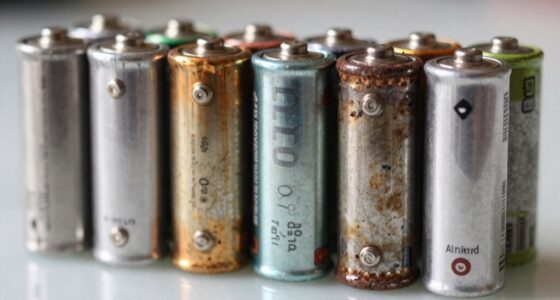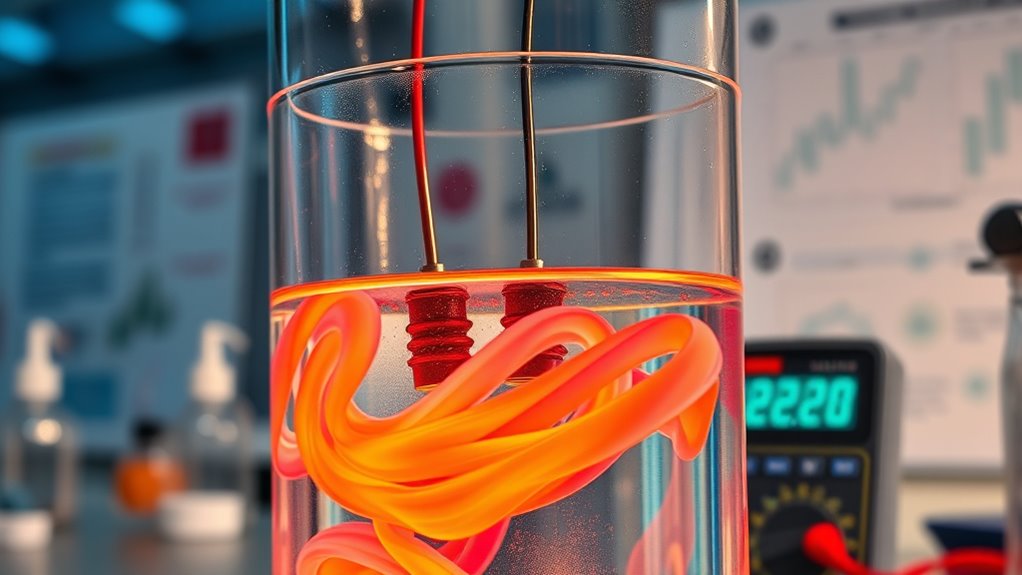

Batteries generate electricity through electrochemical cells by harnessing redox reactions where oxidation occurs at the anode and reduction at the cathode. Electrons flow from the anode to the cathode via an external circuit, creating an electric current that powers your devices. The voltage depends on the difference between electrode potentials. The materials used influence how efficiently and how much energy the battery can produce. Exploring these reactions offers insight into how batteries work and their performance.

Get backup power and energy gear delivered free with Prime
- Fast, free delivery on millions of items
- Prime Video, Amazon Music and more included
- Member-only deals all year
Key Takeaways
- Batteries convert chemical energy into electrical energy through redox reactions at their electrodes.
- Electrons flow from the anode (oxidation) to the cathode (reduction) via an external circuit, generating current.
- The cell’s voltage depends on the difference in electrode potentials of the materials involved.
- The choice of electrode and electrolyte materials influences the battery’s efficiency and energy output.
- The overall redox reactions produce a continuous flow of electrons, powering electronic devices.
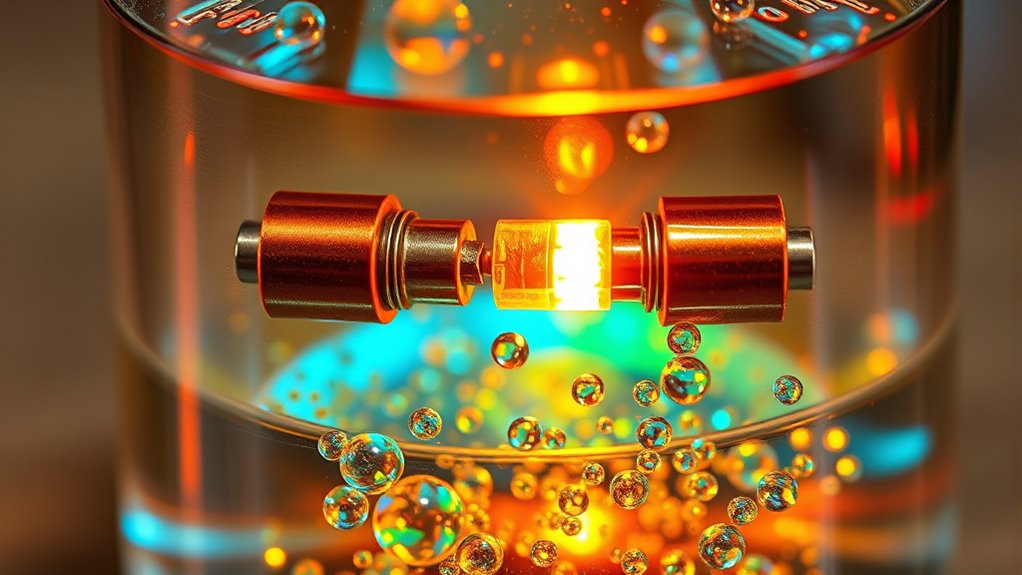
Electrochemical cells are devices that convert chemical energy into electrical energy through redox reactions. When you set up a cell, you fundamentally create a controlled environment where oxidation and reduction occur at different electrodes. These electrode reactions are essential to how the cell produces electricity. At the anode, oxidation takes place, releasing electrons, while at the cathode, reduction occurs, accepting those electrons. The flow of electrons from the anode to the cathode through an external circuit is what generates electric current, powering your devices.
The key to understanding how these cells work lies in the concept of cell voltage, also called electromotive force (emf). Cell voltage depends on the specific electrode reactions happening inside the cell. Each redox reaction has an associated electrode potential, which measures its tendency to gain or lose electrons. When you combine two half-reactions—one at the anode and one at the cathode—the difference between their electrode potentials determines the overall cell voltage. This voltage indicates how much electrical energy can be produced from the chemical reactions. The greater the difference in electrode potentials, the higher the cell voltage, and the more power the cell can deliver.
As you consider the electrode reactions, keep in mind that they’re driven by the tendency of substances to gain or lose electrons. The more reactive a substance is, the more likely it is to participate in redox reactions, influencing the electrode reactions and, consequently, the cell voltage. For example, in a typical zinc-copper cell, zinc is more prone to oxidation, and copper to reduction. The specific electrode reactions in this setup are zinc metal losing electrons to form zinc ions, and copper ions gaining electrons to form copper metal. These reactions are carefully balanced, ensuring the flow of electrons continues smoothly. Additionally, the choice of materials for electrodes and electrolytes impacts the efficiency and energy output of the cell, aligning with the focus on sustainability and eco-friendly decor choices.
In practical terms, the electrode reactions and cell voltage determine how much energy your battery can store and deliver. A higher cell voltage means more energy per unit charge, allowing your devices to run longer or perform more demanding tasks. When designing or choosing batteries, understanding these reactions helps you predict performance and lifespan. The materials used for electrodes and electrolytes influence these reactions and, consequently, the efficiency and energy output of the cell.
alkaline batteries for electronics
As an affiliate, we earn on qualifying purchases.
As an affiliate, we earn on qualifying purchases.
Frequently Asked Questions
How Do Different Types of Batteries Compare in Performance?
You’ll find that different batteries vary in performance based on their battery chemistry and power density. Lithium-ion batteries, for example, offer high power density and long lifespan, making them ideal for portable electronics. In contrast, lead-acid batteries provide lower power density but are cost-effective for backup power. Your choice depends on your needs for energy capacity, rechargeability, and how much power you require for your device or application.
What Factors Affect a Battery’s Lifespan and Efficiency?
Did you know that over time, a typical lithium-ion battery loses about 20% of its capacity? Factors like battery chemistry markedly influence lifespan and efficiency. High temperatures accelerate lifespan degradation, while frequent deep discharges wear down the cells faster. Proper charging habits, avoiding overcharging or excessive discharging, help maintain battery health longer. Ultimately, understanding these factors allows you to optimize your battery’s performance and extend its useful life.
Can Electrochemical Cells Be Recharged Multiple Times?
Yes, electrochemical cells can be recharged multiple times thanks to their rechargeable capabilities. When you use a rechargeable battery, it allows you to restore its energy through a process called battery recycling, which reverses chemical reactions inside the cell. This not only extends the battery’s lifespan but also reduces waste and environmental impact. Proper charging practices help maintain the efficiency and longevity of your rechargeable electrochemical cells.
How Does Temperature Influence Battery Performance?
Did you know that a 10°C increase in temperature can boost a battery’s performance by up to 20%? Thermal effects profoundly impact your battery’s efficiency and lifespan. When temperatures are too high, they cause instability, risking overheating and damage. Conversely, low temperatures reduce chemical reactions, lowering capacity. Maintaining temperature stability is essential for peak performance, ensuring your battery works reliably whether it’s hot or cold outside.
Are There Environmentally Friendly Alternatives to Traditional Batteries?
You can explore environmentally friendly alternatives like biodegradable batteries and solar-powered cells. Biodegradable batteries break down naturally, reducing waste and pollution, making them ideal for eco-conscious use. Solar-powered cells harness sunlight to generate electricity, eliminating the need for traditional chemical batteries altogether. These options help you reduce your carbon footprint and promote sustainable energy solutions, aligning with global efforts to protect the environment while meeting your energy needs.
Conclusion
So, next time you rely on your battery-powered device, remember it’s quietly converting chemicals into electricity—an invisible miracle. Ironically, this tiny powerhouse keeps your world running while you barely think about the complex dance of electrons inside. It’s almost poetic how something so small can fuel your entire day. But don’t forget—beneath that simple glow lies a sophisticated, delicate process, silently reminding you that even the simplest things have a hidden complexity you’ll never see.
Fall Picks
fall essentials
As an affiliate, we earn on qualifying purchases.