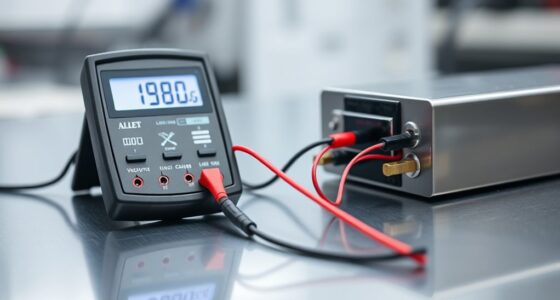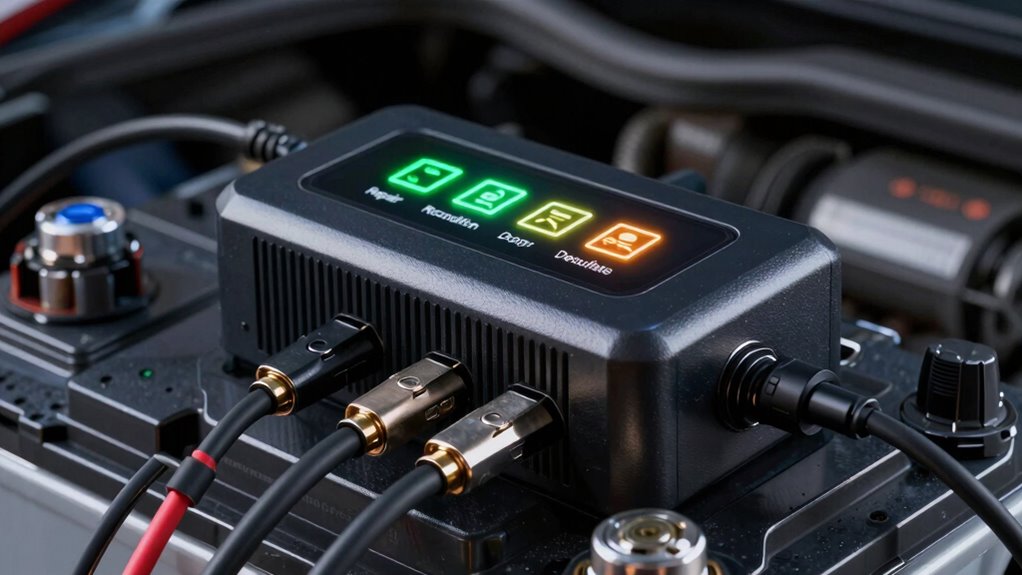

Charger modes like ‘repair,’ ‘recondition,’ and ‘desulfate’ are designed to extend battery life, but their effectiveness depends on the battery’s condition and choosing the right mode. ‘Repair’ aims to fix minor issues, ‘recondition’ restores capacity through deep cycling, and ‘desulfate’ targets sulfate buildup in lead-acid batteries. However, if the battery is heavily damaged, these modes might not help. To understand which mode suits your battery, keep exploring below.

Get backup power and energy gear delivered free with Prime
- Fast, free delivery on millions of items
- Prime Video, Amazon Music and more included
- Member-only deals all year
Key Takeaways
- ‘Repair’ mode aims to fix minor battery issues like sulfation via pulses or surges, but its success depends on battery condition.
- ‘Recondition’ mode involves deep cycling to reverse deterioration, suited for moderately sulfated batteries with proper use.
- ‘Desulfate’ mode targets sulfate buildup in lead-acid batteries using high-frequency pulses, effective only if sulfate layers are not too severe.
- Correct mode selection relies on understanding battery chemistry, sulfate levels, and proper algorithm application for effectiveness.
- Overuse or incorrect mode use can cause further damage; not all deterioration can be reversed, especially in advanced battery failures.

Understanding your car’s charger modes can seem complicated, but once you know what each setting does, you’ll optimize your charging efficiency and battery health. Modern chargers often feature modes like ‘Repair,’ ‘Recondition,’ and ‘Desulfate,’ each claiming to improve your battery’s performance. To navigate these modes effectively, it helps to understand the underlying principles, especially how they interact with your battery chemistry and charging algorithms.
The ‘Repair’ mode is typically marketed as a way to fix minor issues caused by sulfation or incomplete charging. While some chargers use this term loosely, it often involves a series of pulses or high-voltage surges designed to break down lead sulfate crystals that form on the plates of lead-acid batteries. These pulses are part of the charging algorithms tailored to specific battery chemistries, aiming to restore capacity and extend lifespan. However, whether this mode truly repairs a battery depends on its condition; in some cases, damage is irreversible.
‘Recondition’ is another term frequently used, and it usually involves a more aggressive process than standard charging. When you select this mode, your charger may run a deep cycle, carefully controlled to remove sulfation and evenly distribute electrolyte. These processes are based on algorithms that vary the voltage and current to gently reverse some of the deterioration caused by age or misuse. This mode can be effective on moderately sulfated batteries, but it’s not a miracle cure. It works best when used properly, respecting the battery’s chemistry and avoiding overcharging.
‘Desulfate’ or ‘Desulfation’ modes specifically target sulfate buildup, which is common in lead-acid batteries. These modes send high-frequency pulses designed to convert sulfate crystals back into active material. The success of desulfation depends heavily on the battery’s chemistry and the extent of sulfation. If the sulfate layer has become too thick or the battery is deeply damaged, these pulses won’t make much difference. The algorithms governing these modes are critical—they must deliver the right frequency and intensity to be effective without risking further damage. Additionally, advances in battery chemistry understanding have helped develop more targeted and effective desulfation techniques over time.
lead-acid battery reconditioning charger
As an affiliate, we earn on qualifying purchases.
As an affiliate, we earn on qualifying purchases.
Frequently Asked Questions
How Can I Tell if My Charger Mode Is Working Properly?
You can tell if your charger mode is working properly by checking your battery health after charging. If your battery holds a charge longer and shows improved performance, the mode is effective. Make sure your charger is compatible with your device to avoid issues. Also, monitor for any error messages or unusual behavior during charging, as these can indicate problems with the mode’s functionality.
Are There Risks Associated With Improper Charger Mode Use?
Did you know that improper charger mode use can cause up to 30% of battery failures? Yes, using the wrong mode risks battery safety and reduces lifespan. You should always guarantee charger compatibility and follow manufacturer instructions carefully. Misusing modes like ‘Repair’ or ‘Recondition’ can overheat batteries or cause damage, so avoid guesswork. Properly selecting and using the right mode helps keep your batteries safe and functioning at their best.
Can Charger Modes Extend My Battery’s Lifespan?
Yes, using the right charger modes can help extend your battery’s lifespan if you prioritize proper battery maintenance and guarantee charger compatibility. By carefully selecting modes like ‘recondition’ or ‘desulfate’, you can reduce battery aging and improve performance. Just make sure you follow manufacturer instructions, avoid overusing aggressive modes, and use a compatible charger to prevent damage. This proactive approach keeps your battery healthier longer.
Do All Chargers Have the Same Mode Functions?
Not all chargers have the same mode functions because charger technology varies widely. Some focus solely on basic charging, while others include advanced features for battery maintenance like ‘Repair’, ‘Recondition’, or ‘Desulfate’. These specialized modes help extend your battery’s lifespan and improve performance. Before purchasing, check if the charger offers the modes you need for proper battery maintenance, ensuring compatibility and best care for your device.
How Often Should I Switch Between Different Charger Modes?
Like tending a garden, you shouldn’t constantly switch charger modes; instead, focus on your battery’s health. Use the appropriate mode based on your battery’s condition and avoid frequent changes that could harm charger compatibility. Usually, you switch modes only when you notice issues or after a full cycle, allowing your battery to recover without unnecessary stress. Regular checks help maintain ideal battery health and ensure your charger works smoothly.
Conclusion
Ultimately, understanding these charger modes helps you navigate the subtle nuances of battery care. While terms like ‘repair,’ ‘recondition,’ and ‘desulfate’ may suggest clear-cut solutions, they often hint at a gentle dance of restoring balance rather than instant transformation. Embrace the journey with patience and an open mind, knowing that sometimes, a delicate touch can work wonders behind the scenes—guiding your battery back toward its best, quietly and effectively.
Fall Picks
fall essentials
As an affiliate, we earn on qualifying purchases.