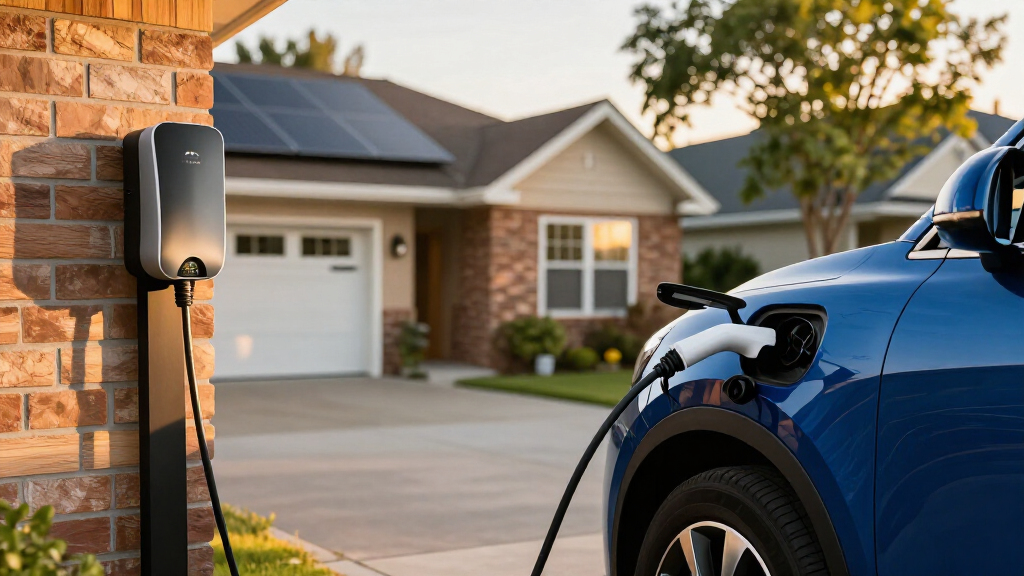

The best EV chargers balance charging speed, installation needs, connector fit, and ease of daily use. My best overall pick is the ChargePoint HomeFlex hardwired J1772, which pairs high charging capacity with a well-established home-charging platform. For buyers who want flexibility without hardwiring, the Autel MaxiCharger 40A offers app control and a plug-in setup, while the Grizzl-E Classic keeps the feature set simple. The main tradeoffs are charging speed versus electrical work, smart features versus simplicity, and fixed installation versus portability. Read on for how all 15 options compare and which fits your home and vehicle.

Get backup power and energy gear delivered free with Prime
- Fast, free delivery on millions of items
- Prime Video, Amazon Music and more included
- Member-only deals all year
Key Takeaways
- Hardwired 48A and 50A models lead this lineup for charging capacity, but they call for a compatible circuit and professional installation planning.
- Plug-in 40A chargers offer a middle ground: faster charging than the 32A and 16A options, with a setup that can be easier to remove or replace.
- J1772 models dominate the selection, while the EVIQO 40A and 48A NACS versions give compatible-vehicle owners a direct NACS option.
- Portable 16A chargers prioritize flexibility over speed; the EVDANCE and bokman models also differ in cable length and outlet-adapter options.
- Smart features are not the same as charging capacity: the Autel, AIMILER, and Emporia add app or power-management capabilities, while simpler options focus on straightforward charging.
| EVDANCE Level 1 and Level 2 Portable EV Charger, 16A, 25 ft Cable |  | Best for Level 1 and Level 2 Flexibility | Connector: J1772 | Charging levels: Level 1 and Level 2 | Input: 120V at 12A or 240V at 16A | VIEW LATEST PRICE | See Our Full Breakdown |
| ChargePoint HomeFlex Level 2 Hardwired EV Charger, J1772, 50A | 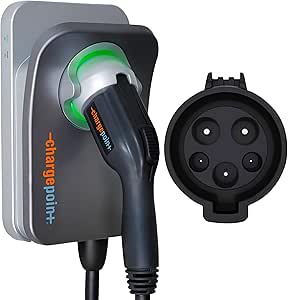 | Best for Fast, Permanent Home Installation | Connector: J1772 | Installation: Hardwired | Amperage: Adjustable 16–50A | VIEW LATEST PRICE | See Our Full Breakdown |
| Autel MaxiCharger 40A Level 2 EV Charger with Wi-Fi, NEMA 14-50 Plug, J1772 Connector, and 25 ft Cable |  | Best Plug-In Choice for Feature-Rich Charging | Output voltage: 240V | Maximum current: 40A | Adjustable current: 16–40A | VIEW LATEST PRICE | See Our Full Breakdown |
| AIMILER Level 2 EV Charger, 32A, 25 ft Cable, Wi-Fi App, NEMA 14-50 Plug, J1772 Connector |  | Best for App Monitoring at Moderate Output | Maximum current: 32A | Adjustable current: 16–32A | Maximum charging power: 7.68 kW | VIEW LATEST PRICE | See Our Full Breakdown |
| ELEGRP Level 2 Portable EV Charger, 40A, J1772, 240V NEMA 14-50 Plug, 25 ft Cable |  | Best for Adjustable 40A Portable Charging | Maximum charging power: 9.6 kW | Maximum current: 40A | Selectable current levels: 16A, 20A, 24A, 32A, and 40A | VIEW LATEST PRICE | See Our Full Breakdown |
| EVIQO Level 2 J1772 EV Charger, 48A, Hardwired, 240V |  | Best for High-Power J1772 Charging | Connector: J1772 | Maximum current: 48A adjustable; optional 50A setting | Required circuit: Dedicated 60A, 240V; 70A circuit for optional 50A setting | VIEW LATEST PRICE | See Our Full Breakdown |
| EVIQO Level 2 NACS EV Charger, 40A, NEMA 14-50, 25 ft Cable |  | Best Plug-In Pick for NACS Vehicles | Connector: NACS | Maximum current: 40A | Voltage: 240V | VIEW LATEST PRICE | See Our Full Breakdown |
| ChargePoint HomeFlex Level 2 EV Charger, J1772, NEMA 14-50 Plug |  | Best for ChargePoint App Users | Connector: J1772 | Voltage: 240V | Plug type: NEMA 14-50 | VIEW LATEST PRICE | See Our Full Breakdown |
| Emporia Pro Level 2 EV Charger with PowerSmart, 48 A, J1772, 25-Foot Cable |  | Best for Managing Household Electrical Load | Connector: J1772 | Maximum current: 48A | Input voltage: 240V AC | VIEW LATEST PRICE | See Our Full Breakdown |
| RIPPLEON Level 2 EV Charger, 48A, 11.5 kW, 240V, 25 ft Cable |  | Best for Mixed J1772 and NACS Households | Charging level: Level 2 | Maximum hardwired output: 48A, 11.5 kW | Plug-in output: Up to 40A, 9.6 kW with NEMA 14-50 | VIEW LATEST PRICE | See Our Full Breakdown |
| EVIQO Level 2 EV Charger, J1772, 40A, NEMA 14-50, 240V |  | Best Smart Plug-In Pick | Connector: J1772 | Maximum amperage: 40A | Voltage: 240V | VIEW LATEST PRICE | See Our Full Breakdown |
| Grizzl-E Classic Level 2 40A EV Charger with NEMA 14-50 Plug |  | Best for Adjustable Charging | Voltage: 240V | Maximum current: 40A | Current settings: 16A, 24A, 32A, 40A | VIEW LATEST PRICE | See Our Full Breakdown |
| EVIQO EVIPOWER-2 48A Hardwired NACS Level 2 EV Charger |  | Best Hardwired NACS Pick | Connector: NACS | Installation: Hardwired | Voltage: 240V | VIEW LATEST PRICE | See Our Full Breakdown |
| IYILO Level 2 EV Charger, 48A, 11.5 kW, 240V, J1772 |  | Best for Flexible Current Control | Connector: SAE J1772 | Maximum current: 48A | Power: 11.5 kW | VIEW LATEST PRICE | See Our Full Breakdown |
| bokman Portable Level 1 and Level 2 EV Charger, 16A, 20 ft, NEMA 6-20P/5-15 Adapter |  | Best for Travel and Standard Outlets | Charging levels: Level 1 and Level 2 | Current settings: 6A, 8A, 10A, 12A, 16A | Connector: J1772 | VIEW LATEST PRICE | See Our Full Breakdown |
| EV charger | Cable length | Connector | Warranty | Maximum current |
|---|---|---|---|---|
| EVDANCE Level 1 and Level 2 Po | 25 ft | J1772 | 1 year | — |
| ChargePoint HomeFlex Level 2 H | 23 ft | J1772 | 3 years | — |
| Autel MaxiCharger 40A Level 2 | 25 ft | SAE J1772 | 3 years | 40A |
| AIMILER Level 2 EV Charger | 25 ft | J1772 | — | 32A |
| ELEGRP Level 2 Portable EV Cha | 25 ft | J1772 | 2 years | 40A |
| EVIQO Level 2 J1772 EV Charger | 25 ft | J1772 | 3 years | 48A adjustable; optional 50A setting |
| EVIQO Level 2 NACS EV Charger | 25 ft | NACS | 3 years | 40A |
| ChargePoint HomeFlex Level 2 E | 23 ft | J1772 | 3-year parts warranty | — |
| Emporia Pro Level 2 EV Charger | 25 ft | J1772 | 3 years | 48A |
| RIPPLEON Level 2 EV Charger | 25 ft | J1772 with NACS adapter | 3 years | — |
| EVIQO Level 2 EV Charger | 25 ft | J1772 | 3 years | — |
| Grizzl-E Classic Level 2 40A E | 24 ft | — | — | 40A |
| EVIQO EVIPOWER-2 48A Hardwired | 25 ft | NACS | 3 years | — |
| IYILO Level 2 EV Charger | 25 ft | SAE J1772 | 3 years | 48A |
| bokman Portable Level 1 and Le | 20 ft | J1772 | — | — |
More Details on Our Top Picks
EVDANCE Level 1 and Level 2 Portable EV Charger, 16A, 25 ft Cable
The EVDANCE is the most adaptable option here for drivers who may need to charge from different outlets. It supports 12A charging on 120V and up to 16A on 240V, so it can serve as a basic home charger or travel backup when the right outlet is available. Its 25-foot cable reaches farther than the 20-foot cable on the bokman portable charger, while the included bag makes it easier to stow between uses. The tradeoff is speed: at a maximum of 3.84 kW, it is far behind the 40A Autel and ELEGRP chargers for regular Level 2 home charging. Outlet adapters may also be needed, and Tesla drivers need a separate J1772 adapter. I’d choose it for flexibility, not for fast daily replenishment.
Pros:- Works with both 120V and compatible 240V outlets
- 25-foot cable offers more reach than the 20-foot bokman portable charger
- Carrying bag and LED display make transport and status checks easier
- IP66 housing protection and built-in safety monitoring
Cons:- Maximum output of 3.84 kW is much lower than the 40A Autel and ELEGRP chargers
- Some outlet types require a separately sold adapter
- Tesla vehicles require a separate J1772 adapter, and compatibility varies by vehicle
Best for: Drivers with J1772 vehicles who want one portable charger for occasional 120V use and faster charging from compatible 240V outlets.
Not ideal for: Drivers who need fast daily Level 2 charging, or Tesla owners seeking a ready-to-use connector without buying an adapter.
- Connector:J1772
- Charging levels:Level 1 and Level 2
- Input:120V at 12A or 240V at 16A
- Maximum power:3.84 kW
- Cable length:25 ft
- Compatible outlets:NEMA 5-15/5-20 and NEMA 6-20
- Weight:7 lb
- Warranty:1 year
Our verdict“Choose the EVDANCE if outlet flexibility and portability matter more than charging speed.”
ChargePoint HomeFlex Level 2 Hardwired EV Charger, J1772, 50A
The hardwired HomeFlex is the strongest fit for a dedicated home charging setup where a homeowner wants adjustable output and app-based controls. It supports 16–50A charging and can deliver up to 37 miles of range per hour, depending on the vehicle—well beyond the portable EVDANCE’s 3.84 kW ceiling. The 23-foot cold-resistant cable and indoor-or-outdoor rating add practical flexibility, while the app provides controls, reminders, and usage information. Its main compromise is installation: unlike the plug-in Autel and ELEGRP, this model requires an electrician and a suitable circuit. Wi-Fi also matters for some features and troubleshooting. I’d rank it above portable choices for a permanent, higher-output installation, but below them for renters or anyone who needs to unplug and move a charger.
Pros:- Adjustable charging from 16A to 50A
- Up to 37 miles of range per hour, depending on the vehicle
- 23-foot cold-resistant cable and indoor/outdoor installation rating
- UL-certified, Energy Star rated, with a 3-year warranty
Cons:- Requires hardwired installation by an electrician
- Needs a suitable 20A or 80A circuit, depending on installation and settings
- Wi-Fi is needed for some features and troubleshooting; Tesla vehicles need an adapter
Best for: Homeowners planning a permanent Level 2 installation who have access to an electrician and want adjustable high-amperage charging with app controls.
Not ideal for: Renters, frequent movers, or buyers who want a plug-in charger that can be installed without hardwiring.
- Connector:J1772
- Installation:Hardwired
- Amperage:Adjustable 16–50A
- Output voltage:240V AC
- Charging speed:Up to 37 miles of range per hour, depending on vehicle
- Cable length:23 ft
- Certification:UL-certified and Energy Star rated
- Warranty:3 years
Our verdict“Pick the HomeFlex for a permanent, high-output home setup, but choose a plug-in model if portability is a priority.”
Autel MaxiCharger 40A Level 2 EV Charger with Wi-Fi, NEMA 14-50 Plug, J1772 Connector, and 25 ft Cable
The Autel MaxiCharger pairs a strong 40A ceiling with a useful set of access and scheduling controls. Its app supports remote operation and scheduled charging, while RFID access can help limit who uses the unit. That makes it a more feature-focused plug-in alternative to the ELEGRP, which also reaches 40A but emphasizes selectable current levels and delay charging. The Autel’s NEMA 4X-rated enclosure is designed for indoor or outdoor use, and its 25-foot cable helps with driveway placement. The limitation is outlet dependence: it requires a NEMA 14-50 connection, while the hardwired ChargePoint HomeFlex can support up to 50A when the installation allows. The J1772 connector also means Tesla and NACS drivers need an adapter. I’d favor this model when app controls and RFID matter more than hardwired maximum output.
Pros:- Adjustable current from 16A to 40A
- App provides remote control and scheduled charging, with RFID access
- NEMA 4X-rated enclosure is designed for indoor or outdoor use
- 25-foot cable and 3-year warranty
Cons:- Requires a NEMA 14-50 outlet
- J1772 connector requires an adapter for Tesla and NACS vehicles
Best for: J1772 EV and plug-in hybrid owners with a NEMA 14-50 outlet who want app scheduling, remote controls, and RFID access.
Not ideal for: Drivers without a NEMA 14-50 outlet, or buyers seeking hardwired charging above 40A.
- Output voltage:240V
- Maximum current:40A
- Adjustable current:16–40A
- Outlet plug:NEMA 14-50
- Connector:SAE J1772
- Cable length:25 ft
- Certification:CSA
- Warranty:3 years
Our verdict“Choose the Autel if you want a 40A plug-in charger with app scheduling and RFID access.”
AIMILER Level 2 EV Charger, 32A, 25 ft Cable, Wi-Fi App, NEMA 14-50 Plug, J1772 Connector
The AIMILER is a practical middle ground for buyers who want app monitoring but do not need 40A output. It adjusts from 16A to 32A and adds a screen, Wi-Fi scheduling, and charging-status checks. Against the Autel MaxiCharger, it gives up 8A of maximum current and RFID access, but keeps a 25-foot cable and a plug-in NEMA 14-50 setup. Its 7.68 kW maximum can suit many home routines, though drivers who regularly need faster replenishment may prefer the 40A ELEGRP or Autel. The main placement caveat is weather exposure: despite its NEMA Type 4 protection, the manufacturer advises against direct sunlight or rainy-day use. Tesla and other NACS vehicles also need a separate adapter. I’d choose it for app-based scheduling at a moderate current, not for exposed installation or the fastest charging.
Pros:- Adjustable current from 16A to 32A
- Wi-Fi app supports scheduling and charge-status monitoring
- 25-foot cable offers flexible placement
- Built-in leakage detection and protection
Cons:- 32A maximum output is lower than the 40A Autel and ELEGRP
- Tesla and NACS vehicles require a separate J1772 adapter
- Manufacturer advises against direct sunlight or rainy-day exposure
Best for: J1772 vehicle owners with a NEMA 14-50 outlet who want scheduling and status checks without needing 40A charging.
Not ideal for: Drivers who need maximum Level 2 output, use a Tesla or NACS vehicle without an adapter, or must mount the charger in direct sun or rain.
- Maximum current:32A
- Adjustable current:16–32A
- Maximum charging power:7.68 kW
- Voltage:240V
- Plug type:NEMA 14-50
- Connector:J1772
- Cable length:25 ft
- Connectivity:Wi-Fi app
- Certifications:ETL and FCC
Our verdict“The AIMILER suits drivers who want app scheduling and a 25-foot cable at up to 32A, provided the installation stays sheltered.”
ELEGRP Level 2 Portable EV Charger, 40A, J1772, 240V NEMA 14-50 Plug, 25 ft Cable
The ELEGRP stands out for combining 40A output with five selectable current levels, giving buyers more room to match charging to their home circuit than the AIMILER’s 16–32A range. It reaches up to 9.6 kW and adds a 1–12-hour delay, so charging can be timed without relying on the Autel’s app-based controls. Its IP67 weather resistance and stated operating range from -21°F to 121°F suit a wider range of conditions than the AIMILER, though installation and outlet requirements still matter. This is a portable, plug-in charger rather than a hardwired alternative like the ChargePoint HomeFlex, so it tops out at 40A and needs a NEMA 14-50 outlet. Tesla drivers also need a separate NACS adapter. I’d choose it for straightforward, adjustable high-output charging with fewer connectivity dependencies.
Pros:- Up to 40A and 9.6 kW, with five selectable current levels
- 25-foot cable supports flexible charger placement
- IP67 weather resistance and a stated operating range of -21°F to 121°F
- 1–12-hour charging delay and ETL certification
Cons:- Requires a 240V NEMA 14-50 outlet
- Tesla vehicles need a separately sold NACS adapter
- Maximum 40A output is below the 50A hardwired ChargePoint HomeFlex
Best for: J1772 EV and plug-in hybrid owners with a NEMA 14-50 outlet who want portable charging up to 40A and selectable current settings.
Not ideal for: Drivers without a 240V NEMA 14-50 outlet, or Tesla owners who do not want to purchase a separate NACS adapter.
- Maximum charging power:9.6 kW
- Maximum current:40A
- Selectable current levels:16A, 20A, 24A, 32A, and 40A
- Input:240V
- Plug type:NEMA 14-50
- Connector:J1772
- Cable length:25 ft
- Weather resistance:IP67
- Warranty:2 years
Our verdict“Choose the ELEGRP if you have a NEMA 14-50 outlet and want adjustable 40A charging without depending on app controls.”
EVIQO Level 2 J1772 EV Charger, 48A, Hardwired, 240V
The EVIQO J1772 makes sense for drivers who want up to 48A charging and are ready for a dedicated installation. Its 25-foot cable gives more parking flexibility than the ChargePoint HomeFlex’s 23-foot lead, while its IP66/NEMA 4 enclosure supports indoor or outdoor placement. App scheduling and energy tracking add useful control, though those features depend on 2.4 GHz Wi-Fi. Unlike the plug-in ChargePoint, this EVIQO must be hardwired by a licensed electrician, so it is a bigger installation commitment. Its J1772 connector suits many non-Tesla EVs and plug-in hybrids; Tesla drivers need a compatible adapter. I’d choose it over the EVIQO NACS 40A model when higher charging output and a hardwired setup matter more than plug-in convenience.
Pros:- Adjustable charging current up to 48A on a dedicated 60A circuit
- 25-foot J1772 cable accommodates varied parking positions
- IP66/NEMA 4 enclosure is suited to indoor or outdoor use
- App offers scheduling, charging controls, reminders, and energy tracking
Cons:- Hardwired installation requires a licensed electrician
- Smart features require a 2.4 GHz Wi-Fi network
- Optional 50A setting requires a dedicated 70A circuit
Best for: J1772 EV and plug-in hybrid owners with a dedicated 60A circuit who want high charging output and a long cable.
Not ideal for: Drivers who need a plug-in charger, lack access to a licensed electrician, or want app features without 2.4 GHz Wi-Fi.
- Connector:J1772
- Maximum current:48A adjustable; optional 50A setting
- Required circuit:Dedicated 60A, 240V; 70A circuit for optional 50A setting
- Installation:Hardwired; licensed electrician required
- Cable length:25 ft
- Connectivity:2.4 GHz Wi-Fi
- Weather protection:IP66 / NEMA 4
- Certifications:UL, ETL, FCC, Energy Star
- Warranty:3 years
Our verdict“Choose this EVIQO if you have a J1772 vehicle and want a weather-ready, high-output charger with a permanent hardwired installation.”
EVIQO Level 2 NACS EV Charger, 40A, NEMA 14-50, 25 ft Cable
For Tesla and other NACS drivers, this EVIQO offers direct connector compatibility in a plug-in 40A setup, avoiding the J1772-to-NACS adapter step that may be needed with the ChargePoint HomeFlex. The NEMA 14-50 connection also makes it less involved to install than the hardwired EVIQO 48A, provided the home already has a suitable dedicated circuit and outlet. Its 25-foot cable and IP66/NEMA 4 housing give it useful reach and indoor-or-outdoor flexibility, while the app adds scheduling and energy tracking. The tradeoff is lower maximum current than the hardwired 48A EVIQO, and J1772 vehicles need a separate adapter. App connectivity also relies on 2.4 GHz Wi-Fi.
Pros:- NACS connector works directly with compatible Tesla and other NACS vehicles
- NEMA 14-50 plug offers a plug-in alternative to hardwired installation
- 25-foot cable and IP66/NEMA 4 housing suit varied parking setups
- App supports scheduling, remote controls, and energy tracking
Cons:- Requires a dedicated 50A circuit and NEMA 14-50 outlet
- J1772 adapter is not included
- App features require a 2.4 GHz Wi-Fi connection
Best for: Tesla and other NACS vehicle owners with a dedicated 50A circuit and NEMA 14-50 outlet who prefer a plug-in installation.
Not ideal for: J1772 vehicle owners who do not want to source an adapter, or drivers seeking the higher output of a 48A hardwired charger.
- Connector:NACS
- Maximum current:40A
- Voltage:240V
- Plug type:NEMA 14-50
- Cable length:25 ft
- Connectivity:2.4 GHz Wi-Fi
- Weather protection:IP66 / NEMA 4
- Installation requirement:Dedicated 50A circuit and NEMA 14-50 outlet
- Warranty:3 years
Our verdict“Pick this EVIQO for a plug-in NACS setup, but choose the hardwired EVIQO 48A if maximum output is the priority.”
ChargePoint HomeFlex Level 2 EV Charger, J1772, NEMA 14-50 Plug
The HomeFlex is the most straightforward fit here for drivers who already use ChargePoint’s ecosystem and want a plug-in J1772 charger with app-based controls and charging information. Its stated charging speed reaches up to 45 miles per hour, depending on the vehicle, and the 23-foot cold-resistant cable helps when the parking spot is not close to the outlet. Compared with the EVIQO 48A hardwired model, the HomeFlex trades a shorter cable and plug-in installation for less commitment than hardwiring; its circuit must still match the home’s setup. It is UL-certified and rated for indoor or outdoor installation. Tesla owners need a separate adapter, and drivers seeking a 25-foot cable or the highest listed output may prefer another option in this group.
Pros:- J1772 connector and NEMA 14-50 plug suit many compatible home setups
- ChargePoint app provides charging controls, reminders, and information
- Cold-resistant 23-foot cable supports indoor or outdoor placement
- UL-certified
Cons:- Tesla vehicles require a separate adapter
- Requires a compatible 240V outlet and 40A or 50A circuit
- Cable is shorter than the 25-foot leads on both EVIQO chargers in this group
Best for: J1772 EV owners who want a plug-in home charger, use ChargePoint app features, and have a compatible 240V outlet.
Not ideal for: Tesla drivers without an adapter, or buyers who need a 25-foot cable or a hardwired high-current setup.
- Connector:J1772
- Voltage:240V
- Plug type:NEMA 14-50
- Circuit requirement:40A or 50A circuit
- Cable length:23 ft
- Maximum charging speed:Up to 45 miles per hour, depending on vehicle
- Certification:UL
- Installation:Indoor or outdoor
- Warranty:3-year parts warranty
Our verdict“Choose the HomeFlex if you want a plug-in J1772 charger with ChargePoint app controls and your outlet and circuit are compatible.”
Emporia Pro Level 2 EV Charger with PowerSmart, 48 A, J1772, 25-Foot Cable
The Emporia Pro’s distinction is PowerSmart load balancing: the included Vue Home Energy Monitor helps coordinate charging with household electricity use, a useful advantage when other high-draw appliances share the home’s capacity. That focus makes it different from the EVIQO 48A, which offers a weather-ready hardwired installation and app controls but does not list an included home energy monitor. Emporia also gives buyers two installation paths—NEMA 14-50 plug-in or hardwired—along with Wi-Fi and Bluetooth for setup and control. Its 25-foot J1772 cable works for many non-Tesla EVs, but it is not a direct NACS connection. The additional monitor and configuration options may be more than a simple charging setup needs, and installation still depends on the home’s electrical arrangement.
Pros:- Included Vue Home Energy Monitor supports PowerSmart load balancing
- Offers NEMA 14-50 plug-in or hardwired installation
- App provides charging schedules and real-time energy tracking
- 25-foot J1772 cable provides useful reach
Cons:- J1772 connector requires an adapter for vehicles that use NACS
- Electrical work may require an electrician, depending on the home setup
- PowerSmart monitoring adds setup needs beyond a basic charger
Best for: J1772 EV owners who want to monitor household electricity use and balance charger demand, with either plug-in or hardwired installation.
Not ideal for: NACS vehicle owners seeking direct connector compatibility, or buyers who want a basic charger without an energy monitor and setup choices.
- Connector:J1772
- Maximum current:48A
- Input voltage:240V AC
- Installation options:NEMA 14-50 plug or hardwired
- Cable length:25 ft
- Connectivity:Wi-Fi and Bluetooth
- Included energy monitor:Vue Home Energy Monitor
- Certifications:ENERGY STAR, NEMA, UL
- Warranty:3 years
Our verdict“Choose the Emporia Pro if household load monitoring matters as much as charging and you want a choice of installation method.”
RIPPLEON Level 2 EV Charger, 48A, 11.5 kW, 240V, 25 ft Cable
RIPPLEON is the flexible connector pick in this group: it pairs a J1772 plug with a NACS adapter, so households with different vehicle connections may have fewer compatibility hurdles than with the J1772-only ChargePoint HomeFlex. Its 48A hardwired mode reaches up to 11.5 kW, while the NEMA 14-50 option is limited to 40A; that distinction matters when choosing between a permanent installation and a plug-in setup. The 25-foot cable, app scheduling, and RFID access add practical control, and IP65 protection supports indoor or outdoor use. Compared with the EVIQO hardwired 48A, RIPPLEON includes a NACS adapter and access-card option, but its listed weather rating is IP65 rather than IP66/NEMA 4. Professional installation is recommended.
Pros:- J1772 connector with included NACS adapter broadens vehicle compatibility
- Hardwired mode supports up to 48A and 11.5 kW
- App includes scheduling and energy or cost monitoring
- RFID access, 25-foot cable, and IP65 protection add useful flexibility
Cons:- NEMA 14-50 plug mode is limited to 40A
- Hardwired installation calls for professional installation
- IP65 rating is lower than the IP66/NEMA 4 protection listed for the EVIQO options
Best for: Households with J1772 and NACS vehicles that want one charger with adapter-based compatibility, scheduling, and RFID access.
Not ideal for: Buyers who need more than 40A from a NEMA 14-50 outlet or prefer a charger with an IP66/NEMA 4 enclosure rating.
- Charging level:Level 2
- Maximum hardwired output:48A, 11.5 kW
- Plug-in output:Up to 40A, 9.6 kW with NEMA 14-50
- Voltage:240V
- Connector:J1772 with NACS adapter
- Cable length:25 ft
- Access methods:Plug and play, app, or RFID card
- Weather protection:IP65
- Warranty:3 years
Our verdict“Choose RIPPLEON if your household needs J1772 and NACS compatibility in one charger and you can accept a 40A plug-in limit.”
EVIQO Level 2 EV Charger, J1772, 40A, NEMA 14-50, 240V
I’d choose this EVIQO for a buyer who wants app-based scheduling and energy tracking without committing to hardwired installation. Its 40A output and 25-foot cable offer a useful mix of charging capacity and reach, while the plug-in NEMA 14-50 setup can simplify installation when the required outlet and dedicated circuit are already in place. The IP66/NEMA 4 housing and broad certifications also suit outdoor mounting. Compared with the Grizzl-E Classic, this model adds Wi-Fi controls, but the Grizzl-E offers adjustable current settings and a metal enclosure. The tradeoff here is dependence on a 2.4 GHz Wi-Fi network for smart features, plus the need for a suitable 50A circuit. I’d pick it for connected control, not for adjustable output or Wi-Fi-free simplicity.
Pros:- App supports charging controls, schedules, and energy tracking.
- 25-foot cable provides reach across many garage and driveway layouts.
- IP66/NEMA 4 housing is designed for indoor or outdoor use.
- UL, ETL, FCC, and Energy Star certifications, plus a 3-year warranty.
Cons:- Needs a dedicated 50A circuit and NEMA 14-50 outlet.
- App features require a 2.4 GHz Wi-Fi connection.
- Fixed 40A output offers less current flexibility than the Grizzl-E Classic.
Best for: J1772 EV or plug-in-hybrid owners with a NEMA 14-50 outlet who want charging schedules, energy tracking, and a long cable.
Not ideal for: Drivers without a 2.4 GHz Wi-Fi network, or households that need adjustable amperage rather than a fixed 40A charger.
- Connector:J1772
- Maximum amperage:40A
- Voltage:240V
- Outlet:NEMA 14-50
- Cable length:25 ft
- Connectivity:2.4 GHz Wi-Fi
- Weather protection:IP66 / NEMA 4
- Warranty:3 years
Our verdict“Choose this EVIQO if you have the right outlet and want a weather-ready 40A charger with app scheduling and energy tracking.”
Grizzl-E Classic Level 2 40A EV Charger with NEMA 14-50 Plug
The Grizzl-E Classic is a strong fit when I’d rather have straightforward, adjustable charging than app features. Its current settings span 16A to 40A, so an owner can match output to the available circuit instead of being locked into one setting. That flexibility is a key difference from the fixed-output EVIQO 40A plug-in model. A metal enclosure and IP67 rating make this a practical choice for exposed installations, while its 24-foot cable is close to the EVIQO’s reach. The compromise is a more basic feature set: the supplied details don’t include Wi-Fi scheduling or energy tracking. It also still depends on a compatible 240V outlet and circuit, and the car’s own charging limits affect the rate. I’d favor it for durable, configurable charging rather than connected monitoring.
Pros:- Adjustable current settings of 16A, 24A, 32A, and 40A.
- IP67-rated metal enclosure suits indoor and outdoor installations.
- 24-foot cable gives practical reach for many parking setups.
- Includes overcurrent, voltage, ground-fault, and temperature protections.
Cons:- Requires a compatible 240V outlet and circuit.
- No app connectivity or energy tracking is listed.
- Actual charging speed depends on the selected current and vehicle.
Best for: EV and plug-in-hybrid owners who want a rugged plug-in charger with current settings they can match to their circuit.
Not ideal for: Drivers who want app scheduling, remote charging controls, or energy tracking built into the charger.
- Voltage:240V
- Maximum current:40A
- Current settings:16A, 24A, 32A, 40A
- Plug:NEMA 14-50
- Cable length:24 ft
- Ingress protection:IP67
- Certification:UL certified
- Weight:16.61 lb
Our verdict“Pick the Grizzl-E Classic if adjustable current and a rugged enclosure matter more to you than app-based charging controls.”
EVIQO EVIPOWER-2 48A Hardwired NACS Level 2 EV Charger
For a home with a Tesla or another NACS-port EV, this EVIQO stands out by pairing a native NACS connector with up to 48A charging. That avoids needing an adapter for compatible vehicles and delivers more output than the 40A plug-in EVIQO, though it comes with a bigger installation commitment. The recommended dedicated 60A circuit and hardwired setup call for suitable electrical capacity and professional installation; this isn’t the flexible choice for renters or anyone relying on an existing NEMA 14-50 outlet. App controls, schedules, and energy tracking add convenience over the Grizzl-E Classic, and its 25-foot cable helps with parking reach. J1772 vehicles need a separately purchased adapter, and the smart features rely on 2.4 GHz Wi-Fi. I’d place it ahead of plug-in models for NACS-focused, higher-output home charging, not for mixed-connector households.
Pros:- Native NACS connector works with compatible vehicles without an adapter.
- Up to 48A charging on the recommended dedicated 60A circuit.
- 25-foot cable and IP66/NEMA 4 protection support varied indoor and outdoor locations.
- App provides charging controls, schedules, and energy tracking.
Cons:- Hardwired installation requires a suitable circuit and professional work.
- J1772 vehicles require a separately purchased adapter.
- App features need 2.4 GHz Wi-Fi.
Best for: Tesla and other NACS EV owners with a suitable 60A circuit who want a hardwired, app-connected home charger.
Not ideal for: Renters, owners without capacity for a hardwired circuit, or households with J1772 vehicles that don’t want to buy an adapter.
- Connector:NACS
- Installation:Hardwired
- Voltage:240V
- Maximum amperage:48A on a dedicated 60A circuit
- Cable length:25 ft
- Connectivity:2.4 GHz Wi-Fi
- Weather protection:IP66 / NEMA 4
- Warranty:3 years
Our verdict“Choose this EVIQO if you own a NACS vehicle, have the electrical capacity for hardwiring, and want higher output with app controls.”
IYILO Level 2 EV Charger, 48A, 11.5 kW, 240V, J1772
The IYILO’s defining advantage is fine-grained current adjustment: settings from 6A to 48A in 1A increments let owners tailor charging to household electrical limits or changing power needs. It also adds power sharing for two chargers, a useful feature for a two-EV household that may not want both units drawing full power at once. Compared with the hardwired EVIQO NACS model, IYILO uses a J1772 connector and includes RFID, but Tesla drivers need a separate adapter. Its connector temperature monitoring can stop charging if overheating is detected. Those capabilities come with a hardwired installation requiring a 60A breaker and a licensed electrician, so it is less plug-and-play than the EVIQO 40A. I’d shortlist it for adjustable output and shared capacity, while noting its 2.4 GHz-only Wi-Fi and installation demands.
Pros:- Current can be adjusted from 6A to 48A in 1A increments.
- Power sharing supports two chargers.
- Connector temperature monitoring can stop charging if it overheats.
- App includes scheduling and energy tracking, with RFID access also listed.
Cons:- Hardwired installation requires a 60A breaker and licensed electrician.
- Wi-Fi supports 2.4 GHz only.
- Tesla vehicles require a separate NACS adapter.
Best for: J1772 households that want precise current control, app scheduling, or power sharing between two chargers.
Not ideal for: Drivers who need a plug-in installation, lack a 60A circuit, or want a NACS connector without buying an adapter.
- Connector:SAE J1772
- Maximum current:48A
- Power:11.5 kW
- Voltage:240V
- Current adjustment:6A to 48A in 1A increments
- Installation:Hardwired; 60A breaker and licensed electrician required
- Cable length:25 ft
- Warranty:3 years
Our verdict“Pick the IYILO if precise current adjustment and power sharing matter enough to justify a hardwired J1772 installation.”
bokman Portable Level 1 and Level 2 EV Charger, 16A, 20 ft, NEMA 6-20P/5-15 Adapter
The bokman is the most flexible option here for drivers who need a charger that can use both standard household outlets and a NEMA 6-20 connection. Its 6A-to-16A settings and delay timer make it easier to adapt charging to the outlet and schedule, while the 20-foot cable and 7.65-pound weight suit a travel kit better than the heavier 40A plug-in models. The tradeoff is speed: 16A is far below the 40A Grizzl-E Classic, so this is not the pick for rapid home charging or frequent high-mileage driving. The LED display gives basic status information without the app features offered by the EVIQO 40A. Tesla owners also need a separate J1772 adapter. I’d choose bokman for portability and outlet flexibility, rather than as a primary high-capacity home charger.
Pros:- Supports Level 1 and Level 2 charging with current settings from 6A to 16A.
- Includes a NEMA 5-15 adapter for standard household outlets.
- 20-foot cable, LED display, and 1–12 hour delay timer support portable use.
- ETL certified with IP65 weather protection.
Cons:- Maximum 16A output is slower than the 40A and 48A chargers in this roundup.
- Tesla vehicles require a separate J1772 adapter.
- The listed NEMA 6-20 plug and household adapter require compatible outlets.
Best for: Drivers who want a lightweight backup or travel charger that can use a standard household outlet or a NEMA 6-20 outlet.
Not ideal for: High-mileage drivers seeking faster Level 2 charging, or Tesla owners who need an included adapter.
- Charging levels:Level 1 and Level 2
- Current settings:6A, 8A, 10A, 12A, 16A
- Connector:J1772
- Plugs:NEMA 6-20P; NEMA 5-15 adapter included
- Cable length:20 ft
- Delay timer:1–12 hours
- Weather protection:IP65
- Weight:7.65 lb
Our verdict“Choose the bokman as a portable, outlet-flexible charger when low weight matters more than high charging output.”
How We Picked
I compared the 15 chargers around the decisions that shape home charging: electrical compatibility, output, connector, installation style, cable reach, and controls. I gave more weight to usable performance and fit than to headline amperage alone, since a charger’s practical speed depends on the vehicle’s onboard charger and the home circuit. I also separated plug-in and hardwired options, and distinguished fixed home units from portable Level 1/Level 2 models.
The ranking favors chargers that balance broad usefulness with clear buyer advantages. The ChargePoint HomeFlex hardwired J1772 leads for buyers seeking a higher-capacity, connected home setup; plug-in alternatives rank well when easier installation or flexibility matters more. Specialized picks, such as NACS models, smart power management, and lower-amperage portable units, rank for the households they serve best rather than being treated as universal choices. Product fit still depends on vehicle compatibility, local electrical requirements, and installation conditions.
| EV charger | Connector |
|---|---|
| EVDANCE Level 1 and Level 2 Po | J1772 |
| ChargePoint HomeFlex Level 2 H | J1772 |
| Autel MaxiCharger 40A Level 2 | SAE J1772 |
| AIMILER Level 2 EV Charger | J1772 |
| ELEGRP Level 2 Portable EV Cha | J1772 |
| EVIQO Level 2 J1772 EV Charger | J1772 |
| EVIQO Level 2 NACS EV Charger | NACS |
| ChargePoint HomeFlex Level 2 E | J1772 |
| Emporia Pro Level 2 EV Charger | J1772 |
| RIPPLEON Level 2 EV Charger | J1772 with NACS adapter |
| EVIQO Level 2 EV Charger | J1772 |
| Grizzl-E Classic Level 2 40A E | — |
| EVIQO EVIPOWER-2 48A Hardwired | NACS |
| IYILO Level 2 EV Charger | SAE J1772 |
| bokman Portable Level 1 and Le | J1772 |
Factors to Consider When Choosing Best EV Chargers
Before choosing from these models, I would match the charger to the home’s electrical setup and the car’s charging limits. A higher amperage label does not automatically mean faster charging for every vehicle, and a plug-in unit is not automatically a no-work installation. These broader checks can help avoid buying more capacity or features than your setup can use.
Match Charger Output to Your Vehicle and Circuit
Start with the vehicle’s maximum AC charging rate, then check what the home circuit can support. A 48A or 50A charger can be useful for compatible vehicles and circuits, but it will not make a car charge faster than its onboard charger allows. Circuit capacity, breaker sizing, wiring, and local electrical rules all affect the usable output. A common mistake is buying by amperage alone without checking the electrical panel or installation cost. If your car charges at a lower rate or your daily driving is modest, a 32A or 40A unit may meet your needs with less demand on the electrical system. Ask a qualified electrician to confirm the circuit plan before purchasing a high-output hardwired model.
Choose J1772 or NACS Based on Your Vehicle
The connector must match your vehicle’s inlet or a compatible adapter arrangement. This roundup includes many J1772 chargers and a smaller set of NACS models, so the connector can narrow your choices quickly. Check the vehicle maker’s current guidance for home AC charging rather than assuming public fast-charging standards dictate your home setup. Adapters can add flexibility, but compatibility, charging limits, and cable handling still matter. If more than one EV will use the charger, think about which connector serves the household’s current cars and likely next vehicle. Buying the wrong connector can turn an otherwise suitable charger into an avoidable extra step.
Decide Between Plug-In and Hardwired Installation
A plug-in charger can be easier to remove or relocate, but it still needs a correctly installed, suitably rated outlet and circuit. Hardwired models can support higher output and avoid an exposed plug connection, though installation is less flexible and generally calls for more electrician work. Do not assume an existing 240V outlet is suitable just because its shape appears to match the charger plug. Have the outlet, wiring, and breaker checked, especially if the circuit is shared or older. If you expect to move soon or want to take the unit elsewhere, portability may matter more than maximum output. For a permanent garage setup, a hardwired unit may be a cleaner fit.
Measure Cable Reach and Plan the Mounting Location
Measure from the likely charger mounting point to the vehicle’s charging port with the car parked in its normal position. A 25-foot cable offers useful reach in many garages, but walls, parking angles, and port placement can reduce that reach in practice. Avoid stretching a cable across a walking route or placing it where a vehicle can roll over it. Check whether the cable can be stored neatly and whether the handle is easy to access from the chosen parking spot. Portable models can work across more than one location, but carrying and storing a heavier or longer-cable unit may be inconvenient. A simple layout sketch before ordering can prevent a poor mounting position.
Pay for Smart Features Only When They Solve a Need
App connectivity can help schedule charging, view energy use, or manage charging around household demand, but those features are only useful if they fit your routines. Some vehicles already provide reliable scheduling, so a separate charger app may add little. Power-management features can matter when a home has limited electrical capacity or several large loads, but the specific system requirements should be checked before buying. Also consider Wi-Fi coverage in the garage and whether you want to depend on an app for routine charging. A simpler charger may be easier to operate and maintain if you mainly plug in overnight. Compare the control features with what your car and utility already support.
Treat Level 1 and Level 2 Portability as Different Jobs
Portable dual-voltage models can serve as a backup or suit drivers who charge in more than one place, but their 16A output makes them a different proposition from the 40A and 48A home units here. Level 1 charging from a standard outlet is especially slow, so it may not replace a dedicated Level 2 charger for higher daily mileage. Check which adapters are included and whether the outlet is appropriate for continuous EV charging; an adapter does not increase circuit capacity. A portable charger is most useful when flexibility is genuinely part of the plan, not as a substitute for verifying electrical safety. For predictable home charging, a fixed 240V setup is usually the more practical primary option.
Frequently Asked Questions
Will a 48A or 50A EV charger charge my car faster than a 40A model?
Only if both the vehicle and home circuit can use the higher output. The car’s onboard AC charger sets a ceiling, so a vehicle limited below 40A may see no speed difference between these models. The circuit and installation must also be rated for the charger’s requirements. Compare the vehicle specification with the electrician’s circuit assessment before paying for more output. If either limit is lower, the higher-amperage unit may offer little practical benefit.
Can I plug a NEMA 14-50 charger into any 240V outlet?
No. The outlet must match the charger plug and be installed on a circuit suitable for sustained EV charging at the charger’s specified load. A familiar receptacle shape does not confirm that the wiring, breaker, or outlet condition is appropriate. Avoid extension cords or improvised adapters unless the charger maker and a qualified electrician specifically approve the arrangement. Have the circuit checked before regular use, particularly in an older home or garage. A plug-in charger still requires a safe, correctly rated electrical installation.
Should I choose a J1772 or NACS charger if I may change cars?
Base the choice on the vehicles you expect to charge and verify their home-charging connector guidance. J1772 is the more common connector across this roundup, while the EVIQO NACS options target vehicles with compatible inlets. An adapter may support some combinations, but it can add cost, handling, and compatibility checks. If multiple EVs in the household use different connectors, decide which one needs the easiest daily connection and confirm adapter support for the other. Future vehicle plans are useful, but confirmed current compatibility should come first.
Is a portable 16A charger enough for everyday home charging?
It can be enough for a driver with modest daily mileage and long parking periods, but it will replenish energy more slowly than the 32A to 50A Level 2 models in this roundup. Level 1 charging is slower still, even when a portable unit supports both voltage types. Estimate how much energy you use on a typical day and how many hours the car sits at home. If the car often arrives with a low battery or needs to be ready quickly, a dedicated Level 2 setup is a better fit. Check the outlet and circuit rating before relying on a portable unit every day.
Do I need Wi-Fi and an app on my home EV charger?
No; a connected charger is most useful when you want charger-based schedules, energy tracking, or power-management functions. Some vehicles already handle charging schedules, which can make a second app unnecessary. Wi-Fi range in the garage and continued access to app features are practical considerations, too. If you mainly plug in overnight and do not need usage data, a simpler unit can reduce setup steps. Choose smart controls for a specific job they perform, not just because they appear on a feature list.
Conclusion
For the broadest mix of high-capacity home charging and connected controls, I recommend the ChargePoint HomeFlex hardwired J1772 as best overall, provided the electrical work suits your home. The Grizzl-E Classic is my best value-style choice for buyers who want a straightforward 40A plug-in charger without making app features the priority. For a premium connected setup, compare the Emporia Pro and Autel MaxiCharger around their power-management and app needs; the Autel also keeps a plug-in format. Beginners who want a simpler fixed-output choice can start with the Grizzl-E Classic, after confirming the outlet and circuit. Choose an EVIQO NACS model for a compatible NACS vehicle, or a portable EVDANCE or bokman unit when low-output flexibility matters more than fast daily charging. My final recommendation is to confirm connector, circuit, and cable reach before choosing by amperage alone.
Columbus Day / Indigenous Peoples' Day Picks
long weekend sales
As an affiliate, we earn on qualifying purchases.