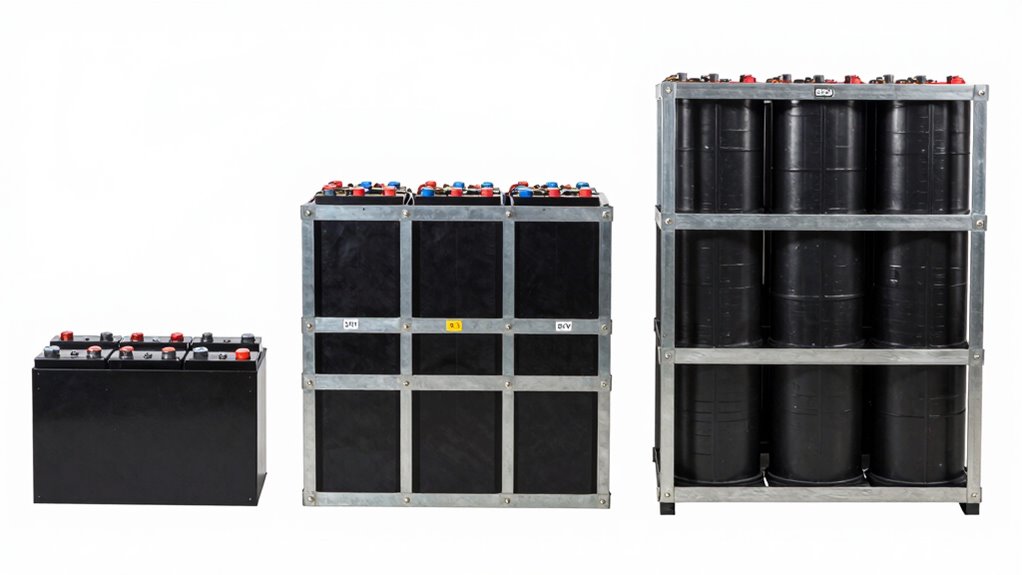

Choosing between 12V, 24V, and 48V battery systems impacts your system’s efficiency, longevity, and scalability. A 48V system distributes loads more evenly, reduces energy loss, and is easier to expand as your power needs grow. In contrast, 12V setups often require complex conversions and may wear out faster under heavy use. If you want to make the right choice and learn how each voltage impacts performance, keep going.
Key Takeaways
- Higher voltage systems like 48V distribute loads evenly, extending battery lifespan and reducing wear compared to 12V systems.
- 48V systems offer greater efficiency and less energy loss during power distribution than 12V or 24V setups.
- Lower voltage systems require complex converters for high-demand devices, increasing inefficiency and maintenance.
- 48V systems are more scalable, making expansion easier and preventing voltage drops during system growth.
- Choosing the appropriate voltage impacts system performance, longevity, and cost, avoiding frequent replacements and higher long-term expenses.
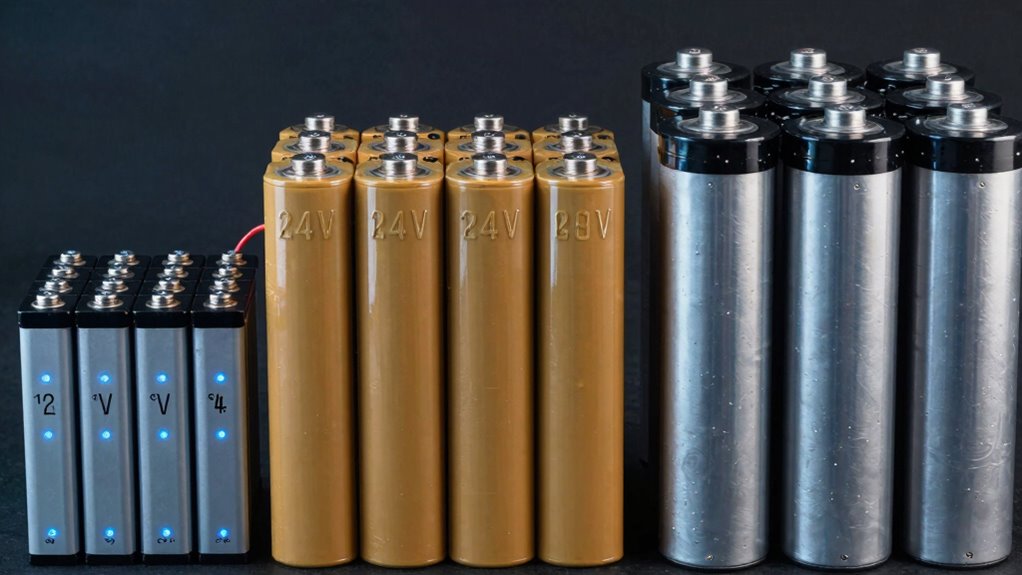
Choosing the right battery system is vital for ensuring your equipment runs smoothly and efficiently. When selecting between 12V, 24V, and 48V systems, many people overlook the importance of understanding how these voltages impact battery longevity and voltage conversion. For example, higher voltage systems like 48V are often more efficient in distributing power and reducing overall energy loss. Your choice can profoundly influence the performance, lifespan, and overall efficiency of your setup. It’s tempting to go with what seems most common or affordable, but knowing the fundamentals helps you make an informed decision that saves you time and money in the long run.
Battery longevity is a key consideration because it determines how often you’ll need replacements or maintenance. Higher voltage systems, like 48V, often have an advantage here because they can distribute the load more evenly across multiple cells, reducing stress on individual batteries. This balanced load helps prevent premature wear and tear, extending the lifespan of your batteries. Conversely, a 12V system may require more frequent replacements if used for heavy-duty applications, as it tends to handle larger loads less efficiently. Understanding how voltage impacts battery longevity ensures that you select a system that aligns with your usage patterns, ultimately providing more reliable service over time.
Higher voltage systems like 48V distribute loads evenly, extending battery lifespan and reducing wear.
Voltage conversion is another critical factor to consider. Many pieces of equipment operate at different voltages, necessitating the use of inverters or converters to match your battery system. For example, if your device runs on 120V AC, you’ll need to convert the power from your battery system. Using a 12V system for high-demand devices can mean more complex and less efficient voltage conversion, often resulting in power loss. On the other hand, a 48V system can reduce the need for multiple converters and minimize energy loss during the conversion process. This not only simplifies your setup but also enhances overall efficiency, saving you money on energy costs and reducing the risk of voltage-related issues.
Furthermore, choosing the correct voltage system impacts how you scale your setup. If you anticipate expanding your system in the future, higher voltages like 24V or 48V provide more flexibility. They allow you to connect additional batteries in series without sacrificing efficiency or risking voltage drops. This scalability is vital if you’re planning for future growth or increased power demands. Additionally, selecting a higher voltage system can facilitate more efficient power management, leading to better overall system performance.
In essence, selecting the right battery voltage involves understanding how it affects battery longevity, facilitates smoother voltage conversion, and supports future expansion. If you ignore these factors and simply pick a system based on initial cost or popularity, you might face frequent replacements, energy inefficiencies, and complicated setups. Take the time to evaluate your power needs carefully, considering both current demands and future plans, so you can choose a system that’s efficient, reliable, and cost-effective over the long haul.
Frequently Asked Questions
How Do Voltage Differences Affect Battery Lifespan?
Higher voltage systems generally experience less battery degradation over time because they maintain better voltage stability under load. When you choose a system with appropriate voltage, it reduces stress on the batteries, extending their lifespan. Conversely, mismatched voltages can cause fluctuations that accelerate degradation. So, selecting the right voltage helps preserve your batteries longer, ensuring consistent performance and maximizing the lifespan of your system.
Can I Upgrade From 12V to 48V Easily?
Thinking about upgrading from 12V to 48V? Sure, it’s a breeze—if you enjoy wiring challenges and compatibility puzzles. You’ll need new batteries, a compatible inverter, and possibly rewiring your entire setup. Don’t forget, not all components are compatible, so expect some headaches. Unless you’re ready to plunge into the technical maze, it’s smarter to consult an expert or stick with what works.
Are Higher Voltage Systems Safer to Handle?
Higher voltage systems aren’t necessarily safer to handle. You should always follow safety precautions and handling guidelines regardless of voltage level. With increased voltage, there’s a higher risk of electric shock or short circuits if you’re not careful. Use insulated tools, wear protective gear, and guarantee proper wiring. Proper training and adherence to safety protocols make working with higher voltage systems safer and prevent accidents.
What’s the Cost Difference Between System Types?
The cost comparison shows that 12V systems are usually the most affordable upfront, making them ideal for smaller budgets. 24V systems cost a bit more but offer better performance for moderate needs, while 48V setups tend to be the most expensive, suited for larger or more demanding applications. When considering budget, you should balance initial costs with long-term efficiency and system expansion needs to make the best choice.
How Do Voltage Choices Impact System Efficiency?
Choosing the right voltage impacts your system’s efficiency by enhancing voltage stability and reducing power losses during transmission. Higher voltages like 48V allow for more stable power delivery and less energy wasted over longer distances. Lower voltages, such as 12V, may lead to increased power loss and less stability, especially in larger setups. So, selecting the appropriate voltage guarantees your system runs smoothly and efficiently, saving you energy and costs.
Conclusion
Now that you understand the differences between 12V, 24V, and 48V systems, you’re better equipped to choose the right one for your needs. Remember, selecting the wrong voltage can lead to inefficiency or even damage. So, ask yourself: are you prioritizing simplicity or power? Making an informed decision guarantees your battery system performs at its best and lasts longer. Isn’t it worth taking the time to choose wisely for your energy future?