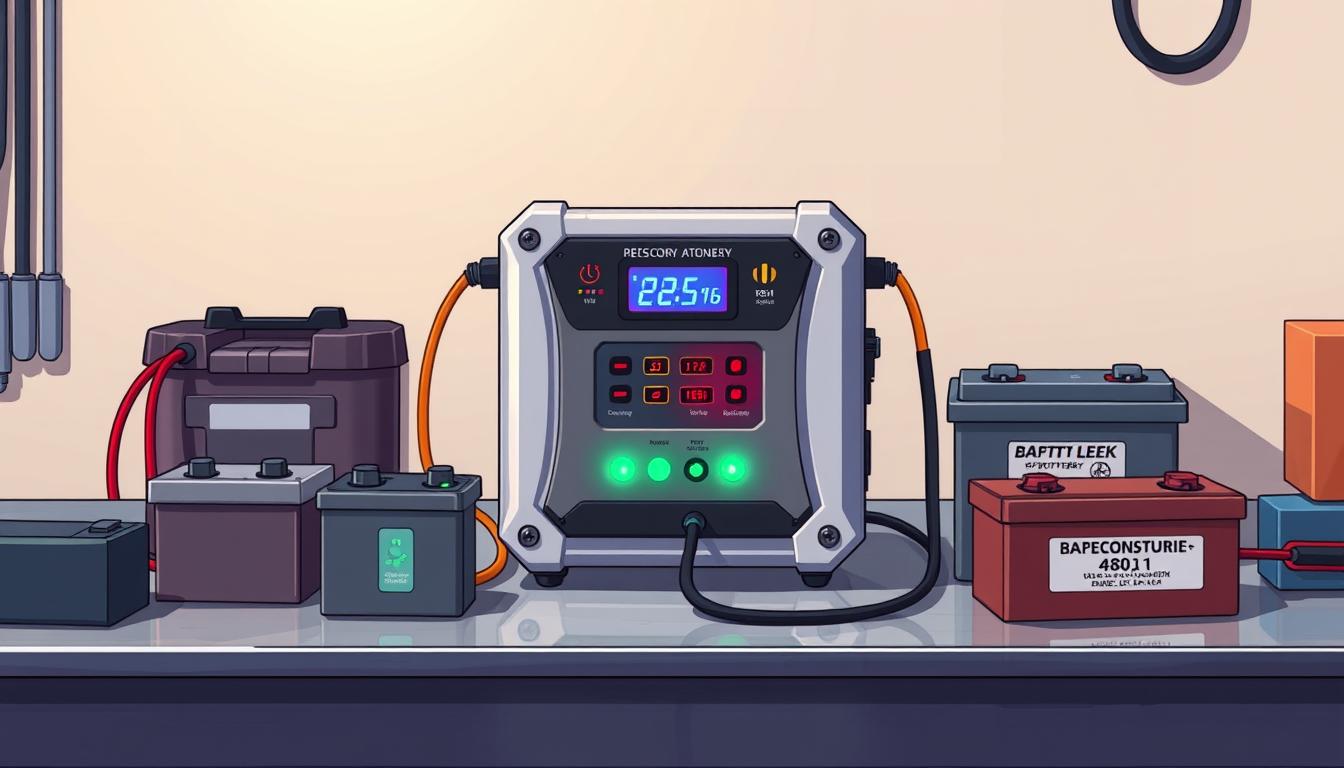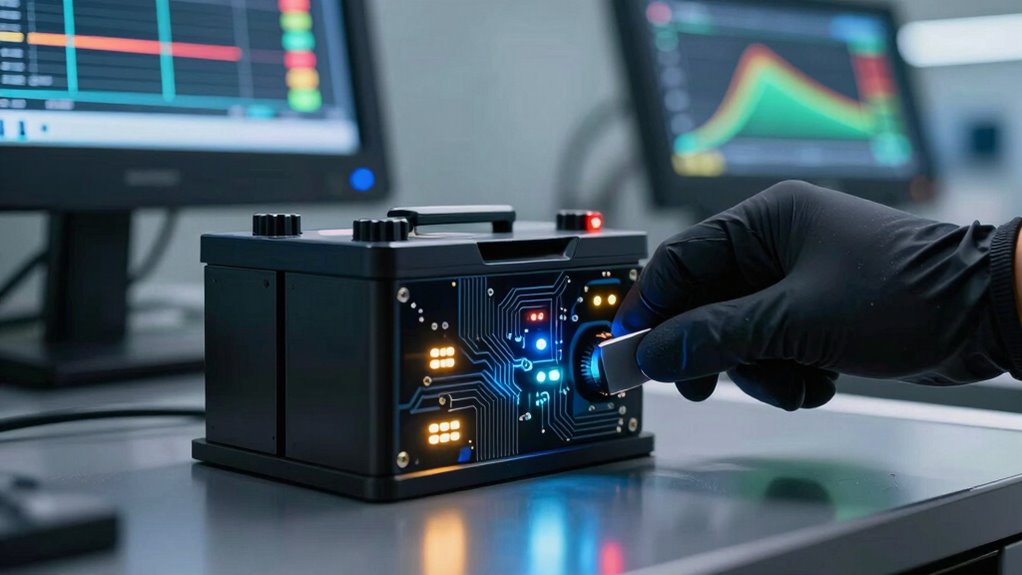

Programmable battery cycling’s value lies in its ability to boost diagnostic accuracy considerably. It mimics real-world usage patterns, allowing for reliable assessments that traditional methods often miss. You can test multiple parameters simultaneously, adjusting variables like charge rates and temperatures. This approach reveals battery behavior and identifies weaknesses early, saving costs and improving reliability. By implementing this advanced testing method, you’ll better understand your battery’s performance and longevity. Discover how it can transform your diagnostics further.
Key Takeaways
- Programmable battery cycling enhances diagnostic accuracy by identifying issues that traditional methods may overlook.
- It simulates real-world usage patterns, providing insights into battery capacity and life expectancy under various conditions.
- Flexibility in testing allows for simultaneous assessment of multiple parameters, revealing factors contributing to battery degradation.
- Automation reduces manual testing time, minimizes human error, and facilitates comprehensive data collection.
- Early identification of weaknesses through diagnostics leads to cost savings and extended battery life, improving overall product reliability.

As technology advances, you might find yourself needing more effective ways to diagnose battery performance. Traditional methods often fall short, leading to inaccurate assessments that can affect the reliability of devices. That’s where programmable battery cycling comes into play. By using this technique, you can greatly enhance your diagnostic accuracy, enabling you to identify issues that standard tests might miss.
Programmable battery cycling allows you to mimic real-world usage patterns in a controlled environment. Instead of relying on static testing, you can tailor the cycling process to match the specific demands your battery will face. This dynamic approach not only helps you understand how the battery behaves under various conditions but also reveals its capacity and life expectancy more accurately. When you apply this method, you get a clearer picture of battery performance, which is vital, especially in applications where reliability is paramount.
Moreover, programmable battery cycling provides you with the flexibility to test multiple parameters simultaneously. You can adjust charge and discharge rates, temperature conditions, and even the number of cycles. This level of control is invaluable, as it allows you to pinpoint the exact factors that contribute to battery degradation. You’re not just seeing how long a battery lasts; you’re understanding why it lasts that long or why it fails. This insight can guide your future designs or purchasing decisions.
Another advantage is the time efficiency. Rather than spending hours on manual testing, you can set up a programmable cycling regime and let it run, freeing you to focus on other tasks. This automation not only speeds up the diagnostic process but also reduces human error, further improving diagnostic accuracy. You’ll find that you can gather more data in less time, making it easier to assess battery performance thoroughly.
Finally, incorporating programmable battery cycling into your diagnostics can save you money in the long run. By identifying weaknesses early, you can avoid costly failures and extend the life of your batteries. Understanding battery performance through this advanced method can lead to better maintenance schedules and improved product reliability, ultimately satisfying your customers.
In a world where every detail matters, programmable battery cycling stands out as a key tool for anyone serious about battery diagnostics. By leveraging this technology, you can enhance your understanding of batteries, ensuring they meet your performance expectations.

KONNWEI KW341 6V 12V 24V Battery Tester for Car Truck Motorcycle
- All-in-One Battery Tester: Tests 6V, 12V, 24V batteries for various vehicles
- Wide Battery Compatibility: Supports flooded, AGM, Gel, EFB, Lithium batteries
- Built-in Safety Features: Reverse polarity protection and weak battery detection
As an affiliate, we earn on qualifying purchases.
As an affiliate, we earn on qualifying purchases.
Frequently Asked Questions
What Types of Batteries Can Be Tested With Programmable Cycling?
You can test various types of batteries with programmable cycling, including lithium-ion and nickel metal hydride. These testing methods let you evaluate performance, cycle life, and efficiency under controlled conditions. By utilizing programmable cycling, you gain insights into how each battery type reacts to different charge and discharge patterns. This helps you optimize battery usage and identify potential issues before they become significant problems, ensuring reliable performance in your applications.
How Long Does a Typical Battery Cycling Test Take?
A battery cycling test isn’t a sprint; it’s more like a marathon. Typically, it takes anywhere from a few hours to several days, depending on the battery type and cycling frequency. You’ll find that more complex batteries require longer testing periods. During this time, you’ll observe performance under various conditions, giving you valuable insights into reliability. So, be patient; thorough battery testing is worth the wait!
Are There Specific Software Tools Required for Battery Cycling?
Yes, there are specific software tools you’ll need for battery cycling. These tools guarantee software compatibility with your battery management system and help you customize parameters for cycle optimization. You’ll want software that allows you to monitor, analyze, and adjust cycling processes effectively. This way, you can achieve more accurate diagnostics and maximize battery performance. Investing in the right tools can greatly enhance your cycling tests and results.
Can Programmable Cycling Improve Battery Lifespan?
Yes, programmable cycling can greatly improve battery lifespan. By precisely controlling charge and discharge cycles, you optimize battery performance and minimize stress on the cells. This tailored approach helps in identifying weak spots and enhances overall efficiency. You’ll notice that maintaining ideal operating conditions through programmable cycling leads to better longevity and reliability. So, if you’re looking to extend your battery’s life, implementing this method is a smart move.
What Safety Precautions Should Be Taken During Testing?
When you’re testing batteries, think of it like walking a tightrope—balance is key! Always use voltage monitoring to keep track of levels, ensuring they stay within safe limits. Don’t forget thermal management; overheating can lead to catastrophic failures. Implement proper ventilation and cooling systems to prevent heat buildup. Wearing appropriate safety gear is essential too. By following these precautions, you’ll protect both yourself and the equipment during testing.
Conclusion
Incorporating programmable battery cycling into diagnostics can greatly enhance your battery management strategies. By enabling precise control over charging and discharging cycles, you can better assess battery health and performance. Notably, studies show that implementing these techniques can improve battery lifespan by up to 30%. This not only saves costs but also contributes to sustainability efforts. Embracing this technology equips you with the tools to make informed decisions and optimize battery usage in your applications.