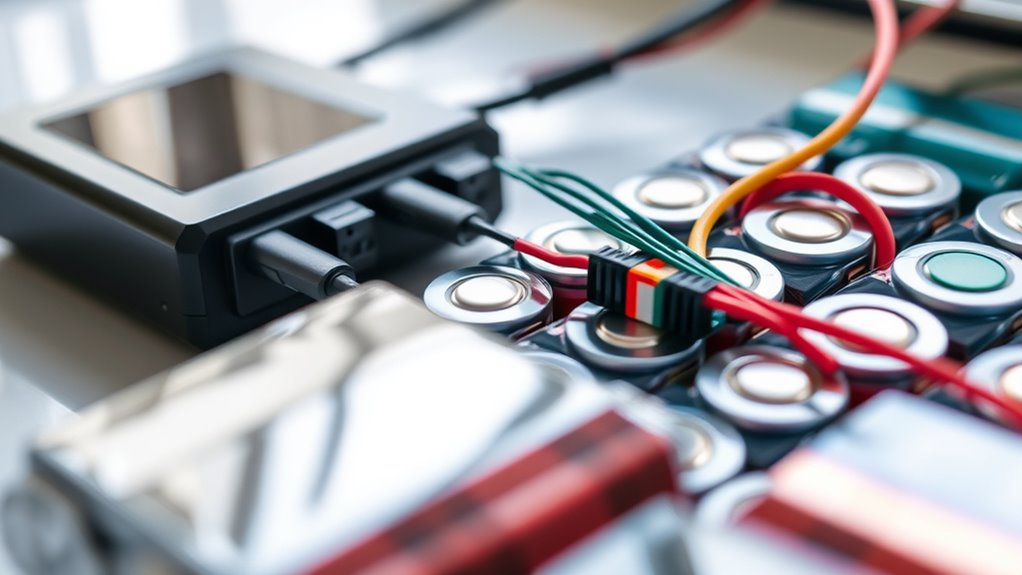

Using a balancing charger for lithium-ion packs helps keep all cells at the same voltage, preventing overcharge or deep discharge of individual cells. This process guarantees your battery stays healthy, safe, and performs at its best over time. It’s essential to choose a charger compatible with your pack’s voltage and chemistry. Proper use of a balancing charger can extend your battery’s lifespan and improve safety. Keep going to discover more tips on maintaining your lithium-ion packs effectively.
Key Takeaways
- Balance chargers equalize voltage across all cells, preventing overcharge and deep discharge.
- Ensure the charger matches your lithium-ion pack’s voltage and cell count for compatibility.
- Regularly use a balancing charger to maintain cell health and prevent safety risks.
- Follow manufacturer guidelines for proper charging procedures and voltage limits.
- Proper use of balancing chargers extends battery lifespan and enhances overall safety.
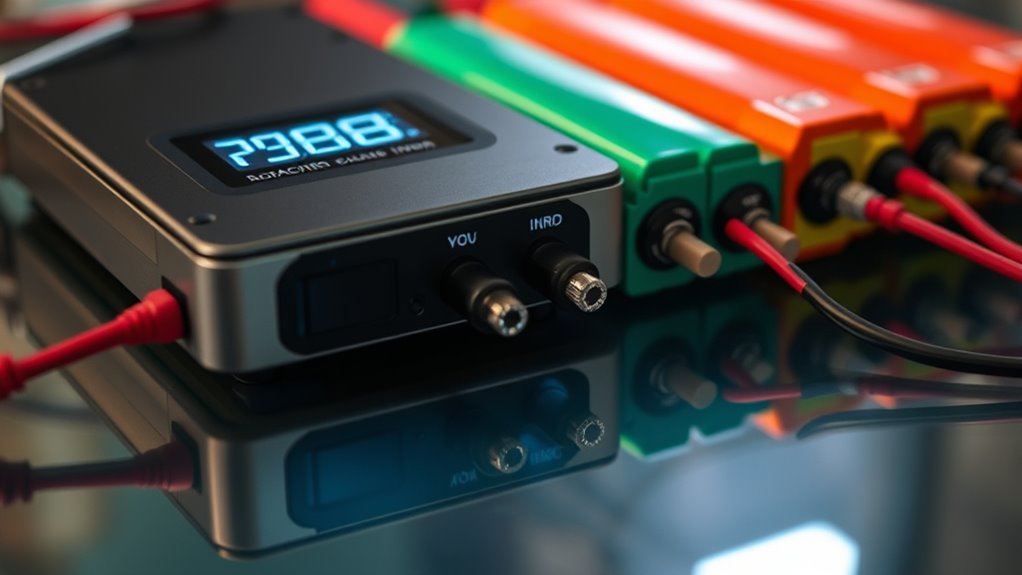
Have you ever wondered why lithium-ion batteries sometimes don’t last as long or perform as well as they should? The answer often lies in proper battery maintenance. Lithium-ion packs, while efficient, require careful care to guarantee their longevity. One essential aspect of this maintenance is using a balancing charger. Without proper balancing, individual cells within the pack can become unbalanced, leading to reduced capacity, shorter lifespan, and even safety risks. Balancing chargers work by equalizing the voltage levels across all cells, preventing overcharge or deep discharge of any single cell. This process helps maintain the pack’s overall health and performance over time.
When you’re selecting a balancing charger, charger compatibility becomes a key consideration. Not all chargers are created equal, and using one that isn’t compatible with your lithium-ion pack can cause damage rather than protect your investment. Make sure your charger supports the specific voltage and cell count of your battery pack. For example, if you’re working with a 3S pack (three cells in series), ensure the charger is designed to handle that configuration. Compatibility also extends to the type of lithium-ion chemistry in your pack, such as LiPo, Li-ion, or LiFePO4. Using a charger that matches your pack’s chemistry guarantees safe and effective balancing, reducing the risk of overcharging or overheating.
Proper battery maintenance isn’t just about using the right charger; it also involves regular monitoring and cautious charging habits. Always follow the manufacturer’s guidelines, and avoid pushing your batteries to their limits. Overcharging or deep discharging can cause cell imbalance, which balancing chargers are designed to correct, but prevention is always better. Keep an eye on your battery’s voltage levels during charging sessions and never leave it unattended. Additionally, store your lithium-ion batteries in a cool, dry place to prevent capacity loss due to temperature extremes. Additionally, understanding the power output of your electric bike can help you choose the right charger and maintain optimal performance.
Balancing chargers are an excellent tool in your battery maintenance arsenal, but only if used correctly. Making sure charger compatibility with your specific battery pack is essential to protect your investment and maximize performance. When you commit to proper care, including balancing and careful selection of your charger, your lithium-ion batteries will serve you better over the long haul. This proactive approach not only extends the lifespan of your packs but also keeps them functioning safely and efficiently, allowing you to get the most out of every charge.
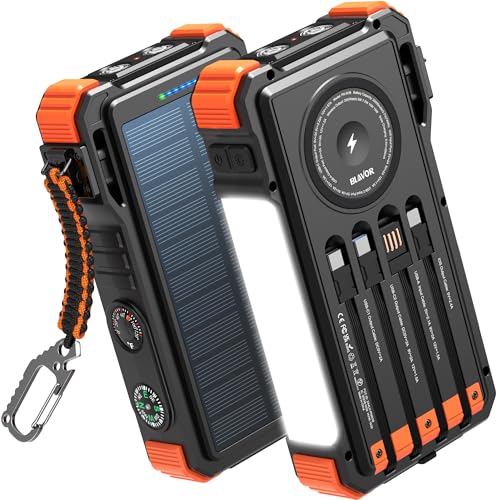
BLAVOR Solar Power Bank 20000mAh Built-in Cables, Wireless Charger for Phones & Apple Watch, 20W Fast Charging Battery Pack with USB C, Flashlight, Solar Charger for iPhone, iPad, iWatch, Samsung
- Simultaneously Charge 6 Devices: Multiple cables and ports for 6 devices
- High Capacity & Fast Charging: 20000mAh battery with 20W USB-C fast charge
- Wireless Charging & Built-in Cables: Wireless charger for phones and Apple Watch
As an affiliate, we earn on qualifying purchases.
Frequently Asked Questions
Can Balancing Chargers Repair Damaged Lithium-Ion Cells?
No, balancing chargers can’t repair damaged lithium-ion cells. They’re designed for cell maintenance, ensuring each cell stays balanced during charging, but they can’t fix cell damage caused by overcharging, deep discharging, or aging. If a cell is damaged, it may need replacement rather than repair. Proper charger maintenance is essential to prevent damage, but once cells are compromised, balancing chargers alone won’t restore their health.
How Often Should I Balance My Lithium-Ion Battery Pack?
You should balance your lithium-ion battery pack regularly to maximize its battery lifespan. Typically, balancing once every few charging cycles, or about once a month, is sufficient, especially if you notice uneven voltage levels. Frequent balancing helps prevent cell imbalances that can reduce capacity and longevity. Adjust your charging frequency based on usage and storage conditions to keep your pack healthy and guarantee ideal performance over time.
Are Balancing Chargers Compatible With All Lithium-Ion Battery Chemistries?
Balancing chargers aren’t compatible with all lithium‑ion battery chemistries. You need to check the charger’s specifications for compatibility with your specific battery chemistry, like Lithium Cobalt or Lithium Iron Phosphate. Using an incompatible charger can lead to improper balancing, reduced battery life, or safety hazards. Always verify charger compatibility with your battery chemistry prior to charging to ensure safe and effective balancing.
What Are the Signs of an Unbalanced Lithium-Ion Pack?
Your lithium-ion pack might be screaming for help if you notice uneven battery temperature or cell voltage disparity. These are clear signs of an unbalanced pack, which can cause overheating or reduced performance. If some cells run markedly hotter or have different voltages than others, it’s a sign you need to take action. Ignoring these signs can lead to serious damage, so stay vigilant and maintain proper balance.
Can Balancing Chargers Prevent Lithium-Ion Battery Fires?
Yes, balancing chargers help prevent lithium-ion battery fires by improving battery safety. They guarantee each cell charges evenly, reducing the risk of overcharging or overheating. Proper charger functionality is vital for maintaining safe operation, as it monitors cell voltages and balances them during charging. By using a balancing charger, you decrease the chances of dangerous conditions that could lead to a fire, keeping your batteries safer and more reliable.
Conclusion
Using balancing chargers for lithium-ion packs is like tending a delicate garden—you guarantee each cell blossoms evenly, preventing damage and extending your pack’s life. By investing a little time in balancing, you protect your investment and keep your power flowing smoothly. Remember, a well-maintained pack isn’t just a tool; it’s the heartbeat of your projects. Take control, stay vigilant, and watch your batteries thrive like a vibrant, resilient garden in full bloom.