To safely transport batteries, you must follow strict regulations like ADR, IATA DGR, and Hazardous Materials Acts. These guidelines guarantee proper classification, packaging, labeling, and handling to prevent hazards during transit. They also require specific training and documentation for personnel involved. Adhering to these standards minimizes risks to people and the environment and helps you stay compliant across borders. Keep exploring to discover more about how these regulations work together to keep your shipments safe.
Key Takeaways
- ADR provides European road transport regulations, including classification, packaging, and labeling requirements for batteries.
- IATA DGR sets specific standards for air transportation safety of lithium-ion and lithium metal batteries.
- Hazardous Materials Acts enforce compliance with international and national laws, ensuring safe handling and transportation.
- Proper training, packaging, and documentation are mandatory under these regulations to minimize risks during transit.
- Regulations are regularly updated to incorporate safety advancements and cybersecurity measures for shipment monitoring.
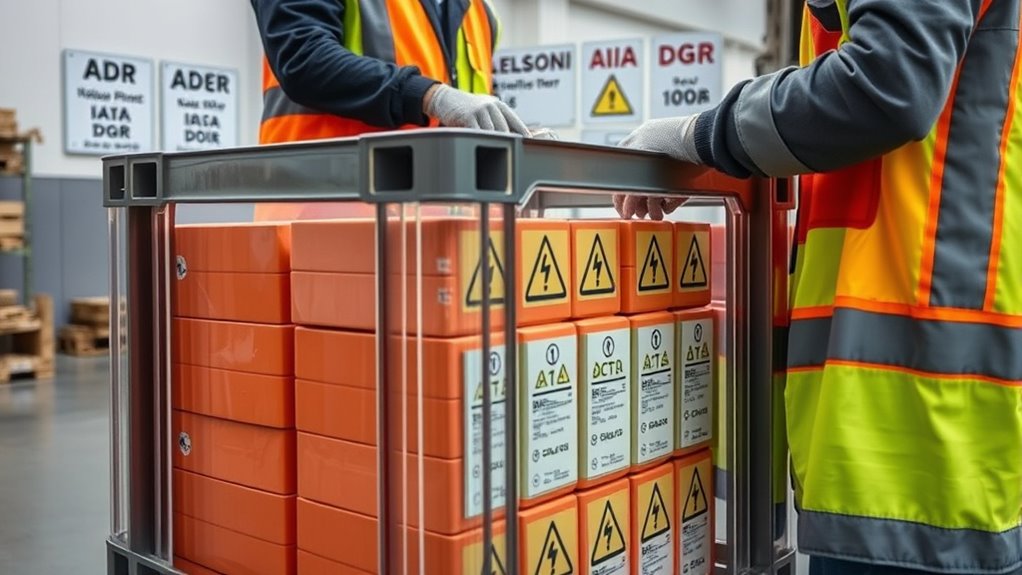
Transporting batteries safely is essential to prevent accidents and comply with regulations. When you handle battery shipments, understanding the importance of proper packaging standards is vital. These standards are designed to protect both people and the environment from potential hazards associated with batteries, especially lithium-ion types. Ensuring battery safety starts with choosing the right packaging that can withstand shocks, vibrations, and environmental conditions during transit. Proper packaging standards help prevent leaks, short circuits, or thermal runaway, which could lead to fires or explosions. As you prepare batteries for shipment, always verify that your packaging meets the specific requirements outlined in the regulations. This includes using sturdy, non-conductive, and appropriately labeled containers that prevent accidental activation or damage.
Regulations like ADR (European Agreement concerning the International Carriage of Dangerous Goods by Road), IATA DGR (International Air Transport Association Dangerous Goods Regulations), and various Hazardous Materials Acts set strict guidelines for battery transport. These rules are in place to minimize risks during transit and guarantee safety across borders. When complying with ADR, you’ll need to classify batteries correctly according to their hazard level, package them according to prescribed standards, and label them appropriately. This process involves understanding the specific requirements for lithium-ion and lithium metal batteries, which are considered especially hazardous due to their energy density and potential fire risk.
Similarly, IATA DGR focuses on air transport, emphasizing the importance of proper documentation, packaging, and labeling. Batteries transported by air must meet additional safety standards because of the increased risk associated with air travel. You should always check for the latest updates in IATA regulations, as they can change annually, affecting packaging and labeling requirements. Hazardous Materials Acts, often enforced by national agencies, further reinforce these standards by mandating proper training for personnel involved in battery shipping. This guarantees everyone understands how to handle, pack, and document dangerous goods properly. Additionally, advancements in cybersecurity have led to improved tracking and monitoring systems for battery shipments, enhancing overall safety and accountability during transit.
Frequently Asked Questions
How Do Regulations Differ for Lithium-Ion Versus Lithium Metal Batteries?
You’ll find that lithium-ion and lithium metal batteries have different regulations to guarantee battery safety and proper packaging standards. Lithium-ion batteries are generally allowed in larger quantities and are often shipped in devices, but they require strict packaging and labeling. Lithium metal batteries are more sensitive; they must be individually protected to prevent short circuits and often face stricter limits on size and quantity for safe transport.
What Are the Penalties for Non-Compliance With Transport Regulations?
If you don’t comply with transport regulations, you face strict compliance enforcement and penalty structures. Authorities can impose hefty fines, revoke licenses, or even pursue criminal charges depending on the violation’s severity. Non-compliance may lead to delays, confiscation of batteries, or legal action. To avoid these penalties, guarantee you understand and follow all applicable rules, maintain proper documentation, and handle lithium batteries safely during transport.
Are There Specific Packaging Requirements for Different Battery Types?
When it comes to packaging different battery types, you need to play it by the book. For lithium batteries, you should use sturdy battery casings and approved packaging materials to prevent leaks or damage. For other batteries, the packaging must be secure and durable, with proper cushioning. Remember, a well-packaged battery isn’t just about compliance—it’s about keeping everyone safe during transport. Don’t cut corners; follow specific packaging requirements for each battery type.
How Often Are the Regulations Updated or Revised?
Regulations are typically reviewed and revised every few years during scheduled compliance cycles or regulatory reviews. You should stay updated by checking official sources regularly, as updates may occur more frequently if safety concerns or technological changes arise. By keeping track of these review periods, you guarantee your packaging, handling, and transportation practices remain compliant and safe, minimizing risks and avoiding penalties.
Can Batteries Be Shipped Internationally Without Special Permits?
You can ship batteries internationally without special permits if they meet specific safety standards. However, regulations require proper packaging, clear labeling, and documentation. Always prioritize safe handling, including emergency procedures, and consider battery recycling options to minimize hazards. Failing to follow these rules can lead to delays, fines, or dangerous incidents. So, guarantee you stay compliant, communicate clearly, and handle batteries responsibly to facilitate smooth, safe international shipments.
Conclusion
Steering battery transport regulations is like guiding a ship through turbulent waters—you need to stay alert and follow the rules to avoid disaster. I once witnessed a shipment delayed because of overlooked guidelines, highlighting how essential compliance is. Remember, understanding ADR, IATA DGR, and hazardous materials acts isn’t just paperwork—it’s your safeguard against accidents and fines. Stay informed, stay safe, and keep your journey smooth by respecting these critical regulations.