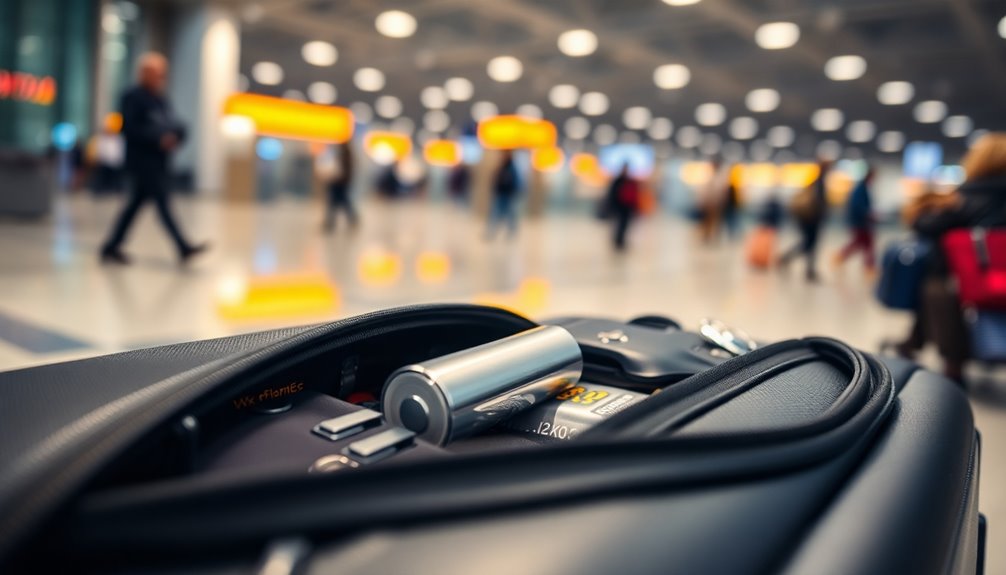
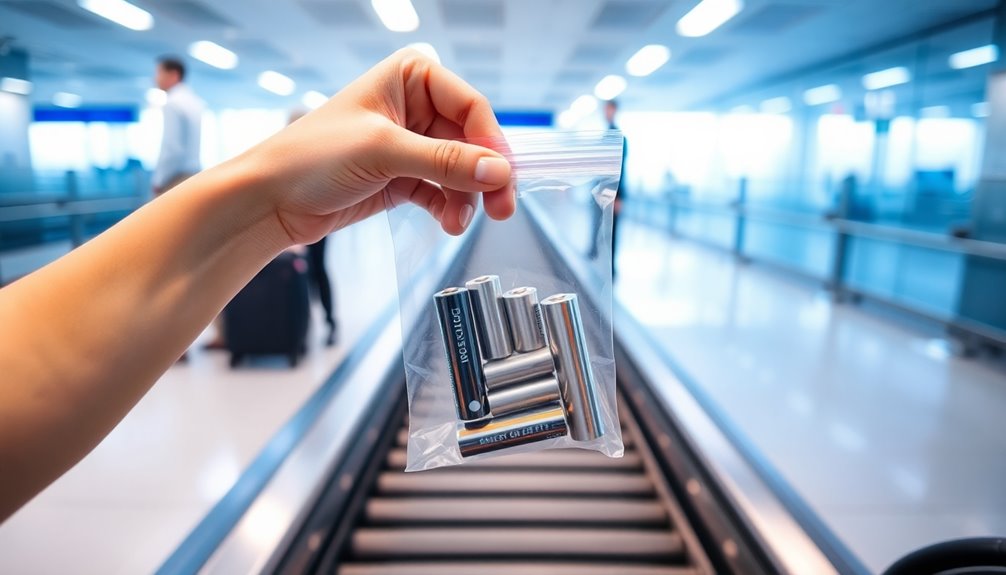
Yes, you can take lithium batteries on a plane, but you need to follow important safety guidelines. Always pack them in your carry-on luggage, not checked bags. Make sure your devices are turned off and secured to prevent accidental activation. Spare batteries should be in their original packaging or insulated. Most airlines allow batteries with a capacity of up to 100 watt-hours. It's important to regularly inspect your batteries for any signs of damage or swelling. By taking these precautions, you can enhance your travel safety while keeping your devices powered. There's more to know to travel safely with your batteries.

Get backup power and energy gear delivered free with Prime
- Fast, free delivery on millions of items
- Prime Video, Amazon Music and more included
- Member-only deals all year
Key Takeaways
- Lithium batteries must be packed in carry-on baggage only, not in checked luggage.
- Ensure all devices are turned off and secured to prevent accidental activation.
- Spare batteries should be stored in their original packaging or insulated to prevent short circuits.
- The maximum battery capacity allowed in carry-on is 100 watt-hours; check with your airline for specifics.
- Regularly inspect devices for damage and avoid exposing batteries to extreme temperatures or moisture.
Overview of Lithium Batteries
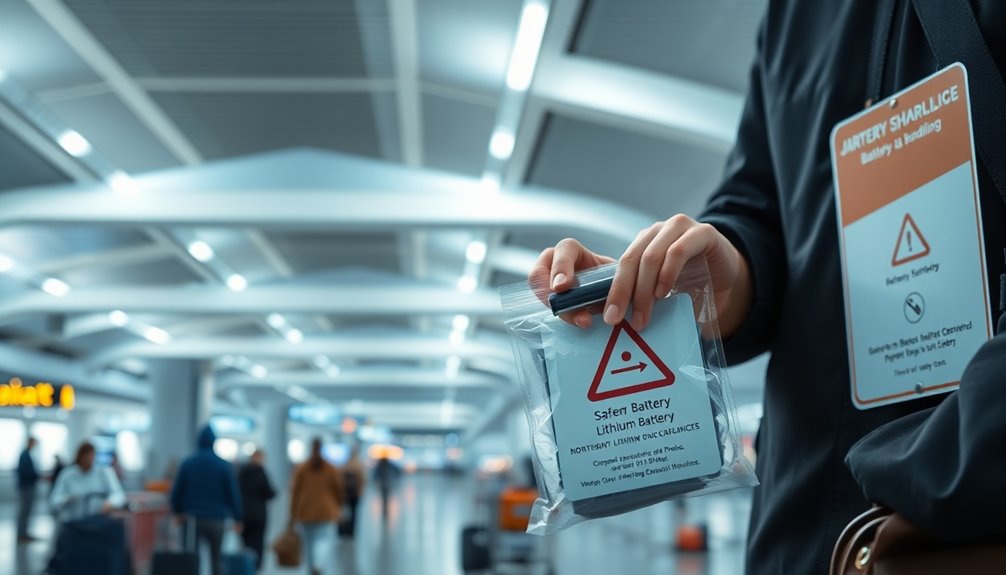
Lithium batteries are the powerhouse behind many of your favorite devices, from smartphones to laptops. You rely on their lightweight and rechargeable nature, making them popular for portable electronics.
The two main types, lithium-ion and lithium polymer, are known for their high energy density, allowing your gadgets to run longer between charges. This efficiency is essential for your daily tech use, but it's important to remember that lithium batteries come with safety considerations.
They can overheat and pose fire hazards, especially if they're damaged or defective. Regulatory agencies classify them as hazardous materials due to these risks.
When you travel, confirm you follow proper packing guidelines, like carrying them in your carry-on and keeping them turned off to avoid accidents.
Risks of Lithium Batteries
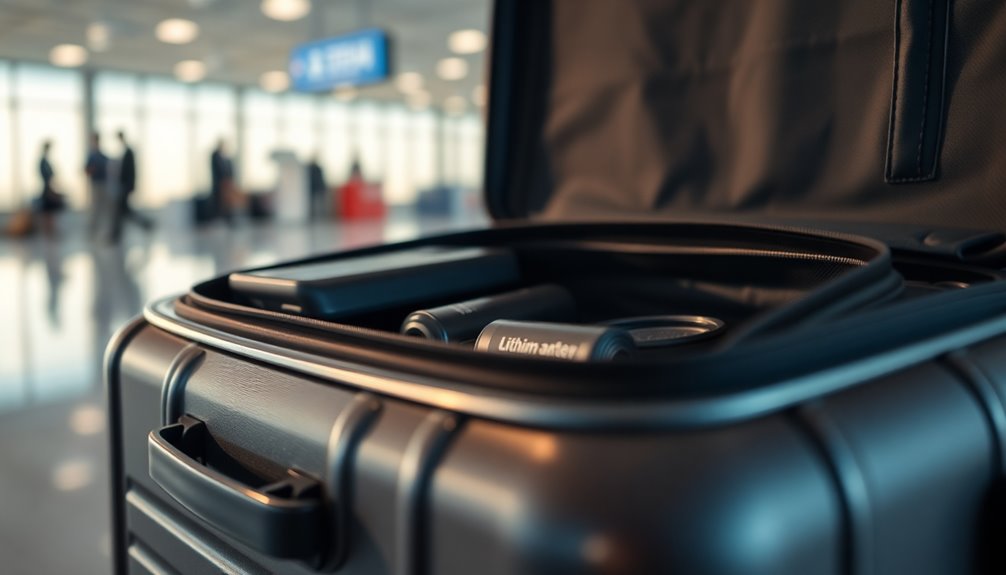
When traveling with devices powered by lithium batteries, it's crucial to understand the risks involved.
Lithium batteries are classified as dangerous goods due to their potential for fire or explosion, especially if they're damaged or defective. They can overheat rapidly during air travel, creating serious fire hazards.
If battery terminals are exposed, short circuits might occur, increasing the danger further. Improper handling can also lead to chemical leaks, releasing toxic fumes that pose health risks.
Regulatory agencies treat lithium batteries as hazardous materials, meaning you must adhere strictly to packing and transportation guidelines.
Being aware of these risks helps you guarantee a safer travel experience while using your devices.
Packing Guidelines for Air Travel
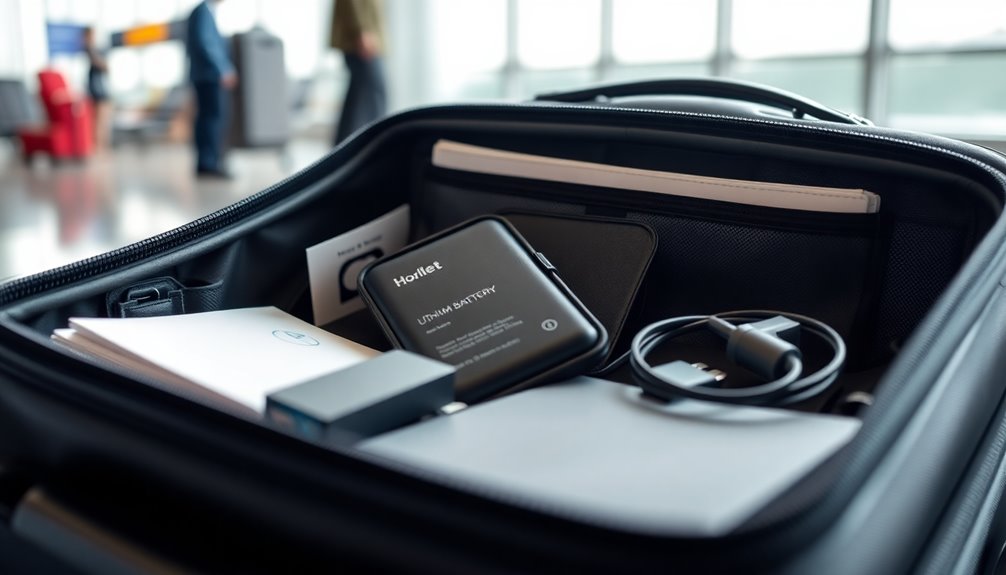
Understanding the risks associated with lithium batteries sets the foundation for safe travel. To guarantee your safety, always pack lithium batteries in your carry-on baggage, as checked baggage isn't allowed.
Make sure any devices containing these batteries are turned off and secured to prevent accidental activation. If you have spare batteries, keep them in their original packaging or insulated to avoid short circuits.
Remember, the maximum capacity for batteries in carry-on luggage is 100 watt-hours; larger batteries may need special permission or mightn't be allowed.
Finally, check your airline's specific regulations on the number of lithium batteries you can bring onboard, as they can vary. Being informed helps you travel safely with your devices.
Cabin Crew Preparedness

To guarantee passenger safety, cabin crew members are well-trained to handle emergencies related to lithium batteries.
They're equipped with specialized firefighting gear, like fire extinguishers and fire blankets, designed specifically for lithium battery fires. This training guarantees they can respond effectively to incidents caused by overheating or damaged batteries.
Additionally, crew members conduct safety checks on passenger devices to guarantee compliance with airline regulations, reducing potential risks.
They provide guidance on dangerous goods policies, helping you understand how to transport lithium batteries safely.
Throughout the flight, they monitor the quantity and condition of lithium batteries on board, playing an essential role in preventing incidents.
Your safety is their priority, and their preparedness helps create a secure travel environment.
Essential Safety Tips
Cabin crew members play an essential role in guaranteeing the safety of passengers, but being aware of how to handle lithium batteries yourself is equally important.
Always carry lithium batteries in your carry-on baggage, as checked luggage isn't allowed due to fire risks. Make certain all devices with lithium batteries are turned off and protected from accidental activation during the flight.
Store spare batteries in their original packaging or insulated to prevent short circuits. Limit the capacity to a maximum of 100 watt-hours to comply with airline regulations.
Regularly inspect your devices for damage, like swelling or corrosion, and avoid exposing them to extreme temperatures or moisture. Following these tips helps guarantee a safe travel experience.
Frequently Asked Questions
How Do You Pack Lithium Batteries for Air Travel?
When you pack lithium batteries for air travel, always keep them in your carry-on bag.
Make sure all devices are turned off to avoid accidental activation.
For spare batteries, use their original packaging or cover the terminals with tape to prevent short circuits.
Remember to limit the capacity to 100 watt-hours, as that's the maximum most airlines allow.
Finally, check your airline's specific regulations for any extra restrictions before you fly.
Can You Put a Lithium Battery in Your Luggage or Carry-On?
You can't put lithium batteries in your checked luggage, as they pose safety risks. Instead, carry them in your carry-on bag.
Make certain to store spare batteries in their original packaging or insulated to avoid short circuits. Also, keep devices turned off and protected from accidental activation.
Always check with your airline for specific regulations about the size and quantity of lithium batteries you can bring on board to guarantee a smooth journey.
What Happens if You Accidentally Check a Lithium Battery on a Plane?
Imagine a dragon hidden in your suitcase, slumbering until it's disturbed. If you accidentally check a lithium battery, you risk awakening that fire-breathing beast.
Security might find it, dispose of it, or even escalate the situation, endangering your flight and fellow passengers. You could lose your device and face fines or bans from flying with certain airlines.
It's vital to keep those fiery dragons in your carry-on, where they can be monitored and managed.
Why Are Lithium Batteries Not Allowed on Airplanes?
Lithium batteries aren't allowed in checked baggage due to their potential fire hazards. If damaged or defective, they can overheat and cause fires that are hard to detect in the cargo hold.
Regulatory agencies set strict guidelines, limiting their capacity and requiring you to carry spare batteries in your carry-on, properly insulated. This helps guarantee your safety and the safety of everyone on the flight, allowing cabin crew to address any emergencies promptly.
Conclusion
As you prepare for your journey, remember that lithium batteries can be both a lifeline and a potential hazard. By following the packing guidelines and keeping safety tips in mind, you can travel with peace of mind. Just like a well-tuned engine, a little preparation goes a long way in ensuring a smooth flight. So, stay informed, be cautious, and enjoy your adventures without the worry of battery mishaps! Safe travels!
Fall Picks
fall essentials
As an affiliate, we earn on qualifying purchases.