
To safely store lithium batteries, keep them in a cool, dry place within 20°C to 25°C to prevent damage from extreme temperatures. Organize batteries separately with original packaging or protective cases, storing them upright in a secure, ventilated area out of children’s reach. Regularly inspect for swelling, corrosion, or leaks, and promptly discard damaged units following local guidelines. Following these practices helps guarantee safety and longevity, and there’s more to learn for ideal storage.
Key Takeaways
- Store lithium batteries in a cool, dry environment at 20°C to 25°C to prevent overheating and electrolyte degradation.
- Keep batteries organized separately from metal objects and in protective cases to avoid short circuits and physical damage.
- Regularly inspect batteries for swelling, corrosion, leaks, or damage, and dispose of compromised units properly.
- Use labeled, upright storage in a secure area, out of reach of children and unauthorized persons.
- Maintain a consistent moderate temperature and good ventilation to extend battery lifespan and ensure safety.
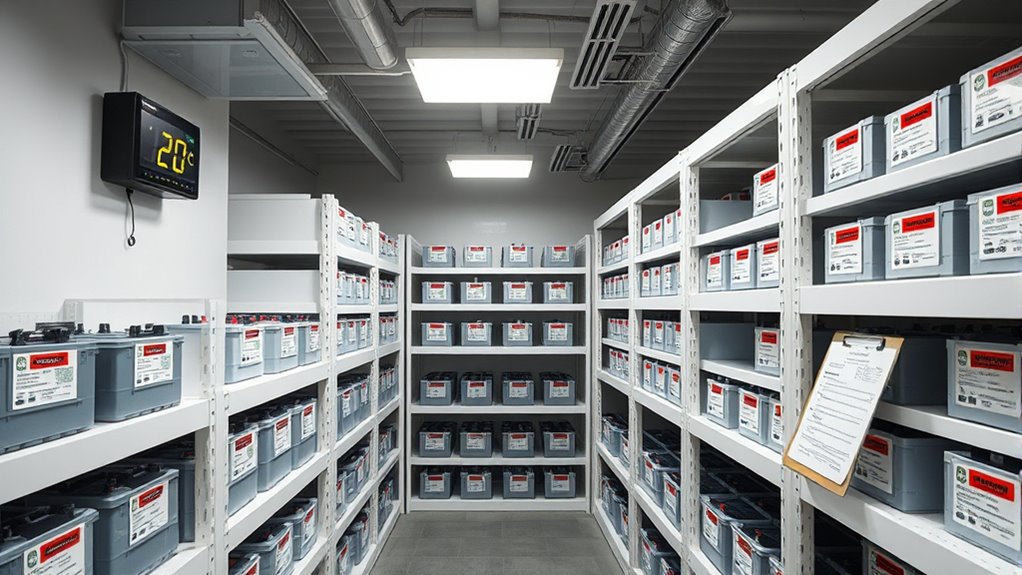
Lithium batteries can pose fire and safety risks if not stored properly, so it’s essential to follow recommended conditions to prevent accidents. Proper storage isn’t just about keeping your batteries out of sight; it’s about ensuring safety through good battery safety practices. When you store lithium batteries correctly, you minimize the risk of short circuits, overheating, and potential fires. Implementing storage best practices involves understanding the ideal temperature range, organizing your batteries properly, and regularly inspecting them for signs of damage or deterioration.
Proper lithium battery storage minimizes fire risks through temperature control, organization, and regular inspections.
Temperature control is critical for safe storage. You should keep lithium batteries in a cool, dry place, ideally between 20°C and 25°C (68°F to 77°F). Avoid exposing them to extreme heat or cold, as high temperatures can cause the electrolyte inside to break down, increasing the risk of thermal runaway. Conversely, freezing temperatures can impair battery performance and damage internal components. Consistently maintaining a moderate temperature helps prolong the battery’s lifespan and reduces safety hazards. If you’re storing batteries for an extended period, consider using a temperature-controlled environment or a storage container with insulation to prevent fluctuations.
Organization plays an essential role in battery safety. Keep your lithium batteries separated from metal objects like jewelry, keys, or tools that could cause accidental shorts. Store individual batteries in their original packaging or in protective cases made specifically for batteries to prevent contact with other batteries or conductive materials. If you have multiple batteries, label them clearly and store them upright in a dedicated, secure area that’s out of reach from children or unauthorized personnel. Proper organization not only reduces the risk of accidental damage but also makes it easier to perform routine inspections.
Regular inspection is a fundamental part of safe storage practices. Periodically check your batteries for swelling, corrosion, leaks, or any signs of physical damage. If you notice any abnormalities, safely dispose of the battery according to local regulations—do not attempt to use or repair a damaged lithium battery. Maintaining a routine inspection schedule helps catch issues early, preventing potential safety hazards. Additionally, monitor the voltage levels if possible; a significant drop or abnormal fluctuation indicates the battery’s internal health may be compromised.
Frequently Asked Questions
How Long Can Lithium Batteries Be Stored Safely?
You can generally store lithium batteries safely for 6 to 12 months if you follow proper storage guidelines. To maximize battery lifespan, keep them in a cool, dry place at around 50% charge. Regularly inspect and organize your batteries to prevent damage. Avoid extreme temperatures and ensure they’re stored separately from metal objects. Adhering to these storage guidelines helps maintain their quality and prolongs their usability over time.
What Are Signs of a Failing Lithium Battery?
About 30% of lithium battery failures show visible signs like swelling or corrosion. You’ll notice battery swelling when it becomes puffy or bulges, indicating gas buildup inside. Corrosion signs appear as rust or leaks around terminals. If you see either, stop using the battery immediately. These signs warn you that the battery is failing, which could lead to leaks, fire, or explosion if ignored. Always inspect batteries regularly for these issues.
Can Lithium Batteries Be Stored Together With Other Chemicals?
You shouldn’t store lithium batteries with other chemicals because of chemical incompatibility. Mixing them can cause dangerous reactions, leaks, or fires. To prevent this, practice storage segregation by keeping lithium batteries separate from acids, oxidizers, or flammable substances. Always follow proper guidelines and use designated containers, ensuring safe handling and minimizing risk of damage or accidents. This approach keeps your storage area safe and compliant with safety standards.
How Often Should Stored Lithium Batteries Be Inspected?
You should inspect stored lithium batteries regularly, ideally every 3 to 6 months, to prevent potential fire hazards. Regular checks help identify swelling, leaks, or corrosion that can lead to dangerous situations. Investigating the importance of proper battery recycling highlights that neglecting inspections increases fire risks. By staying vigilant, you minimize hazards, ensure safety, and promote responsible disposal, preventing accidents and environmental harm.
What Are the Environmental Impacts of Improper Lithium Battery Storage?
Improper lithium battery storage can cause environmental hazards like chemical leaks, fires, and soil or water contamination. These hazards threaten ecosystems and public health. Additionally, poorly stored batteries increase recycling challenges, making it harder to recover valuable materials and properly dispose of hazardous components. To avoid these issues, guarantee batteries are stored in a cool, dry place, organized, and inspected regularly, minimizing environmental risks and supporting responsible recycling efforts.
Conclusion
If you ignore proper storage, your lithium batteries could turn into a ticking time bomb that destroys everything around you! Keep them at the perfect temperature, organize them carefully, and inspect regularly—these simple steps can prevent disaster. Don’t leave safety to chance; treat your batteries like priceless treasures. By following these guidelines, you’ll protect your home, your loved ones, and your peace of mind—because one small mistake can lead to a catastrophe of epic proportions!