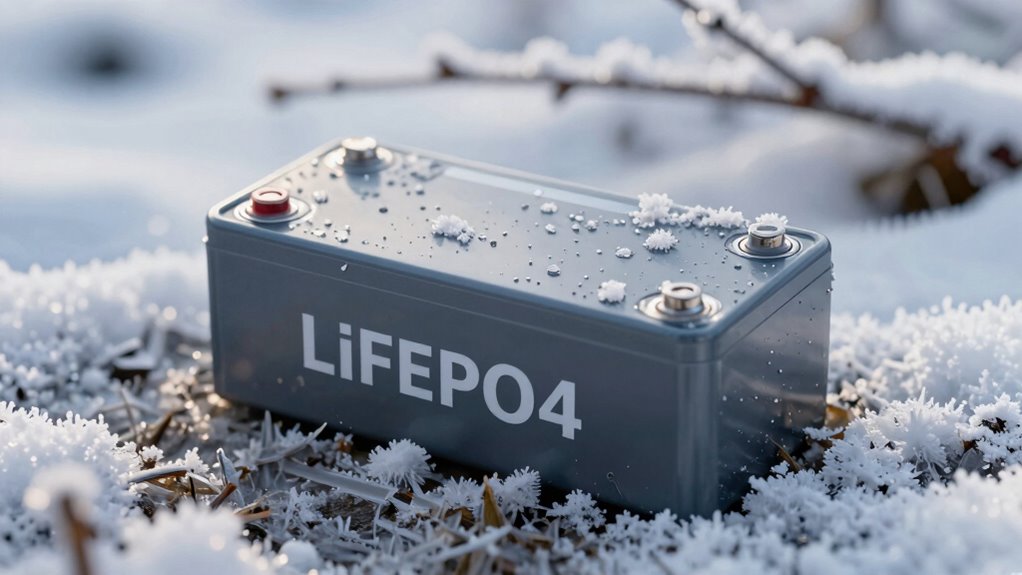

Before charging your LiFePO4 battery in cold weather, always check its temperature with a reliable thermometer. If it’s below the recommended range, you need to warm it up first using external heaters or a heated space to prevent damage or safety hazards. Charging a cold battery at high speeds can cause irreversible harm, so use slow, steady charging methods and follow manufacturer guidelines. If you want to guarantee safe, effective charging in cold climates, keep exploring these essential tips.
Key Takeaways
- Always verify the battery temperature with a reliable thermometer before charging.
- Do not charge LiFePO4 batteries at sub-zero temperatures; pre-warm if necessary.
- Use slow, steady charging methods to prevent thermal shock and damage.
- Employ external heaters or keep batteries in heated environments when cold.
- Follow manufacturer guidelines and avoid fast charging in low temperatures.
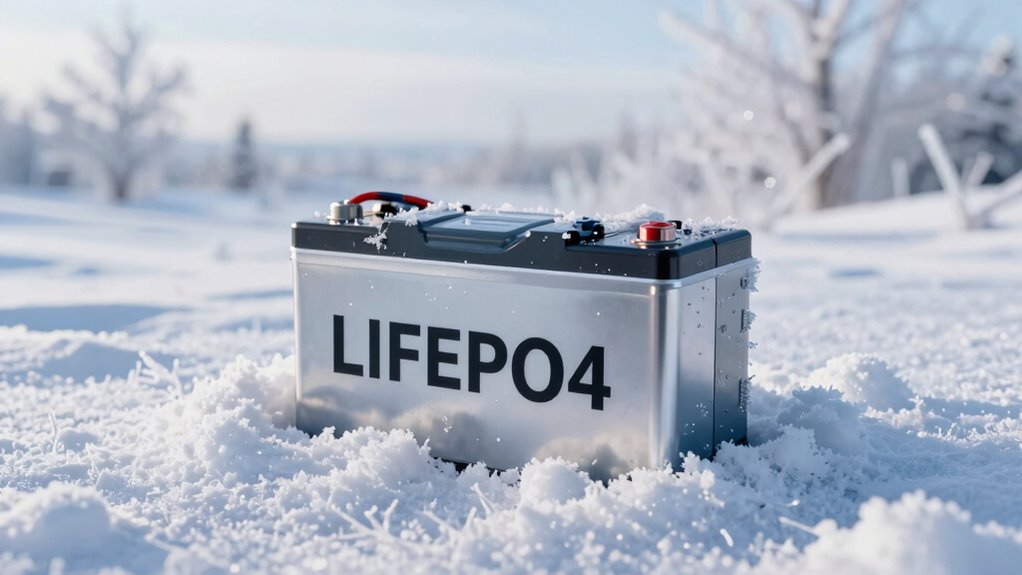
LiFePO4 batteries are known for their stability and long lifespan, but cold weather can pose challenges to their performance. When temperatures drop, these batteries become less efficient, and their ability to deliver power can decline markedly. To keep your battery functioning at its best, you need to pay close attention to thermal management and follow proper charging protocols. Cold temperatures slow down the chemical reactions inside the battery, which can lead to reduced capacity and increased internal resistance. That’s why managing the battery’s temperature is vital before attempting to charge it. If you charge a LiFePO4 battery when it’s too cold, you risk damaging the cells or causing uneven charging that can shorten the battery’s lifespan. The key is to confirm the battery is within its recommended temperature range, typically above freezing point, before connecting it to a charger.
Thermal management becomes your first line of defense in cold conditions. You should consider pre-warming your battery if it’s stored in a cold environment or if it’s been exposed to low temperatures for an extended period. Many modern battery systems come with built-in heaters or thermal management solutions, which help maintain an ideal temperature range. If your battery doesn’t have these features, you can use external warmers or keep it in a heated space until it reaches the appropriate temperature. Never attempt to charge or discharge a LiFePO4 battery at sub-zero temperatures without proper heating, as this can cause damage or even dangerous situations. Always check the battery’s temperature with a reliable thermometer before proceeding with any charging activity.
Additionally, adhering to specific charging protocols during cold weather is essential. You should avoid fast charging when the battery is cold, as rapid charging can generate excess heat and cause stress to the cells. Instead, opt for a slow, steady charge that allows the battery to warm gradually, reducing the risk of thermal shock. Many chargers have temperature sensors and smart charging modes that automatically adjust their parameters based on the battery’s current condition. Be sure to follow the manufacturer’s guidelines for cold weather charging, which often recommend starting with a lower voltage and gradually increasing it as the battery warms. Proper thermal management combined with correct charging protocols ensures your LiFePO4 battery remains healthy, safe, and effective even in cold conditions. Ignoring these precautions can lead to reduced capacity, shorter cycle life, or irreversible damage, so always take the time to prepare your battery properly before charging in winter weather. Additionally, understanding the impact of energy-efficient solutions can help optimize your battery’s performance in cold climates.
Frequently Asked Questions
How Can I Tell if My Lifepo4 Battery Is Too Cold to Charge?
You can tell if your LiFePO4 battery’s too cold to charge by checking its temperature. Use temperature sensors to monitor the battery’s core temperature; if it drops below 0°C (32°F), it’s too cold. Also, guarantee proper battery insulation to maintain warmth. If the sensor shows a low temperature, wait until it warms up before charging to prevent damage and ensure safe operation.
What Are the Signs of Damage From Charging in Cold Weather?
A picture is worth a thousand words—if your battery shows swelling or leaks, damage has likely occurred. Charging in cold weather can cause thermal expansion or electrolyte freeze, leading to internal damage. Signs include reduced capacity, swelling, or strange odors. Avoid these issues by inspecting your battery carefully before charging, and remember, it’s better to be cautious than to risk long-term harm from cold-induced damage.
Can I Use a Battery Heater With Lifepo4 Batteries?
Yes, you can use a battery heater with LiFePO4 batteries. This helps maintain ideal temperature through thermal regulation, especially in cold weather. Make sure you have proper battery insulation to protect against cold temperatures and prevent heat loss. Using a heater keeps the battery within a safe charging range, reducing the risk of damage and improving performance. Always follow manufacturer guidelines for safe and effective thermal management.
How Long Should I Wait Before Charging After Exposure to Cold Temperatures?
You should wait at least 30 minutes to an hour after exposure to cold temperatures before charging your LiFePO4 battery. Use thermal insulation or battery warming techniques to raise the temperature gradually, preventing damage. Avoid charging immediately after cold exposure, as cold causes internal resistance to increase, risking safety. Warming your battery guarantees safe, efficient charging and prolongs its lifespan.
Are There Specific Chargers Recommended for Cold Weather Lifepo4 Charging?
Don’t put all your eggs in one basket—choose chargers designed for cold weather to protect your LiFePO4 cells. Look for chargers with advanced thermal management features and verify they’re compatible with LiFePO4 batteries. Specialized chargers help prevent overcharging or damage caused by low temperatures. By selecting the right equipment, you keep your battery safe and extend its lifespan, even when the mercury drops.
Conclusion
So, next time you brave the cold to charge your LiFePO4 battery, remember the rule you must follow—yet somehow, ignoring it might just be the best way to test your patience. Ironically, what seems like a simple precaution could save you from costly damage, but where’s the fun in that? Embrace the chill, follow the guidelines, and enjoy the thrill of avoiding the inevitable. After all, what’s life without a little icy adventure?