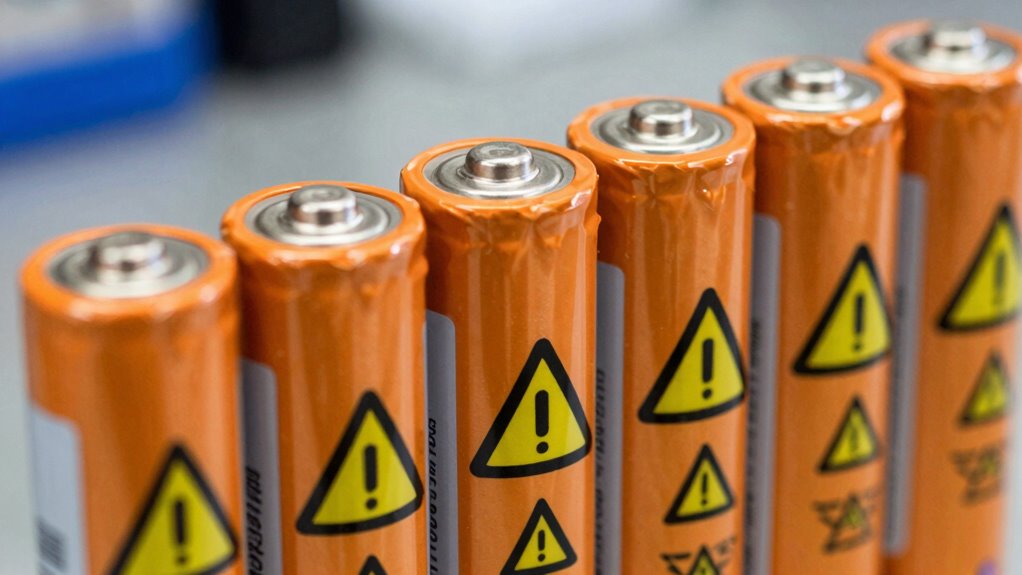

Hazard labels help prevent battery incidents by clearly showing the risks associated with different battery types, such as fires, leaks, or chemical exposure. They guide you on safe storage, handling, and disposal practices, reducing the chances of accidents during everyday use or recycling. Consistent symbols and standards make it easier to recognize dangers quickly and follow safety protocols. If you want to understand how these labels can protect you and others better, there’s more to discover.

Get backup power and energy gear delivered free with Prime
- Fast, free delivery on millions of items
- Prime Video, Amazon Music and more included
- Member-only deals all year
Key Takeaways
- Hazard labels communicate specific risks, enabling safe handling and reducing the chance of accidents during use and disposal.
- Clear hazard symbols allow quick risk identification, prompting proper precautions to prevent fires, leaks, and chemical exposure.
- Labels guide safe storage, transport, and disposal practices, minimizing incidents caused by mishandling or improper disposal.
- Proper labeling ensures correct recycling, preventing hazardous reactions and environmental contamination.
- Hazard labels assist in emergency response, enabling swift action and reducing injury or damage during accidents.
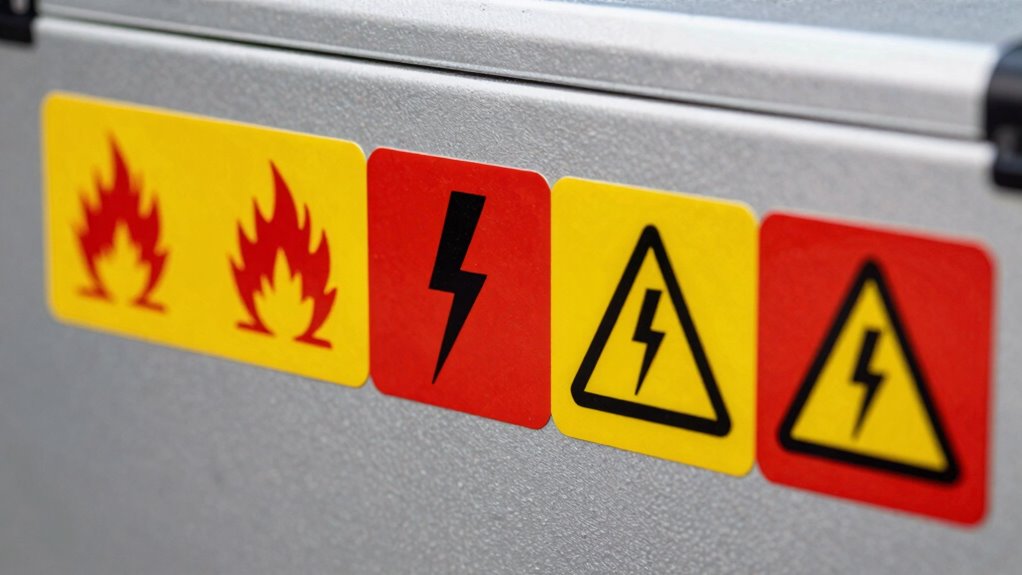
Understanding hazard labels is essential for guaranteeing battery safety, especially as batteries become more common in everyday devices. These labels are more than just symbols; they’re indispensable tools that communicate the risks associated with different types of batteries. When you handle batteries with the correct hazard labels, you’re better equipped to prevent accidents such as fires, leaks, or chemical exposure. Proper labeling also guides you on how to store, transport, and dispose of batteries safely, reducing the risk of incidents during the entire lifecycle of the battery.
One of the main ways hazard labels help prevent battery incidents is by promoting label compliance. When manufacturers adhere to labeling standards, they ensure that the hazard symbols are clear, accurate, and consistent. This consistency helps you quickly identify the specific risks, whether it’s a lithium-ion battery prone to thermal runaway or a lead-acid battery containing corrosive acids. Correctly labeled batteries make it easier for you to follow safety protocols, from wearing protective gear during handling to isolating damaged batteries to prevent leaks or fires.
Battery recycling is another critical aspect where hazard labels play a fundamental role. Proper label compliance ensures that batteries are correctly sorted and sent to recycling facilities equipped to handle their specific hazards. For example, a battery marked with a flammable symbol prompts you or handlers to avoid exposure to heat or sparks. It also informs recycling centers about the necessary precautions, preventing hazardous reactions or environmental contamination. When batteries are labeled correctly, they’re less likely to be improperly disposed of, which can lead to dangerous leaks or fires in waste management systems. Additionally, hazard communication helps in educating users about the potential dangers and proper procedures associated with different batteries. Furthermore, understanding labeling standards can significantly improve overall safety practices in both domestic and industrial environments.
In addition, hazard labels serve as an educational tool, reminding you of best practices for battery safety. They provide quick visual cues, so you don’t need to read lengthy instructions every time you handle a battery. This instant recognition can be critical in emergency situations, enabling you to act swiftly to contain a leak or disconnect a malfunctioning device. Labels also help in training staff and users, ensuring everyone understands the significance of proper handling and disposal, and reinforcing the importance of battery recycling efforts. Recognizing the importance of hazard labels in promoting safety standards is vital for reducing risks associated with batteries.
As an affiliate, we earn on qualifying purchases.
Frequently Asked Questions
How Often Should Hazard Labels Be Updated on Batteries?
You should update hazard labels whenever they show signs of damage, fading, or wear to guarantee label durability. Regular inspections are vital, especially if regulations change or new safety information emerges. Maintaining accurate labels helps you stay compliant with regulations and guarantees clear communication of hazards. Updating labels promptly minimizes risks, prevents accidents, and guarantees safety standards are consistently met across your operations.
Are Hazard Labels Standardized Internationally for All Battery Types?
Think of hazard labels as the universal language of safety. International standards aim to create label consistency across all battery types, but they aren’t perfectly standardized worldwide. You’ll find some variations depending on the region or battery type, so always check local regulations. While global guidelines like ISO help harmonize labels, it’s essential to stay updated and verify your labels meet the specific standards for each market to keep everyone safe.
What Training Is Needed to Interpret Hazard Labels Correctly?
You need training to interpret hazard labels correctly, focusing on label visibility and color coding. This training helps you quickly identify battery hazards, understanding symbols and color cues that indicate risks like flammability or corrosiveness. By learning to read labels accurately, you guarantee safe handling, storage, and transportation. Regular refresher courses keep your knowledge current, reducing the chance of accidents caused by misinterpreting hazard labels.
How Do Hazard Labels Influence Emergency Response Procedures?
Imagine a brightly colored label flashing like a warning beacon on a battery, guiding your actions. Hazard labels directly influence your emergency response protocols by ensuring label visibility, so you quickly recognize dangers. They serve as essential signals, helping you assess risks swiftly and act decisively. Clear, visible labels streamline your response, enabling you to follow correct procedures efficiently and minimize hazards during emergencies.
Can Hazard Labels Be Customized for Specific Battery Applications?
Yes, hazard labels can be customized for specific battery applications. Through label customization, you can include application-specific symbols, handling instructions, and safety warnings tailored to the battery’s unique use. This application specificity guarantees that everyone handling or working around the battery understands its particular hazards. Custom labels enhance safety by providing clear, relevant information, reducing the risk of accidents, and ensuring compliance with industry standards for different battery types and uses.
Conclusion
Think of hazard labels as the lighthouse guiding your ship through treacherous waters, alerting you to hidden dangers before disaster strikes. By clearly marking battery risks, you’re not just following safety rules—you’re shining a beacon that helps you navigate safely, avoiding fiery storms and silent pitfalls. When you heed these labels, you’re steering your journey with wisdom, ensuring that your voyage remains smooth and secure, just as a lighthouse guards a safe passage through darkness.
Halloween Picks
halloween
As an affiliate, we earn on qualifying purchases.