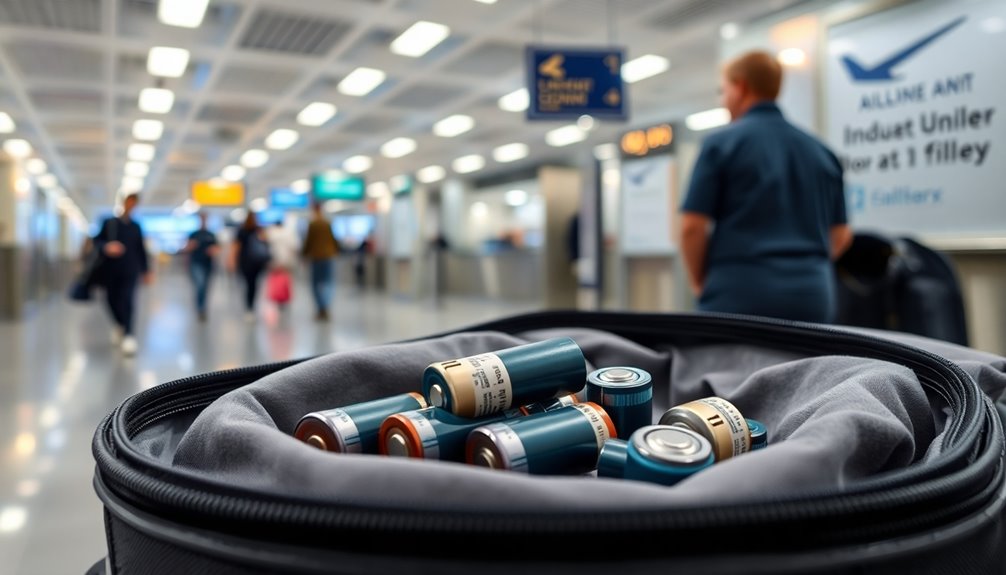
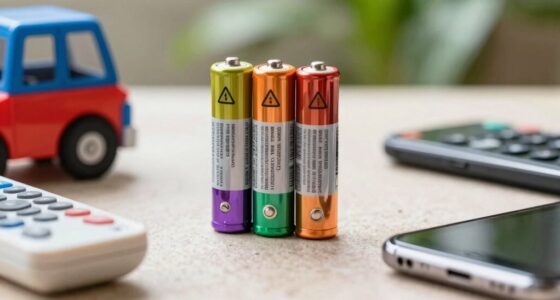
A strong battery safety culture at home and work involves handling batteries carefully, storing them in cool, dry places, and avoiding damage or leaks. You should always recycle batteries properly and dispose of them through designated programs. Prepare for emergencies by keeping fire extinguishers nearby and practicing safety procedures regularly. Educate your family and colleagues on safe handling and safety protocols. If you want to create a truly safe environment, understanding these practices is essential.

Get backup power and energy gear delivered free with Prime
- Fast, free delivery on millions of items
- Prime Video, Amazon Music and more included
- Member-only deals all year
Key Takeaways
- Implement and follow strict protocols for battery handling, storage, and disposal to minimize risks.
- Educate all household and workplace members about battery hazards and safe practices regularly.
- Keep safety equipment like fire extinguishers accessible and develop emergency response plans.
- Conduct routine safety audits and update procedures based on latest standards and incidents.
- Promote awareness of chemical hazards and encourage environmentally responsible battery recycling.
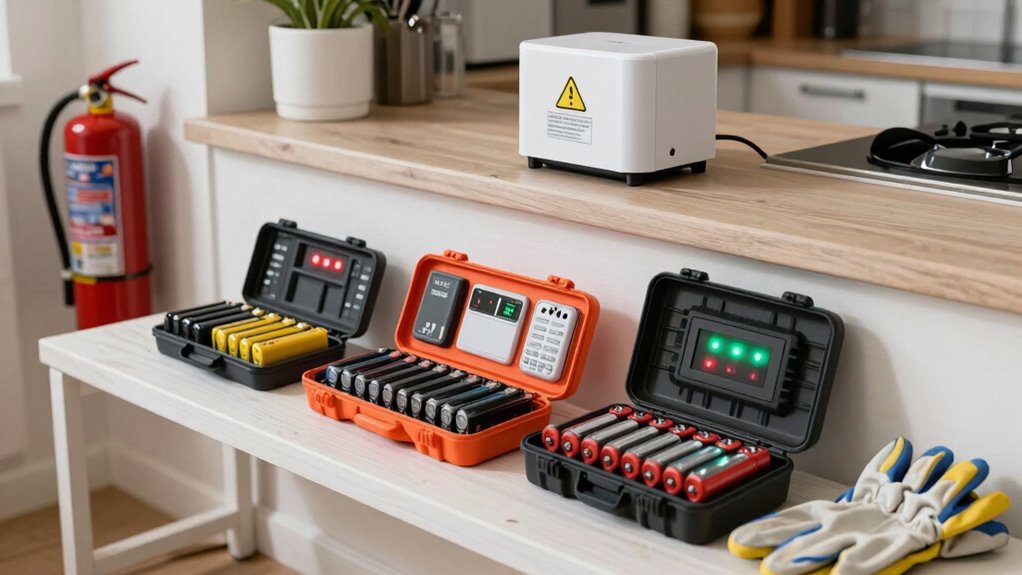
Battery safety isn’t something to overlook, whether you’re at home or on the job. It’s essential to understand how to handle batteries properly and create a safety-conscious environment. A strong battery safety culture means more than just knowing the basics; it involves proactive steps to prevent accidents and ensure everyone’s well-being. One key aspect is proper battery recycling. You should always dispose of batteries through designated recycling programs instead of throwing them in the trash. Batteries contain chemicals that can leak or cause fires if they’re damaged or improperly discarded. By recycling batteries correctly, you help reduce environmental hazards and minimize the risk of fires or chemical exposure. Promoting battery recycling at home and work shows your commitment to safety and environmental responsibility.
Another important part of building a safety culture is emergency preparedness. You need to be ready for potential battery-related incidents, such as fires or chemical leaks. Keep a fire extinguisher nearby, specifically one suited for electrical fires, and make sure everyone knows how to use it. Have clear procedures in place for responding to battery emergencies, and practice drills regularly. This way, if an incident occurs, you and your team can respond quickly and effectively, minimizing damage and injury. Emergency preparedness also involves having the right safety equipment and knowing how to shut down devices safely to prevent further hazards. Ensuring proper storage practices can significantly reduce the likelihood of accidents caused by damaged batteries.
Creating a battery safety culture at home involves simple daily habits. For example, don’t leave batteries in devices that aren’t in use for long periods, and avoid exposing batteries to extreme heat or cold. Store batteries in a cool, dry place away from flammable materials. Teach family members about the importance of handling batteries carefully and what to do if they notice any signs of damage, such as leaks or bulges. At work, establish safety protocols for replacing and disposing of batteries, and ensure that everyone is trained to follow them. Regular safety audits and updates to procedures help reinforce good habits. Being aware of battery chemical hazards and how to handle them safely further supports a strong safety culture. Developing a clear understanding of hazardous materials involved in batteries can help prevent incidents and improve response times in emergencies. Additionally, staying informed about the latest safety standards can help maintain a proactive approach to battery management.
Ultimately, a robust battery safety culture means integrating safe handling, proper disposal, and emergency preparedness into your everyday routines. It’s about creating an environment where safety is a shared priority, and everyone understands their role in preventing accidents. When you prioritize battery safety, you’re not only protecting yourself but also contributing to a safer home and workplace. Building this culture takes awareness and consistent effort, but the peace of mind that comes with knowing you’re prepared and responsible is well worth it.
electrical fire extinguisher for home
As an affiliate, we earn on qualifying purchases.
As an affiliate, we earn on qualifying purchases.
Frequently Asked Questions
How Often Should I Inspect My Batteries for Safety?
You should inspect your batteries monthly for safety, checking for any signs of damage like swelling, corrosion, or leaks. Proper battery disposal is vital if you find any issues. Also, review your charging habits—avoid overcharging or using incompatible chargers, as they can cause overheating or damage. Regular inspections help prevent accidents, ensuring your batteries remain safe and functional, whether at home or work.
Are There Specific Storage Tips for Different Battery Types?
You should store different battery types separately to prevent leaks or fires, using proper storage organization. Keep lithium-ion batteries in a cool, dry place away from metal objects, and store alkaline batteries in a similar environment. Always follow manufacturer instructions for storage. When batteries reach the end of their life, prioritize battery recycling to dispose of them responsibly. Proper storage and recycling help maintain a safe environment at home and work.
What Should I Do if a Battery Starts to Overheat?
When a battery starts to overheat, don’t wait for disaster—act fast. Disconnect it from power source immediately, and if safe, move it to a non-flammable surface outside. Use water or a fire extinguisher designed for electrical fires if needed, but never puncture or throw it in the trash. Follow proper emergency procedures and battery disposal guidelines. Staying calm and acting swiftly can prevent bigger problems down the line.
How Can I Identify Counterfeit or Substandard Batteries?
To spot counterfeit or substandard batteries, carefully examine the packaging for poor quality printing or misspellings, which often indicate fake products. Check the battery’s branding and serial numbers against the manufacturer’s official records. Reliable battery manufacturing companies include security features or holograms. Use counterfeit detection tools or apps if available. Trust reputable sources and avoid suspiciously cheap deals to guarantee you’re using safe, genuine batteries.
Are There Legal Regulations for Battery Safety at Home and Work?
You’re protected by laws that set the bar for battery safety at home and work, ensuring safety standards are met. Governments enforce legal compliance through regulations that mandate proper labeling, safe storage, and disposal of batteries. These rules aim to prevent disasters, making sure batteries don’t turn your environment into a hazardous battlefield. Staying informed and following these regulations isn’t just smart — it’s essential for safeguarding lives and property.
Conclusion
By embracing a strong battery safety culture at home and work, you protect not just devices, but loved ones and colleagues as well. It’s easy to overlook small precautions, yet one moment of care can prevent a devastating accident. Sometimes, it’s the simple act of checking a charger or storing batteries properly that makes all the difference. When safety becomes second nature, you create a safer environment—often just when you least expect it, saving lives and peace of mind.
Fall Picks
fall essentials
As an affiliate, we earn on qualifying purchases.