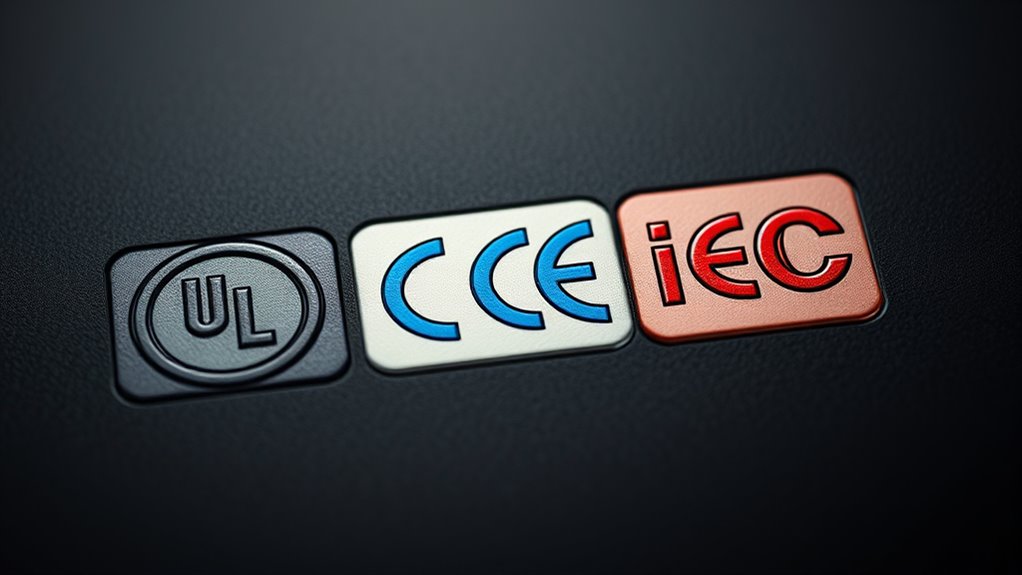

UL, CE, and IEC certifications all aim to protect you from hazards, but they focus on different regions and standards. UL emphasizes safety and reliability mainly in North America, CE ensures products meet EU safety and environmental rules, while IEC establishes global safety benchmarks. Knowing which certification covers your needs helps you choose safer, compliant products. Keep exploring to discover how each standard truly safeguards your safety and well-being.

Get backup power and energy gear delivered free with Prime
- Fast, free delivery on millions of items
- Prime Video, Amazon Music and more included
- Member-only deals all year
Key Takeaways
- UL certification emphasizes safety and hazard prevention primarily for North American consumers.
- CE marking ensures compliance with EU safety, health, and environmental standards for European markets.
- IEC standards promote global harmonization of safety and performance benchmarks across multiple regions.
- All certifications are based on rigorous testing protocols designed to protect consumers from hazards.
- Recognizing the specific scope and recognition of each certification helps ensure genuine consumer protection.
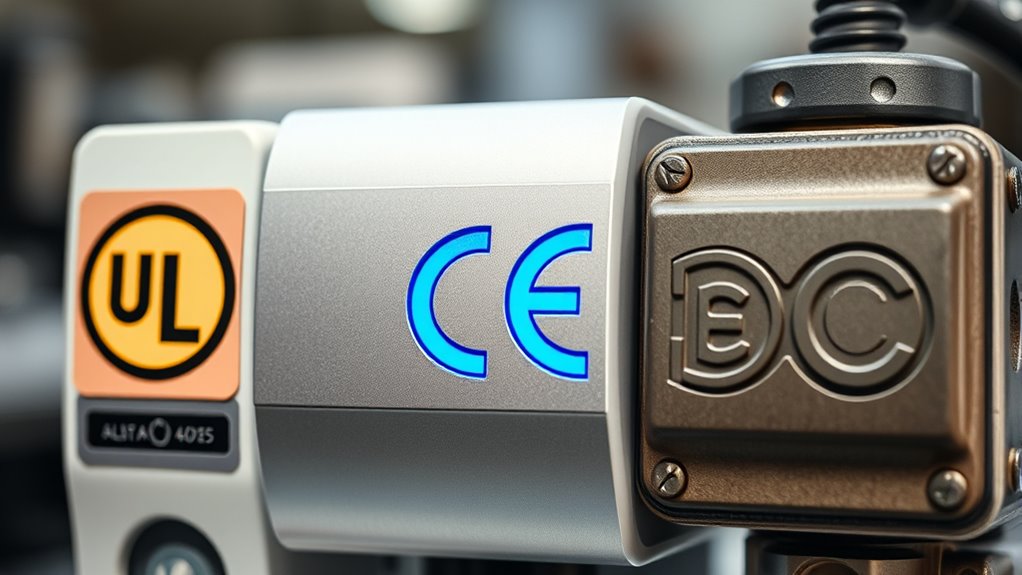
When choosing electronic products, understanding the differences between UL, CE, and IEC certifications can be confusing, but it’s vital for your safety. These certifications serve as indicators of safety standards and international compliance, helping you determine whether a product is safe to use. Each certification has its own origin, scope, and focus, which influences the level of protection they offer to consumers like you. Recognizing these differences can prevent accidents, ensure product reliability, and give you peace of mind. For example, safety standards are often developed based on comprehensive testing protocols that address potential hazards, ensuring reliable protection.
Frequently Asked Questions
How Do CErtification Costs Vary Between UL, CE, and IEC?
When comparing certification costs, you’ll notice significant differences in certification fees among UL, CE, and IEC. UL certification often involves higher costs due to its rigorous testing and detailed processes, while CE and IEC certifications tend to be more cost-effective. Your expenses depend on the product type, complexity, and testing requirements, so it’s essential to evaluate the cost differences thoroughly to guarantee compliance without overspending.
Are There Specific Industries Where One Certification Is Preferred?
Did you know that over 70% of electronics exported from Europe require CE marking? You’ll find that industry-specific standards and regional preferences heavily influence certification choices. For example, UL certification is often preferred in North America for electronics, while CE is essential within the European Union. IEC standards are widely adopted globally for safety and quality, especially in manufacturing. Your choice depends on the industry and the target market’s regional requirements.
How Long Does the Certification Process Typically Take?
The certification process duration varies depending on your product, manufacturing timelines, and testing procedures. Typically, it takes several weeks to a few months, as authorities review your documentation and conduct necessary tests. You’ll want to plan ahead, ensuring your manufacturing and testing schedules align with certification timelines. Staying organized and responsive to feedback can help speed up the process, so you get your product to market without unnecessary delays.
Can Products Have Multiple Certifications Simultaneously?
Imagine juggling a million certs at once—yes, products can have multiple certifications simultaneously! You might face product overlap and certification conflicts, but it’s totally doable. Manufacturers often pursue multiple standards to meet diverse markets and ensure safety, quality, and compliance. So, don’t worry about mixing certifications; it’s a strategic move to cover all bases and maximize consumer protection across different regions and standards.
What Are the Legal Implications of Using Uncertified Products?
Using uncertified products can expose you to serious legal liability if they cause harm or fail to meet safety standards. Without proper certification, you might face lawsuits, fines, or product recalls that jeopardize consumer safety. As a responsible user or seller, you need to guarantee products meet relevant certifications to protect yourself legally and ensure consumer safety, minimizing risks associated with liability and potential harm.
Conclusion
So, which certification really keeps you safe? It’s not just about labels—it’s about trust and assurance. As you weigh UL, CE, and IEC, remember that each has strengths and limitations. But the real question remains: will these certifications always be enough to protect you in an unpredictable world? Stay vigilant, stay informed, because the answer might surprise you when you least expect it. The truth about consumer safety is closer than you think—are you ready to discover it?
Fall Picks
fall essentials
As an affiliate, we earn on qualifying purchases.