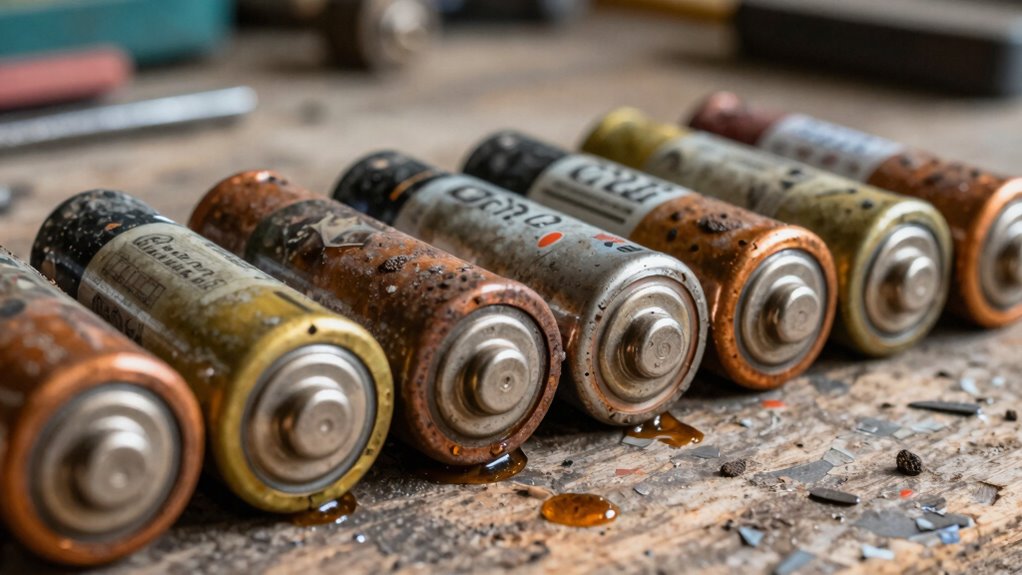

If you don’t store batteries properly, they’re likely to fail due to chemical degradation, leaks, or corrosion. Exposure to extreme heat speeds up chemical reactions, causing capacity loss or swelling, while cold reduces power delivery. Poor storage can also lead to leaks that harm the environment and damage your devices. Ignoring regular inspections and recycling increases risks. To keep batteries safe and working longer, learn key storage tips that help prevent these common failures.

Get backup power and energy gear delivered free — and shop member deals
- Fast, free delivery on millions of items
- Access to Prime Big Deal Days deals on October 6–7
- Prime Video, Amazon Music and more included
Key Takeaways
- Improper storage conditions, such as exposure to extreme temperatures, accelerate chemical degradation and reduce battery lifespan.
- Neglecting regular inspection leads to unnoticed corrosion and damage, causing leaks and failure.
- Storing batteries in high humidity environments promotes corrosion and internal chemical reactions.
- Failure to recycle or dispose of old batteries responsibly increases risk of leaks and environmental hazards.
- Storing batteries without proper insulation or sealing accelerates chemical changes and capacity loss.
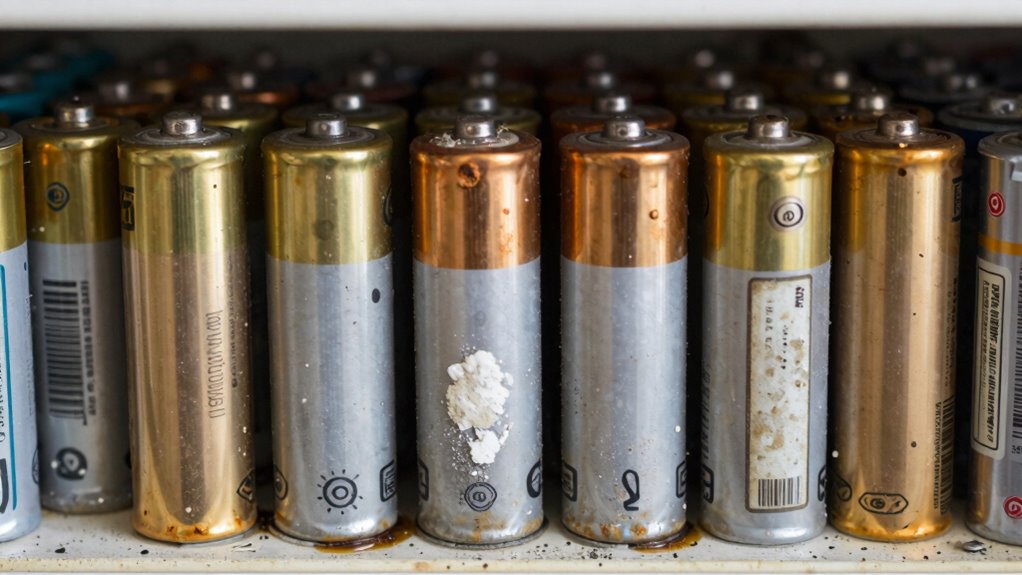
Have you ever stored batteries only to find them dead or damaged when you needed them most? It’s frustrating, especially when you realize that improper storage can cause batteries to fail prematurely. One of the most common reasons for this is neglecting proper storage practices that lead to internal chemical changes. Over time, batteries can degrade, leak, or even rupture if left in unsuitable conditions. This not only renders them useless but also poses environmental risks if the chemicals leak into the soil or water. That’s why understanding how to store batteries correctly is crucial for both your safety and the environment.
Proper storage prevents battery damage, leaks, and environmental harm—protecting both your safety and the planet.
Temperature plays a significant role in battery longevity. Batteries stored in extreme heat can accelerate chemical reactions inside, causing capacity loss or swelling. Conversely, extremely cold temperatures can reduce a battery’s ability to deliver power effectively. Ideally, you should keep batteries in a cool, dry place—away from direct sunlight or heat sources. Additionally, humidity can promote corrosion, so storing batteries in sealed containers or original packaging helps protect them from moisture. Proper storage also involves keeping batteries separated—particularly avoiding contact between the terminals—since this can cause short circuits or leakage. Using appropriate storage containers with insulation can further prevent accidental electrical contact.
Another common issue that leads to battery failure in storage is neglecting the importance of battery recycling. When batteries are improperly discarded or stored for long periods without use, they can eventually leak harmful chemicals. Proper disposal methods are essential to prevent environmental impact and reduce the risk of pollution. Recycling programs are designed to handle used batteries safely, minimizing environmental hazards. If you’re storing batteries for an extended period, it’s better to take damaged or old ones to a recycling center rather than letting them sit neglected. This responsible approach minimizes environmental harm and ensures that hazardous materials are managed safely.
Corrosion is also a culprit in battery failure. Over time, the metallic parts inside can corrode, especially if exposed to moisture or air. Corrosion not only damages the battery’s internal structure but can also cause leakage of corrosive substances. Regularly inspecting stored batteries and replacing old or damaged ones helps prevent this. When disposing of batteries, always follow local guidelines for recycling to avoid environmental damage. Proper disposal and recycling are essential in reducing the environmental impact of battery waste, helping prevent the chemical toxins from leaching into the environment. Additionally, understanding battery chemistry can help you better appreciate how chemical reactions influence battery lifespan and safety. Proper storage techniques that consider chemical stability can significantly extend a battery’s useful life and safety during storage.
As an affiliate, we earn on qualifying purchases.
Frequently Asked Questions
How Can I Tell if a Stored Battery Is Still Functional?
You can tell if a stored battery is still functional by inspecting its voltage with a multimeter; it should match the expected voltage for its chemistry. Check the battery’s label for proper storage conditions, and verify it’s in a suitable storage container that prevents corrosion or damage. If the voltage is low or the battery shows signs of swelling or corrosion, it’s likely failed and should be replaced.
Are There Specific Storage Conditions That Extend Battery Lifespan?
Keep your batteries in tip-top shape by following specific storage conditions. You should store them in a cool, dry place where temperature management is consistent, ideally between 15-25°C. Humidity control is equally important; too much moisture can cause corrosion. Think of it as keeping a delicate plant healthy—avoid extremes. Proper storage extends battery lifespan, ensuring they’re ready when you need them most, instead of being a drain on your resources.
What Are Signs of a Failing Battery After Storage?
You’ll notice signs of a failing battery after storage if it doesn’t hold a charge, drains quickly, or shows reduced performance. Battery chemistry can change over time, especially if storage materials weren’t ideal, leading to capacity loss. You might also see swelling, corrosion, or leaks. These indicators suggest the battery’s internal chemistry has deteriorated, often due to poor storage conditions, and it’s time to replace it for dependable use.
Can Batteries Be Recharged After Storage Failure?
You can often revive a battery after storage failure if you act quickly—don’t throw in the towel just yet. Depending on the battery chemistry, recharging techniques like slow, controlled charging might bring it back to life. However, some batteries, especially lead-acid or lithium-ion, may be beyond saving if they’ve suffered deep discharge or damage. Always test thoroughly and proceed with caution to avoid further harm.
How Often Should I Check Stored Batteries for Potential Issues?
You should check your stored batteries every 3 to 6 months, depending on their chemistry. Regular inspections help identify potential issues early, like leakage or corrosion. Use appropriate storage containers to prevent damage, and guarantee batteries are stored in a cool, dry environment. Checking periodically allows you to recharge or replace batteries before failure, extending their lifespan and ensuring they’re ready when you need them.
Conclusion
Understanding why batteries fail in storage helps you extend their lifespan. Remember, approximately 50% of stored batteries experience capacity loss due to factors like temperature fluctuations and self-discharge. By storing batteries in cool, dry places and avoiding complete discharges, you can greatly reduce failures. Keeping these practices in mind, you’ll ensure your batteries stay reliable longer, saving you money and hassle. Stay proactive, and your batteries will serve you better over time.
Fall Picks
fall essentials
As an affiliate, we earn on qualifying purchases.