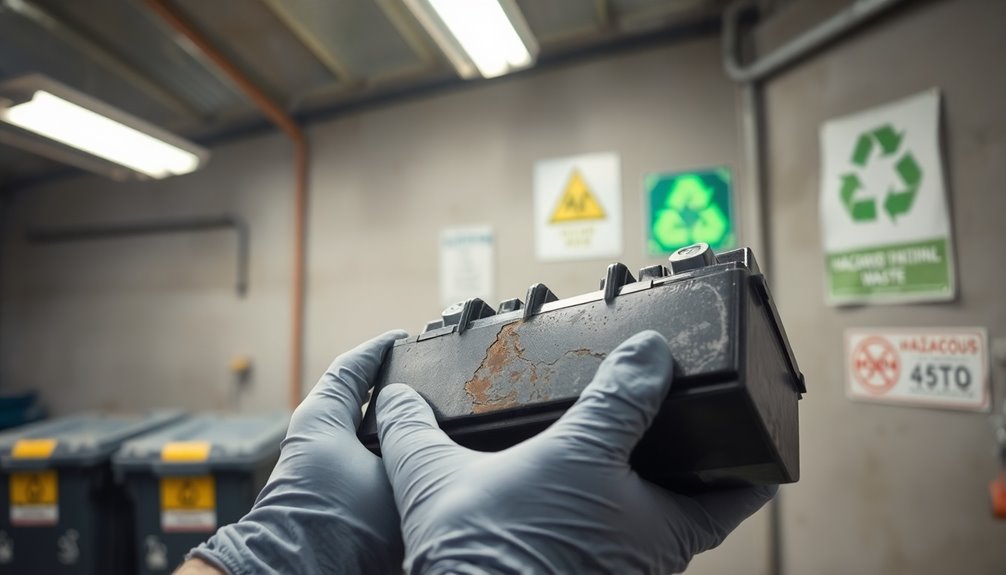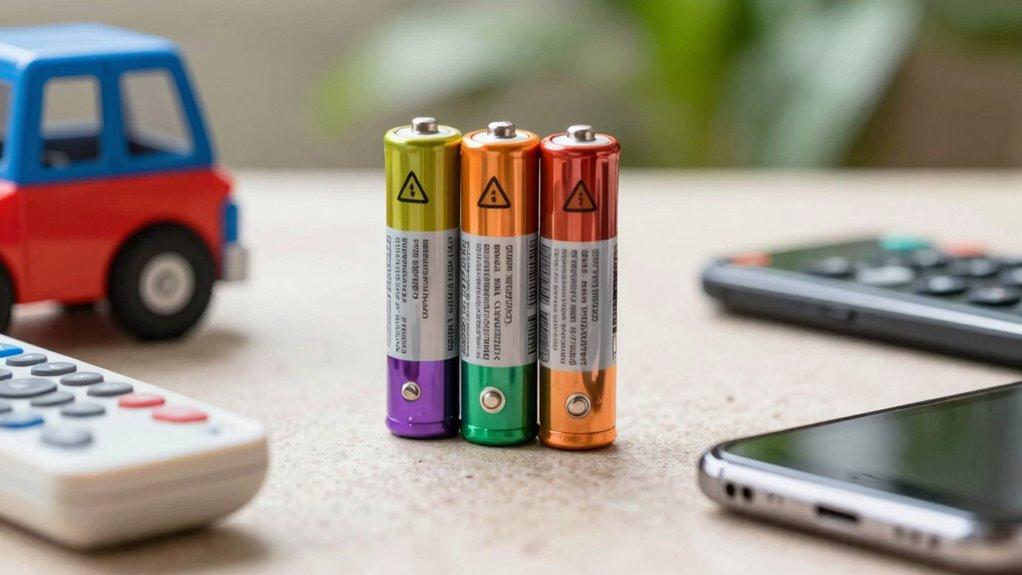

To explain battery safety to non-technical folks, start by highlighting key points. Emphasize the importance of storing batteries in cool, dry places and checking for any damage regularly. Let them know that old batteries shouldn’t just go in the trash; they need proper disposal due to harmful chemicals. Also, remind them to follow manufacturer’s guidelines to guarantee safety. By sticking around, you’ll discover more helpful tips for keeping everyone safe and sound.

Get backup power and energy gear delivered free — and shop member deals
- Fast, free delivery on millions of items
- Access to Prime Big Deal Days deals on October 6–7
- Prime Video, Amazon Music and more included
Key Takeaways
- Know Your Batteries: Understand different types of batteries and their specific handling requirements to ensure safety during use and storage.
- Store Properly: Keep batteries in a cool, dry place and avoid direct sunlight to prevent leaks or damage.
- Dispose Responsibly: Never throw batteries in the trash; always use designated recycling facilities to protect the environment.
- Inspect Regularly: Check batteries for damage like swelling or leaks, and handle any issues immediately with caution.
- Follow Instructions: Always read and adhere to manufacturer guidelines for safe usage and charging to prevent accidents.

Batteries power much of our modern life, from smartphones to toys, but handling them safely is vital. You might not think twice about picking up that remote control or charging your phone, but understanding battery types and how to handle them properly can prevent accidents and prolong their life. Whether you’re using alkaline, lithium-ion, or rechargeable batteries, knowing a few safety tips can make all the difference.
First, always check the battery type before use. Different batteries have unique characteristics and handling requirements. For instance, lithium-ion batteries are popular in phones and laptops but can be dangerous if punctured or exposed to extreme temperatures. On the other hand, alkaline batteries are commonly found in household items but can leak if they’re left in devices for too long. By identifying which batteries you’re dealing with, you can take the right precautions. Understanding battery chemistry can help you grasp how different batteries behave under various conditions. Additionally, being aware of cell design can help you understand how batteries are constructed to prevent failures.
Next, it’s important to store batteries properly. Keep them in a cool, dry place, away from direct sunlight and moisture. High temperatures can cause batteries to swell or leak, while moisture can lead to corrosion. Also, if you have loose batteries, store them in their original packaging or in a non-conductive container. This prevents any accidental contact that could lead to short-circuiting. Proper storage can help maintain battery integrity and safety. Additionally, being aware of venting mechanisms in batteries can help you understand how they release pressure if they overheat, preventing dangerous situations.
When it comes to disposal, don’t just throw old batteries in the trash. Many battery types contain harmful chemicals that can harm the environment. Instead, check local guidelines for battery recycling. Many places offer drop-off locations where you can safely dispose of used batteries. By recycling, you’re not only keeping the environment safe but also possibly reclaiming valuable materials.
Another important safety tip is to inspect your batteries regularly. Look for signs of damage, like corrosion, swelling, or leaks. If you notice any issues, remove the battery immediately and handle it with care. Use gloves if necessary, and make sure to dispose of it properly. This proactive approach can prevent potential hazards.
Lastly, always follow the manufacturer’s instructions when using or charging batteries. Each device may have specific requirements that help guarantee safe operation. Ignoring these guidelines can lead to accidents, so it’s worth taking a moment to read through them. Being aware of battery safety tips can significantly reduce risks associated with battery use.
battery safety storage containers
As an affiliate, we earn on qualifying purchases.
As an affiliate, we earn on qualifying purchases.
Frequently Asked Questions
What Should I Do if My Battery Leaks?
If your battery leaks, act quickly. First, identify the leak and assess the situation. Put on gloves and safety goggles to protect yourself. Move the battery to a well-ventilated area, away from flammable materials. Never touch the leaked substance directly. Dispose of the battery properly, following local regulations. Clean the area with a damp cloth, ensuring you take appropriate safety precautions. If you’re uncertain, consider contacting a professional for help.
How Can I Tell if a Battery Is Damaged?
To tell if a battery’s damaged, start with a visual inspection. Look for signs like corrosion or leakage; that’s a clear cue something’s wrong. Next, check for battery swelling; if it’s bulging, it’s definitely time to take action. Don’t ignore these indicators, as they can lead to bigger problems. If you spot any of these signs, safely dispose of the battery and consider replacing it to prevent potential hazards.
Are Some Batteries Safer Than Others?
Yes, some batteries are safer than others. Lithium batteries, for instance, offer high energy density but require careful handling due to their volatility. On the other hand, alkaline batteries are generally safer for casual use. Rechargeable batteries provide benefits like cost-efficiency and less waste, but you need to understand the voltage differences between types. Always choose a battery that fits your device’s needs and be mindful of safety guidelines.
Can Batteries Explode in Heat?
Yes, batteries can explode in heat. When a battery overheats, it may enter a state called thermal runaway, where the temperature rises uncontrollably. This process can lead to a release of gases and even cause the battery to rupture or explode. To prevent this, keep your batteries in a cool environment and avoid exposing them to high temperatures. Always check for any signs of damage or swelling before use.
How Do I Properly Dispose of Old Batteries?
To properly dispose of old batteries, start by identifying the battery types you have. Many recycling programs accept common batteries like alkaline and lithium-ion. Look for local drop-off locations or scheduled collection events. Some retailers also offer in-store recycling options. Avoid throwing batteries in the trash, as they can harm the environment. By recycling, you’re helping conserve resources and keep hazardous materials out of landfills.
Conclusion
So, next time you reach for a battery, remember: safety’s just a few simple steps away. You’ve learned how to store them properly, spot potential hazards, and even what to do in case of a mishap. But what happens if you ignore these tips? The consequences could be shocking. Don’t let a small lapse lead to a big problem. Stay informed, stay safe, and keep your devices running smoothly—because you wouldn’t want to find out the hard way.
Fall Picks
fall essentials
As an affiliate, we earn on qualifying purchases.