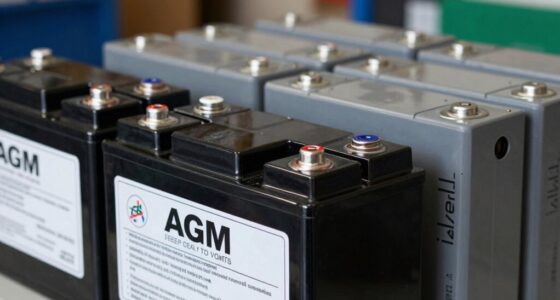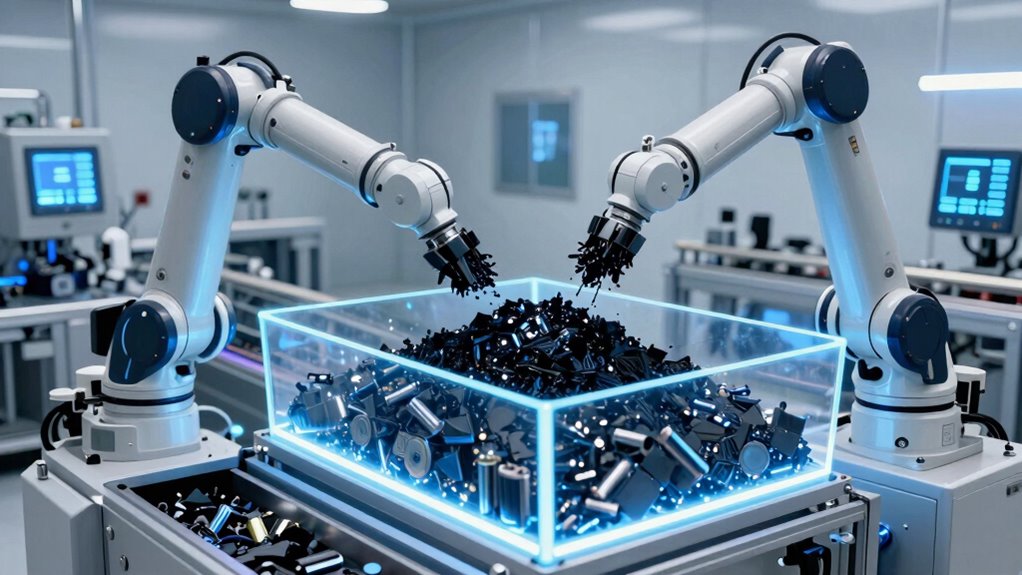

Black mass plays a vital role in modern battery recycling by allowing you to recover valuable metals like lithium, cobalt, and nickel more efficiently. It acts as an intermediate that reduces reliance on environmentally harmful mining, supporting sustainability. Processing black mass helps lower carbon emissions and conserves resources. It also boosts economic growth by creating new opportunities in recycling industries. To find out how black mass is transforming battery recycling and why it matters, keep exploring this essential topic.

Get backup power and energy gear delivered free — and shop member deals
- Fast, free delivery on millions of items
- Access to Prime Big Deal Days deals on October 6–7
- Prime Video, Amazon Music and more included
Key Takeaways
- Black mass is a crucial intermediate that contains valuable metals like lithium, cobalt, and nickel for recycling.
- Processing black mass enables efficient extraction of raw materials, reducing dependency on virgin mining.
- It promotes environmentally friendly recycling by minimizing ecological harm compared to traditional mining methods.
- Recycling black mass enhances economic value by recovering high-value metals cost-effectively.
- It supports a circular economy by transforming waste batteries into sustainable resource sources.
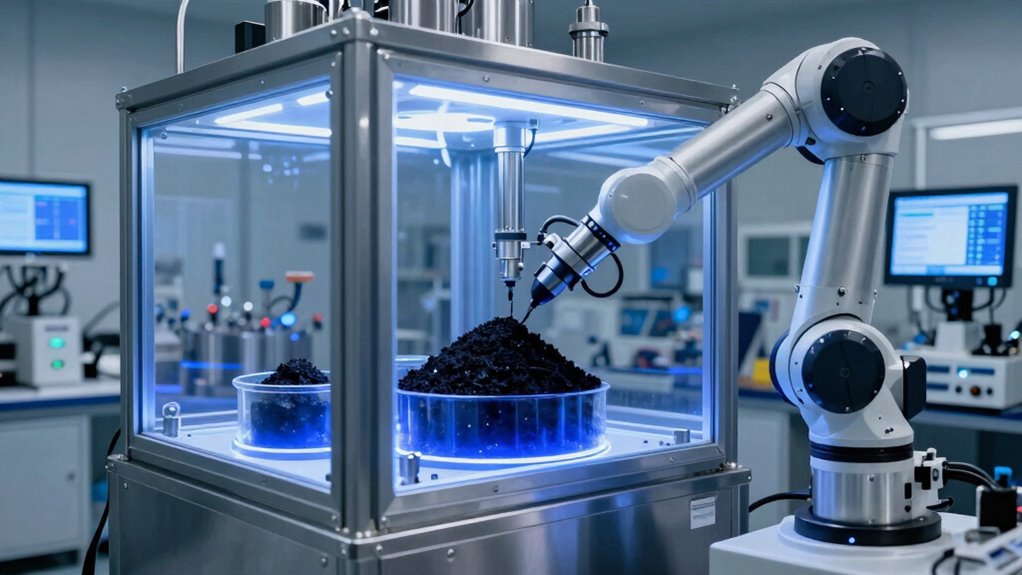
Have you ever wondered what happens to batteries after they’re discarded? When you toss a used lithium-ion battery into the trash, it often ends up in a landfill, where it can pose serious environmental risks. The environmental impact of improperly disposed batteries includes the release of toxic substances like heavy metals into soil and water, which can harm ecosystems and human health. That’s why recycling has become essential—not only to reduce waste but also to recover valuable materials. Central to modern battery recycling is black mass, an indispensable intermediate that holds the key to extracting raw materials efficiently. Black mass contains a mixture of lithium, cobalt, nickel, and other metals, making it a crucial resource for manufacturing new batteries. By processing these discarded batteries into black mass, recycling facilities can markedly lessen the need for mining virgin materials, reducing environmental degradation caused by mining operations. This shift not only benefits the planet but also aligns with efforts to lower carbon emissions associated with raw material extraction and processing. Additionally, advancements in black mass processing techniques are helping to improve the purity and recovery rates of valuable metals, further enhancing the sustainability of the recycling process. These innovations are driven by a growing interest in sustainable resource management** and the development of more environmentally friendly recycling technologies. Improving the efficiency of black mass processing is also vital for reducing the energy consumption involved in recycling, which aligns with environmental stewardship** goals.
The economic benefits of focusing on black mass are substantial. For one, recycling companies can maximize the recovery of high-value metals, turning what used to be waste into a profitable resource. Extracting metals from black mass is often more cost-effective than mining new ore, especially given the rising demand for electric vehicle batteries and renewable energy storage. This creates a sustainable supply chain that can stabilize prices and reduce dependency on geopolitically sensitive regions where raw materials are mined. Additionally, developing efficient black mass processing techniques fosters innovation within the recycling industry, creating jobs and stimulating local economies. Governments and private sectors see the economic potential in scaling up black mass recovery, which encourages investments into advanced recycling technologies. These advancements make the process faster, more efficient, and more environmentally friendly, further amplifying both economic and ecological benefits. Promoting the development of recycling technologies can also help to address the growing need for sustainable resource management.
In essence, black mass acts as a bridge between discarded batteries and the future of sustainable resource management. It allows us to reclaim valuable metals, reduce environmental harm, and support a circular economy. As you become more aware of the importance of recycling, understanding how black mass fits into this picture highlights its role in transforming waste into wealth. This process not only conserves natural resources but also promotes economic growth and environmental stewardship, making it a cornerstone of modern battery recycling efforts. Increased investment in black mass processing can also lead to breakthroughs in metal recovery efficiency, further advancing the industry.
battery recycling black mass processing equipment
As an affiliate, we earn on qualifying purchases.
As an affiliate, we earn on qualifying purchases.
Frequently Asked Questions
How Is Black Mass Extracted From Used Batteries?
You extract black mass from used batteries through a process involving electrolyte removal and metal separation. First, you safely remove the electrolyte, often through draining or chemical treatment. Then, you break down the battery and separate metals like lithium, cobalt, and nickel using physical or chemical methods. This process concentrates valuable materials into black mass, which can then be processed further for reuse in new batteries, reducing waste and resource demand.
What Environmental Impacts Does Black Mass Recycling Have?
Ever wonder how black mass recycling affects the environment? You’ll be pleased to know it considerably reduces the environmental footprint by lowering pollution levels often linked to traditional mining and disposal. Recycling black mass helps mitigate pollution by reclaiming valuable materials, decreasing waste, and limiting harmful emissions. This process promotes sustainability, conserves natural resources, and supports cleaner air and water, making it an essential step toward eco-friendly battery reuse.
Are There Safety Concerns in Black Mass Processing Plants?
Yes, there are safety concerns in black mass processing plants. You need to prioritize worker safety because chemical hazards, like exposure to toxic substances, can pose serious health risks. Proper protective gear, ventilation, and strict handling procedures are essential to prevent accidents. Regular safety training and monitoring help guarantee workers stay safe while managing potentially dangerous chemicals involved in black mass processing.
How Does Black Mass Quality Affect Battery Manufacturing?
Black mass quality profoundly impacts battery manufacturing; higher purity enhances performance, ensuring batteries last longer and perform better. When black mass boasts superior black mass purity, it boosts recycling efficiency, reducing contaminants that could compromise battery integrity. Poor quality black mass can introduce impurities, impairing electrode functionality and risking safety. Consequently, maintaining high black mass purity is essential for producing reliable, efficient, and safe batteries, directly influencing overall manufacturing success.
What Innovations Are Emerging in Black Mass Recycling Technologies?
You’ll find that emerging innovations focus on improving black mass recycling through advanced processes like hydrometallurgy and pyrometallurgy. These methods enhance metal recovery efficiency and enable the production of synthetic cathodes, reducing reliance on virgin materials. New technologies also aim to lower energy consumption and environmental impact, making recycling more sustainable. As a result, these innovations strengthen the circular economy in battery manufacturing, promoting sustainable energy storage solutions.
Conclusion
As you glimpse into the future of sustainable energy, black mass emerges as a crucial treasure chest, transforming discarded batteries into shimmering streams of valuable metals. Picture it as a hidden alchemist’s secret, turning waste into wealth beneath the surface of our everyday lives. Embracing black mass in recycling not only fuels the electric revolution but also paints a brighter, greener horizon—where every battery’s end sparks new beginnings, weaving a resilient, eco-conscious tapestry for tomorrow.
Halloween Picks
halloween
As an affiliate, we earn on qualifying purchases.