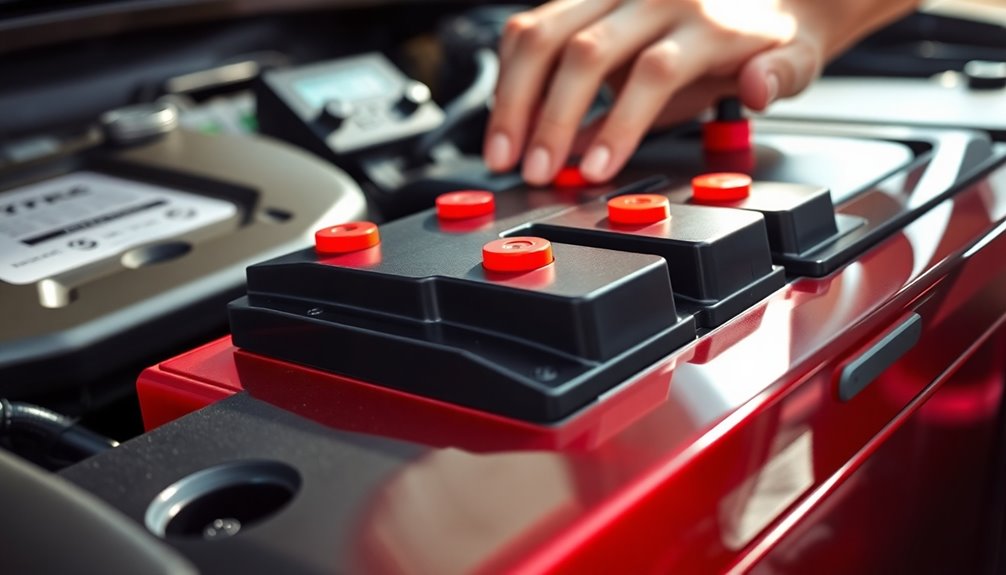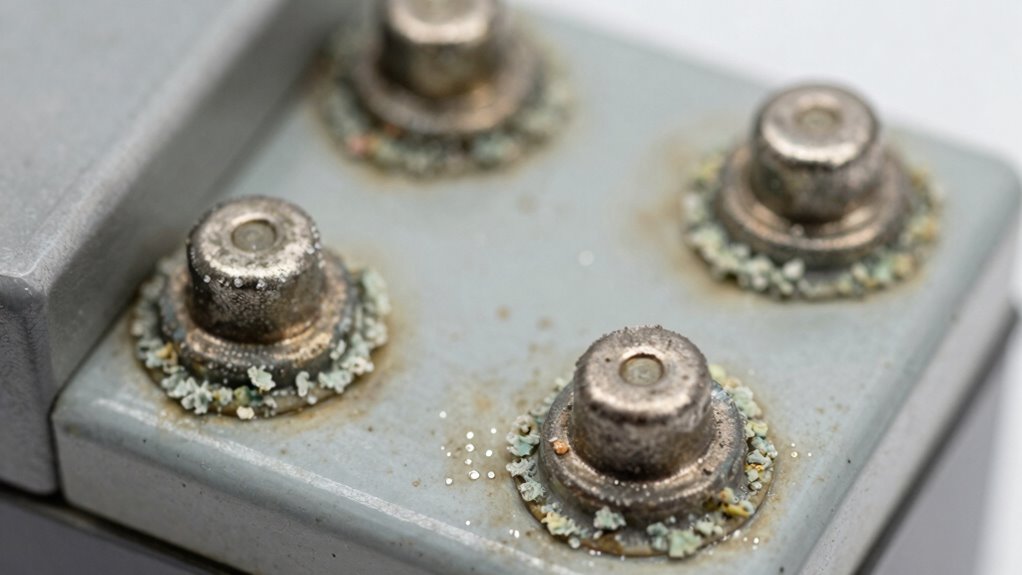
Corrosion around your battery terminals usually means a chemical reaction between sulfuric acid, moisture, and metal, creating a crusty or greenish film. This buildup can disrupt electrical connections, making it harder to start your vehicle and risking battery failure. If you see signs of corrosion, it’s a sign to inspect and clean your terminals promptly. Staying proactive about this can prevent bigger issues—which you’ll better understand as you explore further.

Get backup power and energy gear delivered free with Prime
- Fast, free delivery on millions of items
- Prime Video, Amazon Music and more included
- Member-only deals all year
Key Takeaways
- Corrosion indicates a chemical reaction between sulfuric acid and metal terminals, often caused by exposure to moisture.
- It suggests potential electrical connection issues, leading to poor battery performance and difficulty starting the vehicle.
- The buildup of lead sulfate and corrosion films signals possible long-term neglect or damage.
- Visible crusty, bluish, greenish, or whitish deposits are signs of active or recent corrosion.
- Persistent corrosion may result in terminal damage, requiring cleaning or terminal replacement.
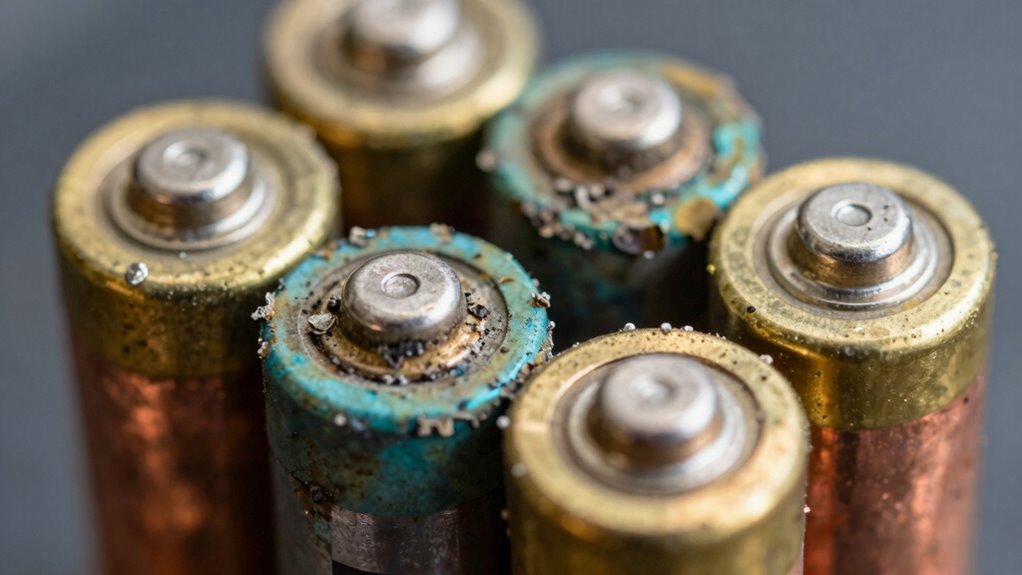
Corrosion around your battery terminals usually means there’s a chemical reaction happening. It’s often caused by the buildup of lead sulfate, which forms when the battery’s sulfuric acid reacts with the metal terminals. This reaction is accelerated by exposure to moisture, heat, and vibrations. Over time, these factors cause a buildup of corrosion that looks like a crusty, bluish, greenish, or whitish film. If left unchecked, it can lead to poor electrical connections, making it harder for your battery to supply power to your vehicle. In worst-case scenarios, it can even cause your battery to fail prematurely. Regular battery maintenance involves more than just checking the fluid levels; it also means inspecting and cleaning the terminals. Terminal cleaning involves removing the corrosion carefully to restore a solid, conductive connection. You can use a mixture of baking soda and water, which neutralizes the acid and helps loosen the corrosion. Using a wire brush or a terminal cleaning tool, gently scrub away the residue. After cleaning, it’s a good idea to apply a terminal protector or some petroleum jelly to prevent future corrosion buildup. Proper battery maintenance can help prevent corrosion from recurring frequently. Dealing with corrosion promptly can save you money and frustration. If the buildup gets too thick or if you notice the terminals are damaged, replacing the battery terminals might be necessary. Additionally, understanding the chemical reactions involved can help you better prevent future corrosion issues, as well as recognize the signs of battery failure early. Recognizing the signs of corrosion can enable timely intervention before more serious damage occurs.
As an affiliate, we earn on qualifying purchases.
Frequently Asked Questions
How Can I Prevent Battery Terminal Corrosion?
To prevent battery terminal corrosion, you should regularly perform battery maintenance and terminal cleaning. Check your terminals for any buildup of corrosion and clean them with a mixture of baking soda and water using a wire brush or toothbrush. Apply a thin layer of petroleum jelly or terminal protectant after cleaning to keep moisture out. Consistent maintenance and cleaning help guarantee your battery stays in good condition and avoids corrosion issues.
Is Corrosion Around Battery Terminals Dangerous?
Corrosion around battery terminals can be dangerous because it hampers battery performance and may cause electrical issues. Think of it as a medieval knight’s armor rusting—weakening protection and risking failure. Regular battery maintenance helps prevent corrosion caused by acid leaks, moisture, or dirt. Ignoring this buildup can lead to starting problems or even a dead battery, so you should address corrosion promptly to keep your vehicle’s electrical system running smoothly.
Can Corrosion Affect My Vehicle’s Performance?
Corrosion around your battery terminals can indeed affect your vehicle’s performance. It hampers electrical efficiency, leading to starting issues or dimming lights. Over time, this corrosion can shorten your battery’s lifespan and cause inconsistent power delivery. Regular cleaning and maintenance help prevent these problems, ensuring your vehicle runs smoothly. Addressing corrosion promptly keeps your battery healthy, maintains peak electrical performance, and extends its overall lifespan.
How Often Should I Check for Corrosion?
Think of your car’s battery like a garden that needs regular tending. You should check for corrosion and inspect terminals at least once every three to six months. During battery cleaning, remove any buildup carefully, and look for signs of corrosion around terminals. Regular terminal inspection helps catch issues early, preventing performance problems and extending your battery’s life. Staying proactive keeps your vehicle running smoothly and avoids unexpected breakdowns.
Are There Specific Types of Batteries More Prone to Corrosion?
Certain battery types are more prone to corrosion due to their chemistry and terminal materials. Lead-acid batteries, especially those with aluminum or lead terminals, tend to corrode more quickly because of acid vapors and metal reactions. Similarly, older or poorly sealed batteries with incompatible terminal materials also experience increased corrosion. Regular checks help you catch corrosion early, preventing damage and maintaining the best possible battery performance.
Conclusion
So, next time you notice that white, powdery corrosion around your battery terminals, it’s probably more than just a coincidence—your car’s way of telling you something’s up. Addressing it early can prevent unexpected breakdowns, and you might even find that fixing one small issue coincidentally improves your overall vehicle performance. Keep an eye on those terminals; sometimes, a little corrosion is just the universe’s way of nudging you to stay on top of maintenance.
Halloween Picks
halloween
As an affiliate, we earn on qualifying purchases.