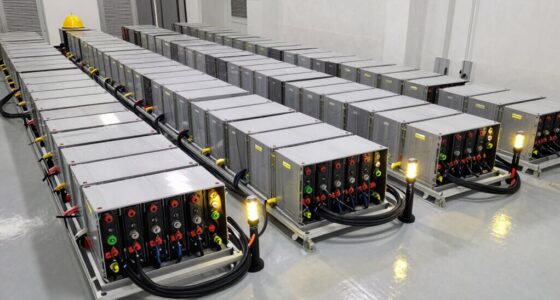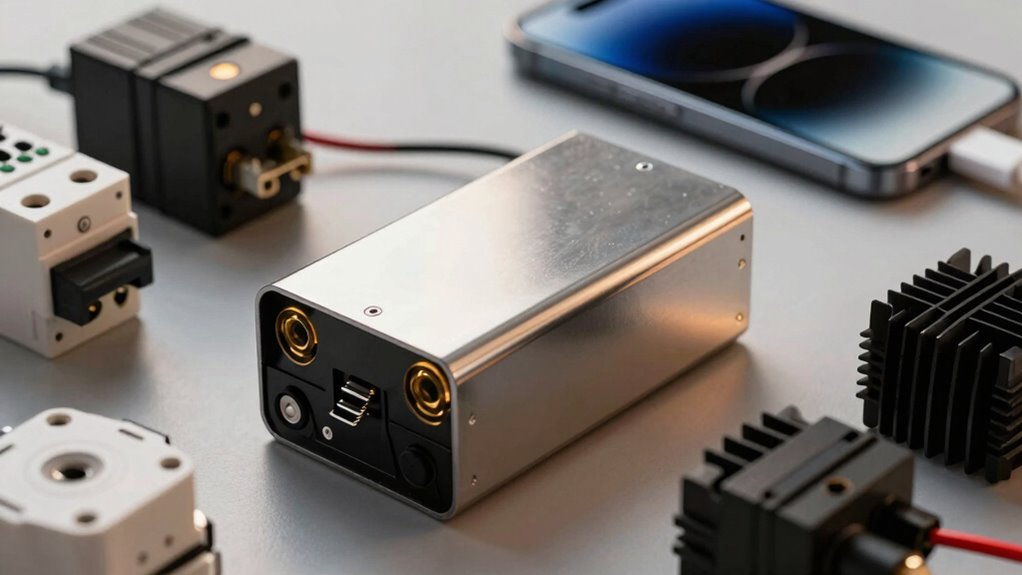

Every battery bank owner needs to grasp DC protection basics to guarantee reliable performance. Start with selecting the right fuses or circuit breakers for overcurrent protection, and make certain they’re rated for DC systems. Voltage regulation is vital to prevent battery damage from fluctuations. Isolating batteries and proper grounding can enhance safety. Finally, consider surge protection and monitoring systems to guard against voltage spikes. Keep these essentials in mind, and you’ll set a solid foundation for your battery bank.
Key Takeaways
- Select appropriate fuses to match system current capacity, ensuring effective overcurrent protection and preventing nuisance trips.
- Use resettable DC-rated circuit breakers for convenience and enhanced reliability in your battery bank.
- Implement voltage regulation to maintain optimal charging levels and prevent battery overcharging or undercharging.
- Isolate individual batteries to prevent localized issues from affecting the entire bank and simplify troubleshooting.
- Incorporate surge protection and monitoring systems to safeguard equipment from voltage spikes and track performance.
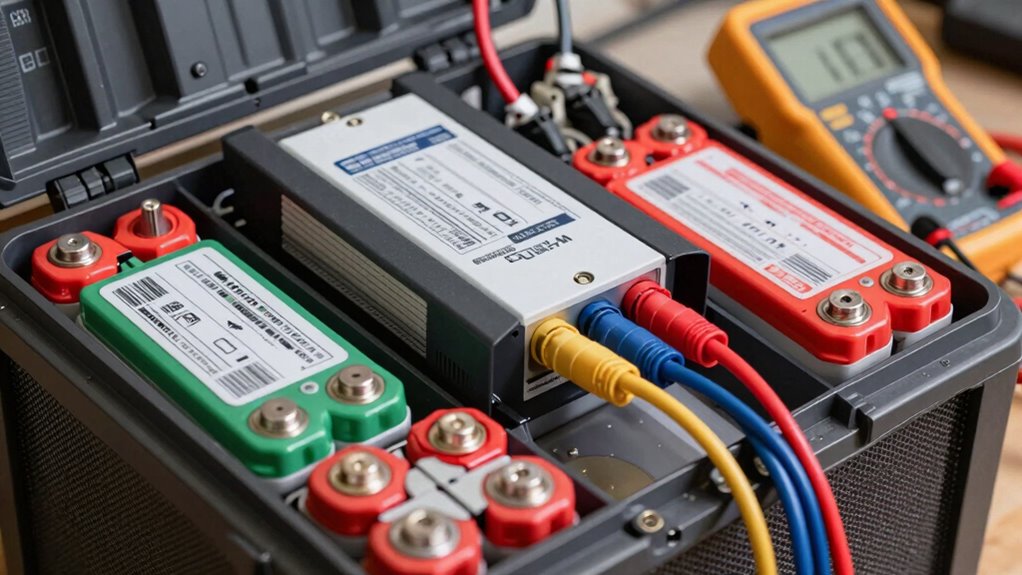
When you own a battery bank, understanding DC protection basics is fundamental to guaranteeing safety and efficiency. One of the first things you should consider is fuse selection. Choosing the right fuse is critical for overcurrent protection; it helps prevent excessive current from damaging your battery bank or connected devices. You’ll want to pick a fuse that matches the current capacity of your system to avoid nuisance trips while still providing adequate protection.
Understanding fuse selection is crucial for protecting your battery bank from overcurrent damage while ensuring optimal performance.
Circuit breakers are another essential component in your DC protection strategy. They function similarly to fuses but can be reset after tripping, saving you the hassle of replacement. Confirm that the circuit breakers you choose are rated for DC applications since AC breakers won’t operate correctly in a DC system. This can make a considerable difference in your battery bank’s reliability.
Voltage regulation is also key to maintaining the health of your battery bank. Uncontrolled voltage fluctuations can lead to overcharging or undercharging, greatly shortening the lifespan of your batteries. Implementing a good voltage regulator guarantees that your batteries are charged at the ideal voltage, preserving their longevity and effectiveness.
Battery isolation is another important practice. By isolating individual batteries or groups of batteries, you can prevent issues in one part of your system from affecting the entire bank. This makes troubleshooting easier and helps maintain overall system performance. Coupling this with proper system grounding helps mitigate electrical hazards. Grounding provides a safe path for stray currents and reduces the risk of electric shock, making it a fundamental safety measure.
Surge protection should also be on your radar. Voltage spikes can occur due to lightning strikes or other sudden changes in the power supply, damaging your equipment. Incorporating surge protectors into your system can safeguard your battery bank from these unexpected events. Additionally, understanding DC protection basics helps you select appropriate components and design a resilient system.
Finally, don’t overlook the importance of monitoring systems. These tools allow you to keep an eye on voltage levels, current flow, and overall battery health. By regularly checking these metrics, you can catch potential issues before they escalate into serious problems. This proactive approach not only enhances safety but also promotes the efficiency of your battery bank.
As an affiliate, we earn on qualifying purchases.
Frequently Asked Questions
How Do I Choose the Right Battery for My System?
To choose the right battery for your system, start by evaluating your energy needs. Look for a battery that matches your required battery capacity and offers high energy efficiency. Consider factors like discharge rates and lifespan, too. If you plan to use the battery for renewable energy storage, confirm it’s compatible with your system. Finally, check reviews and ratings to make certain it meets your performance expectations and reliability.
What Is the Lifespan of a Typical Battery Bank?
A typical battery bank lasts around 5 to 15 years, depending on its battery chemistry and how you manage charging cycles. For instance, lithium-ion batteries tend to last longer, often exceeding 2,000 cycles, while lead-acid batteries might only handle 500. If you keep an eye on charging habits and avoid deep discharges, you can extend your battery bank’s lifespan considerably. So, make those cycles count!
Can I Mix Different Battery Types in One Bank?
You shouldn’t mix different battery types in one bank. Doing so can create battery compatibility issues that lead to uneven charging and reduced lifespan. Each battery type has unique charging voltage differences, which can cause some batteries to overcharge while others underperform. This imbalance can damage your batteries and affect overall performance. To guarantee efficiency and longevity, stick to the same type and brand for your battery bank.
How Often Should I Perform Maintenance on My Battery Bank?
Think of your battery bank like a car; without regular check-ups, it won’t run well. You should perform maintenance on your battery bank every three to six months to guarantee peak battery health. Create a maintenance schedule that includes checking connections, cleaning terminals, and testing voltage. Just like you wouldn’t ignore a warning light on your dashboard, staying proactive with maintenance keeps your battery bank running smoothly and extends its lifespan.
What Tools Do I Need for Battery Bank Maintenance?
For battery bank maintenance, you’ll need a few essential tools. Start with a multimeter to check voltage and battery health. A hydrometer helps measure electrolyte levels in flooded batteries. Keep a wrench handy for terminal connections, and use safety goggles and gloves for protection. Following a maintenance schedule guarantees you catch issues early, prolonging battery life. Regularly cleaning terminals with a wire brush can also help maintain peak performance.
Conclusion
In wrapping things up, understanding DC protection is key for every battery bank owner. By keeping an eye on overvoltage, overcurrent, and proper fusing, you can guarantee your system runs smoothly and safely. After all, an ounce of prevention is worth a pound of cure. So, take the time to implement these basics, and you’ll not only extend the life of your batteries but also enjoy peace of mind knowing you’ve got your bases covered.