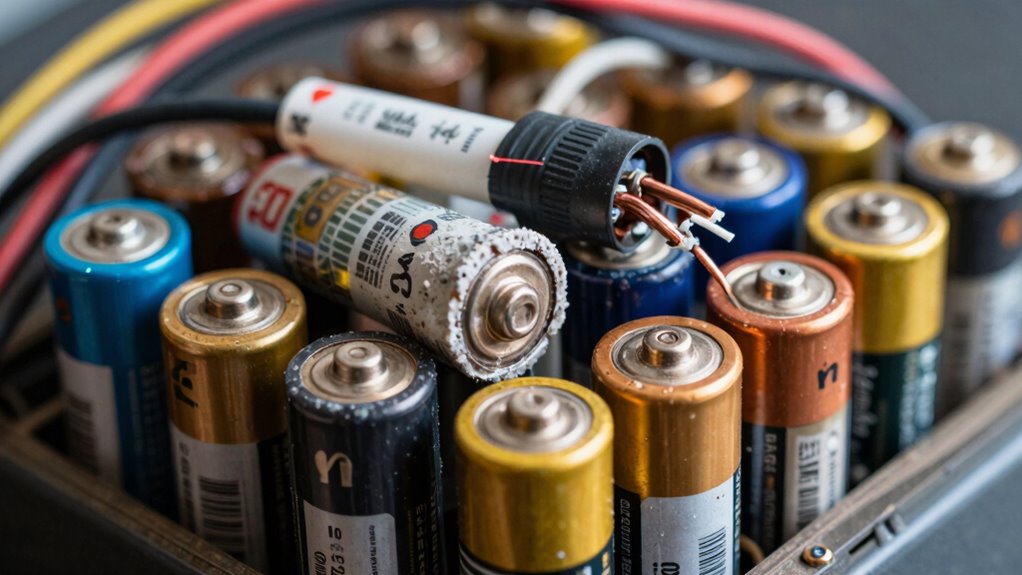
To spot an overcomplicated battery setup, look for incompatible chemistries like mixing lithium-ion with lead-acid without proper management, which can cause uneven charging and safety issues. Check for excessive wiring, too many safety devices, or redundant components that obscure clarity and make troubleshooting difficult. If the system feels overly complex or hard to understand, it’s likely prone to failure. Continue exploring to learn key signs that protect your system’s reliability.

Get backup power and energy gear delivered free with Prime
- Fast, free delivery on millions of items
- Prime Video, Amazon Music and more included
- Member-only deals all year
Key Takeaways
- Multiple incompatible battery chemistries combined without proper management increase failure risk.
- Excessive wiring, multiple chargers, or custom firmware suggest unnecessary complexity.
- Overuse of safety devices or poorly integrated components can create failure points.
- Difficult troubleshooting due to tangled wiring or obscure components indicates overcomplexity.
- Systems that hinder maintenance or upgrades are likely overly complicated and prone to failure.
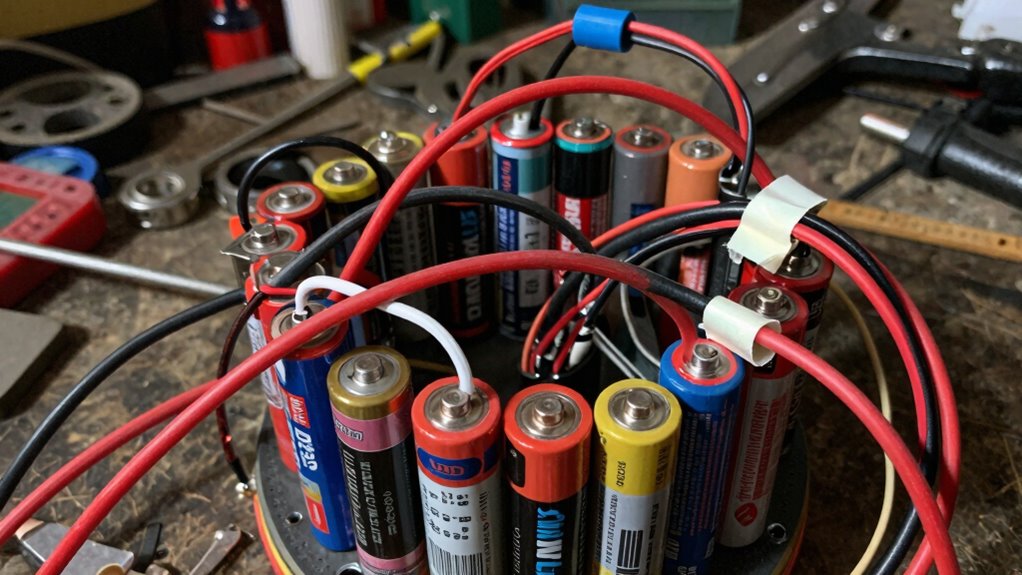
Overcomplicated battery setups might seem impressive at first, but they often hide potential problems that can lead to failure. When you see a complex arrangement of batteries, it’s essential to evaluate whether the design is truly beneficial or just overly complicated. One key factor to consider is the battery chemistry used. Different chemistries, such as lithium-ion, lead-acid, or nickel-metal hydride, have unique characteristics and maintenance needs. Mixing incompatible chemistries or using an unnecessarily complex combination can introduce risks like uneven charging, thermal runaway, or reduced lifespan. If the setup involves multiple chemistries without proper management systems, it’s a red flag that the system might be more prone to failure. Additionally, battery management systems (BMS) are crucial for maintaining safety and performance, and a lack of proper BMS can be a sign of overcomplication.
Overly complex battery setups risk failure; evaluate chemistry compatibility and management to ensure reliability and safety.
Charging protocols are equally crucial. An overly intricate setup often requires specialized charging procedures to keep everything functioning smoothly. If you notice a setup with multiple chargers, custom firmware, or elaborate wiring to accommodate different voltage or current requirements, it’s a sign that the system isn’t straightforward. Such complexity can cause inconsistent charging, overcharging, or undercharging certain battery groups, all of which accelerate wear and increase the risk of failure. Reliable battery setups should follow standard, proven charging protocols tailored to the specific chemistry involved. If the charging process seems overly complicated or requires constant manual adjustments, you should question whether the setup is unnecessarily risky. Furthermore, overly complex configurations may hinder system scalability and make future upgrades more difficult.
In addition, safety devices can sometimes be overused or improperly integrated, leading to potential points of failure rather than protection.
Another indicator of overcomplexity is the presence of numerous safety devices or elaborate wiring that seem excessive for the size or purpose of the system. While safety measures are vital, excessive or poorly integrated components can introduce points of failure. For instance, multiple disconnects, fuses, or bypasses might be intended to protect the system but could also cause operational issues if not properly coordinated. When inspecting a setup, look for signs that these safety features are well-integrated and necessary for the system’s size and chemistry — otherwise, they might just add unnecessary complexity. A well-designed system balances safety with simplicity to avoid creating additional failure points.
Finally, consider the maintenance and troubleshooting aspects. If you find that diagnosing issues requires deciphering a tangled web of wiring or specialized knowledge about obscure components, the setup is probably overcomplicated. Simplicity in design supports easier maintenance, quicker troubleshooting, and ultimately, better system reliability. If a battery setup looks more like a laboratory experiment than a practical solution, it’s likely set up with more complexity than needed, increasing the chance of failure down the line. Keep these factors in mind, and you’ll be better equipped to spot overcomplicated battery systems before they cause problems.
battery management system for lithium-ion batteries
As an affiliate, we earn on qualifying purchases.
As an affiliate, we earn on qualifying purchases.
Frequently Asked Questions
Can Overcomplicated Setups Affect Battery Lifespan?
Yes, overcomplicated battery setups can negatively impact your battery lifespan. When your system has too many components or complex wiring, it can reduce battery capacity and cause uneven charging, lowering charging efficiency. This strain often leads to faster degradation. Simplifying your setup ensures better battery capacity management and improved charging efficiency, ultimately extending your battery’s longevity and maintaining peak performance over time.
What Safety Risks Are Associated With Complex Battery Configurations?
Think of your battery system as a busy highway; overcomplicated wiring creates safety hazards like accidents. Wiring hazards can lead to short circuits, sparks, or even fires, risking your safety. Complex configurations increase the chance of incorrect connections, overloads, or overheating. These safety hazards threaten not just your equipment but also your well-being. Simplify your setup to reduce wiring hazards and guarantee a safer, more reliable power system.
How Cost-Effective Is Simplifying a Battery System?
Simplifying your battery system is highly cost-effective because it reduces complexity, which minimizes maintenance and potential failures. With a streamlined setup, you’ll find it easier to manage your batteries and optimize their performance through effective battery management. Fewer components mean lower upfront costs and less frequent repairs, ultimately saving you money. Plus, a simpler system enhances safety and reliability, ensuring your energy needs are met efficiently without unnecessary expenses.
Are There Specific Tools to Evaluate Battery Setup Complexity?
You might think specialized tools are unnecessary, but battery monitoring devices and detailed wiring diagrams are essential. These tools help you evaluate battery setup complexity by revealing wiring issues and performance problems early. With battery monitoring, you can track voltage and health, while wiring diagrams clarify the system’s layout. Using these tools, you’ll easily identify overcomplicated setups, preventing failures and ensuring your system remains reliable and efficient.
How Often Should a Complicated Battery System Be Inspected?
You should perform regular Battery maintenance and check your complicated battery system at least every 6 months. Inspection frequency depends on usage, environmental conditions, and system complexity; more frequent checks are necessary if you notice performance issues or if the system is exposed to harsh conditions. Regular inspections help identify potential problems early, preventing failures and ensuring your system runs smoothly. Stay proactive to keep your setup reliable.
Conclusion
By keeping an eye on your battery setup, you’re like a seasoned captain steering through choppy waters, avoiding hidden storms that could sink your system. Watch for signs of unnecessary complexity—wires tangled like vines or components crowding the space. Simplify where you can, and your setup will run smoother and last longer. Remember, the less cluttered your battery system, the less likely it is to fail when you need it most—like a well-tuned engine ready to roar to life.
Halloween Picks
halloween
As an affiliate, we earn on qualifying purchases.