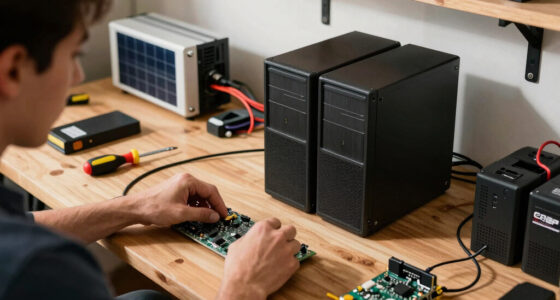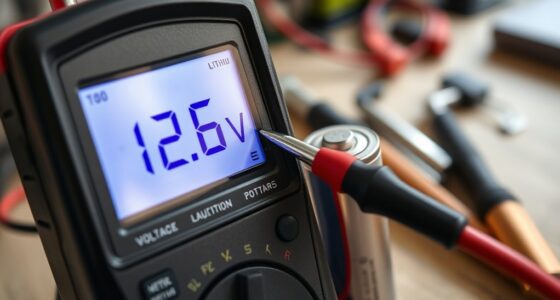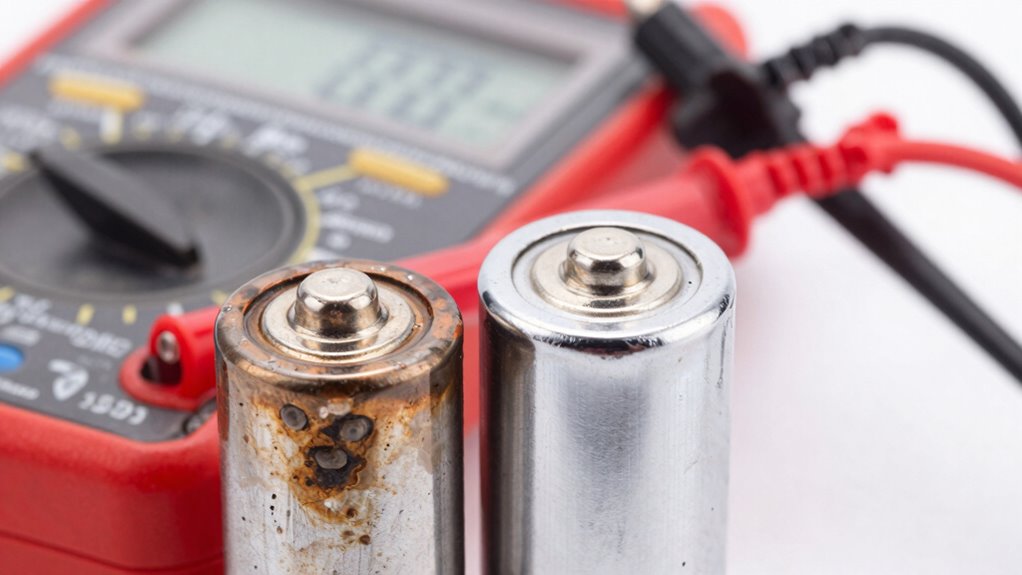

To tell if your battery problem is electrical or chemical, start by checking for symptoms like intermittent power, slow cranking, or flickering lights, which suggest electrical issues. If you notice reduced capacity, shorter battery life, or chemical signs like corrosion, it’s likely chemical deterioration. Testing connections, inspecting terminals, and monitoring performance can help pinpoint the cause. Keep exploring; you’ll gain more tips to diagnose and fix the problem effectively.

Get backup power and energy gear delivered free with Prime
- Fast, free delivery on millions of items
- Prime Video, Amazon Music and more included
- Member-only deals all year
Key Takeaways
- Check for signs of chemical deterioration, like capacity loss and aging, to identify chemical issues.
- Look for electrical symptoms such as intermittent power or flickering, indicating electrical faults.
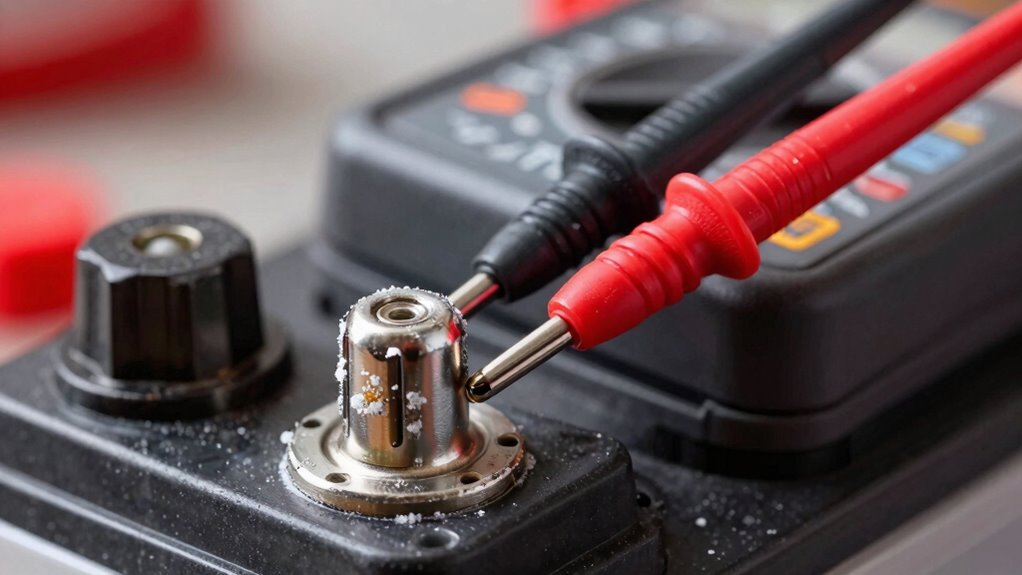
- Inspect terminals for corrosion or loose connections that suggest electrical problems.
- Test the battery’s performance with diagnostic tools to distinguish between chemical wear and electrical faults.
- Consider the battery’s age and charging habits to determine if degradation is chemical or electrical.
When your vehicle or device shows signs of a failing battery, it can be challenging to determine whether the issue stems from electrical or chemical problems. Batteries naturally degrade over time, so understanding the difference can help you troubleshoot more effectively. One key aspect to consider is the battery lifespan. If your battery is several years old, it’s likely nearing the end of its useful life, which points toward chemical deterioration. As batteries age, their internal chemical reactions become less efficient, leading to reduced capacity and performance. On the other hand, if your battery is relatively new but still exhibits issues, electrical problems might be be the culprit.
Your charging habits play a significant role in maintaining battery health. Consistently overcharging or undercharging your device can accelerate chemical wear, shortening the battery’s lifespan. For example, if you leave your vehicle plugged in for extended periods or frequently top off your device’s battery, you might be damaging the internal chemistry, causing capacity loss over time. Conversely, irregular charging patterns, like letting the battery drain completely before recharging, can also harm the battery chemistry. Proper, consistent charging habits help preserve the chemical integrity of your battery and extend its useful life. Additionally, understanding how battery chemistry impacts performance can help you make informed decisions about maintenance and replacement. Knowing the chemical processes inside your battery can also assist in diagnosing issues more accurately.
Consistent charging habits preserve battery chemistry and extend its lifespan.
Electrical problems tend to manifest as issues with the flow of power rather than chemical deterioration. If your battery is relatively new and you notice symptoms like intermittent power, difficulty starting, or electrical components flickering, the problem might be electrical. Corrosion on terminals, loose connections, or faulty wiring can disrupt the flow of current without necessarily affecting the battery’s internal chemistry. These issues are often repairable without replacing the entire battery, so it’s worth inspecting the connections and testing the electrical system. Additionally, understanding the electrical system in your device or vehicle can help identify potential causes of power issues early on. Recognizing electrical issues early can prevent unnecessary battery replacements and save you money. Being aware of battery health indicators can further assist in diagnosing the root cause of the issue.
As an affiliate, we earn on qualifying purchases.
Frequently Asked Questions
Can Environmental Factors Affect Battery Chemical Reactions?
Environmental impact definitely affects battery chemical reactions. Harsh conditions like extreme temperatures, humidity, or exposure to chemicals can accelerate chemical degradation inside the battery. This causes the chemical reactions to become less efficient or even break down, reducing battery lifespan and performance. So, if your battery’s acting up, consider environmental factors, as they can profoundly influence chemical reactions and overall battery health.
How Long Do Chemical Battery Issues Typically Last?
Chemical battery issues usually last from a few months up to several years, depending on usage and maintenance. You might notice reduced battery lifespan or chemical degradation signs like decreased capacity or swelling. If you see these symptoms, it indicates chemical issues that can be corrected or may require replacing the battery. Regularly checking and caring for your battery helps slow chemical degradation, extending its effective lifespan.
Are Electrical Issues More Common in Certain Battery Types?
Think of electrical issues like a faulty wiring system—you’ll find they’re more common in lead-acid batteries, especially if neglecting proper battery maintenance or inconsistent charging protocols. For instance, a friend’s car battery failed prematurely because of corroded terminals. Regular maintenance and correct charging protocols help prevent electrical problems, regardless of battery type. Lithium-ion batteries tend to have fewer electrical issues but require careful handling to avoid internal damage.
What’s the Best Way to Prevent Chemical Battery Problems?
You can prevent chemical battery problems by practicing regular battery maintenance, such as keeping terminals clean and ensuring proper electrolyte levels. To maintain chemical stability, avoid overcharging or deep discharging your battery, which can lead to chemical imbalances. Store batteries in a cool, dry place and follow manufacturer guidelines for usage. Consistent maintenance helps prevent buildup of harmful substances and extends your battery’s lifespan.
How Do Temperature Changes Influence Electrical Battery Performance?
Temperature tweaks can really tinker with your battery’s performance. When it gets too hot, poor heat dissipation and high thermal conductivity cause overheating, which can damage internal components and reduce efficiency. Cold climates, on the other hand, slow down chemical reactions, limiting power output. To keep your battery balanced, make certain proper heat dissipation and monitor thermal conductivity, so temperature shifts don’t sabotage your device’s reliability and longevity.
Conclusion
Understanding whether your battery issue is electrical or chemical helps you troubleshoot more effectively. Remember, it’s like reading between the lines—sometimes, the problem isn’t what it seems on the surface. By paying close attention to symptoms and testing methods, you can uncover the true cause. Don’t let uncertainty drain your confidence—your knowledge is the key to keeping your device powered and reliable. Because, in the end, a well-informed mind is the strongest battery of all.
Halloween Picks
halloween
As an affiliate, we earn on qualifying purchases.