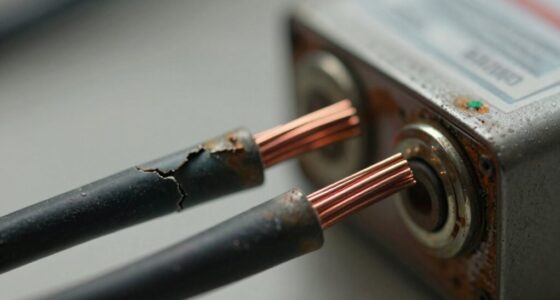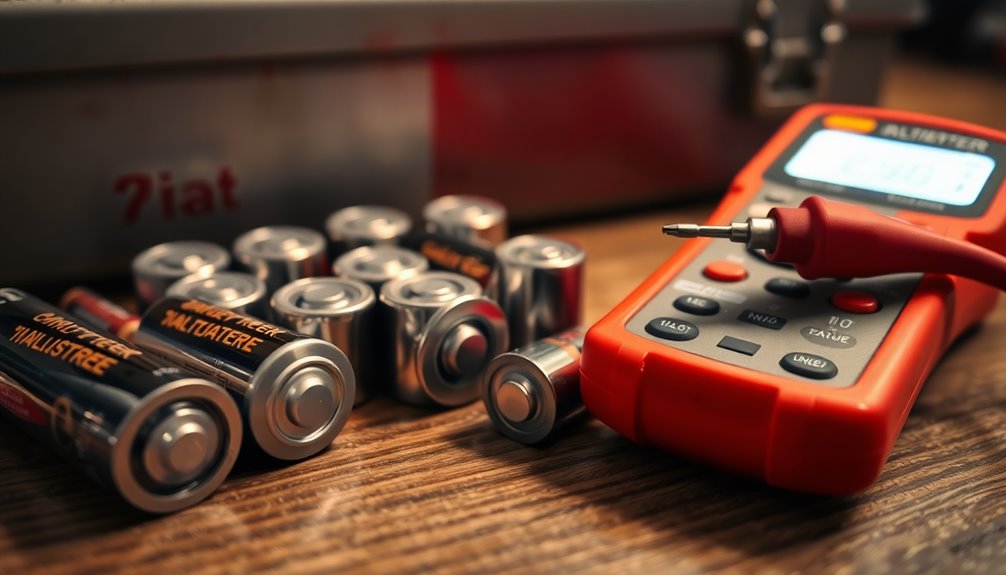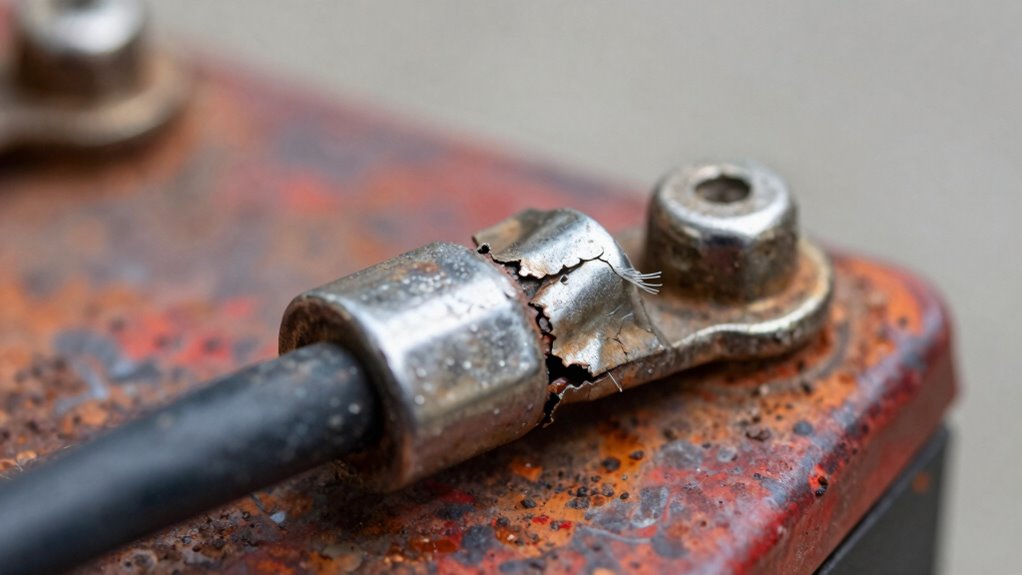

High resistance connections in your battery system hinder the flow of electricity, causing sluggish engine starts, dimmer lights, and reduced overall performance. Over time, they generate heat, accelerate internal wear, and shorten the battery’s lifespan. Corrosion, loose fittings, or dirt can all increase resistance and damage your system. If you want to keep your battery running smoothly and stay safe on the road, understanding how to maintain low-resistance connections is essential. Keep going to learn more.

Get backup power and energy gear delivered free with Prime
- Fast, free delivery on millions of items
- Prime Video, Amazon Music and more included
- Member-only deals all year
Key Takeaways
- High resistance disrupts smooth current flow, causing slower engine starts and dimmer electrical components.
- It accelerates internal battery wear, reducing overall lifespan and efficiency.
- Increased resistance leads to heat buildup, risking damage and potential safety hazards.
- Corrosion and loose connections elevate energy costs and fuel consumption.
- Maintaining low resistance connections ensures optimal battery performance and safety.
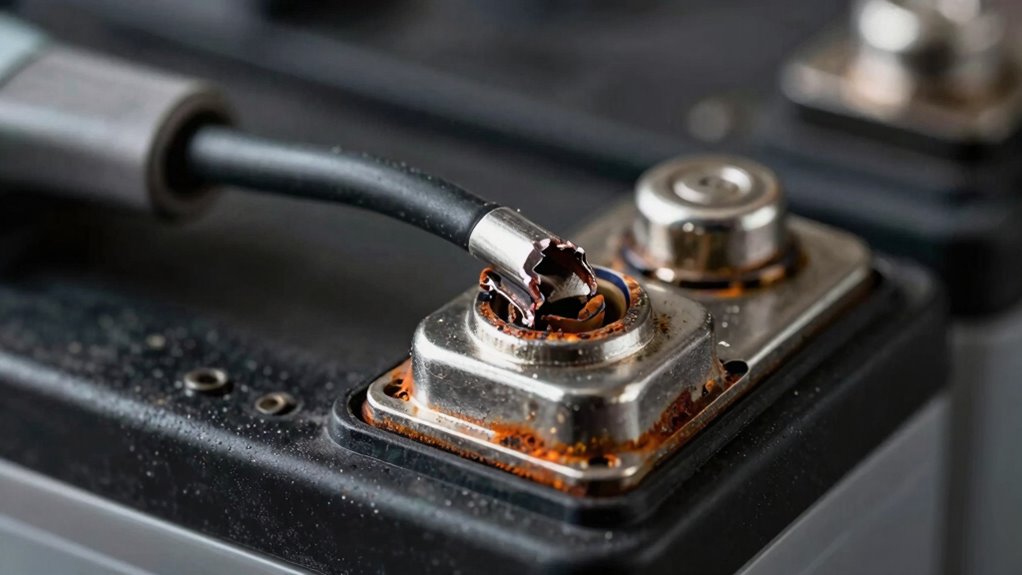
Have you ever wondered how small electrical issues can considerably impact your battery’s performance? One of the most overlooked problems is high resistance in the connections. When resistance increases at the battery terminals or cable joints, it hampers the smooth flow of electricity. This resistance often stems from corrosion effects, which develop over time and interfere with proper contact. Corrosion, usually caused by moisture, salts, or acids, creates a thin insulating layer that prevents efficient current transfer. As a result, your battery struggles to deliver power effectively, leading to slower starts, dimmer lights, and overall reduced performance.
High resistance from corrosion hampers battery performance and causes slow starts and dim lights.
Connection maintenance becomes vital to prevent these issues. Regularly inspecting your battery terminals and cables helps you catch early signs of corrosion or loose fittings. Cleaning corrosion from terminals using a wire brush or a specialized cleaner restores good electrical contact. After cleaning, applying a protective coating or dielectric grease can slow down future corrosion effects. Proper connection maintenance guarantees that the resistance remains low, allowing your battery to perform at its best level. When connections are secure and clean, electricity flows freely, and your vehicle or device operates more reliably. Additionally, understanding the causes of corrosion can help you better prevent future connection problems. Recognizing and addressing corrosion effects promptly can significantly extend the lifespan of your battery and maintain optimal performance. Maintaining low resistance connections is especially important because corrosion can develop quickly in harsh environments, further degrading performance if not addressed promptly. Moreover, ensuring secure connections can prevent sudden disconnections that might lead to electrical failures.
High resistance doesn’t just cause immediate performance drops; it also accelerates wear on your battery. When resistance is high, the battery has to work harder to supply the same amount of power. This extra load generates heat and strains the internal components, which can shorten the battery’s lifespan. Over time, this leads to reduced capacity and the need for more frequent replacements. Properly managing connection quality through regular maintenance can help prevent these issues from escalating. Additionally, high resistance can cause your charging system to work harder, increasing fuel consumption in vehicles or energy costs in other applications.
Ignoring connection issues can also result in dangerous situations. Loose or corroded connections generate heat, which might lead to melting insulation or damage to nearby components. In extreme cases, this can cause shorts or fires. That’s why consistent connection maintenance isn’t just about prolonging battery life; it’s also about safety. Guaranteeing tight, clean, and corrosion-free connections minimizes resistance, maximizes performance, and keeps everything running smoothly.
battery terminal cleaner wire brush
As an affiliate, we earn on qualifying purchases.
As an affiliate, we earn on qualifying purchases.
Frequently Asked Questions
How Can I Detect High Resistance Connections in Batteries?
You can detect high resistance connections by performing a corrosion inspection and checking for corrosion buildup or loose fittings. Use a multimeter to measure voltage drops across connections; higher-than-normal readings indicate resistance issues. Tighten any loose connections carefully, and look for signs of corrosion or damage. Regularly inspecting and maintaining your battery connections helps prevent high resistance problems and guarantees peak performance and longevity.
What Tools Are Best for Measuring Connection Resistance?
To tackle connection quality and resistance testing, grab a reliable milliohm meter or a precision clamp meter. These tools are tailored for testing tiny resistance levels, helping you detect high resistance connections efficiently. Use a digital multimeter with a low-resistance setting for quick checks. By using these tools, you accurately measure resistance, ensuring your battery’s connections stay solid, secure, and free from high resistance hassles.
Do High Resistance Connections Affect All Types of Batteries Equally?
High resistance connections impact all types of batteries differently, depending on their material and susceptibility to connection corrosion. You’ll notice that some battery materials, like lead-acid, are more forgiving, while lithium-ion batteries can be more sensitive to high resistance issues. When connections corrode, resistance increases, reducing efficiency and lifespan across all batteries, but the effects are more pronounced in certain types due to their unique chemistry and construction.
How Often Should Battery Connections Be Inspected for Resistance Issues?
You should inspect your battery connections regularly—about every three to six months—to catch any subtle signs of corrosion prevention issues. During connection maintenance, look for corrosion buildup or looseness, which can signal resistance problems. Routine checks help guarantee peak performance, prevent unexpected failures, and extend battery life. By staying proactive, you keep your system running smoothly and avoid the more serious effects of high resistance connections over time.
Can High Resistance Connections Cause Battery Overheating or Failure?
Yes, high resistance connections can cause battery overheating or failure. When corrosion buildup or connection looseness occurs, it increases resistance, leading to excessive heat. This heat can damage the battery and other electrical components, potentially causing a complete failure. Regularly inspecting and cleaning connections helps prevent corrosion buildup and guarantees tight, secure connections, reducing the risk of overheating and prolonging your battery’s lifespan.
Conclusion
High resistance connections can notably impair your battery’s performance by limiting current flow and causing voltage drops. While some believe that minor resistance has minimal impact, research shows even small increases can lead to reduced efficiency and shorter battery life. Regularly checking and maintaining clean, tight connections is essential. Trusting the theory that resistance directly affects performance underscores the importance of proper maintenance, ensuring your battery operates at its full potential and lasts longer.
Fall Picks
fall essentials
As an affiliate, we earn on qualifying purchases.