
TL;DR

Get backup power and energy gear delivered free with Prime
- Fast, free delivery on millions of items
- Prime Video, Amazon Music and more included
- Member-only deals all year
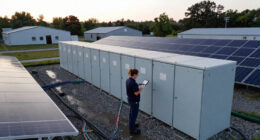
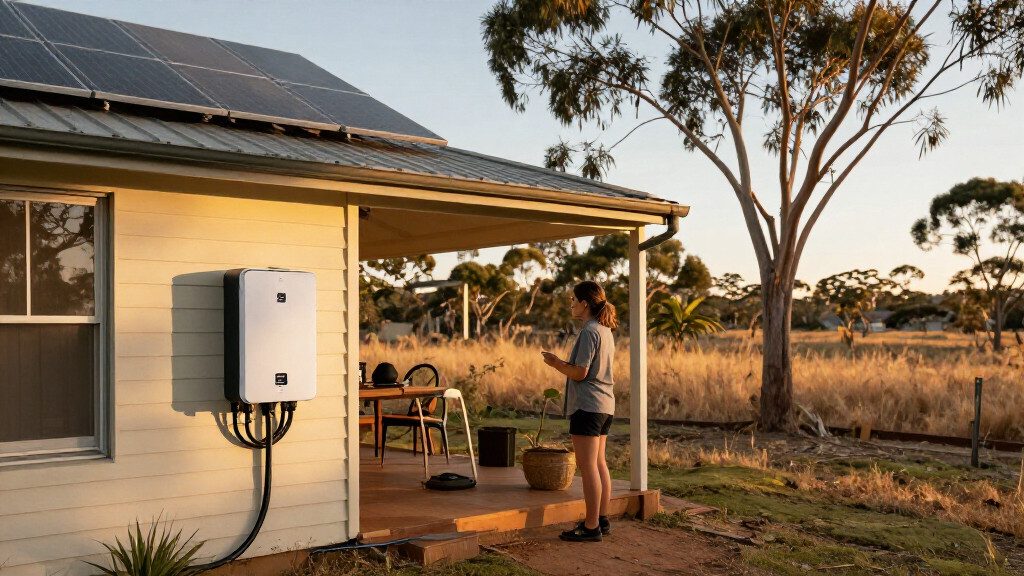
Battery energy stored in Australia’s National Electricity Market (NEM) reached a record 20.17GWh on Nov. 6, 2026, a 203% rise year on year, according to analysis by Dylan McConnell Eldridge. The same day brought record solar output in Victoria and high renewable-energy curtailment, highlighting both the growth of storage and limits on how much renewable generation the grid can use.
Battery energy stored across Australia’s National Electricity Market (NEM) reached a record 20.17GWh on Nov. 6, 2026, up 203% from a year earlier, according to analysis by Dylan McConnell Eldridge. The record coincided with high renewable output and an estimated 41.36GWh of curtailed wind and solar generation, underscoring that more battery capacity does not by itself remove constraints on using renewable electricity.
Eldridge’s figures show the 20.17GWh stored-energy level was a new high for the NEM’s battery energy storage systems (BESS). The figure measures energy held in batteries, in gigawatt-hours; it is distinct from battery power output, which is measured in megawatts. A separate discharge record came on Aug. 11, when batteries discharged at up to 4,325MW and supplied 14.42% of NEM consumption during that interval, according to figures reported by Eldridge at the time.
Renewable generation also reached high levels on Nov. 6. Utility-scale solar photovoltaic output in Victoria hit a record 1,588MW, 35% above its level a year earlier. NEM-wide solar availability reached 10,561MW, 12% higher than the previous record of 9,410MW set on Oct. 17, 2025.
At the same time, Eldridge estimated that 41.36GWh of renewable energy was curtailed across the market that day: 26.67GWh of solar and 14.69GWh of wind. Curtailment means available generation is reduced or not dispatched. In New South Wales, it totalled 15.68GWh, almost all from solar, and the state set a record for average curtailment during intervals with positive prices.
Storage Growth Meets Grid Constraints
The record indicates that batteries are holding substantially more energy in the NEM than a year earlier, offering greater potential to shift electricity from periods of abundant generation to times when supply is tighter. But stored energy is not the same as energy delivered to customers: the amount batteries can discharge depends on their power limits, state of charge, location and market conditions.
The simultaneous curtailment figures show why storage deployment alone is not a complete measure of how effectively the electricity system is using renewables. Eldridge said transmission constraints, local dispatch conditions and where storage is located affect how much generation the grid can absorb. For consumers and energy planners, the practical issue is whether storage, transmission and market operations can work together to reduce wasted output and support supply when demand rises.
The figures also matter to investors because battery revenues can be concentrated in a small number of high-value periods. NEMPulse reported that 59 grid-scale batteries earned AU$88.91 million in the third quarter of 2026, with five days accounting for 15% of the quarter’s total revenue. That snapshot suggests revenues may vary considerably over time; it does not establish that every battery project has the same performance.
Products Worth Considering

Jackery Solar Generator 1000 V2 with 100W Solar Panel, 1024Wh LiFePO4 Battery

Samsung Galaxy Tab A11+ 11-Inch Tablet, 6GB RAM, 128GB Storage, Expandable, Gray

Bose Lifestyle Ultra Compact Wireless Smart Home Speaker Bundle, Black
As an affiliate, we earn on qualifying purchases.
A Rapidly Expanding Battery Fleet
Battery deployment in the NEM has grown quickly in recent years. The Australian Energy Regulator reported that installed battery output increased from 261MW at the start of 2021 to 6.1GW at the end of 2025. It also said batteries set the wholesale price 16.3% of the time in 2025. These are measures of installed power and price-setting frequency, not stored energy, so they should not be directly compared with the 20.17GWh record.
The Clean Energy Council said 2GW of battery power capacity, with 5.1GWh of energy capacity, was commissioned in 2025, a 233% year-on-year increase. The industry body also said Australia became the world’s third-largest utility-scale battery storage market, behind the United States and China. Separately, the Australian Energy Market Operator reported that 9.1GW of renewable generation and storage connected to the NEM in financial year 2026, while its connections pipeline reached 75.4GW; batteries made up 52% of that pipeline capacity.
These developments form the backdrop to the new record, but pipeline capacity is not the same as operating capacity. Projects still need to reach construction and connection before they can contribute to the market.
“The question is increasingly not just how much generation and storage capability we have, but how effectively the NEM can utilise it.”
— Dylan McConnell Eldridge, writing on LinkedIn
What the Record Does Not Show
The reported record is a snapshot of stored energy on Nov. 6, not a measure of how much electricity batteries delivered over the full day or how much was available at every point in the market. The source material does not specify the fleet’s state of charge across the day, the number of batteries contributing to the total, or the data method behind the 203% year-on-year comparison.
The curtailment figures are Eldridge’s estimates; the supplied report does not provide a breakdown of how much curtailed generation could have been captured by batteries, or how much was unavailable to them because of location, charging limits or network conditions. It also does not establish the causes of each individual dispatch decision. The figures therefore show concurrent records and constraints, but do not prove that the battery fleet could have absorbed all the curtailed energy.
Future project pipeline totals are also subject to change. The supplied material does not give commissioning dates for the individual projects or establish how much will be completed on schedule.
Tracking Connections and Grid Use
The next developments to watch are whether planned batteries reach connection and operation, and whether transmission upgrades and market arrangements allow them to charge during periods of surplus renewable generation. AEMO’s reported 75.4GW connections pipeline provides a measure of prospective projects, but its size alone does not confirm when that capacity will become available.
Further market data should show whether stored-energy records are repeated, how battery discharge changes during periods of high demand, and whether curtailment trends shift as new storage and network capacity come online. AEMO chief executive Daniel Westerman has pointed to investment beyond 2030 as relevant to reliability; the timing and delivery of that investment remain important questions.
Key Questions
What does the 20.17GWh record measure?
It measures the reported amount of energy stored in battery energy storage systems across the NEM at the record level on Nov. 6, 2026. It is an energy measure, not the batteries’ maximum power output.
How much did stored battery energy increase?
Eldridge’s analysis said the 20.17GWh record was 203% higher year on year. The supplied report does not provide further details on the comparison methodology.
Why was renewable energy curtailed on the same day?
Eldridge identified transmission constraints, local dispatch conditions and storage location as factors affecting how much generation the NEM can use. The available figures do not explain the cause of every curtailment decision or establish how much could have been stored.
Does the record mean batteries supplied 20.17GWh to consumers?
No. The figure refers to energy stored, not energy discharged to the grid. A separate discharge record was reported for Aug. 11, when output reached 4,325MW during an interval.
Source: energy-storage.news