
You need to test your battery backups before storm season because untested systems can fail up to 30% of the time when you really need them. Waiting until storms hit can lead to panic and unexpected outages. Regular testing helps you identify performance issues, set maintenance schedules, and guarantee your backups are functional. This proactive approach gives you peace of mind and can even save money in the long run. There’s more to know about storm preparedness strategies that can help you stay connected.

Get backup power and energy gear delivered free with Prime
- Fast, free delivery on millions of items
- Prime Video, Amazon Music and more included
- Member-only deals all year
Key Takeaways
- Testing battery backups before storm season ensures they function properly, preventing panic during unexpected outages.
- Untested backups may fail during power flickers, leaving you unprepared in critical moments.
- Regular testing identifies performance issues, allowing timely replacements and maintenance.
- Functional backups during storms keep devices charged and maintain communication, enhancing safety.
- Proactive preparation reduces anxiety and saves costs by preventing unexpected backup failures.
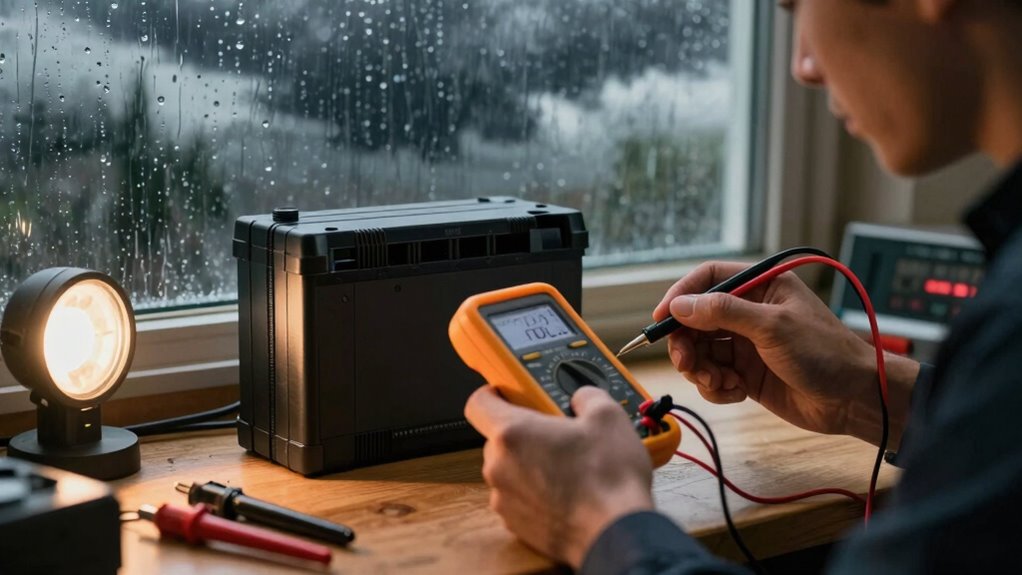
When it comes to protecting your devices from unexpected power outages, battery backups are essential. You want to verify your tech remains functional when the lights go out, especially during storm season. However, many people wait until the storms hit to test their backup systems. This is a risky approach. Testing your battery backups before storm season not only enhances battery maintenance but also improves backup efficiency and energy reliability.
Imagine a storm rolling in and the power flickering before going out entirely. You flip the switch on your battery backup, only to find it’s not working. Panic sets in as you realize you haven’t checked the backup’s functionality. This scenario happens more often than you’d think. By establishing a solid testing protocol ahead of time, you can avoid this nightmare. Regular testing allows you to identify any issues and verify your battery is ready when you need it most.
A storm hits, power fades, and your untested backup fails—avoid the panic by establishing a regular testing routine.
Preparation isn’t just about having the right equipment; it’s about knowing that equipment works. A well-maintained battery backup can greatly reduce the impact of power outages. You might be surprised to learn that batteries can degrade over time. By performing regular tests, you can monitor their performance and replace them as needed. This proactive approach means you’re not left in the dark when you need power the most. Additionally, understanding battery degradation can help you make informed decisions about replacements and maintenance schedules. Proper testing can also reveal if your system needs a battery replacement sooner than expected, ensuring continued reliability.
Storm preparedness isn’t just about stocking up on food and water; it’s also about verifying your devices can stay operational. A functional battery backup can keep your essential devices, like phones and laptops, charged. Smart thermostats can even help optimize energy use during outages, ensuring your home stays comfortable without wasting power. You’ll find it much easier to stay connected during a storm, whether for updates on the weather or for communication with loved ones.
Moreover, knowing your battery backup is efficient gives you peace of mind. You won’t have to wonder if it’ll hold up during extended outages. Regular testing can help you gauge how long your backup will last, allowing you to plan accordingly. Proper testing and maintenance can also extend the lifespan of your batteries, saving you money in the long run. Being proactive about testing can also prevent unexpected failures that could leave you unprepared when it matters most.
As an affiliate, we earn on qualifying purchases.
Frequently Asked Questions
How Often Should Battery Backups Be Tested?
You should test your battery backups at least once every three to six months for ideal battery maintenance. Regular testing guarantees your system’s reliability and performance when you need it most. If you use your backup frequently or have an older model, consider increasing the testing frequency to every month. Keeping a consistent schedule helps you catch potential issues early, assuring your backup’s readiness during power outages or emergencies.
What Signs Indicate a Failing Battery Backup?
If your battery backup shows signs of declining battery health, it’s likely failing. Watch for warning signs like frequent beeping, dimming lights, or power fluctuations. You might notice performance issues, such as reduced backup time or inability to hold a charge. To maintain your system, regularly test the battery, clean the connections, and replace it if it’s over three to five years old. Staying proactive can prevent bigger problems later on.
Can I Test My Battery Backup Myself?
Yes, you can test your battery backup yourself! In fact, about 25% of battery backups fail during power outages due to lack of testing. For DIY testing, unplug your unit and see if it powers your devices. Remember to follow safety precautions: avoid overloading the backup and check for any signs of wear. Regular testing guarantees your battery works when you need it most, keeping you prepared for unexpected outages.
What Is the Lifespan of a Typical Battery Backup?
A typical battery backup lasts around 3 to 5 years, but it really depends on battery maintenance and usage. You should regularly check its performance and replace the battery when necessary to guarantee effective power management. Neglecting maintenance can shorten its lifespan, leaving you unprepared. Keep an eye on indicators and test it periodically to make certain it’s ready when you need it most. This proactive approach can extend its usability considerably.
Are There Specific Tools Needed for Testing Backups?
To keep your battery backup humming like a well-tuned engine, you’ll need some specific testing equipment. Grab a multimeter to check voltage levels, and consider a load tester to guarantee your backup can handle the pressure. Regular maintenance practices, like cleaning terminals and checking connections, will extend its life. Think of these tools as the lifeguards on duty, ready to make sure your backup is prepared for the stormy seas ahead.
Conclusion
As storm clouds gather and winds begin to howl, the last thing you want is a malfunctioning battery backup. Picture yourself in the dim light of a flickering candle, anxiously waiting for power to return. By testing your battery backups ahead of storm season, you’re not just ensuring peace of mind; you’re safeguarding your home and loved ones. Don’t wait for the tempest to strike—prepare now, so you can weather any storm with confidence.
Fall Picks
fall essentials
As an affiliate, we earn on qualifying purchases.