When inspecting your battery regularly, look for corrosion around the terminals, such as white, green, or bluish powder. Check that the battery connections are tight but not overtightened, and look for cracks, leaks, or bulges in the case. Use a multimeter to test the voltage; a fully charged battery should read about 12.6 volts. Spotting signs early helps prevent failures, and if you keep going, you’ll learn more tips to keep your battery in top shape.
Key Takeaways
- Check for corrosion around terminals, such as white, green, or bluish powdery deposits.
- Ensure terminal clamps are snug but not overtightened, and look for cracks or leaks in the battery case.
- Inspect for signs of internal damage like bulges, cracks, or leaks in the battery.
- Test the battery voltage with a multimeter; a healthy battery should read around 12.6 volts when off.
- Look for buildup of crusty or fuzzy material that can disrupt electrical flow and cause starting issues.
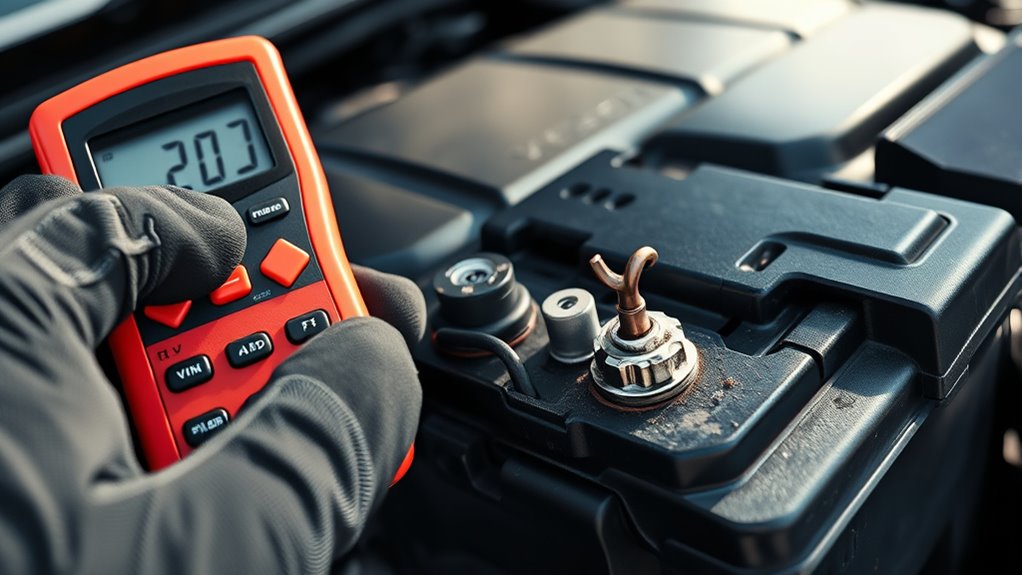
Have you ever wondered how to guarantee your vehicle’s battery stays reliable? Regular battery inspection is key to preventing unexpected breakdowns and assuring your car performs smoothly. One of the most common issues you’ll want to watch out for is corrosion buildup, especially around the battery terminals. Corrosion, often appearing as a white, green, or bluish powdery substance, can greatly impact your battery’s performance. It forms when sulfuric acid leaks or reacts with moisture, creating a layer that hinders the flow of electricity. Terminal corrosion is particularly problematic because it disrupts the connection between the battery and the cables, leading to starting problems or even failure to start altogether.
Regularly inspect your battery for corrosion to ensure reliable vehicle performance and prevent starting issues.
To keep your battery in top shape, you should routinely examine the terminals for any signs of corrosion or buildup. When inspecting, look for a crusty or fuzzy substance around the terminal posts and cable clamps. If you notice any corrosion, don’t ignore it. Cleaning it off is straightforward and can save you from costly repairs down the line. Use a mixture of baking soda and water to neutralize the corrosion—apply it with a toothbrush or a small brush, scrub gently, and then rinse with clean water. Make sure to dry the terminals thoroughly afterward. Once cleaned, consider applying a thin layer of petroleum jelly or terminal protector spray to prevent future corrosion from forming. Regular battery inspection can help you catch issues early before they lead to more serious problems.
Another aspect to check during your inspection is the tightness of the terminal connections. Loose connections can cause intermittent electrical issues, which are often mistaken for a failing battery. Ensure the clamps are snug but not overly tight, as overtightening can damage the posts or clamps. Also, keep an eye out for any cracks, leaks, or bulges in the battery case itself, as these are signs of internal damage that could compromise the battery’s reliability.
In addition to visual checks, it’s wise to test your battery’s voltage periodically using a multimeter. A healthy, fully charged car battery should read around 12.6 volts when the engine is off. If the reading is considerably lower, it indicates your battery might be failing or needs charging. Combining these visual inspections with voltage tests gives you a thorough understanding of your battery’s health.
Frequently Asked Questions
How Often Should I Have My Battery Inspected?
You should have your battery inspected at least once a year, especially before winter. During inspections, look for signs of battery corrosion and perform voltage testing to guarantee it’s holding a proper charge. If you notice corrosion around the terminals or your vehicle’s performance declines, schedule an inspection sooner. Regular checks help prevent unexpected failures and extend your battery’s lifespan. Don’t wait—early detection keeps you moving smoothly.
Can a Battery Be Inspected at Home or Only by Professionals?
You can perform DIY testing on your battery with a multimeter, but for the most accurate assessment, it’s best to obtain a professional assessment. DIY testing helps you spot obvious issues like low voltage, but professionals have specialized tools to evaluate overall health and pinpoint hidden problems. Regular check-ups, whether DIY or professional, ensure your battery stays reliable and prevents unexpected breakdowns.
What Tools Are Needed for a Thorough Battery Inspection?
Think of your tools as the detectives for your battery’s health. You’ll need a digital voltmeter for voltage testing, which acts like a lie detector for your battery’s charge. A wire brush or corrosion remover helps you inspect for corrosion, keeping its surface smooth and clean. Gloves and safety glasses protect you during the inspection. With these tools, you can confidently monitor your battery’s condition at home, catching issues early.
How Do Environmental Factors Affect Battery Health?
Environmental factors critically impact your battery’s health. Corrosion buildup can occur when moisture combines with battery terminals, leading to poor connections and reduced performance. Temperature impact is also essential; high temperatures accelerate battery fluid evaporation and internal damage, while cold temperatures can decrease capacity temporarily. You should regularly check for corrosion and monitor temperature conditions, ensuring your battery remains in ideal shape and avoids costly failures.
When Is It Time to Replace a Failing Battery?
When your battery starts showing signs of failure, it’s time to replace it. Look for battery corrosion around terminals and perform voltage testing—if your readings are consistently below 12.6 volts, it’s a sign it’s nearing the end. Don’t wait until it’s an “I Love Lucy” moment of unexpected failure; proactive replacement saves you from being stranded. Trust your inspections and replace when necessary to keep everything running smoothly.
Conclusion
Regularly inspecting your battery is key to preventing unexpected failures and extending its lifespan. Keep an eye out for corrosion, leaks, or a swollen case, and don’t forget to check the terminals for tightness. When was the last time you gave your battery a quick inspection? Staying proactive not only saves you money but also keeps your vehicle running smoothly. So, why wait for a breakdown when a quick check now can save you headaches later?