
If your car is starting slow, warning lights flicker, or you notice corrosion on the terminals, start by inspecting the battery and connections. Clean any corrosion with baking soda and water, then tighten the terminals securely. Check the charging system to confirm the alternator charges properly. Regular maintenance and testing can catch issues early. Exploring these steps further will help you keep your battery in top shape and avoid unexpected breakdowns.

Get backup power and energy gear delivered free with Prime
- Fast, free delivery on millions of items
- Prime Video, Amazon Music and more included
- Member-only deals all year
Key Takeaways
- Check for corrosion on terminals and clean with baking soda and water to improve electrical connection.
- Test the battery voltage and current to identify signs of aging or power loss.
- Inspect the alternator to ensure it is charging the battery properly and replace if faulty.
- Monitor warning lights like the battery or check engine light for potential electrical issues.
- Ensure the battery is not struggling to start, especially in cold weather, indicating possible deterioration.

A dead or weak car battery can leave you stranded at the worst moment, but many battery problems are simple to diagnose and fix. When your car struggles to start or takes longer than usual, it’s often due to issues related to the battery’s lifespan or charging system. Batteries don’t last forever; typically, they serve you well for about three to five years. As the battery ages, its ability to hold a charge diminishes, making it more susceptible to slow starts and frequent drain. If your vehicle’s battery is nearing the end of its lifespan, you might notice it struggles to turn over, especially in colder weather, or that warning lights flicker on your dashboard indicating electrical issues. These signs point to a need for a battery check or replacement.
Charging issues are another common culprit behind battery problems. Your car’s alternator is responsible for recharging the battery while you drive, so if it’s malfunctioning, your battery won’t get the juice it needs to stay healthy. A failing alternator can cause your battery to drain quickly, leading to repeated dead starts and warning lights on your dashboard, such as the battery or check engine light. You might also notice dimming headlights or sluggish electronic accessories, which signals the charging system isn’t functioning properly. Regularly inspecting your charging system and ensuring the alternator is working correctly can prevent these issues from worsening.
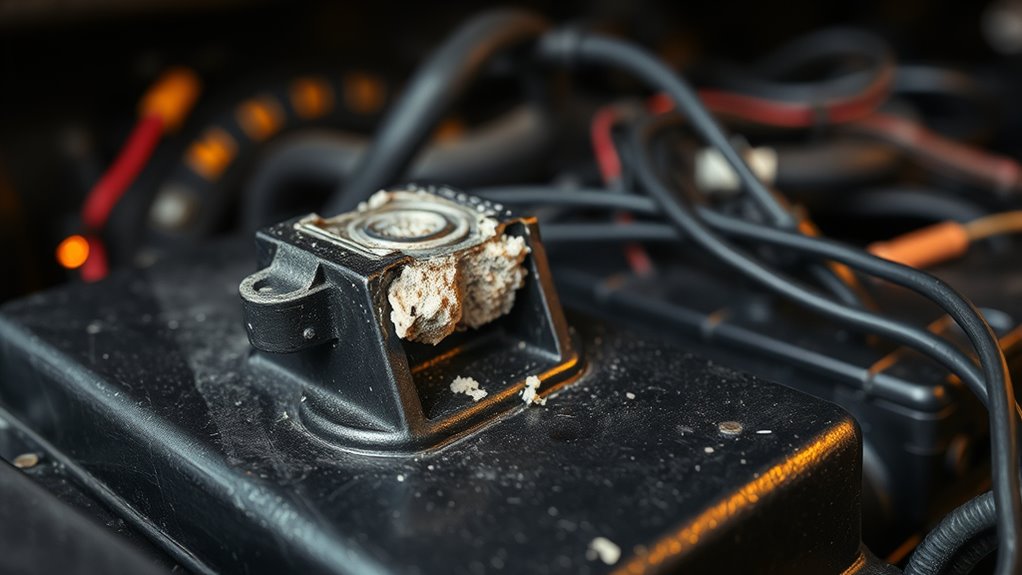
Corrosion is a silent enemy that can accelerate battery deterioration, especially if you neglect maintenance. Corrosion appears as a whitish or bluish powder on the battery terminals, creating a poor connection that hampers the flow of electricity. When corrosion builds up, it can cause intermittent starting problems, slow engine cranks, or even prevent the car from starting altogether. Cleaning the terminals with a mixture of baking soda and water and applying petroleum jelly or terminal protectors can help prevent corrosion from forming again. Maintaining clean, tight terminals ensures dependable connection, helping your battery perform reliably for its lifespan.
Additionally, using reliable diagnostic tools can help you identify and troubleshoot battery issues more effectively. Finally, always keep an eye on your battery’s health by scheduling regular inspections, especially if your vehicle is older or if you notice warning signs. Testing the battery voltage and current can reveal underlying issues before they leave you stranded. Addressing charging issues promptly, replacing an aging battery, and keeping terminals clean can extend your battery’s service life and ensure your vehicle starts smoothly every time. Remember, many battery problems are straightforward to identify and fix with a little attention, saving you time, money, and stress on the road.
Frequently Asked Questions
How Often Should I Replace My Car Battery?
You should replace your car battery every 3 to 5 years, depending on your battery’s lifespan and driving habits. Regularly check for signs of weakness, like slow starts or warning lights, which indicate it’s time for a replacement. Keep in mind that extreme temperatures can shorten your battery’s lifespan. To avoid unexpected failures, consider scheduled replacement intervals, and have your battery tested annually by a professional.
Can a Dead Battery Be Jump-Started Successfully?
Yes, a dead battery can often be jump-started successfully. When you perform a battery jump start, you connect your car’s dead battery to another vehicle’s good battery using jumper cables. This provides the necessary power to start your engine. Just guarantee the jumper cables are connected correctly, and avoid attempting a jump start if your battery or cables are damaged. Once started, drive for a while to recharge your battery.
What Are the Signs of a Failing Alternator?
You might notice your car’s electrical system throwing a tantrum, like flickering lights or a dying radio. An alternator warning light popping up is a dead giveaway. You could also experience dim headlights or frequent battery drain, as your alternator struggles to keep up. These signs point to a failing alternator, causing electrical issues that leave you stranded. Don’t ignore them—your car’s power source is crying out for help.
Does Extreme Weather Affect Battery Lifespan?
Extreme weather definitely impacts your battery’s lifespan. Cold temperatures can slow chemical reactions inside the battery, making it harder to start your car, while hot weather accelerates internal corrosion and fluid evaporation. Seasonal effects like winter freeze and summer heat put extra strain on your battery, causing it to wear out faster. To keep your battery healthy, check it regularly and consider replacements more often if you live in extreme climates.
Are Aftermarket Batteries as Reliable as OEM Ones?
Aftermarket batteries can be reliable, but they often don’t match the consistency of OEM batteries. When comparing reliability, OEM batteries are designed specifically for your vehicle, ensuring better fit and performance. While aftermarket options may cost less and offer variety, they sometimes lack the rigorous testing OEM batteries undergo. If longevity and guaranteed compatibility matter to you, sticking with OEM batteries usually provides better peace of mind.
Conclusion
By staying attentive to signs like slow starts, warning lights, or corrosion, you can catch battery issues early. For example, imagine your car struggles to turn over on cold mornings—checking the terminals and testing the battery could save you a costly repair. Regular maintenance and quick troubleshooting guarantee your vehicle stays reliable. Don’t ignore these signs; a little care now prevents bigger problems later, keeping you safe and on the road.
Halloween Picks
halloween
As an affiliate, we earn on qualifying purchases.