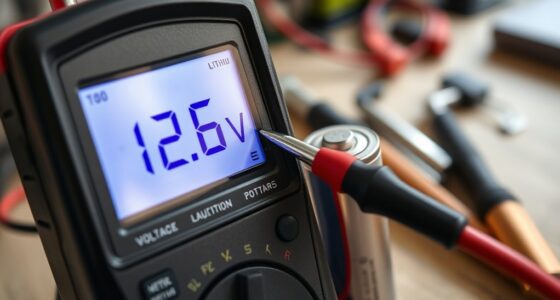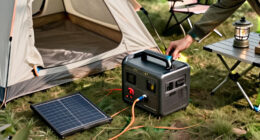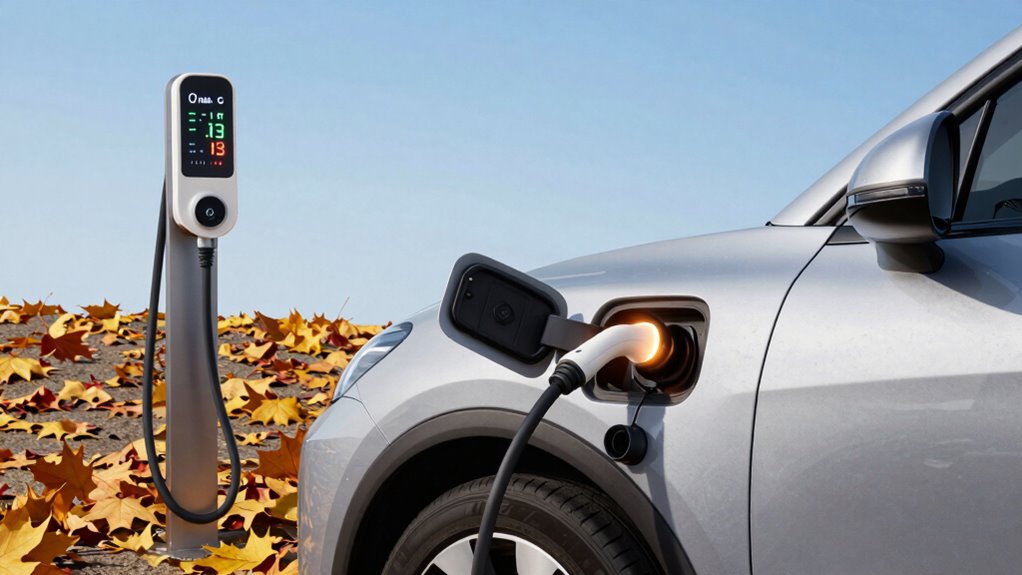

Ambient temperature directly affects how your device charges by influencing the chemical reactions inside the battery. When it’s too hot, charging slows down or the device may overheat, risking damage. Cold temperatures reduce current flow, making charging slower or less effective. Staying within moderate temperatures helps your battery charge efficiently and lasts longer. If you want to understand how thermal management and environmental factors play a role, keep exploring to learn more.

Get backup power and energy gear delivered free — and shop member deals
- Fast, free delivery on millions of items
- Access to Prime Big Deal Days deals on October 6–7
- Prime Video, Amazon Music and more included
Key Takeaways
- Extreme temperatures slow chemical reactions, reducing charging efficiency in cold or hot environments.
- Overheating during charging can trigger device safety measures, slowing or stopping the process.
- Cold temperatures decrease current flow, leading to slower charging times or incomplete charging.
- Thermal management systems maintain optimal temperature, ensuring consistent charging performance.
- Environmental factors like sunlight or freezing conditions can impair battery health and charging speed.
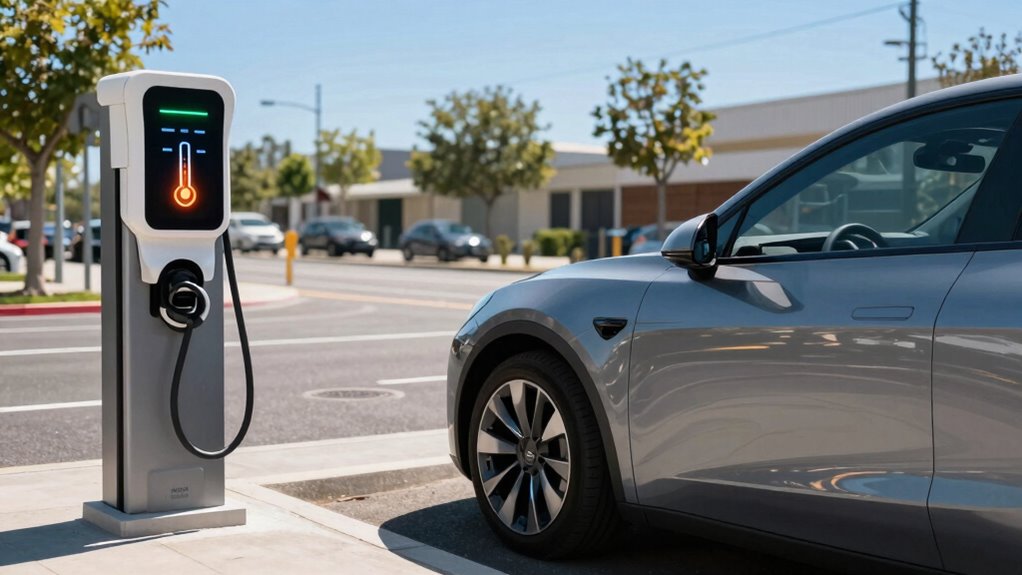
Ambient temperature markedly influences how your devices charge, affecting both speed and battery health. When the environment is too hot or cold, it impacts your device’s battery efficiency, which in turn alters the charging process. Batteries operate best within a specific temperature range, typically between 20°C and 25°C (68°F and 77°F). Outside this range, the chemical reactions inside the battery become less efficient, causing slower charging times or even preventing your device from charging altogether. High temperatures accelerate chemical activity, which can lead to faster battery degradation, while low temperatures slow down the process, making charging less effective. That’s why you might notice your device charges more slowly in a cold room or takes longer to reach full capacity during a heatwave.
Thermal management plays a vital role in maintaining your device’s battery health and guaranteeing efficient charging. Modern devices are equipped with thermal management systems that regulate internal temperature, preventing overheating or excessive cooling. When you’re charging your device in an environment with extreme temperatures, these systems kick in to protect the battery. For example, if your phone gets too hot, it may slow down or temporarily halt charging to prevent damage. Conversely, in cold conditions, the device might limit current flow to avoid internal stress. Proper thermal management not only prolongs your battery’s lifespan but also helps maintain consistent charging performance. Effective thermal regulation ensures your device operates optimally across different environments. Keeping your device in a moderate environment enhances battery efficiency, reducing the risk of overheating or freezing during the charging process. Additionally, understanding ambient temperature and its effects can help you optimize your device’s overall performance and longevity. Recognizing that battery chemistry is sensitive to temperature fluctuations allows you to better protect and extend your device’s lifespan. Knowing how thermal management systems function can also help you better understand why your device behaves differently under various conditions. Furthermore, being aware of how temperature fluctuations impact battery chemistry can guide you in adopting better device care practices.
To maximize charging behavior, you should be mindful of ambient temperature conditions. Avoid exposing your device to direct sunlight or leaving it in a cold car, as extreme temperatures can undermine battery efficiency and thermal management systems. Using your device in a controlled environment allows it to charge more quickly and safely, preserving battery capacity over time. If you notice your device heating up during charging, removing the case or turning off background apps can help dissipate heat. Similarly, in cold weather, warming up your device gently before charging can improve efficiency. Overall, maintaining a moderate ambient temperature ensures your device charges quickly, safely, and retains its battery health longer. Recognizing these environmental influences empowers you to take better care of your device and fine-tune its charging behavior.
thermal management smartphone case
As an affiliate, we earn on qualifying purchases.
As an affiliate, we earn on qualifying purchases.
Frequently Asked Questions
How Quickly Does Temperature Affect Battery Performance?
Temperature can impact your battery efficiency pretty quickly, often within minutes of exposure to extreme conditions. When it’s too cold, your battery’s thermal adaptation slows down chemical reactions, reducing performance. Conversely, high temperatures can cause faster degradation over time. You notice these effects as decreased range or slower charging. To maintain the best performance, keep your device within recommended temperature ranges, allowing your battery to thermally adapt and stay efficient longer.
Are Certain Battery Types More Sensitive to Temperature Changes?
Yes, some battery types are more sensitive to temperature changes due to their chemistry. Lithium-ion batteries, for example, perform best with effective thermal management, as high temperatures can cause degradation and safety issues, while low temperatures reduce capacity. Nickel-based batteries tend to be more tolerant but still benefit from proper thermal management. Understanding your battery’s chemistry helps you optimize charging and extend its lifespan, especially in varying ambient temperatures.
Can Ambient Temperature Impact Charging Safety?
Ambient temperature can impact charging safety like a storm brewing on the horizon. When temperatures are too high or low, your device struggles with thermal regulation, risking overheating or freezing. Following safety protocols helps prevent thermal runaway and damage. Staying within recommended temperature ranges guarantees safe charging, protecting both your device and yourself. Always keep an eye on ambient conditions to avoid surprises and keep your charging experience smooth and safe.
How Do Temperature Fluctuations Affect Long-Term Battery Health?
Temperature fluctuations can considerably impact your battery’s long-term health. When exposed to varying temperatures, your battery’s thermal resilience decreases, accelerating battery aging. Frequent temperature swings cause stress on battery components, reducing capacity over time. To preserve your battery’s longevity, avoid extreme heat or cold, and try to keep it within a stable temperature range. Proper thermal management helps maintain ideal performance and extends the overall lifespan of your battery.
What Are the Best Practices for Charging in Extreme Temperatures?
To charge your device in extreme temperatures, focus on temperature regulation by avoiding very hot or cold environments. Use charging accessories designed for safety and efficiency, such as insulated cables or portable heaters. Keep your device at room temperature if possible, and unplug it if it gets too hot or cold. Monitoring ambient conditions helps prevent battery damage, ensuring best performance and longevity even in challenging weather.
Conclusion
So, next time you charge your device, remember that ambient temperature really matters. Cooler temperatures can boost your battery’s lifespan, while heat speeds up wear and tear—sometimes by as much as 50%! Keeping your device in a moderate environment isn’t just about comfort; it’s about maximizing efficiency and longevity. Stay mindful of the temperature around you, and your device will thank you with better performance and a longer life.
Halloween Picks
halloween
As an affiliate, we earn on qualifying purchases.