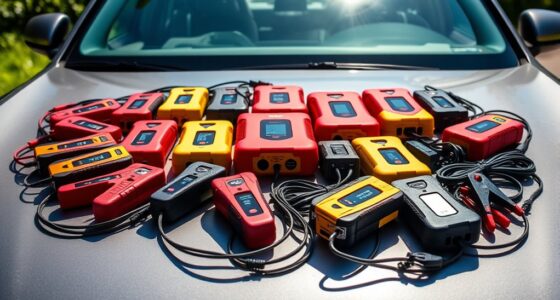
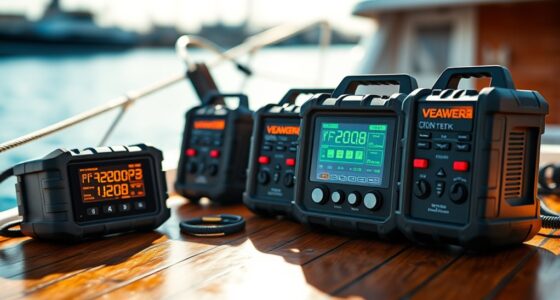
Solar generator charging panels pair a portable power station with panels that replenish it from sunlight, but the right bundle depends on how much energy you need and how quickly you need to replace it. My best overall pick is the BLUETTI Elite 300 with two 200W panels, which leads this lineup in listed battery capacity and bundled panel wattage. The EF ECOFLOW DELTA 3 Classic with a 220W panel and Jackery Solar Generator 1000 v2 with a 200W panel stand out for buyers seeking a more portable-capacity balance. The main tradeoff is between larger batteries and faster solar input on one side, and lighter, easier-to-carry bundles on the other. Read on for the full breakdown, including what to check before choosing a panel and power station together.

Get backup power and energy gear delivered free with Prime
- Fast, free delivery on millions of items
- Prime Video, Amazon Music and more included
- Member-only deals all year
Complete the kit


Key Takeaways
- The BLUETTI Elite 300 bundle leads on listed capacity and panel wattage: its 3014Wh battery and two 200W panels suit buyers who prioritize stored energy and bundled solar input over a compact setup.
- The 220W EF ECOFLOW panel is the highest-wattage single panel listed: it edges the Jackery 200W bundle on panel wattage, while both pair with 1024Wh power stations.
- Panel wattage varies substantially even when battery capacity is similar: the two Jackery 1000 v2 bundles share a 1024Wh battery but include either a 200W or 100W panel, changing the solar-recharge tradeoff.
- The Anker C300 bundles are a middle ground, not interchangeable twins: both list 288Wh and a 60W panel, while the DC and standard C300 versions are distinct configurations buyers should compare for their output needs.
- Small bundles prioritize portability over sustained power: the Apowking 146Wh and MARBERO 155Wh packages come with 40W and 30W panels, respectively, making them better suited to modest loads than long-term high-demand use.
| BLUETTI Elite 300 Solar Generator with Two 200W Solar Panels, 3014Wh LiFePO4 Battery |  | Best for Extended Backup | Battery capacity: 3014Wh | Battery chemistry: LiFePO4 | Solar panels: 2 × 200W | VIEW LATEST PRICE | See Our Full Breakdown |
| EF ECOFLOW DELTA 3 Classic Solar Generator with 220W Solar Panel, 1024Wh |  | Best for Fast Solar Recharging | Battery capacity: 1024Wh | Battery chemistry: LiFePO4 | Solar panel: 220W bifacial, N-Type cells | VIEW LATEST PRICE | See Our Full Breakdown |
| Jackery Solar Generator 1000 v2 with 200W Solar Panel, 1024Wh LiFePO4 Battery |  | Best for App-Controlled Charging | Battery capacity: 1024Wh | Battery chemistry: LiFePO4 | Solar panel: 200W | VIEW LATEST PRICE | See Our Full Breakdown |
| VTOMAN Jump 600X 600W Portable Power Station with 110W Foldable Solar Panel |  | Best Compact Panel Bundle | Battery capacity: 268.8Wh | Battery chemistry: LiFePO4 | Solar panel output: 110W | VIEW LATEST PRICE | See Our Full Breakdown |
| BROWEY 1600W Portable Power Station with Built-In Solar Panel, 1024Wh LiFePO4 Battery |  | Best for All-in-One Solar Convenience | Battery capacity: 1024Wh | Battery type: LiFePO4 | Built-in solar panel: 40W | VIEW LATEST PRICE | See Our Full Breakdown |
| Jackery Solar Generator 1000 V2 with 100W Solar Panel, 1024Wh LiFePO4 Battery |  | Best for Long-Term Battery Life | Battery capacity: 1,024Wh | Battery type: LiFePO4 | AC output: 1,500W | VIEW LATEST PRICE | See Our Full Breakdown |
| Apowking 146Wh Portable Power Station with 40W Solar Panel |  | Best Lightweight Solar Starter | Battery capacity: 146Wh | Solar panel output: 40W | Solar panel efficiency: 20.5% | VIEW LATEST PRICE | See Our Full Breakdown |
| Anker SOLIX C300 DC Portable Power Station with 60W Solar Panel, 288Wh, 300W |  | Best Compact USB-C Solar Kit | Battery capacity: 288Wh | Battery type: LiFePO4 | Maximum output: 300W | VIEW LATEST PRICE | See Our Full Breakdown |
| Anker SOLIX C300 Portable Power Station with 60W Solar Panel, 288Wh, 300W |  | Best Compact Solar Pick with AC Outlets | Battery capacity: 288Wh | Battery chemistry: LiFePO4 | Continuous output: 300W | VIEW LATEST PRICE | See Our Full Breakdown |
| Anker SOLIX C1000 Gen 2 Portable Power Station with 200W Solar Panel |  | Best for Faster Solar Recharging | Battery capacity: 1,024Wh | Battery chemistry: LiFePO4 | Output power: 2,000W | VIEW LATEST PRICE | See Our Full Breakdown |
| ZeroKor 300W Portable Power Station with 60W Solar Panel |  | Best for Budget-Conscious, Low-Wattage Kits | Maximum station output: 300W | Included solar panel: 60W foldable monocrystalline | Panel conversion efficiency: 20.5% | VIEW LATEST PRICE | See Our Full Breakdown |
| Anker SOLIX C1000 Gen 2 Portable Power Station with 100W Solar Panel |  | Best for High-Capacity Power with a Portable Panel | Battery capacity: 1,024Wh | Battery type: LiFePO4 | Running output: 2,000W | VIEW LATEST PRICE | See Our Full Breakdown |
| MARBERO 155Wh Portable Power Station with 30W Solar Panel |  | Best Lightweight Starter Kit | Station capacity: 155Wh | Included solar panel: 30W | Panel conversion efficiency: 23% | VIEW LATEST PRICE | See Our Full Breakdown |
| solar generator charging panel | Battery capacity | Weight | Included solar panel |
|---|---|---|---|
| BLUETTI Elite 300 Solar Genera | 3014Wh | — | — |
| EF ECOFLOW DELTA 3 Classic Sol | 1024Wh | — | — |
| Jackery Solar Generator 1000 v | 1024Wh | 23.4 lbs | — |
| VTOMAN Jump 600X 600W Portable | 268.8Wh | — | — |
| BROWEY 1600W Portable Power St | 1024Wh | 26 lbs | — |
| Jackery Solar Generator 1000 V | 1,024Wh | 23.4 lb | 100W |
| Apowking 146Wh Portable Power | 146Wh | 3.3 lb | — |
| Anker SOLIX C300 DC Portable P | 288Wh | 2.8 kg | 60W |
| Anker SOLIX C300 Portable Powe | 288Wh | 15.5 lb | 60W |
| Anker SOLIX C1000 Gen 2 Portab | 1,024Wh | 24.9 lb | 200W bifacial |
| ZeroKor 300W Portable Power St | — | — | 60W foldable monocrystalline |
| Anker SOLIX C1000 Gen 2 Portab | 1,024Wh | — | 100W PS100 bifacial portable panel |
| MARBERO 155Wh Portable Power S | — | 3.7 lb | 30W |
More Details on Our Top Picks
BLUETTI Elite 300 Solar Generator with Two 200W Solar Panels, 3014Wh LiFePO4 Battery
I rank the BLUETTI Elite 300 first for buyers who want panel charging paired with substantial stored power, not just a lightweight camping setup. Its two 200W panels provide more included solar capacity than the single 220W panel bundled with the EcoFlow DELTA 3 Classic, while the 3014Wh battery offers roughly three times that model’s storage. That combination suits longer outages and RV use, though the listed solar recharge time is still approximately 7–15 hours, depending on conditions. The 2400W output, 4800W surge rating, TT-30 outlet, and 12V/30A port also make it better equipped for larger loads and RV connections than the smaller Jackery 1000 v2. The tradeoff is bulkier capacity, and the panels ship separately, so the complete kit may not arrive together.
Pros:- 3014Wh LiFePO4 battery provides substantially more stored energy than the 1024Wh EcoFlow and Jackery bundles.
- Two included 200W panels offer 400W of rated solar panel capacity.
- TT-30 outlet and 12V/30A DC port suit RV power needs.
- 2400W AC output and 4800W surge rating support larger loads and startup surges.
Cons:- Listed solar recharge time is approximately 7–15 hours, so a full recharge can take much of a day.
- Panels ship separately from the power station.
- Its high-capacity setup is a less convenient fit for buyers seeking a compact camping kit.
Best for: RV owners and households seeking a large LiFePO4 reserve with two included panels for extended backup or off-grid use.
Not ideal for: Campers who prioritize a light, compact setup or buyers who need the power station and panels to arrive together.
- Battery capacity:3014Wh
- Battery chemistry:LiFePO4
- Solar panels:2 × 200W
- AC output:2400W
- Surge output:4800W
- RV connection:TT-30 outlet
- DC port:12V/30A
- Solar recharge time:Approximately 7–15 hours with included panels
Our verdict“Choose the Elite 300 if extended backup capacity and RV-ready connections matter more than compactness or a quick solar recharge.”
EF ECOFLOW DELTA 3 Classic Solar Generator with 220W Solar Panel, 1024Wh
The EcoFlow DELTA 3 Classic earns a distinct place for buyers who value a comparatively capable panel and fast AC charging in a mid-size kit. Its included 220W bifacial panel is rated to recharge the 1024Wh station in 5.8 hours under stated conditions, slightly less time than the Jackery 1000 v2’s 200W panel is specified to need. That does not make solar output predictable: sunlight and setup affect actual results. For charging from an outlet, the stated 45-minute 0–80% time is a practical advantage when there is limited time before leaving. The 1800W output and under-10ms UPS switchover add household and electronics flexibility that the smaller VTOMAN Jump 600X lacks. Its capacity remains well below the BLUETTI Elite 300, and the panel and station may arrive separately.
Pros:- Included 220W bifacial panel has more rated output than the Jackery 1000 v2’s 200W panel.
- Stated solar recharge time is 5.8 hours with the included panel.
- AC charging is specified at 0–80% in 45 minutes.
- Under-10ms UPS switchover can help keep sensitive electronics powered during an interruption.
Cons:- 1024Wh capacity is much smaller than the BLUETTI Elite 300’s 3014Wh reserve.
- Solar recharge time depends on sunlight and panel conditions.
- The power station and panel may arrive separately.
Best for: Campers and home users who want a 1024Wh station, an included higher-output panel, and quick AC recharging between trips or outages.
Not ideal for: Buyers needing multi-day backup, RV-specific high-capacity connections, or a panel and station guaranteed to arrive in one shipment.
- Battery capacity:1024Wh
- Battery chemistry:LiFePO4
- Solar panel:220W bifacial, N-Type cells
- Panel conversion efficiency:Up to 25%
- AC output:1800W
- Surge output:3600W
- Solar charging time:5.8 hours with the included panel
- AC charging time:0–80% in 45 minutes
- UPS switchover:Under 10ms
Our verdict“Pick the DELTA 3 Classic if you want a 1024Wh bundle with a 220W panel and quick AC recharging rather than a larger, longer-running system.”
Jackery Solar Generator 1000 v2 with 200W Solar Panel, 1024Wh LiFePO4 Battery
I’d put the Jackery Solar Generator 1000 v2 on the shortlist for buyers who want a portable 1024Wh station and more control over charging behavior. Its 200W panel is a little lower in rated output than the EcoFlow DELTA 3 Classic’s 220W bifacial panel, but Jackery adds app-controlled modes, including quiet and energy-efficiency settings, alongside emergency charging. With emergency mode enabled, the stated full charge time is 50 minutes; that is an AC charging claim, not a promise of a 50-minute solar recharge. The 1500W output and 3000W peak are below EcoFlow’s 1800W and 3600W ratings, while the 23.4-pound weight and 10ms UPS switchover make the Jackery a useful portable backup choice. Product notes conflict on default full-charge time, and the panel ships separately.
Pros:- Included 200W panel gives the 1024Wh station a substantial solar input option.
- App offers emergency, quiet, and energy-efficiency charging modes.
- 23.4-pound listed weight is lighter than the 26-pound BROWEY station.
- 10ms UPS switchover and multiple device ports support backup and everyday use.
Cons:- 1500W AC output and 3000W peak are lower than the EcoFlow DELTA 3 Classic’s ratings.
- The stated 50-minute full charge requires emergency charging to be enabled in the app.
- Product information gives conflicting default full-charge times, and the panel ships separately.
Best for: Road-trippers and campers who want a portable 1024Wh station with app-managed charging modes and a bundled 200W panel.
Not ideal for: Buyers who need the highest AC output in a 1024Wh bundle or a clear, consistent default charging-time specification.
- Battery capacity:1024Wh
- Battery chemistry:LiFePO4
- Solar panel:200W
- AC output:1500W
- Peak output:3000W
- UPS switchover:10ms
- Weight:23.4 lbs
- Battery lifespan:Rated to retain over 70% capacity after 4000 charge cycles
Our verdict“Choose the Jackery if portability and app-based charging controls matter more than the EcoFlow’s higher output and slightly stronger panel rating.”
VTOMAN Jump 600X 600W Portable Power Station with 110W Foldable Solar Panel
The VTOMAN Jump 600X is the compact pick here: its included foldable 110W monocrystalline panel and 268.8Wh battery make more sense for short trips and modest device loads than the 1024Wh EcoFlow or Jackery bundles. The panel’s adjustable kickstands help with positioning, while the 600W continuous output and 1200W surge rating cover smaller appliances but set a firm ceiling. That is the central tradeoff: this kit is easier to match to limited power needs, but it cannot provide the longer reserve or heavier AC output of the larger stations. Its 100W USB-C port and LiFePO4 battery rated for 3000+ cycles to 80% capacity add useful everyday flexibility. Solar input is specified at 12–28V, and the station and panel ship separately, so check package timing before a trip.
Pros:- Includes a foldable 110W monocrystalline panel with adjustable kickstands.
- LiFePO4 battery is rated for 3000+ cycles to 80% capacity.
- 100W USB-C output supports compatible higher-power devices.
- Solar, AC, and car charging provide several ways to replenish the station.
Cons:- 268.8Wh capacity is far below the 1024Wh EcoFlow and Jackery bundles.
- 600W continuous output limits the appliances it can run.
- Power station and panel ship in separate packages.
Best for: Weekend campers and day-trip users powering phones, laptops, lights, and other modest loads from a compact solar kit.
Not ideal for: Households seeking multi-day outage backup or buyers who need to run appliances above 600W continuously.
- Battery capacity:268.8Wh
- Battery chemistry:LiFePO4
- Solar panel output:110W
- Solar cell efficiency:23%
- Continuous output:600W
- Surge output:1200W
- USB-C output:100W
- Solar input voltage:12–28V
Our verdict“Choose the Jump 600X for modest camping loads and a foldable included panel, but skip it for extended backup or power-hungry appliances.”
BROWEY 1600W Portable Power Station with Built-In Solar Panel, 1024Wh LiFePO4 Battery
The BROWEY 1600W takes a different approach from the other 1024Wh options: its 40W solar panel folds out from the station, so buyers do not need to pack a separate panel for basic solar access. That convenience comes with limited charging speed. The EcoFlow DELTA 3 Classic’s included panel is rated at 220W, and the Jackery 1000 v2’s at 200W; BROWEY’s built-in panel is only 40W. It can also accept up to 200W from a compatible external panel, but that panel is not included. The 1024Wh LiFePO4 battery and 1600W pure sine wave output offer a useful balance for camping or backup, while the 26-pound weight makes carrying it less appealing than the 23.4-pound Jackery. I’d treat the built-in panel as a convenience feature, not a fast-recharge solution.
Pros:- Built-in fold-out 40W panel avoids packing a separate panel for basic solar charging.
- Compatible external solar panels can provide up to 200W of solar input.
- 1024Wh LiFePO4 battery and 1600W output suit a range of camping and backup needs.
- 100W USB-C PD and eight total outlets and ports support multiple devices.
Cons:- The built-in panel’s 40W rating is much lower than the panels included with the EcoFlow and Jackery bundles.
- A compatible external panel is sold separately for the stated 200W maximum solar input.
- At 26 pounds, it weighs more than the Jackery 1000 v2.
Best for: Campers and RV travelers who prefer an attached, fold-out panel for supplemental charging and want a 1024Wh station with 1600W output.
Not ideal for: Buyers who expect fast solar replenishment from the included panel or need a lighter station for frequent carrying.
- Battery capacity:1024Wh
- Battery type:LiFePO4
- Built-in solar panel:40W
- Maximum solar input:200W with compatible external panel
- AC output:1600W
- Peak output:3200W
- USB-C PD output:100W
- Weight:26 lbs
Our verdict“Pick the BROWEY if an attached panel matters more than solar recharge speed, and plan on an external panel if you need stronger solar input.”
Jackery Solar Generator 1000 V2 with 100W Solar Panel, 1024Wh LiFePO4 Battery
I’d choose this Jackery when battery longevity and a substantial reserve matter more than fast solar replenishment. Its 1,024Wh LiFePO4 battery and stated capacity retention after 4,000 cycles give it a stronger long-use case than the smaller Anker SOLIX C300 DC, while the included 100W panel is more modest than the 200W panel bundled with the Anker SOLIX C1000 Gen 2. That panel can help maintain the station during a sunny day, but it means slower solar recovery than the larger-panel option. The 1,500W output and 3,000W surge capacity also extend its use beyond phones and lights to some household appliances. I like the app’s charging modes and 10ms UPS switchover for backup use, though the fastest 50-minute charging mode requires app activation and the panel and station ship separately.
Pros:- 1,024Wh LiFePO4 battery is rated to retain over 70% capacity after 4,000 cycles.
- 1,500W output and 3,000W surge capacity support more than small-device charging.
- Included 100W solar panel provides a ready-to-use solar charging setup.
- App controls offer charging modes, and UPS switchover is listed at 10ms.
Cons:- The included 100W panel replenishes the battery more slowly than the 200W panel bundled with the Anker SOLIX C1000 Gen 2.
- 50-minute emergency charging must be enabled in the app each time.
- The power station and panel ship separately.
Best for: Campers and households seeking a roughly 1kWh station with a long-cycle LiFePO4 battery and an included panel for gradual solar charging.
Not ideal for: Buyers who need faster solar recovery from the included panel, or who want a single shipment containing both the power station and panel.
- Battery capacity:1,024Wh
- Battery type:LiFePO4
- AC output:1,500W
- Surge output:3,000W
- Included solar panel:100W
- Weight:23.4 lb
- UPS switchover:10ms
- Battery lifespan:Over 70% capacity after 4,000 charge cycles
Our verdict“Choose this Jackery for a durable 1kWh battery and broad output, but pick the Anker SOLIX C1000 Gen 2 if quicker solar charging is your priority.”
Apowking 146Wh Portable Power Station with 40W Solar Panel
This Apowking is the most approachable pick here for carrying a small solar setup on foot: the station weighs 3.3 lb, and its included 40W monocrystalline panel pairs with a 146Wh battery for topping up personal electronics and other low-draw gear. Compared with the Anker SOLIX C300 DC, it is lighter and comes with a panel, but its capacity and 100W continuous output are much lower. That makes it a better fit for a short camping trip than for running appliances or supporting a busy group of devices over several days. Seven outputs help share its limited reserve, while the dual LED lights add useful emergency functions. I’d skip it if your solar plan depends on substantial stored energy: a small battery and panel can’t match the recovery potential or runtime of the larger Anker or Jackery bundles.
Pros:- Light 3.3 lb design is easier to carry than the larger Anker and Jackery stations.
- Included 40W monocrystalline panel gives buyers a compact solar charging setup.
- Seven outputs support several small devices and personal electronics.
- Dual LED lights include flashlight, strobe, and SOS modes.
Cons:- 146Wh capacity limits runtime and the amount of energy available after sunset.
- 100W continuous output rules out many household appliances.
- The 40W panel is a modest charging source compared with the larger panels in this roundup.
Best for: Solo campers, hikers with a vehicle nearby, and emergency-kit owners who want a very light station and panel for phones, lights, and other small loads.
Not ideal for: Buyers powering appliances above 100W, running several high-draw devices, or needing multi-day energy reserves.
- Battery capacity:146Wh
- Solar panel output:40W
- Solar panel efficiency:20.5%
- Continuous output:100W
- Peak output:200W
- Weight:3.3 lb
- Number of outputs:7
- Dimensions:7.5 × 3.7 × 6.1 in
Our verdict“Pick the Apowking for lightweight charging of small devices on short trips, not as a substitute for a higher-capacity solar generator.”
Anker SOLIX C300 DC Portable Power Station with 60W Solar Panel, 288Wh, 300W
I’d put the Anker SOLIX C300 DC on a shortlist for buyers who want a compact station centered on USB-C gear rather than AC appliances. Its 288Wh battery and 60W included panel offer more stored energy and a larger solar input than the Apowking’s 146Wh battery and 40W panel, while the C300 DC remains a compact option for travel. Anker lists about four hours to recharge with the included panel, so it suits daytime replenishment better than rapid turnaround or extended cloudy stretches. The high-output USB-C ports can serve laptops and other compatible devices without making AC outlets the focus. That is a different proposition from the standard Anker SOLIX C300, which includes AC outlets; buyers who need them should compare that model instead. Also check panel compatibility, since several Anker SOLIX panels are excluded.
Pros:- Included 60W panel offers more solar input than the Apowking’s 40W panel.
- 288Wh battery provides twice the stored capacity of the Apowking’s 146Wh unit.
- Multiple USB-C ports support charging a range of compatible devices.
- Recharge options include wall outlet, solar, car, and USB-C.
Cons:- About four hours of listed solar recharge time makes it a gradual rather than rapid solar-charging option.
- It does not offer the AC outlets included on the standard Anker SOLIX C300.
- Not compatible with Anker SOLIX PS30, PS200, or PS400 panels; shoulder strap is sold separately.
Best for: Travelers and campers charging USB-C laptops, phones, cameras, and similar devices who want a compact station with a bundled solar panel.
Not ideal for: Buyers who need AC outlets, faster solar replenishment, or compatibility with the listed Anker SOLIX PS30, PS200, or PS400 panels.
- Battery capacity:288Wh
- Battery type:LiFePO4
- Maximum output:300W
- Included solar panel:60W
- Solar recharge time:About 4 hours with the included panel
- Weight:2.8 kg
- USB-C outputs:2 × 140W, 1 × 100W, 1 × 15W
- Warranty:3 years
Our verdict“Choose the C300 DC for compact, USB-C-focused solar charging, but select the standard C300 if AC outlets matter to your setup.”
Anker SOLIX C300 Portable Power Station with 60W Solar Panel, 288Wh, 300W
Unlike the USB-C-focused C300 DC, this Anker SOLIX C300 adds three AC outlets, making it the more flexible compact choice for campers bringing gear that needs a standard plug. Its 288Wh battery and 60W panel are a step up from the Apowking’s 146Wh capacity and 40W panel, though neither bundle is designed for quickly refilling a large battery from sunlight. The station can also recharge from a wall outlet, car, or PD 3.1 USB-C, so solar is one part of a broader charging plan rather than the only route. A stated 25dB operating level may suit quiet campsites, and the listed 3,000-cycle battery design supports repeat use. The tradeoffs are its 15.5-pound weight and panel restrictions; buyers prioritizing USB-C ports and a lighter carry should compare it with the C300 DC.
Pros:- Three AC outlets add plug-in flexibility absent from the Anker SOLIX C300 DC.
- Included 60W panel and 288Wh battery make a more capable kit than the Apowking’s 40W/146Wh setup.
- Wall, solar, car, and PD 3.1 USB-C charging provide several ways to refill.
- Stated 25dB operation and a battery designed for 3,000 cycles suit repeat camping use.
Cons:- At 15.5 lb, it is less suitable for carrying on foot than the compact Apowking or C300 DC.
- The 60W panel is a limited source for recharging the 288Wh battery quickly.
- Listed Anker SOLIX panels and other 5V/3A USB-C panels are not compatible; carry strap is sold separately.
Best for: Campers and mobile workers who want compact solar charging plus AC outlets for small plug-in gear.
Not ideal for: Hikers who need a very light carry, or buyers who want to use the listed Anker SOLIX PS30, PS200, PS400, or other 5V/3A USB-C panels.
- Battery capacity:288Wh
- Battery chemistry:LiFePO4
- Continuous output:300W
- Surge output:600W
- Included solar panel:60W
- AC outlets:3
- Weight:15.5 lb
- Noise level:25 dB at 3.3 ft
Our verdict“Choose this C300 if AC outlets matter in a compact solar kit, and choose the C300 DC if you prefer a lighter, USB-C-centered setup.”
Anker SOLIX C1000 Gen 2 Portable Power Station with 200W Solar Panel
For buyers choosing primarily by the charging panel, the Anker SOLIX C1000 Gen 2 has the strongest bundle here: its 200W bifacial panel is twice the wattage of the Jackery 100W panel and well ahead of the 60W panels paired with the Anker C300 models. The 1,024Wh LiFePO4 station also accepts up to 600W of solar input, giving a path to faster recharging if you add compatible panel capacity; the included panel alone does not use that full input limit. Compared with the Jackery, this model offers 2,000W output and a stated solar recharge time of 1.8 hours, alongside app scheduling and UPS backup under 10ms. It is a heavier, larger kit than the compact options, and the station and panel ship separately. I’d favor it for substantial power needs and more capable solar replenishment, not for minimal pack weight.
Pros:- Included 200W bifacial panel offers more solar capacity than the Jackery’s 100W panel and the compact Anker bundles’ 60W panels.
- 1,024Wh LiFePO4 battery pairs with 2,000W output and 3,000W peak output.
- Supports up to 600W solar input for buyers adding compatible panel capacity.
- UPS switchover is under 10ms, with app-based monitoring and scheduling.
Cons:- The included 200W panel does not reach the station’s 600W maximum solar input.
- At 24.9 lb, it is much heavier than compact options such as the Apowking.
- The power station and solar panel are dispatched separately.
Best for: Campers and backup-power buyers who want a 1kWh station with a larger included panel and the option to expand solar input.
Not ideal for: Travelers seeking a lightweight personal-device kit, or buyers expecting the included 200W panel alone to meet the station’s 600W maximum solar input.
- Battery capacity:1,024Wh
- Battery chemistry:LiFePO4
- Output power:2,000W
- Peak output:3,000W
- Included solar panel:200W bifacial
- Maximum solar input:600W, 60V maximum
- Solar recharge time:1.8 hours
- Weight:24.9 lb
Our verdict“Pick the C1000 Gen 2 if a stronger included panel and expandable solar input matter more than compact size.”
ZeroKor 300W Portable Power Station with 60W Solar Panel
The ZeroKor pairs a 60W foldable monocrystalline panel with a station rated for 300W maximum output, making it a straightforward starter kit for phones, lights, and other modest loads. Compared with the MARBERO 155Wh kit, its panel has twice the rated output, which can help collect energy faster in favorable sun, though the ZeroKor’s battery capacity is not specified here, so I can’t compare stored energy directly. It also offers more than solar charging: AC, compatible solar, and a 12V car outlet provide useful backup routes when sunlight is limited. The tradeoff is its low output ceiling; appliances above 300W are unsupported. The panel’s junction box must stay dry, and the unit needs periodic charge maintenance during storage.
Pros:- Included 60W foldable monocrystalline panel has a higher rated output than the 30W panel in the MARBERO kit.
- Station can recharge from an AC outlet, compatible solar panel, or 12V car outlet.
- Offers AC, DC, standard USB, and quick-charge USB outputs.
- Built-in protections and a flashlight with reading and SOS modes add useful emergency-kit features.
Cons:- The 300W maximum output rules out appliances that draw more power.
- The solar panel junction box is not waterproof and needs protection from moisture.
- The instructions recommend maintaining the battery charge during storage rather than leaving it unused for long periods.
Best for: Campers and emergency-kit buyers who want an included solar panel for charging small electronics and other devices below 300W.
Not ideal for: Buyers planning to run high-wattage appliances or leave the panel exposed to wet conditions, since output is capped at 300W and the junction box is not waterproof.
- Maximum station output:300W
- Included solar panel:60W foldable monocrystalline
- Panel conversion efficiency:20.5%
- AC outlets:2; 300W maximum
- USB outputs:3 standard USB ports and 1 quick-charge USB port
- Solar recharge input:Compatible 13V–23V panel; built-in MPPT
- Other recharge methods:AC outlet and 12V car outlet
- Safety protections:Short-circuit, overcurrent, overvoltage, overload, and overheating
Our verdict“Choose the ZeroKor for a modest-load kit where its included 60W panel and multiple recharge methods matter more than high appliance output.”
Anker SOLIX C1000 Gen 2 Portable Power Station with 100W Solar Panel
This Anker kit stands apart from the smaller ZeroKor and MARBERO options through its 1,024Wh LiFePO4 battery and 2,000W running output: it can support substantially larger loads and longer use, while the included 100W panel keeps the bundled solar setup relatively portable. The panel is bifacial, foldable, and IP68-rated, a useful combination for buyers who want a weather-resistant panel they can carry between sites. The station can accept up to 600W of solar input, but the included panel supplies only 100W, so taking advantage of that higher input requires additional compatible panel capacity. Solar recharge is listed at about 1.8 hours under specified conditions; actual collection depends on sunlight. The station and panel also ship separately, which may mean they do not arrive together.
Pros:- 1,024Wh LiFePO4 battery and 2,000W running output support larger loads than the ZeroKor or MARBERO kits.
- Included 100W bifacial panel folds for transport and has an IP68 waterproof rating.
- Station accepts up to 600W of solar input for buyers who add compatible panel capacity.
- Ten ports allow multiple devices to connect at once.
Cons:- The included 100W panel uses only part of the station’s 600W solar input capability.
- The station and solar panel are dispatched separately and may arrive at different times.
- At 24.9 lb for the station, it is less convenient to carry than the smaller kits.
Best for: Campers and homeowners who need a substantial battery and strong appliance output but want a foldable, weather-resistant panel included in the kit.
Not ideal for: Buyers seeking the fastest solar replenishment from the included panel alone; its 100W rating is well below the station’s 600W solar input limit.
- Battery capacity:1,024Wh
- Battery type:LiFePO4
- Running output:2,000W
- Peak output:3,000W
- Included solar panel:100W PS100 bifacial portable panel
- Maximum solar input:600W; 60V maximum
- Solar recharge time:About 1.8 hours
- Panel weight:7 lb including stand
- Number of ports:10
Our verdict“Pick the C1000 Gen 2 if you want a large-capacity station and a durable included panel, and may add more solar capacity later.”
MARBERO 155Wh Portable Power Station with 30W Solar Panel
At 3.7 lb, the MARBERO is the most carry-friendly choice among these three, bundling a 155Wh station with a 30W panel for buyers prioritizing easy transport over fast solar recovery. Its panel has a 6.5-foot cable and an IP65 rating, giving some flexibility to place the panel in sun while keeping the station nearby and offering protection from dust and water jets. That panel is half the ZeroKor’s 60W rating, and the listed solar recharge time is 6–7 hours, so this kit suits gradual top-ups better than frequent, rapid replenishment. The two 100W AC outlets and several USB and DC options provide connection variety, but the station’s capacity and outlet limits make it a poor match for demanding appliances or extended power needs.
Pros:- At 3.7 lb, it is easier to carry than the ZeroKor and Anker station.
- Included 30W panel has an IP65 rating and a 6.5-foot cable for flexible placement.
- Multiple AC, USB, and DC outputs accommodate a range of small devices.
- Three flashlight modes include steady, SOS, and strobe.
Cons:- The 30W panel is the lowest-output option here and has a listed solar charging time of 6–7 hours.
- The 155Wh capacity and 100W AC outlets limit runtime and appliance choice.
- Its smaller panel is less suited to buyers who need to replenish power quickly or repeatedly.
Best for: Backpackers, day campers, and occasional emergency-kit users who want a lightweight bundle for phones, lights, and other small electronics.
Not ideal for: Buyers who need quick solar charging, long runtimes, or appliances drawing more than the station’s 100W AC outlet rating.
- Station capacity:155Wh
- Included solar panel:30W
- Panel conversion efficiency:23%
- Panel water resistance:IP65
- Solar charging time:6–7 hours
- AC outlets:2 × 100W
- Other outputs:1 QC3.0 USB-A, 2 standard USB-A, 1 USB-C, 3 DC outputs, and 1 car port
- Weight:3.7 lb
- Solar panel cable:6.5 ft
Our verdict“Choose the MARBERO when low carry weight and basic device charging matter more than panel speed or substantial capacity.”
How We Picked
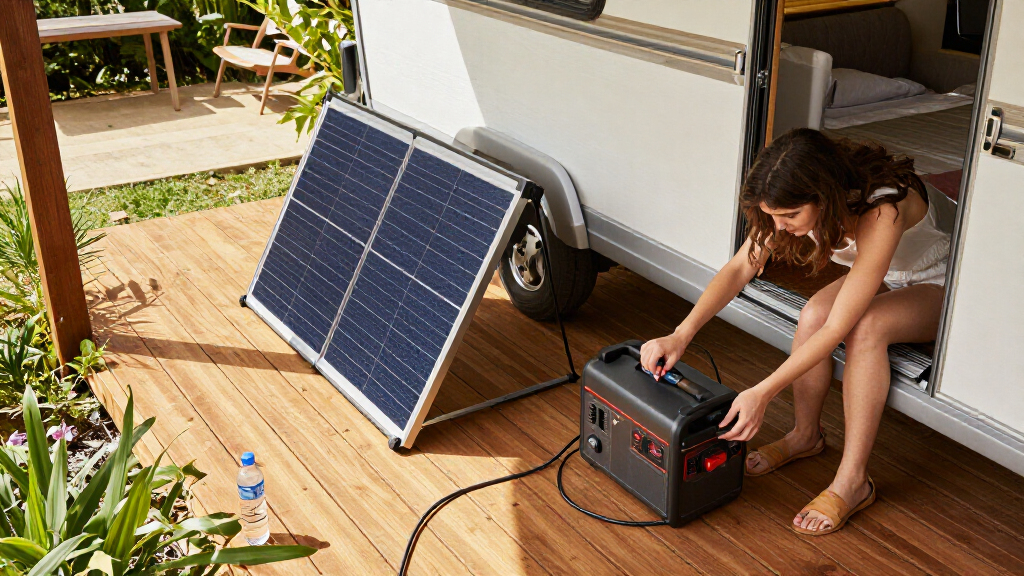
I ranked these bundles by how well their included panels and power stations work together for the buyer use cases their listed specifications support. My main criteria were battery capacity, bundled panel wattage, the balance between the two, and practical portability. A larger battery gives more stored energy, but it can take longer to refill when paired with a lower-wattage panel; a stronger panel can collect more power in suitable sun, but does not add storage capacity. I also separated bundles that appear similar on paper, such as the two Jackery 1000 v2 and two Anker C300 configurations, because the panel or station variant changes the buying decision.
The ranking favors useful solar input and capacity balance, then accounts for whether the package makes sense for compact, beginner, or specialized needs. A bundle with limited listed capacity or a smaller panel can still rank well for light-duty portability, but it does not outrank a more capable system for extended power needs. Product names and specifications supplied for this roundup do not establish connector compatibility, charging limits, real-world solar output, or included accessories beyond the named panel, so I treat those as items buyers should verify before purchase rather than making unsupported performance claims.
Factors to Consider When Choosing Solar Generator Charging Panels
I’d choose a complete solar bundle by matching expected energy use to both the station’s storage and the panel’s ability to replenish it. The product list shows why those are separate decisions: bundles can share a power station capacity yet include different panel wattages, or offer a capable panel beside a much smaller battery. These checks help avoid paying for the wrong balance.
Match Battery Capacity to Your Actual Loads
Start by listing the devices you expect to run and how long they will run, rather than choosing by the largest capacity number alone. A 1024Wh station stores far more energy than the 146Wh and 155Wh compact options, but actual usable energy can be lower than the stated battery capacity because power conversion and device behavior affect runtime. Add up watt-hours when a device lists them; for devices that list watts, multiply power draw by hours of use for a rough estimate. Leave room for uncertainty, especially for appliances with startup surges or variable draw. A bigger battery also adds bulk, so it may be a poor match if your priority is carrying a small kit for phones and other light loads.
Compare Panel Wattage With Station Capacity
Panel wattage indicates rated solar input under specified conditions, not a promise of constant output in the field. A large station paired with a smaller panel may serve as a useful reserve but refill slowly during limited daylight; a stronger panel can help collect more energy when conditions and station limits allow. The two Jackery 1000 v2 bundles make this tradeoff especially clear: both list 1024Wh, but one includes a 200W panel and the other a 100W panel. Check the power station’s maximum solar input before paying for a larger panel, since the station may not accept all of its rated output. Also plan around shade, panel angle, clouds, and shorter winter days rather than assuming rated wattage all day.
Verify Compatibility Before Buying a Bundle
A panel and station sold together may still require careful checks of connectors, voltage range, and the station’s solar input limits. Confirm that the panel’s output falls within the power station’s accepted range and that the included cable reaches your preferred panel position. If you expect to add panels later, check whether the station supports parallel connections and what limits apply; do not assume matching brand names guarantee an easy expansion path. The provided product names do not specify all connection details, so consult the product documentation before relying on an adapter or mixing brands. A small compatibility check can prevent a panel from being unusable with the station you chose.
Think Through Portability and Setup
Panel wattage usually comes with physical tradeoffs: larger panels tend to take more space and can be less convenient to move, position, and store. A foldable panel can suit travel, but you still need room to place it in sun while keeping the power station protected and nearby. Bundles with multiple panels, like the BLUETTI package, can provide more total rated input but ask for more setup space than a single-panel kit. Consider who will carry the equipment, how often you will reposition it, and whether your campsite or vehicle has a clear sun-facing area. For occasional phone charging, an oversized setup may add hassle without a meaningful benefit.
Choose for Your Charging Routine, Not Just Peak Sun
Solar replenishment is variable, so decide whether the panel is your primary charging source or a way to extend runtime between wall charges. If you need dependable daily energy, look at both the station’s capacity and realistic daylight access, and keep a backup charging method where possible. A compact 30W or 40W panel can be convenient for modest needs but may not replace energy quickly after heavier use. Conversely, a high-wattage bundle may be unnecessary if the station is only used for brief outages or occasional device charging. Avoid planning around ideal sunlight alone; tree cover, weather, season, and panel placement all affect what you collect.
Know When Paying for More Makes Sense
More capacity or more panel wattage is useful only when it addresses a real constraint in your routine. Paying for a larger station makes sense when you need longer runtimes or want more reserve between charging opportunities; a higher-wattage panel matters when faster solar replenishment is a priority and the station can accept the input. A lower-capacity bundle can be the better choice for occasional light loads, especially when easy transport matters more than extended runtime. Compare the complete system rather than choosing by one standout number, and check what cables, stands, and charging options are actually included. The goal is a panel-to-battery balance that matches your use, not the biggest specification on the page.
Frequently Asked Questions
Is the 200W Jackery panel worth choosing over the 100W bundle?
Both bundles list the same 1024Wh Jackery Solar Generator 1000 v2, so the main stated difference is the included panel wattage. The 200W option makes more sense if you expect solar to replenish the station regularly and have room to place a larger panel in good sunlight. The 100W bundle may suit lighter or less frequent solar use, though it can take longer to replace the same amount of stored energy under comparable conditions. Actual output depends on sunlight, placement, and the station’s charging limits. Check the station’s documentation and your expected daily energy use before choosing.
Can a 220W or 200W panel fully recharge a 1024Wh power station in one day?
Panel wattage alone cannot promise a full recharge in one day. The listed wattage is a rated figure, while real solar input changes with sun angle, cloud cover, shade, season, and panel temperature. The station may also limit how much input it accepts, and conversion losses affect the energy that reaches the battery. A full recharge could take more than one day in weak or interrupted sunlight, even with a higher-wattage panel. Use the manufacturer’s solar-input and recharge guidance, then plan with a buffer instead of relying on ideal conditions.
Should I choose the BLUETTI Elite 300 bundle or a 1024Wh option?
The BLUETTI Elite 300 package lists a 3014Wh battery and two 200W panels, while the EF ECOFLOW and Jackery options listed here pair 1024Wh stations with single panels. That makes the BLUETTI more suited to buyers who need a larger energy reserve and can manage a bigger setup. A 1024Wh bundle may be easier to match to moderate loads and smaller storage or transport needs. Compare your expected consumption and available panel space, not just the capacity figures. Also verify weight, input limits, connections, and recharge details in the product documentation.
What should I check before adding a second or third solar panel?
First confirm the station’s maximum solar input, accepted voltage and current ranges, and whether it supports multiple panels in parallel or series. The panels must be connected in a configuration the manufacturer permits; incompatible voltage or current can prevent charging or create a safety issue. Check connector types, cable requirements, and whether the added panel will be limited by the station’s input ceiling. More panel area also needs more unshaded space and may be harder to position. If the manufacturer does not clearly state expansion limits, ask them before buying additional panels.
Are the small 30W to 60W panel bundles enough for camping?
They can work for light camping needs, but “enough” depends on what you plan to recharge and how often. The MARBERO and Apowking bundles pair small panels with 155Wh and 146Wh stations, while the Anker C300 packages list 288Wh stations with 60W panels. Those capacities can suit modest device charging, but frequent use or larger loads may outpace solar replenishment. Check the watt-hours required by your devices and whether you will have reliable sunlight during the trip. For longer stays or heavier loads, a higher-capacity station and stronger compatible panel may be a better fit.
Conclusion
For the strongest capacity-and-solar package in this lineup, I’d choose the BLUETTI Elite 300 with two 200W panels as best overall, provided its larger setup suits your space and transport needs. My best value in capability is the Jackery Solar Generator 1000 v2 with a 200W panel: it pairs 1024Wh of storage with more panel wattage than the Jackery 100W bundle. For a best premium-style capacity option, the BLUETTI also stands out; buyers who favor a 220W single-panel pairing can look at the EF ECOFLOW DELTA 3 Classic. For beginners, the Jackery 1000 v2 with the 100W panel offers a simpler lower-input entry point than the 200W bundle, though it will generally collect less solar power in comparable conditions. For specific compact needs, the Apowking and MARBERO packages suit modest loads, while the Anker C300 bundles offer a step up in listed capacity; check the exact configuration and compatibility before choosing.