TL;DR

Get backup power and energy gear delivered free with Prime
- Fast, free delivery on millions of items
- Prime Video, Amazon Music and more included
- Member-only deals all year
Illinois selected developers to provide 600 megawatts of battery storage in its first incentive procurement, short of the initial target. The shortfall was concentrated in northern Illinois, where one 80-MW project was chosen against a 588-MW goal; officials are seeking developer feedback before the next round.
Illinois selected developers to build or supply 600 megawatts of battery storage in its first incentive procurement, missing the initial target and drawing only one proposed project for ComEd’s northern Illinois territory. The outcome gives the state a start toward its 2030 storage mandate, but leaves a substantial gap in a region where demand is expected to grow with data-center development.
The Illinois Power Agency, which procures electricity on behalf of the state’s large utilities, held an auction-type proceeding in August to award incentives to companies proposing battery projects. The state sought 588 MW in ComEd territory, but selected a single company planning an 80-MW project there. In Ameren Illinois’ territory, which covers much of the state, bids from three developers were selected for a combined 520 MW.
The statewide result was less than two-thirds of the target for the initial procurement, according to the source report. The projects would add substantially to a small existing base: Illinois currently has 102 MW of storage, according to energy data firm Cleanview. The selected commitments are not the same as batteries already operating on the grid; the report describes them as plans to develop storage.
The agency is collecting feedback from developers through Oct. 28 with the aim of improving the next procurement. The source report does not provide a date for that next round or a final timeline for construction and operation of the selected projects.
The Northern Illinois Storage Gap
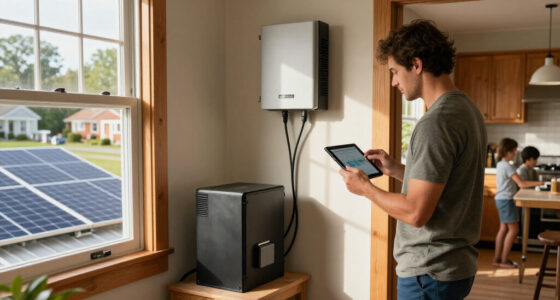
Battery storage can hold electricity when renewable generation is plentiful and release it when demand rises or generation falls. That makes it relevant to Illinois’ 100% clean-energy mandate by 2050 and to a power system facing additional demand from data centers, as described in the source report.
The uneven procurement results matter because the 80 MW selected for ComEd territory is far below that region’s 588-MW target. The 520 MW selected in Ameren territory makes up most of the statewide total, but does not erase the shortfall in northern Illinois. The projects could expand a state fleet now measured at 102 MW, but their eventual contribution depends on development and grid connection.
Advocates characterized the overall result as encouraging despite the ComEd gap. James Gignac, Midwest policy director for the Union of Concerned Scientists’ climate and energy program, called it “a strong start” and said it showed “there is interest in developing energy storage in Illinois.” Those comments reflect an advocate’s assessment, not a guarantee that every selected project will be completed.
As an affiliate, we earn on qualifying purchases.
A New Mandate Meets Grid Delays
Illinois passed a law last fall requiring 3 gigawatts of battery storage by the end of 2030. The procurement is one step toward that requirement. The state has expanded renewable energy over the past decade, but has lagged in building storage, according to the source report.
Battery deployment has grown across the United States, from 4.7 GW in 2022 to more than 50 GW, according to federal data cited in the report. That national growth took time to accelerate. The report also points to New York, which has a 3-GW utility-scale storage goal for 2030 and secured promises for 950 MW in September through a similar incentive mechanism. These figures describe other markets and do not establish how quickly Illinois projects will be built.
Grid connection is a particular concern in the PJM Interconnection, which carries power across parts of 13 states, including ComEd territory. Brett Sproul, who leads Illinois regulatory work for Advanced Energy United, said multiple developers could build projects by 2030, but uncertainty in PJM’s interconnection queue could affect whether they can begin storing power by then. He said that uncertainty “led to some cold feet.”
““However because of the interconnection queue at PJM there’s a lot of uncertainty” about whether projects could start storing power by the deadline.”
— Brett Sproul, Illinois regulatory lead for Advanced Energy United
Project Timing and Grid Access
The procurement identifies developers and planned capacity, but the source report does not say when the projects will be built, whether each will reach operation, or how much storage will ultimately be available by the 2030 deadline. Selected capacity is not operating capacity.
It is also unclear what changes the agency will make after reviewing developer feedback, whether a later procurement will address the ComEd shortfall, or how quickly projects can move through PJM’s interconnection queue. The report gives no specific explanation for why only one ComEd-area bid was selected; Sproul’s comments describe grid-connection uncertainty as a barrier for developers generally.
Agency Reviews Developer Feedback
The Illinois Power Agency is due to collect developer feedback through Oct. 28 and use it to improve the next procurement, according to the source report. The agency’s next process, including its timing and any revised targets or terms, has not been specified in the material provided.
For the selected projects, the next practical milestones are development and connection to the grid. Whether the 80-MW ComEd proposal and the 520 MW selected in Ameren territory advance on schedule will help show how much of the procurement can contribute toward Illinois’ 3-GW requirement by the end of 2030.
Key Questions
How much battery storage did Illinois select in the procurement?
Developers were selected for 600 MW statewide: 80 MW proposed in ComEd territory and 520 MW across three bids in Ameren Illinois territory.
Did Illinois meet its initial procurement target?
No. The 600 MW selected was less than two-thirds of the initial target, according to the source report. The ComEd-area result was especially limited: one proposed 80-MW project against a 588-MW goal.
Are the selected batteries already operating?
The report describes developer plans and selected bids, not operating projects. It does not give construction or operation dates, so the selected capacity should not be counted as storage already on the grid.
What is Illinois’ battery-storage goal?
A state law passed last fall requires 3 gigawatts of batteries on the grid by the end of 2030.
What could delay the projects?
Advanced Energy United’s Brett Sproul cited uncertainty in the PJM interconnection queue, which can affect whether proposed projects connect and begin storing power by the deadline. The source report does not give project-by-project connection timelines.
Source: rss
Halloween Picks
halloween
As an affiliate, we earn on qualifying purchases.