
TL;DR

Get backup power and energy gear delivered free with Prime
- Fast, free delivery on millions of items
- Prime Video, Amazon Music and more included
- Member-only deals all year
A German research project is testing digital workflows and practical installation solutions intended to speed up heat pump retrofits amid a shortage of skilled workers. WESPE aims to reduce installation times by up to 40%, but that figure is a project goal; the source does not report that the reduction has been achieved across installations.
Researchers in Germany are testing digital tools and installation methods intended to make heat pump retrofits faster, with the WESPE project aiming to cut installation times by up to 40%. The work, coordinated by the German Sanitation, Heating and Air Conditioning Association, brings research institutes, installers and industry partners together to address labor shortages and time-consuming steps in replacing oil- and gas-fired heating systems.
WESPE examines work across the retrofit process, from initial assessments and customer communication to planning, purchasing materials, site coordination, installation, commissioning and invoicing. Researchers at the Fraunhofer Institute for Building Physics (Fraunhofer IBP) and the Fraunhofer Institute for Solar Energy Systems (Fraunhofer ISE) have identified steps that could be improved or digitised and made guidance and resources available through a web-based platform for installation businesses.
The platform includes material for customer consultations, planning and quotations, site preparation, installation, commissioning and billing. Its WESPE Check questionnaire lets businesses assess their existing processes and receive tailored suggestions, including digital or physical resources, tools, organisational changes and external services. The project is designed to help companies make their workflows more consistent; the source does not say that using the platform has already produced a measured reduction in total installation times.
Fraunhofer ISE has also developed a prototype augmented-reality application called Heat Pump PlanAR. It is intended to bring several planning tasks into one tool. Researchers say the app could eventually generate preliminary plans and quotations quickly and automatically create cost-optimised piping layouts for heating components represented digitally. It remains a prototype, and the source describes these functions as potential future support rather than a deployed, proven time-saving service.
Less Time on Each Retrofit
Heat pump installations involve both office planning and work at the property. If businesses can reduce duplicated data entry, improve preparation and use components assembled in advance, they may be able to complete more projects with the staff and working hours available. That matters in a sector facing a shortage of skilled workers, particularly as households and building owners replace fossil-fuel heating systems.
The project’s potential value is not limited to speed. Researchers say more standardised procedures could also reduce planning effort and the risk of errors as heating systems become more technically complex. These are project aims and reported findings from trials, not a guarantee of lower costs, fewer errors or faster completion in every home. The source gives no results showing the scale of any such effects across the wider market.
For customers, a shorter and better-organised installation could mean less disruption while existing heating is replaced. But WESPE does not report a customer-level comparison of installation duration, price or service interruption. Its 40% figure is a target, and whether businesses can reach it in routine projects remains to be established.
Products Worth Considering

Amazon Kindle Paperwhite (12th Generation, 2024), 16 GB, 7-inch Display, Jade

Amazon Kindle Scribe Colorsoft 64GB (1st Generation)

Amazon Kindle Paperwhite Signature Edition (12th Generation, 2024), 32 GB, Metallic Black
As an affiliate, we earn on qualifying purchases.
From Workflow Review to Site Trials
The project began by examining where work could be improved or digitised, including condition assessments, customer contact, logistics, procurement and on-site installation. Fifteen specialist installation businesses are involved. They are documenting office procedures and work at 30 installation sites, while helping researchers identify practical use cases. A time-tracking app records how long individual on-site tasks take.
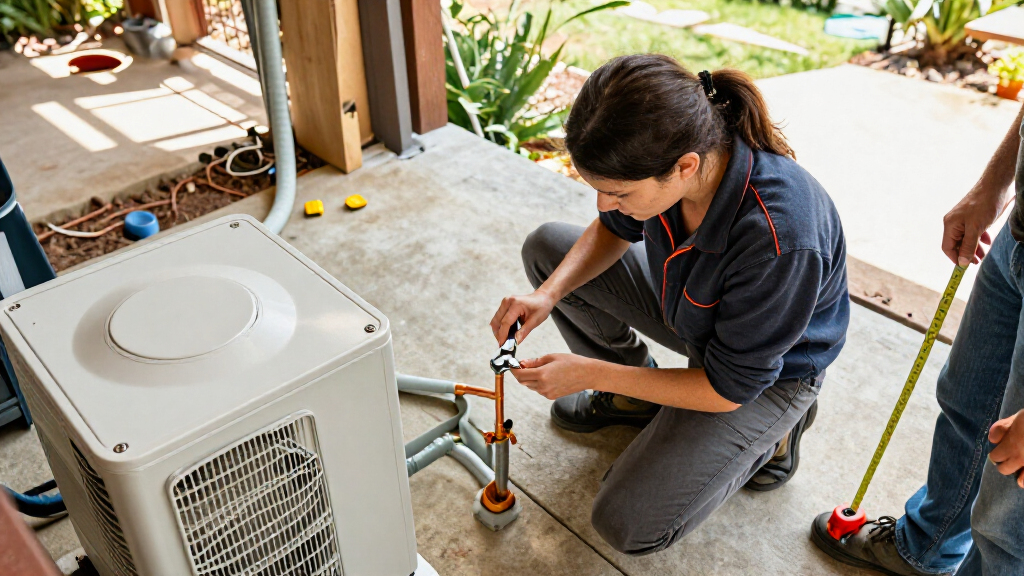
Alongside the field work, Fraunhofer IBP has set up a physical innovation lab in Holzkirchen. Researchers recreated typical installation scenarios in the basement of one of two identical single-family research buildings, supplemented by other test areas and a utility container. The facilities allow teams to commission heat pump systems under defined conditions and test components and procedures with installation companies.
Trials have included prefabricated foundations, building penetrations, hydraulic solutions and pre-assembled components. According to the source report, the work found that standardised components, pre-assembled units and optimised processes can shorten installation times and improve efficiency. Researchers say the trial findings were fed back into the development of components and procedures for practical use. The source provides no detailed task-by-task time results or independent evaluation of the project’s overall target.
“The goal is to highlight practical options, tools and approaches that installation businesses can use to further develop their internal processes, especially since the increasingly complex technical requirements of heating systems increase the planning effort as well as the risk of errors during implementation.”
— Susanne Schwab, researcher at Fraunhofer IBP
The 40% Target Still Needs Testing
The source does not specify a project completion date, when the platform or Heat Pump PlanAR might become widely available, or whether the prototype has been tested in routine commercial use. It also does not provide a baseline definition for the up-to-40% target, such as which tasks or installation types are included in the time calculation.
Although the trials point to potential gains from prefabrication and improved processes, the report does not give measured before-and-after times, sample sizes for particular methods or cost comparisons. It is not clear how consistently the results would apply across different buildings, existing heating systems and installation businesses. The target should not be read as a confirmed reduction achieved by every installer or homeowner.
More Testing in Real Installations
The participating businesses and research teams are continuing to document office workflows and installation tasks, while the institutes test and refine tools and components. The source describes trial findings being incorporated into ongoing development, but gives no date for a final assessment or a decision on broader deployment.
The next useful evidence will include measured comparisons of installation times, details of how those times are counted and results across a wider range of retrofit conditions. Further reporting would also clarify whether the platform and PlanAR prototype are adopted by installers and whether any time savings translate into lower costs or reduced disruption for customers.
Key Questions
What is the WESPE project?
WESPE is a German research project coordinated by the German Sanitation, Heating and Air Conditioning Association. It brings together Fraunhofer researchers, specialist installers and industry partners to study digital workflows and practical methods for speeding up heat pump retrofits.
Has the project already cut installation times by 40%?
The source describes up to 40% as the project’s aim, not a confirmed result across installations. It reports that trials identified time-saving potential in standardised components, pre-assembled units and improved processes, but gives no overall before-and-after measurement.
What does the WESPE platform offer installers?
The web-based platform provides guidance and resources for customer consultation, planning and quotations, site preparation, installation, commissioning and invoicing. Its WESPE Check questionnaire is intended to help businesses review their processes and receive tailored recommendations.
What is Heat Pump PlanAR?
Heat Pump PlanAR is a prototype augmented-reality app developed within the project. It is intended to combine work steps and may eventually support preliminary planning, quotations and piping layouts, but the source does not say it is already in general commercial use.
Who is taking part in the research?
Fifteen specialist installation businesses are documenting processes in their offices and at 30 installation sites. Fraunhofer IBP and Fraunhofer ISE are conducting research, with additional project partners from the skilled-trade and industry sectors.
Source: rss