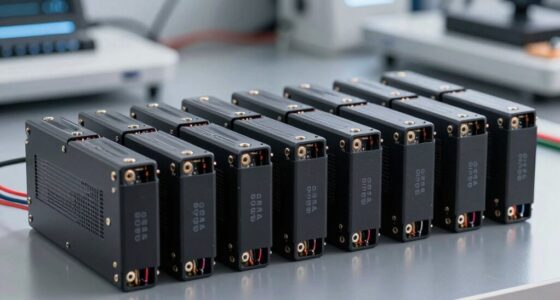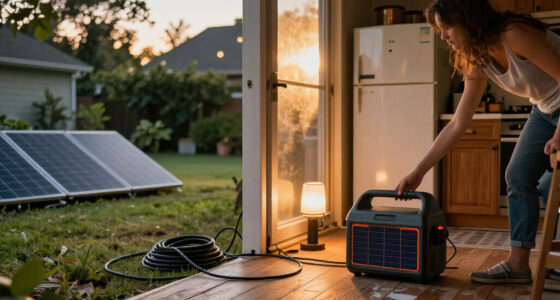
Choosing the right portable power station depends heavily on whether you need a lightweight companion for weekend camping or a heavy-duty unit for home backup. Anker SOLIX C1000 Gen 2 stands out as the best overall choice for most users, balancing high capacity with a durable LiFePO4 battery and rapid charging speeds. For those prioritizing raw power for heavy appliances, the EF ECOFLOW DELTA Pro offers unmatched expandability, while the Jackery Explorer 300 remains the go-to for ultra-lightweight needs. The main tradeoff in this category is between energy density and weight; higher capacity units are often too heavy for hiking but essential for running refrigerators or medical devices. This guide breaks down these differences to help you match a model to your specific power demands.

Get backup power and energy gear delivered free with Prime
- Fast, free delivery on millions of items
- Prime Video, Amazon Music and more included
- Member-only deals all year
Complete the kit


Key Takeaways
- LiFePO4 battery chemistry has become the standard for longevity, offering 3,000+ cycles compared to older NMC batteries which degrade after 500-800 cycles.
- Units with 1,000Wh capacity represent the sweet spot for versatility, capable of running a standard fridge for a day without being excessively heavy.
- AC output wattage matters more than capacity for high-draw devices like coffee makers or space heaters, with 2,000W+ being the threshold for most household appliances.
- Weight is the most overlooked factor; units over 25 lbs become impractical for solo camping trips, limiting their use to car-based activities or stationary backups.
- Expandability via additional battery packs is a key differentiator in the premium tier, allowing users to scale capacity without buying a second unit.
| Anker SOLIX C1000 Portable Power Station with Car Charging Cable, 1,056Wh |  | Best Overall | Capacity: 1,056Wh | Battery type: LiFePO4 | Running output: 1,800W | VIEW LATEST PRICE | See Our Full Breakdown |
| Anker SOLIX C1000 Gen 2 Portable Power Station, 1,024Wh LiFePO4 Battery |  | Best for Home Backup | Battery capacity: 1,024Wh | Battery chemistry: LiFePO4 | Continuous output: 2,000W | VIEW LATEST PRICE | See Our Full Breakdown |
| Jackery Explorer 300 Portable Power Station, 292Wh |  | Best Compact Pick | Battery capacity: 292Wh | Battery cell type: Lithium-ion listed in specifications | Peak surge: 600W | VIEW LATEST PRICE | See Our Full Breakdown |
| Pecron E3600LFP Portable Power Station, 3072Wh |  | Best for Expandable High-Capacity Power | Capacity: 3,072Wh | Expandable capacity: Up to 18.43kWh with four EP3800-48V extra batteries | Output options: 16 | VIEW LATEST PRICE | See Our Full Breakdown |
| Jackery Explorer 1000 v2 Portable Power Station, 1024Wh LiFePO4 Battery |  | Best for Straightforward Camping | Battery capacity: 1,024Wh | Battery type: LFP (LiFePO4) | AC output: 1,500W | VIEW LATEST PRICE | See Our Full Breakdown |
| Jackery Explorer 2000 v2 Portable Power Station, 2042Wh, 2200W AC Output |  | Best for Quiet, High-Capacity Backup | Capacity: 2042Wh | AC output: 2200W | AC outlets: 3 | VIEW LATEST PRICE | See Our Full Breakdown |
| EF ECOFLOW DELTA 3 Portable Power Station, 1024Wh, 1800W |  | Best for Fast Charging and Expansion | Capacity: 1024Wh | AC output: 1800W | Surge output: 3600W | VIEW LATEST PRICE | See Our Full Breakdown |
| OUPES Mega 1 Lite Portable Power Station, 1024Wh, 2000W | 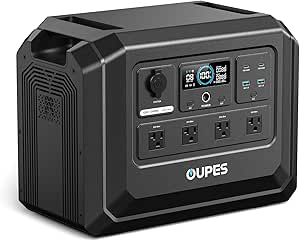 | Best for Port Variety and UPS Backup | Battery capacity: 1024Wh | AC output: 2000W | Surge capacity: 4500W | VIEW LATEST PRICE | See Our Full Breakdown |
| Anker SOLIX C300 Portable Power Station, 288Wh |  | Best Compact Travel Pick | Battery capacity: 288Wh | Running output: 300W | Surge output: 600W | VIEW LATEST PRICE | See Our Full Breakdown |
| Jackery HomePower 3600 Plus Portable Power Station |  | Best for Whole-Home and Heavy Loads | Capacity: 3584Wh | AC output: 3600W | Parallel output: 7200W | VIEW LATEST PRICE | See Our Full Breakdown |
| EF ECOFLOW DELTA Pro Portable Power Station, 3600Wh, 3600W AC Output | 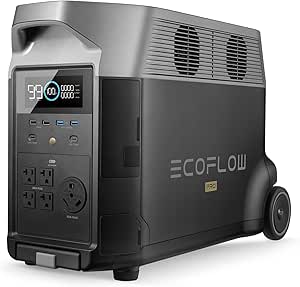 | Best for Expandable Home Backup | Battery capacity: 3,600Wh | Battery chemistry: LFP | AC output: 3,600W | VIEW LATEST PRICE | See Our Full Breakdown |
| Jackery HomePower 3000 Portable Power Station, 3072Wh |  | Best for Home Backup with UPS Protection | Battery capacity: 3,072Wh | Battery type: LiFePO4 | Running output: 3,600W | VIEW LATEST PRICE | See Our Full Breakdown |
| LIBRIDS C600 Portable Power Station, 640Wh, 600W |  | Best Compact UPS Pick | Battery capacity: 640Wh | Surge power: 1,200W | Battery type: LiFePO4 | VIEW LATEST PRICE | See Our Full Breakdown |
| Anker SOLIX S2000 Portable Power Station, 2,010Wh, 1,500W |  | Best for Long-Life Mid-Capacity Backup | Capacity: 2,010Wh | Battery: LiFePO4, 314Ah | Continuous output: 1,500W | VIEW LATEST PRICE | See Our Full Breakdown |
| EF ECOFLOW RIVER 2 Pro Portable Power Station, 768Wh, 800W |  | Best for Fast-Charging Portable Power | Battery capacity: 768Wh | Battery chemistry: LFP (LiFePO4) | Output with X-Boost: Up to 1,600W | VIEW LATEST PRICE | See Our Full Breakdown |
| portable power station | Weight | Battery capacity |
|---|---|---|
| Anker SOLIX C1000 Portable Pow | — | — |
| Anker SOLIX C1000 Gen 2 Portab | 11.3kg | 1,024Wh |
| Jackery Explorer 300 Portable | 7.5lb | 292Wh |
| Pecron E3600LFP Portable Power | 79lb | — |
| Jackery Explorer 1000 v2 Porta | 23.3lb (10.6kg) | 1,024Wh |
| Jackery Explorer 2000 v2 Porta | 39.5 lbs | — |
| EF ECOFLOW DELTA 3 Portable Po | 12.5kg | — |
| OUPES Mega 1 Lite Portable Pow | 26.7 lbs | 1024Wh |
| Anker SOLIX C300 Portable Powe | 4.13kg | 288Wh |
| Jackery HomePower 3600 Plus Po | 77.2 lbs | — |
| EF ECOFLOW DELTA Pro Portable | 99 lb | 3,600Wh |
| Jackery HomePower 3000 Portabl | 59.5 lb | 3,072Wh |
| LIBRIDS C600 Portable Power St | 16.3 lb | 640Wh |
| Anker SOLIX S2000 Portable Pow | 35.7 lb | — |
| EF ECOFLOW RIVER 2 Pro Portabl | 8.25 kg | 768Wh |
More Details on Our Top Picks
Anker SOLIX C1000 Portable Power Station with Car Charging Cable, 1,056Wh
The Anker SOLIX C1000 is my best all-around pick for buyers who want roughly 1kWh of capacity without stepping up to a heavier, higher-capacity unit like the Pecron E3600LFP. Its 1,800W output and 2,400W surge rating cover many common appliances, while 11 ports make it useful for a mix of campsite gear and home essentials. Rapid AC charging can reach 80% in 43 minutes, and up to 600W of solar input gives you a route to recharge away from an outlet. The LiFePO4 battery is rated for 3,000 cycles, though the C1000 Gen 2 claims 4,000 cycles and offers higher output. The tradeoff is its narrower stated operating range of 68–122°F, and the fastest charging mode requires the app.
Pros:- 1,800W output and 2,400W surge capacity suit many common appliances.
- Up to 600W solar input and fast AC charging offer flexible recharge options.
- Eleven output ports accommodate several devices at once.
- LiFePO4 battery is rated for 3,000 cycles and up to 10 years of use.
Cons:- The fastest AC charging mode requires the Anker app and a smartphone.
- The stated operating temperature range is limited to 68–122°F.
- Its 3,000-cycle rating is below the C1000 Gen 2’s 4,000-cycle specification.
Best for: Campers and households seeking a versatile 1kWh station for mixed devices, occasional appliance use, and fast recharging.
Not ideal for: Buyers who need UPS backup, higher continuous output, or documented use outside the 68–122°F operating range; the C1000 Gen 2 is a stronger match for higher output and UPS needs.
- Capacity:1,056Wh
- Battery type:LiFePO4
- Running output:1,800W
- Surge capacity:2,400W
- Output ports:11
- Solar input:Up to 600W
- AC charging:80% in 43 minutes; full charge in under an hour
- Battery life:3,000 cycles; up to 10 years
Our verdict“Choose the SOLIX C1000 for a capable, fast-recharging 1kWh station, but pick the Gen 2 if UPS backup or higher output matters more.”
Anker SOLIX C1000 Gen 2 Portable Power Station, 1,024Wh LiFePO4 Battery
For a portable station that may need to protect sensitive electronics during an outage, I’d put the Anker SOLIX C1000 Gen 2 ahead of the original C1000. Its under-10ms UPS switchover is the defining difference: connected equipment can switch to battery quickly when household power fails. It also delivers 2,000W continuous output and a 3,000W peak, exceeding the original C1000’s stated output. The battery is rated to retain at least 80% capacity after 4,000 cycles, and AC recharge takes 49 minutes at 1,600W. The compromises are a 600W solar-input ceiling and an 11.3kg carry weight, so it is less appealing for frequent hikes than the 7.5lb Jackery Explorer 300. It suits backup duty better than truly lightweight travel.
Pros:- Under-10ms UPS switchover supports backup for connected equipment.
- 2,000W continuous output and 3,000W peak exceed the original C1000’s listed output.
- LiFePO4 battery is rated to retain at least 80% capacity after 4,000 cycles.
- Can recharge by AC or up to 600W solar input.
Cons:- At 11.3kg, it is cumbersome for frequent carrying.
- Solar input is capped at 600W and 60V maximum.
- Its 1,024Wh capacity is modest for extended whole-home backup.
Best for: Home-office users and outage-conscious households who want a portable battery with fast UPS switchover and substantial AC output.
Not ideal for: Backpackers or buyers who prioritize low carry weight, and solar users who need more than 600W of input.
- Battery capacity:1,024Wh
- Battery chemistry:LiFePO4
- Continuous output:2,000W
- Peak output:3,000W
- Solar input:600W; 60V maximum
- AC recharge time:49 minutes at 1,600W
- UPS switchover:Under 10ms
- Weight:11.3kg
- Battery cycle life:At least 80% capacity after 4,000 cycles
Our verdict“Pick the C1000 Gen 2 for portable outage backup and UPS support, not for lightweight trips or multi-day high-load power needs.”
Jackery Explorer 300 Portable Power Station, 292Wh
The Jackery Explorer 300 earns its place by keeping the load and carry weight modest: at 7.5lb, it is easier to bring along than the 23.3lb Jackery Explorer 1000 v2. Its 292Wh capacity and 300W rated output are suited to phones, cameras, lights, and other small electronics, not power-hungry appliances. Six ports—including 100W USB-C PD—let it handle several personal devices without requiring a separate hub. It also accepts solar charging, but the panel is sold separately. Compared with the Anker SOLIX C1000, this is far easier to carry but offers much less stored energy and output. One data point needs checking before purchase: the product information lists lithium-ion cells, while its pros claim a LiFePO4 battery rated for over 4,000 cycles.
Pros:- At 7.5lb, it is much easier to carry than the 1kWh stations in this roundup.
- Six ports include a 100W USB-C PD output.
- Two AC outlets support small plug-in devices.
- Solar charging is available with a compatible panel.
Cons:- The 300W rated output rules out many higher-power appliances.
- The solar panel is not included.
- Product information conflicts on battery chemistry and cycle-life claims.
Best for: Solo campers, day-trip travelers, and photographers who need a lightweight source for small electronics rather than appliances.
Not ideal for: Buyers powering refrigerators, kitchen appliances, or several high-draw devices; its 300W rated output and 292Wh capacity are restrictive.
- Battery capacity:292Wh
- Battery cell type:Lithium-ion listed in specifications
- Peak surge:600W
- Weight:7.5lb
- AC outlets:2
- USB-C PD output:100W
- Solar charging:About 80% in 2.8 hours with a 100W panel; panel not included
Our verdict“Choose the Explorer 300 for lightweight personal-device charging, but step up to a 1kWh model for appliances or longer backup.”
Pecron E3600LFP Portable Power Station, 3072Wh
The Pecron E3600LFP is the capacity-first choice here, with 3,072Wh onboard and room to expand to 18.43kWh using four compatible extra batteries. That makes it a better fit for longer outages or demanding RV setups than the 1,024Wh Jackery Explorer 1000 v2, which is much easier to move but stores far less energy. Its 3,600W rated output, 16 output options, and two 100W USB-C ports give it flexibility across appliances and devices. The cost of that capability is physical: at 79lb, this is a station to position and leave in place, not carry between campsites. Fast recharge figures also depend on substantial input—its solar time is specified with eight 300W panels. I’d choose it for capacity and expansion, not casual portability.
Pros:- 3,072Wh capacity supports longer use between recharges than the 1kWh-class options.
- Expandable to 18.43kWh with four compatible extra batteries.
- 3,600W rated output and 16 output options cover varied equipment.
- Built-in protection addresses short circuits, overloads, and overheating.
Cons:- At 79lb, it is difficult to move regularly.
- The specified 1.5-hour solar recharge uses eight 300W panels.
- Expansion requires compatible extra batteries, adding bulk to an already large setup.
Best for: RV owners and households preparing for extended outages who can keep a heavy power station in a fixed or semi-fixed location.
Not ideal for: Campers who move equipment often, buyers with limited storage space, or anyone expecting rapid solar charging from a small panel setup.
- Capacity:3,072Wh
- Expandable capacity:Up to 18.43kWh with four EP3800-48V extra batteries
- Output options:16
- USB-C outputs:2, up to 100W each
- AC charging time:1.3 hours at 3,200W; 2 hours at 1,800W
- Solar charging time:1.5 hours with eight 300W panels
- Weight:79lb
Our verdict“Choose the E3600LFP when high capacity and future expansion outweigh easy carrying and a simple solar setup.”
Jackery Explorer 1000 v2 Portable Power Station, 1024Wh LiFePO4 Battery
The Jackery Explorer 1000 v2 is a practical middle ground for campers who want a full-size battery without the 79lb burden of the Pecron E3600LFP. At 23.3lb and about 1kWh, it is portable enough for car camping and can provide backup for smaller household essentials. Its 1,500W AC output, 3,000W surge peak, and 10ms UPS switchover give it more reach than the compact Explorer 300, though it has only two AC ports. Emergency charging can fill the battery in 50 minutes, but that mode must be enabled in the app; default charging takes 1.25 hours. Solar panels are not included, and compatibility is limited to Jackery panels, making its solar setup less flexible than the Anker SOLIX C1000’s stated input support.
Pros:- 1,024Wh LiFePO4 battery provides meaningful capacity for camping and basic backup.
- At 23.3lb, it is far easier to move than the Pecron E3600LFP.
- 10ms UPS switchover supports connected equipment during a power interruption.
- Emergency charging can reach a full charge in 50 minutes when enabled in the app.
Cons:- Only two pure sine wave AC ports are listed.
- Solar panel is not included and solar charging is limited to Jackery panels.
- The 50-minute charging mode requires app activation; default charging takes 1.25 hours.
Best for: Car campers and small households wanting roughly 1kWh of portable backup with a manageable carry weight and simple device mix.
Not ideal for: Buyers who need several AC outlets, broad third-party solar-panel compatibility, or higher continuous output than 1,500W.
- Battery capacity:1,024Wh
- Battery type:LFP (LiFePO4)
- AC output:1,500W
- Surge peak:3,000W
- Ports:2 AC, 2 USB-C, 1 USB-A, 1 DC car port
- UPS switchover:10ms
- Weight:23.3lb (10.6kg)
- Charging time:50 minutes with emergency charging enabled; 1.25 hours by default
- Solar compatibility:Jackery solar panels only; panel not included
Our verdict“Pick the Explorer 1000 v2 for portable camping and basic backup, but choose the Anker SOLIX C1000 for higher AC output and a broader solar-input option.”
Jackery Explorer 2000 v2 Portable Power Station, 2042Wh, 2200W AC Output
The Jackery Explorer 2000 v2 is a strong fit for buyers who want substantial capacity without stepping up to a wheeled home-backup unit like the Jackery HomePower 3600 Plus. Its 2042Wh battery and 2200W output can support a wider mix of household essentials or camping gear than compact stations, while Silent Charging below 30dB is useful when recharging near living or sleeping areas. The 20ms transfer switch also gives it a role in backup setups where a brief interruption matters. It charges quickly from AC, with an optional app-assisted mode rated for a full charge in 102 minutes. The tradeoff is its 39.5-pound carry weight and only three AC outlets; buyers needing more capacity or 240V support should look at the HomePower 3600 Plus instead.
Pros:- 2042Wh capacity and 2200W AC output suit a broad range of backup and outdoor loads
- Silent Charging operates below 30dB
- 20ms transfer switching supports backup use
- LiFePO4 battery is designed for up to 10 years of use
Cons:- At 39.5 pounds, it is cumbersome for frequent carrying
- Three AC outlets may limit simultaneous plug-in use
- Fast solar charging depends on separately supplied 400W panels
Best for: Campers and households seeking quiet, roughly 2kWh backup power with solar and AC charging options
Not ideal for: Buyers who need a lightweight station for frequent long carries, several AC outlets, or 240V appliance support
- Capacity:2042Wh
- AC output:2200W
- AC outlets:3
- USB-C output:100W PD
- Battery chemistry:LiFePO4
- Weight:39.5 lbs
- AC charging:0–80% in 66 minutes
- UPS transfer time:20ms
Our verdict“Choose the Explorer 2000 v2 for quiet, high-capacity backup in a carryable format, but pick the HomePower 3600 Plus for greater capacity and 240V capability.”
EF ECOFLOW DELTA 3 Portable Power Station, 1024Wh, 1800W
The EF ECOFLOW DELTA 3 makes sense for buyers who value quick recharging and a path to more capacity. Its 1024Wh battery is half the size of the Jackery Explorer 2000 v2, but the stated 56-minute full charge can get it back into service quickly between outages or travel days. A 1800W output with 3600W surge gives it room for many everyday appliances, and compatible EcoFlow batteries can expand the system to 5kWh. That flexibility sets it apart from the compact Anker SOLIX C300, which is easier to carry but not built for comparable loads or expansion. The DELTA 3 is still a 12.5kg unit rather than a pocketable travel battery, and expanding capacity means buying compatible battery packs. The IP65 rating applies to the battery pack, not necessarily the station itself.
Pros:- Stated 56-minute full charge helps shorten downtime
- Expandable to 5kWh with compatible EcoFlow battery packs
- 1800W output and 3600W surge support many household appliances
- LiFePO4 battery is rated for 4000 cycles to 80% capacity
Cons:- Expansion requires compatible EcoFlow battery packs
- At 12.5kg, it is less convenient to carry than the Anker SOLIX C300
- IP65 protection rating applies to the battery pack
Best for: Households and RV users who want a quickly recharged 1kWh station with the option to add compatible battery capacity later
Not ideal for: Buyers prioritizing the lowest carry weight, or anyone expecting the entire station to have IP65 protection
- Capacity:1024Wh
- AC output:1800W
- Surge output:3600W
- Battery chemistry:LiFePO4
- Battery cycle life:4000 cycles to 80% capacity
- Maximum expandable capacity:5kWh
- Solar input:Up to 500W
- Weight:12.5kg
Our verdict“Pick the DELTA 3 if fast recharging and expandable capacity matter more than a lighter, smaller station like the Anker SOLIX C300.”
OUPES Mega 1 Lite Portable Power Station, 1024Wh, 2000W
The OUPES Mega 1 Lite pairs a 1024Wh capacity with 2000W AC output, giving it more rated output than the similarly sized EF ECOFLOW DELTA 3. Its nine ports include two 140W USB-C connections, a useful setup for charging power-hungry laptops alongside other gear without occupying an AC outlet. The under-20ms UPS switchover adds appeal for users who want backup power for a home office or network equipment. It also accepts up to 800W of solar input, more than the DELTA 3’s stated 500W limit, though panels are not listed among the included accessories. This is not the lightest station in its capacity class: at 26.7 pounds, it is heavier than the DELTA 3. Buyers should weigh the extra port flexibility against that carry burden.
Pros:- 2000W AC output and 4500W surge capacity
- Nine ports, including two 140W USB-C PD ports
- UPS switchover under 20ms
- Supports up to 800W solar input
Cons:- At 26.7 pounds, it is heavier than the EF ECOFLOW DELTA 3
- Solar panels are not listed among the included accessories
- Solar input and app features may be more than simple device-charging buyers need
Best for: Remote workers and campers who need several connection types, high-output USB-C charging, and quick UPS switching
Not ideal for: Frequent travelers who need the lightest 1kWh station, or buyers expecting solar panels in the box
- Battery capacity:1024Wh
- AC output:2000W
- Surge capacity:4500W
- Total ports:9
- USB-C ports:2 × 140W PD
- Solar input:Up to 800W
- UPS switchover:<20ms
- Weight:26.7 lbs
Our verdict“Choose the Mega 1 Lite for its strong port selection and fast UPS switching, but favor the lighter DELTA 3 if carrying weight matters more.”
Anker SOLIX C300 Portable Power Station, 288Wh
The Anker SOLIX C300 is the portability specialist in this group: its 288Wh capacity is a fraction of the 1024Wh EF ECOFLOW DELTA 3, but its smaller 4.13kg body is much easier to pack for day trips, camera work, or short camping outings. Eight ports, including two 140W USB-C outputs, cover phones, laptops, and accessories without requiring a larger station. It can recharge from a wall outlet, car, solar, or USB-C, so buyers have several ways to top it up. Quiet operation at 25dB is another plus in a tent or shared room. The capacity and 300W running output set a firm limit: this is for personal electronics and modest loads, not household backup or high-draw appliances. Its shoulder strap is sold separately.
Pros:- Compact 4.13kg design is easier to transport than the larger stations in this group
- Eight ports include two 140W USB-C outputs
- Can recharge from a wall outlet, car, solar panel, or USB-C
- Operates at a stated 25dB from 3.3 feet
Cons:- 288Wh capacity and 300W running output limit it to smaller loads
- Shoulder strap is sold separately
- Not compatible with Anker SOLIX PS30, PS200, or PS400 solar panels
Best for: Photographers, drone operators, and weekend campers who need portable power for electronics rather than major appliances
Not ideal for: Households seeking outage backup for refrigerators, heaters, or other high-draw equipment
- Battery capacity:288Wh
- Running output:300W
- Surge output:600W
- Charging ports:8
- USB-C output:Two 140W ports; one 15W port
- Battery chemistry:LiFePO4
- Weight:4.13kg
- Noise level:25dB at 3.3 ft
Our verdict“Pick the SOLIX C300 for lightweight power for personal electronics, not as a substitute for the much higher-capacity DELTA 3.”
Jackery HomePower 3600 Plus Portable Power Station
The Jackery HomePower 3600 Plus is the lineup’s heavy-duty choice, built around a 3584Wh battery and 3600W AC output. That gives it a much wider household-backup role than the Jackery Explorer 2000 v2, including support for demanding essentials and dual-voltage setups when configured for parallel use. Its luggage-style wheels and telescopic handle help move a 77.2-pound unit across a floor, though they do not make it easy to lift into a vehicle. Capacity can expand substantially with compatible equipment, and hybrid AC+DC charging is listed at two hours. The tradeoffs are physical bulk, just two AC outlets in the base configuration, and separately supplied solar panels. Compared with the Explorer 2000 v2, this is less suited to campsites or frequent transport and better suited to a planned home or RV backup setup.
Pros:- 3584Wh capacity and 3600W output support heavier household loads
- Expandable capacity supports larger backup setups
- Wheels and telescopic handle make it easier to roll than a comparable lift-only unit
- Hybrid AC+DC charging is listed at two hours
Cons:- 77.2-pound weight makes lifting and vehicle loading difficult
- Base configuration has only two AC outlets
- Solar panels are sold separately
Best for: Homeowners and RV users who need high-output backup for demanding appliances and can roll the station rather than carry it
Not ideal for: Campers, apartment dwellers, or buyers who need a light station with several built-in AC outlets
- Capacity:3584Wh
- AC output:3600W
- Parallel output:7200W
- Voltage:120V / 240V in parallel
- Battery chemistry:LiFePO4
- Weight:77.2 lbs
- Hybrid AC+DC charge time:2 hours
- Cycle life:6000 cycles
Our verdict“Choose the HomePower 3600 Plus for high-capacity household or RV backup if you can accommodate its weight and limited base outlet count.”
EF ECOFLOW DELTA Pro Portable Power Station, 3600Wh, 3600W AC Output
The DELTA Pro suits buyers building a scalable backup system, rather than looking for a battery to carry on casual outings. Its 3,600Wh capacity, 3,600W AC output and 15 connections give it more room for household loads than the smaller RIVER 2 Pro, while compatible batteries and smart generators can raise capacity to 25kWh. Five charging routes, including EV stations and solar, add options when grid access is limited, and app connectivity helps with remote monitoring. The tradeoff is its 99-pound weight: it is portable in the broad sense, but moving it often is a chore. Its 4,500W X-Boost figure also depends on that mode, and reaching 7,200W requires pairing two units. I’d choose it for expandable backup, not lightweight mobility.
Pros:- 3,600Wh battery and 3,600W AC output support larger loads than compact options such as the RIVER 2 Pro.
- Expandable capacity up to 25kWh supports a staged home-backup setup.
- Fifteen connections let it power several device types at once.
- Wall, solar, EV-station, smart-generator and car charging provide multiple replenishment options.
Cons:- At 99 pounds, it is difficult to move without planning.
- The 4,500W output figure requires X-Boost, while 7,200W requires pairing two units.
- Expansion depends on buying compatible additional equipment.
Best for: Homeowners who want substantial outage capacity now and the option to expand it with compatible batteries or a smart generator.
Not ideal for: Campers or renters who need to carry a power station regularly, since its 99-pound weight and large footprint make frequent transport difficult.
- Battery capacity:3,600Wh
- Battery chemistry:LFP
- AC output:3,600W
- Expandable capacity:Up to 25kWh with compatible equipment
- Output connections:15 total
- Charging methods:EV station, solar, wall outlet, smart generator and car outlet
- Weight:99 lb
- Dimensions:25 × 11.2 × 16.4 in
Our verdict“Choose the DELTA Pro if expandable home backup matters more than a manageable carry weight.”
Jackery HomePower 3000 Portable Power Station, 3072Wh
The HomePower 3000 pairs 3,072Wh of capacity with 3,600W running output, making it a strong fit for backup loads without the DELTA Pro’s 99-pound bulk. At 59.5 pounds, it is still a substantial unit, but its size and built-in TT-30 RV outlet make it more adaptable between a home setup and an RV. A UPS switching time of 20ms or less helps keep connected essential devices running through a power interruption, and two 100W USB-C ports serve laptops without separate adapters. Its LiFePO4 battery is rated for 4,000 cycles to 70% capacity. The tradeoffs: solar panels are sold separately, and its four AC outlets offer fewer AC connections than the DELTA Pro’s five. I’d favor this model for a mix of outage readiness and RV use.
Pros:- 3,600W running output and 7,200W surge capacity handle demanding loads.
- TT-30 RV outlet adds a useful connection for RV users.
- UPS switching within 20ms supports continuity for connected essential devices.
- Two 100W USB-C PD ports can charge compatible laptops directly.
Cons:- At 59.5 pounds, it is not an easy one-person carry for frequent outings.
- Solar panels are optional and sold separately.
- Four AC outlets provide fewer AC connections than the DELTA Pro.
Best for: RV owners and households who want a high-output backup station with a TT-30 outlet and UPS support for essential electronics.
Not ideal for: Buyers who need a light, frequently carried station or expect solar charging equipment to come included.
- Battery capacity:3,072Wh
- Battery type:LiFePO4
- Running output:3,600W
- Surge output:7,200W
- UPS switching time:≤20ms
- Battery cycle life:4,000 cycles to 70% capacity
- Ports:AC, USB-C, USB-A, DC and TT-30 RV
- Weight:59.5 lb
Our verdict“Pick the HomePower 3000 for high-output home or RV backup with UPS switching and a dedicated TT-30 outlet.”
LIBRIDS C600 Portable Power Station, 640Wh, 600W
The C600 is a smaller-scale choice for keeping essential electronics and modest appliances powered, not a substitute for the high-output DELTA Pro or HomePower 3000. Its 640Wh battery and 600W rated output suit lighter loads, while a 10ms UPS switch is a practical fit for connected devices that need a quick handoff during an outage. Four AC outlets and eight total ports offer plenty of connection points for a compact unit. LiFePO4 cells are rated for more than 4,000 cycles while retaining over 80% capacity, and AC, solar, car and generator inputs give it several recharge paths. The boundary is clear: devices must stay within 600W, and at 16.3 pounds it is compact but not featherweight. Compared with the RIVER 2 Pro, it offers less capacity and rated output, so I’d choose it for smaller backup needs.
Pros:- Small dimensions and an integrated handle make it easier to store and move than large backup stations.
- 10ms UPS switch supports a quick handoff for connected electronics.
- Four AC outlets and eight total ports allow several devices to connect.
- LiFePO4 battery is rated for more than 4,000 cycles while retaining over 80% capacity.
Cons:- 600W rated output rules out many higher-power appliances.
- Its 640Wh capacity is modest beside the 768Wh RIVER 2 Pro and large home-backup models.
- At 16.3 pounds, it may be heavier than some buyers want for regular carrying.
Best for: Apartment dwellers and remote workers seeking a compact station for routers, phones, laptops and other loads within 600W.
Not ideal for: Buyers who need to run high-wattage appliances or extend backup across larger household loads; its 600W rated output and 640Wh capacity are limiting.
- Battery capacity:640Wh
- Surge power:1,200W
- Battery type:LiFePO4
- Output ports:8, including 4 AC outlets
- UPS switch time:10ms
- Recharging methods:AC, solar, car and gas generator
- Weight:16.3 lb
Our verdict“Choose the C600 for compact electronics backup and a quick UPS handoff, not for high-wattage appliances.”
Anker SOLIX S2000 Portable Power Station, 2,010Wh, 1,500W
The SOLIX S2000 sits between compact stations and the high-output HomePower 3000: its 2,010Wh capacity suits longer-running essentials, but its 1,500W continuous output limits the appliances it can run. That lower output is the key distinction from the Jackery, which offers 3,600W for more demanding loads. The Anker’s standout is its LiFePO4 battery, rated for up to 10,000 cycles, along with a UPS switchover under 10ms for connected equipment. Eight outlets and front-and-rear placement can make a multi-device setup easier to arrange, and solar input reaches 400W. There is an important omission for buyers with vehicle accessories: no 12V DC port. Runtime also changes with the appliance and conditions, so the stated refrigerator duration is not a fixed guarantee. I’d pick it for durable, mid-capacity backup rather than high-wattage appliances.
Pros:- 2,010Wh capacity gives it more reserve than compact models such as the C600.
- LiFePO4 battery is rated for up to 10,000 cycles.
- UPS switchover under 10ms suits connected electronics that need a quick handoff.
- Up to 400W solar input and multiple charging methods provide flexible replenishment.
Cons:- 1,500W continuous output is well below the HomePower 3000’s 3,600W.
- No 12V DC port for compatible vehicle accessories.
- Actual appliance runtime varies with use and ambient conditions.
Best for: Buyers seeking a mid-capacity home backup station for refrigerators and electronics, with a long-rated cycle life and fast UPS switchover.
Not ideal for: People who need a 12V DC connection or want to power loads above 1,500W continuously; the HomePower 3000 offers higher running output.
- Capacity:2,010Wh
- Battery:LiFePO4, 314Ah
- Continuous output:1,500W
- Peak output:3,000W
- Battery cycle life:Up to 10,000 cycles
- Solar input:Up to 400W
- UPS switchover:Less than 10ms
- Weight:35.7 lb
Our verdict“Choose the SOLIX S2000 for durable mid-capacity backup and fast UPS switching if its 1,500W ceiling fits your appliances.”
EF ECOFLOW RIVER 2 Pro Portable Power Station, 768Wh, 800W
The RIVER 2 Pro is the more portable choice for weekend trips and backup of smaller devices, trading the capacity and output of the DELTA Pro for a 768Wh battery in a much smaller package. Its 800W rated output covers many everyday electronics and modest appliances; the advertised 1,600W figure relies on X-Boost, so I wouldn’t treat it as equivalent to 1,600W of standard output. A stated 70-minute AC recharge can shorten the wait between trips, while up to 220W solar input gives it an off-grid charging route. Eleven outlets, including four AC outlets, make it versatile for its size. The limits are its capacity and rated output: it cannot match the C600’s 10ms UPS switch or the larger stations’ longer backup potential. Solar panels are not included in the listed components. I’d choose it when quick recharging and carryability matter more than long runtimes.
Pros:- Stated AC recharge time of about 70 minutes helps reduce downtime between uses.
- LFP battery is rated for more than 3,000 cycles before reaching 80% capacity.
- Eleven outlets, including four AC outlets, support several connected devices.
- Solar charging supports off-grid use with up to 220W input.
Cons:- 800W is the rated output; reaching up to 1,600W depends on X-Boost.
- Its 768Wh capacity offers less backup reserve than the 2,010Wh SOLIX S2000.
- Solar panels are optional and not listed among the included components.
Best for: Campers and weekend travelers who want a relatively light station for electronics and modest loads, with quick AC recharging between outings.
Not ideal for: Households seeking extended outage coverage or people whose appliances draw more than 800W under normal operation.
- Battery capacity:768Wh
- Battery chemistry:LFP (LiFePO4)
- Output with X-Boost:Up to 1,600W
- AC recharge time:About 70 minutes
- Solar input:Up to 220W
- Number of outlets:11, including 4 AC outlets
- Weight:8.25 kg
Our verdict“Pick the RIVER 2 Pro for fast-recharging portable power for modest loads, not extended home backup.”
How We Picked
I evaluated these portable power stations based on three primary criteria: battery chemistry and lifespan, power output capabilities, and portability. Battery chemistry was the first filter because LiFePO4 (Lithium Iron Phosphate) cells offer significantly longer lifespans and better thermal stability than traditional Lithium-ion NMC cells. I prioritized models using LiFePO4 for their long-term value, unless the user had specific ultra-lightweight needs where the slight weight savings of NMC justified the shorter lifespan. For power output, I looked at both continuous and surge wattage, ensuring each recommended unit could handle common household and camping appliances without tripping its internal breakers. A unit might have high capacity, but if it cannot output 1,800W continuously, it fails to run a standard microwave or hair dryer.
Portability was assessed by weight and form factor. A 3,000Wh station is useless for a backpacker, just as a 300Wh unit is insufficient for powering a CPAP machine for three nights. I also considered charging speeds and input options, favoring stations that support fast AC charging and solar pass-through charging. This allows users to recharge quickly from a wall outlet or top up while hiking. Finally, I compared price-to-performance ratios, excluding models that offered marginal gains in capacity for disproportionate price increases. The resulting list covers a range of use cases, from minimalist day-trippers to those preparing for multi-day outages.
Factors to Consider When Choosing Best Portable Power Stations
Selecting a portable power station requires balancing technical specifications with practical usage scenarios. Many buyers focus solely on the “Wh” (Watt-hour) number, but this single metric fails to capture the full picture of usability, longevity, and compatibility.Battery Chemistry and Lifespan
LiFePO4 vs. NMC: The single most important factor for long-term value is battery chemistry. LiFePO4 (Lithium Iron Phosphate) batteries last 3,000 to 4,000 charge cycles before degrading to 80% capacity, whereas older NMC (Nickel Manganese Cobalt) batteries typically last only 500 to 800 cycles. If you plan to use the station daily or over several years, LiFePO4 is the smarter investment despite a higher upfront cost. For occasional users who only deploy the unit once or twice a year, NMC might suffice, but the price gap has narrowed enough that LiFePO4 is rarely a bad choice. Check the spec sheet carefully, as some brands hide this detail in fine print.
Capacity vs. Weight Tradeoff
There is a direct correlation between capacity and weight. A 1,000Wh unit typically weighs 25-30 lbs, while a 3,000Wh unit can exceed 60 lbs. Portability is not just about carrying it once; it is about how often you will move it. If you are backpacking or hiking, anything over 10 lbs is often burdensome, making small units like the Jackery Explorer 300 or Anker SOLIX C300 ideal. For car camping or home backup, weight is less critical, allowing you to prioritize capacity. Do not buy a 2,000Wh station for a weekend trip where you only need to charge phones and run a fan; you will regret the extra bulk.
Output Power and Inverter Type
Capacity (Wh) tells you how long a device runs, but output power (W) tells you if it runs at all. Most modern power stations use pure sine wave inverters, which are safe for sensitive electronics. However, you must check the continuous output rating. A 1,000W inverter cannot run a 1,200W coffee maker, even if the battery is full. For heating elements, air conditioners, or power tools, you need at least 2,000W of continuous output. Some units offer “X-Boost” or surge modes that allow higher wattage for short periods, but these features vary by brand and should be tested with your specific appliances before relying on them during an outage.
Charging Speed and Input Options
A common mistake is overlooking how long it takes to recharge the unit. Some older models require 8-10 hours to fully charge via AC, rendering them less useful for frequent cycling. Newer models with fast charging technology can go from 0% to 80% in under an hour. Additionally, check for solar input capabilities. If you plan to use solar panels, ensure the station supports MPPT charging directly, which is more efficient than external controllers. Pass-through charging (using the power station while it is being charged) is also a critical feature for uninterrupted power during long outages, but not all models support it safely.
Expandability and Ecosystem Lock-in
Premium units often allow you to add expansion batteries to double or triple their capacity. This is valuable if your needs might grow, such as adding a refrigerator to your backup list. However, this often locks you into a specific brand’s ecosystem. If you buy a Jackery expansion battery, it will not work with an Anker station. Consider whether you are likely to upgrade. If you are on the fence, buying a larger single unit might be cheaper than buying a smaller unit plus expansion packs later. Also, check if the expansion packs are easy to transport; some are as heavy as the main unit, complicating mobility.
Frequently Asked Questions
Can I run a refrigerator on a 1,000Wh portable power station?
Yes, but only for a limited time. A standard home refrigerator draws about 150-200 watts while running, but it cycles on and off, averaging 50-100 watts per hour over a full day. A 1,000Wh unit, accounting for 15% inverter loss, provides about 850Wh of usable power. This means you could run a fridge for roughly 8-12 hours, depending on ambient temperature and door openings. For longer backup, you need a 2,000Wh+ unit or a way to recharge it via solar or generator.Is LiFePO4 battery chemistry worth the extra cost over Lithium-ion?
For most buyers, yes. While LiFePO4 stations have a higher upfront price, they last 3-4 times longer than NMC Lithium-ion stations. If you use the power station weekly, an NMC battery might need replacement in 2-3 years, whereas LiFePO4 will last a decade. The extra cost is amortized over the lifespan, making LiFePO4 cheaper per cycle. Additionally, LiFePO4 is safer and less prone to thermal runaway, which is a critical consideration for indoor storage.Why does my power station shut off when I plug in a space heater?
Space heaters have very high starting surges and continuous draw. If your heater draws 1,500W and your station has a 1,000W continuous inverter, it will trip the overload protection immediately. Even if your station has a 1,200W surge rating, sustained high loads generate excessive heat, causing the thermal protection to kick in. Always check the running watts of your appliance against the station’s continuous output rating. You may need a station with at least 2,000W continuous output to handle heating appliances reliably.Can I charge my portable power station with a car cigarette lighter?
Yes, most units include a 12V DC input for car charging. However, this is typically the slowest charging method, often limited to 100W max. Charging a 1,000Wh station via a car port can take 10+ hours. It is useful for topping up during road trips, but not for quick recharges. Some high-end models support faster DC charging via 12V, but you usually need a specific cable or adapter. Always use the manufacturer’s recommended cable to avoid damaging the vehicle’s fuse or the station’s input port.Do I need a pure sine wave inverter for my electronics?
For sensitive electronics like laptops, CPAP machines, and medical devices, a pure sine wave inverter is mandatory. Modified sine wave inverters can cause buzzing, overheating, or permanent damage to motors and compressors. All the models in this roundup use pure sine wave inverters. If you are considering cheaper, non-branded units, verify this specification. Using a modified sine wave unit on a refrigerator compressor can shorten its lifespan significantly, negating any savings from the cheaper power station.Conclusion
Choosing the best portable power station depends on your primary use case. For most users seeking a balance of capacity, speed, and durability, the Anker SOLIX C1000 Gen 2 is the Best Overall choice, thanks to its LiFePO4 battery and rapid charging. If you need a lightweight option for hiking or day trips, the Jackery Explorer 300 is the Best for Beginners and Best Compact pick, offering simplicity and portability. For those preparing for extended outages or powering heavy appliances, the EF ECOFLOW DELTA Pro stands as the Best Premium option, with massive capacity and expandability. The Jackery Explorer 1000 v2 offers excellent Value for campers who need reliable power without the premium price tag of the largest units. Match the wattage and capacity to your actual needs, not just the highest numbers, to avoid overpaying for unused bulk.