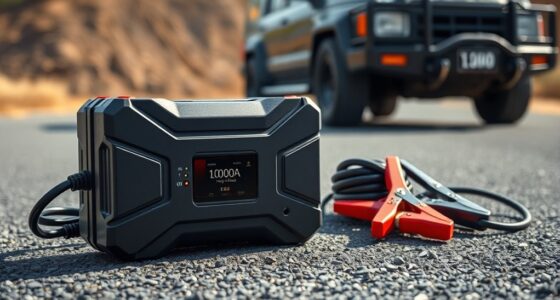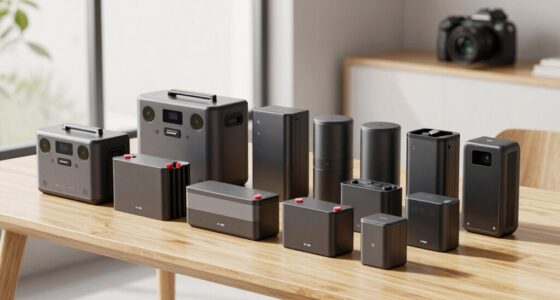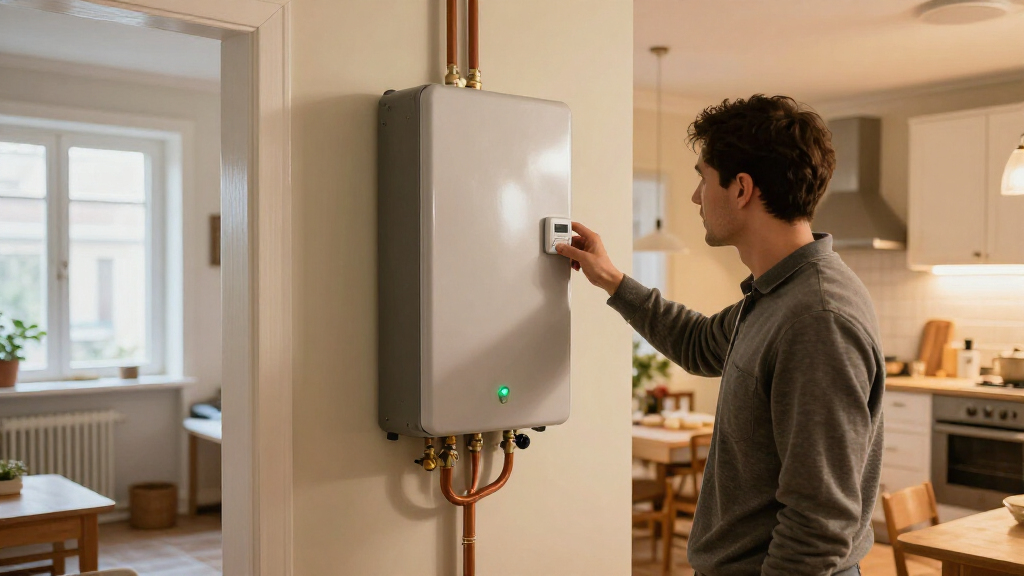

Home heat batteries can store electricity for backup and solar use, but the three systems here are electrical LiFePO4 batteries—not dedicated thermal batteries that store heat for a hydronic heating system. I rank the ECO-WORTHY Cubix100 first for buyers who want a large, expandable rack system with a long stated warranty; the Rvpozwer 314Ah is the higher-capacity single-unit alternative; and the ECO-WORTHY 200Ah two-pack is the space-conscious choice for a smaller installation.

Get backup power and energy gear delivered free with Prime
- Fast, free delivery on millions of items
- Prime Video, Amazon Music and more included
- Member-only deals all year
The main tradeoff is straightforward: more stored energy and expansion headroom usually mean more weight, space, and installation planning. A wall-mounted pair may suit a compact home backup setup, while the rack cabinet is better suited to a dedicated equipment area. I also explain what these batteries can and cannot do for home heating, so you can distinguish electrical storage from a purpose-built heat battery before choosing.
Key Takeaways
- The ECO-WORTHY Cubix100 has the largest stated starting capacity here at 30.72kWh and includes a cabinet, but its 636-pound system weight calls for a prepared installation area.
- The Rvpozwer 314Ah stores 16.07kWh in one battery and offers a 200A BMS with an external breaker, though its stated five-year warranty is shorter than the Cubix100’s ten-year warranty.
- The ECO-WORTHY two-pack totals 200Ah at 51.2V and offers wall or floor placement, making it the most space-conscious option, but it stores less energy than either larger system.
- All three options are 51.2V LiFePO4 electrical storage systems; none is described as a dedicated thermal battery for storing heat in water or another heating medium.
- Check inverter compatibility, installation requirements, usable energy, and the relevant heating loads before buying; capacity alone does not establish how long a system will run a home.
| ECO-WORTHY Cubix100 48V 600Ah LiFePO4 Battery System with RACK6 V3 Cabinet |  | Best Overall for Large, Expandable Home Storage | Chemistry: LiFePO4 | Configuration: Six 100Ah batteries | Capacity: 600Ah; 30.72kWh stated | VIEW LATEST PRICE | See Our Full Breakdown |
| 48V 314Ah LiFePO4 Battery – 16.07 kWh High Capacity Energy Storage with Breakers |  | Best Single-Battery Capacity | Chemistry: LiFePO4 | Capacity: 314Ah; 16.07kWh stated | Voltage: 51.2V | VIEW LATEST PRICE | See Our Full Breakdown |
| ECO-WORTHY 48V 200Ah (2-Pack 48V 100Ah) Wall-Mount Indoor LiFePO4 Battery with Conduit Box, Bluetooth & WiFi, Low-Temperature Protection – Off-Grid Home Backup Power |  | Best Space-Saving Two-Battery Setup | Chemistry: LiFePO4 | Configuration: Two 100Ah batteries | Capacity: 200Ah total; combined kWh not stated in supplied details | VIEW LATEST PRICE | See Our Full Breakdown |
| home heat batterie | Chemistry | Capacity | Voltage | Configuration |
|---|---|---|---|---|
| ECO-WORTHY Cubix100 48V 600Ah | LiFePO4 | 600Ah; 30.72kWh stated | 51.2V DC | Six 100Ah batteries |
| 48V 314Ah LiFePO4 Battery | LiFePO4 | 314Ah; 16.07kWh stated | 51.2V | — |
| ECO-WORTHY 48V 200Ah | LiFePO4 | 200Ah total; combined kWh not stated in supplied details | 51.2V | Two 100Ah batteries |
More Details on Our Top Picks
ECO-WORTHY Cubix100 48V 600Ah LiFePO4 Battery System with RACK6 V3 Cabinet
The Cubix100 is the most complete large-system option in this lineup: six 100Ah batteries provide 30.72kWh at 51.2V, and the included cabinet gives those batteries a defined rack-based home. Its stated capacity is nearly twice the Rvpozwer battery’s 16.07kWh and substantially greater than the ECO-WORTHY two-pack’s 200Ah total. That makes it the clearest choice here for a buyer planning a sizeable electrical storage installation rather than a small backup addition.
Its advantage is not just the initial capacity. CAN and RS485 communication support integration with compatible inverters, while Bluetooth and Wi-Fi enable app monitoring. The system is listed as expandable up to 32 units, with a stated possible total of 163.8kWh. That headroom may matter to a household planning staged expansion, though a larger installation requires a compatible design, suitable space, and professional attention to electrical and safety requirements.
The tradeoff is physical scale. At 636 pounds for the system and roughly 26 by 27 by 46 inches, this is not a casual wall-mounted battery for a cramped utility closet. The cabinet helps organize the system but does not make it lightweight or remove the need for a suitable floor and access plan. By comparison, the ECO-WORTHY 200Ah pair is easier to place in a space-conscious home, while Rvpozwer supplies more capacity in a single listed battery unit.
I rank the Cubix100 first because it combines the lineup’s largest starting capacity, an included cabinet, extensive communication options, expansion potential, and a stated ten-year warranty. Still, buyers should confirm inverter compatibility and installation requirements before treating those features as plug-and-play. The listed certifications are useful information, but the final system design and any required inspection depend on the equipment and local rules. This is an electrical storage system, not a direct thermal battery.
Pros:- Six 100Ah LiFePO4 batteries provide 30.72kWh of stated energy capacity.
- Includes a rack cabinet, parallel cables, communication cables, grounding wires, and other listed installation accessories.
- CAN, RS485, Bluetooth, and Wi-Fi support compatible inverter communication and app monitoring.
- Stated expansion capacity reaches up to 32 units, with a ten-year warranty.
Cons:- The 636-pound system needs a suitable location, access route, and substantial handling support.
- Closed-loop communication depends on inverter compatibility, and installation or inspection needs may vary.
- Its rack format and large capacity may be excessive for modest backup needs or homes without dedicated equipment space.
Best for: Homeowners planning a substantial 51.2V electrical storage installation who have a dedicated equipment area and want rack organization and room to expand.
Not ideal for: Buyers with limited floor space, no help for handling heavy equipment, a small backup requirement, or a search specifically for a battery that directly stores heat.
- Chemistry:LiFePO4
- Configuration:Six 100Ah batteries
- Capacity:600Ah; 30.72kWh stated
- Voltage:51.2V DC
- Communication:CAN, RS485, Bluetooth, and Wi-Fi
- Expansion:Up to 32 units; stated system capacity up to 163.8kWh
- Weight and dimensions:636lb; 25.98 × 26.77 × 46.22in
- Warranty:10 years
Our verdict“I recommend the Cubix100 for buyers who can accommodate a heavy rack system and want the lineup’s strongest combination of capacity, monitoring, and stated expansion headroom.”
48V 314Ah LiFePO4 Battery – 16.07 kWh High Capacity Energy Storage with Breakers
The Rvpozwer 314Ah is the middle ground in this group: one 51.2V battery provides a stated 16.07kWh, more than the ECO-WORTHY two-pack’s 200Ah total but less than the Cubix100’s 30.72kWh system. That makes it a useful comparison for buyers who want meaningful storage without starting with a six-battery rack. Its floor-standing or wall-mounted format may offer more placement flexibility than the Cubix cabinet, though the listing also describes it as heavy and installation-sensitive.
Safety and system feedback are its central differentiators. It has an integrated 200A smart BMS and external breaker, with listed over-charge, over-discharge, over-current, short-circuit, and temperature protections. RS485, CAN, and RS232 communication, along with an LCD and Bluetooth/Wi-Fi, offer several ways to check status and connect with compatible equipment. These features are more extensive than the ECO-WORTHY two-pack’s listed monitoring details, but buyers should verify the specific inverter protocol and any included communication hardware rather than assume every connection works with their setup.
The battery can be paralleled up to 15 units, with a stated possible total of 241kWh. That expansion claim gives it a strong growth path on paper, although building a large battery bank still involves system design, space, wiring, and compatible equipment. The Cubix100 is more turnkey as a listed rack package because its cabinet and accessories are included; the Rvpozwer instead focuses on high capacity in one battery and listed protection features.
Its main drawback is the five-year stated warranty, shorter than the Cubix100’s ten-year term. The available details also do not give a weight or dimensions, making it harder to plan handling and mounting from the listing information alone. I would choose it over the smaller ECO-WORTHY pair when single-unit capacity matters, but not when the longest stated warranty or a clearly documented rack package is the priority. Like the other two, it stores electricity rather than heat directly.
Pros:- Provides 16.07kWh stated capacity in a 314Ah, 51.2V battery.
- Combines a 200A smart BMS with an external breaker and listed electrical and temperature protections.
- Offers RS485, CAN, RS232, an LCD screen, Bluetooth, and Wi-Fi for monitoring and compatible integration.
- The product description states support for up to 15 units in parallel.
Cons:- The stated five-year warranty is shorter than the Cubix100’s ten-year warranty.
- Heavy, bulky installation is noted, but the supplied details do not specify weight or dimensions.
- Inverter compatibility and professional installation requirements need checking before purchase.
Best for: Buyers who want a single 16.07kWh battery with an integrated smart BMS, external breaker, multiple communication interfaces, and potential for parallel expansion.
Not ideal for: People who need a clearly documented rack package, a longer stated warranty, or a direct thermal-storage product; also a poor fit if mounting and installation cannot be planned with a qualified professional.
- Chemistry:LiFePO4
- Capacity:314Ah; 16.07kWh stated
- Voltage:51.2V
- Battery management:Integrated 200A smart BMS and external breaker
- Communication and display:RS485, CAN, RS232, LCD, Bluetooth, and Wi-Fi
- Placement:Floor-standing or wall-mounted; confirm mounting needs
- Expansion:Up to 15 units in parallel, as described
- Warranty:5 years
Our verdict“I would pick the Rvpozwer when one battery’s 16.07kWh capacity and listed protection features matter more than a longer warranty or an included rack cabinet.”
ECO-WORTHY 48V 200Ah (2-Pack 48V 100Ah) Wall-Mount Indoor LiFePO4 Battery with Conduit Box, Bluetooth & WiFi, Low-Temperature Protection – Off-Grid Home Backup Power
For homes where equipment footprint matters more than maximum stored energy, the ECO-WORTHY 200Ah two-pack is the most space-conscious pick in this lineup. It comprises two 100Ah batteries at 51.2V and is described as suitable for either wall mounting or floor placement. That flexibility contrasts with the Cubix100’s dedicated rack cabinet and 636-pound total system weight. It also gives a buyer a two-unit arrangement rather than one higher-capacity battery, though the supplied details do not state a combined kWh figure.
Each battery weighs 97 pounds and measures 22.05 by 11.81 by 24.8 inches. Wall mounting can free floor area in a garage or utility room, but the weight means installation still needs a suitable mounting surface and safe lifting arrangements. The included conduit boxes and mounting hardware requirements should be checked against the planned location. In other words, a smaller footprint does not mean a lightweight or effortless installation.
Bluetooth and Wi-Fi monitoring offer a convenient way to check battery status, and low-temperature protection is a useful listed feature for installations exposed to colder conditions. Compared with the Rvpozwer battery, this pair provides less stated capacity and does not list the same selection of CAN, RS485, and RS232 interfaces or an LCD. Compared with the Cubix100, it is a more modest system with no supplied claim here of expansion to dozens of units.
I rank it third not because its format lacks value, but because the other options are stronger for buyers prioritizing capacity, expansion, or detailed interface information. This is the better match for a smaller electrical backup installation where wall or floor placement is helpful. I would skip it if the goal is to run large loads for extended periods without first checking the home’s energy demand, or if the search is for direct heat storage rather than an electrical battery.
Pros:- Two 100Ah LiFePO4 batteries provide 200Ah total at 51.2V.
- Wall-mount or floor-standing placement can help fit different indoor layouts.
- Bluetooth and Wi-Fi support remote battery status monitoring.
- Low-temperature protection is included in the listed product details.
Cons:- Each battery weighs 97lb, so wall mounting and handling need careful planning.
- The supplied specifications do not state combined kWh capacity or a warranty term.
- It has less capacity than the Rvpozwer single battery and much less than the Cubix100 system.
Best for: Homeowners building a modest indoor backup or off-grid system who value flexible wall or floor placement and remote status monitoring.
Not ideal for: Buyers seeking the highest listed capacity, extensive stated expansion, a detailed set of inverter communication interfaces, or a direct thermal battery.
- Chemistry:LiFePO4
- Configuration:Two 100Ah batteries
- Capacity:200Ah total; combined kWh not stated in supplied details
- Voltage:51.2V
- Placement:Wall-mounted or floor-standing
- Weight:97lb per battery
- Dimensions:22.05 × 11.81 × 24.8in per listed unit
- Monitoring and cold protection:Bluetooth, Wi-Fi, and low-temperature protection
Our verdict“I recommend this ECO-WORTHY pair for space-conscious buyers with moderate storage needs who prefer flexible placement over the greater capacity of the other two picks.”
How We Picked
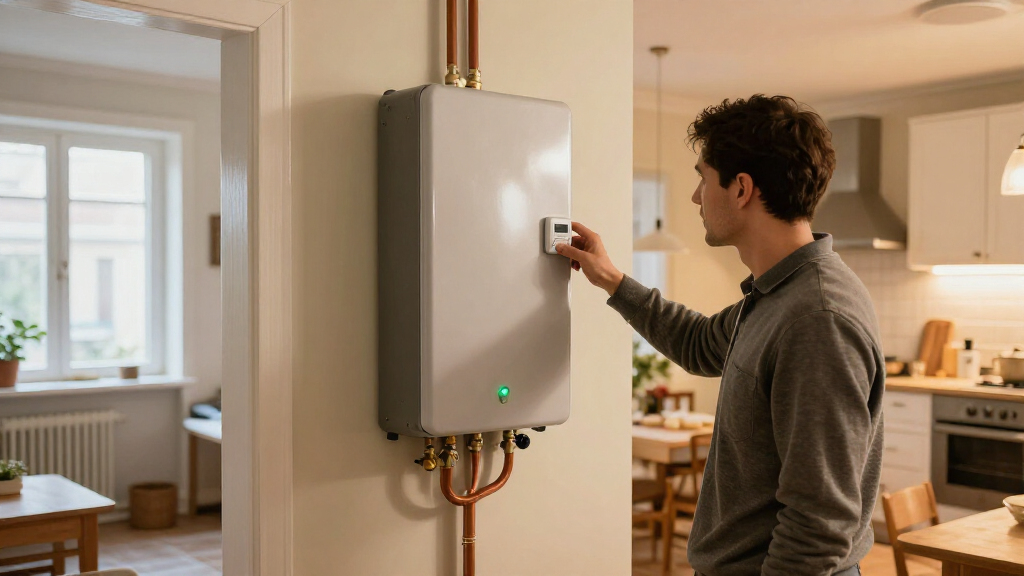
I ranked these options around the needs behind a home heat battery search: storing energy for home use, supporting backup or solar applications, and fitting the available installation space. The supplied product information describes LiFePO4 electrical batteries, so I did not treat them as thermal storage appliances. A true thermal battery stores heat directly; these products store electricity that may power compatible electrical loads, subject to inverter, system, and load requirements.
My comparison gives weight to stated energy capacity, installation format, system expandability, monitoring and inverter communication, and the practical burden of mounting or placing the equipment. I also compare the stated warranty and the information buyers would need to verify, including usable capacity, inverter compatibility, and installation conditions. The largest system does not automatically rank first for every household: a compact setup can be a better fit where space and load needs are modest.
I use the supplied specifications rather than making claims about independent performance, heating duration, or real-world efficiency. Product information does not establish that any of these batteries can directly provide heat, nor does it give enough detail to calculate a home’s runtime. Before purchase, I would confirm the full system design with a qualified installer and check whether the battery, inverter, and intended loads are compatible.
| home heat batterie | Configuration | Expansion | Placement |
|---|---|---|---|
| ECO-WORTHY Cubix100 48V 600Ah | Six 100Ah batteries | Up to 32 units; stated system capacity up to 163.8kWh | — |
| 48V 314Ah LiFePO4 Battery | — | Up to 15 units in parallel, as described | Floor-standing or wall-mounted; confirm mounting needs |
| ECO-WORTHY 48V 200Ah | Two 100Ah batteries | — | Wall-mounted or floor-standing |
Factors to Consider When Choosing Best Home Heat Batteries
I would start by clarifying what a home heat battery means for your project. The products in this roundup store electrical energy in LiFePO4 cells. They may form part of a home backup or solar-storage system, but the descriptions do not identify them as thermal batteries that store heat directly. The choice between them then comes down to system capacity, usable space, inverter fit, and installation demands.Electrical storage is not the same as a thermal battery
A thermal battery stores heat in a medium such as water or another material, then releases that heat for space heating or hot water. The three products here are battery energy storage systems: they store electricity. That electricity can potentially serve compatible electrical loads through a properly designed system, but the supplied information does not establish direct connection to a boiler, heat pump, or hydronic heating loop.
If your goal is to shift heating demand, check the whole energy chain: the battery, inverter, heating appliance, controls, and electrical service. A battery’s capacity alone cannot tell you how much heat it can supply or for how long. If you specifically need stored heat for a heating circuit, compare purpose-built thermal storage products rather than treating a LiFePO4 battery as a direct substitute.
Match capacity to actual loads
The stated energy capacities separate these picks clearly. The Cubix100 lists 30.72kWh, the Rvpozwer lists 16.07kWh, and the ECO-WORTHY pair is specified as 200Ah total without a combined kWh figure in the supplied details. These values help compare the products, but they do not state how much energy is usable in a particular installation or predict runtime.
List the loads you plan to support, their power draw, and the hours you want them running. Include surge needs for equipment that starts with a high draw, and ask an installer how inverter limits, battery configuration, and reserve settings affect the result. I would not select the largest system simply because it offers the most capacity; a smaller system may better suit a short backup list and a tight equipment area.
Check inverter communication before buying
Battery communication can help an inverter coordinate charging, discharging, and status reporting, but listed ports do not guarantee compatibility with every inverter. The Cubix100 and Rvpozwer both list CAN and RS485; Rvpozwer also lists RS232 and an LCD. The ECO-WORTHY pair highlights Bluetooth and Wi-Fi monitoring, while its supplied specifications do not list the same communication interfaces.
Ask the battery maker or installer to confirm the exact battery and inverter models work together, including any required protocol settings or cables. A monitoring app can show information, but it does not by itself establish closed-loop inverter control. Compatibility matters especially when the battery is part of a larger solar or backup design.
Plan for weight, mounting, and access
Installation format is a real distinction here. The Cubix100 weighs 636 pounds as a system and includes a rack cabinet, so it suits a prepared equipment area more than an ordinary wall. Rvpozwer allows floor-standing or wall-mounted placement, but its description warns that the unit is heavy and bulky; supplied details do not give its dimensions or weight. Each ECO-WORTHY 100Ah battery weighs 97 pounds, so the pair may be easier to arrange than the rack system but still needs careful handling.
Before ordering, measure doors, stairs, service clearances, wall structure, and the intended installation footprint. Confirm whether the floor can support the planned equipment and whether required mounting brackets, conduit boxes, ventilation clearances, or other hardware are included. The product descriptions do not replace local electrical rules or a qualified installation plan.
Compare expansion claims with your real plan
Expansion can be useful when a home storage system is built in stages, but it should not be read as a guarantee that any added battery will work with any setup. The Cubix100 lists expansion up to 32 units and a stated maximum of 163.8kWh; Rvpozwer describes parallel operation up to 15 units and a possible 241kWh total. The two-unit ECO-WORTHY product details do not specify an expansion limit.
For either expandable option, check supported configurations, wiring, inverter limits, firmware or communication requirements, and whether units must match. Ask how future additions affect system design and protection. If you have no plan to expand, an ambitious maximum may matter less than a suitable starting capacity, clearly documented compatibility, and a location that fits the equipment.
Review protection, warranty, and missing details
Rvpozwer explicitly lists a 200A smart BMS and external breaker, with several electrical and temperature protections. The Cubix100 lists multiple certifications and a ten-year warranty; Rvpozwer states a five-year warranty. The supplied information for the ECO-WORTHY pair highlights low-temperature protection but does not give a warranty term. Those differences make it worth checking the complete product documentation before making a final choice.
Confirm warranty coverage, installation conditions, service process, and the meaning of any certification for the complete system you plan to build. Also ask for usable capacity, charge and discharge limits, operating temperature ranges, and any required accessories if those details are important to your project. Where the supplied listing does not state a specification, I would not assume it from another product in the same brand’s range.
Frequently Asked Questions
Are these products thermal home heat batteries?
No. The products described here are 51.2V LiFePO4 electrical batteries that store electricity. A thermal battery stores heat directly in a medium for later heating use. These electrical batteries may be part of a system that powers compatible electrical loads, but the supplied product details do not describe direct heat storage or connection to a home’s heating loop.
Which of the three has the most stated storage capacity?
The ECO-WORTHY Cubix100 has the largest stated capacity at 30.72kWh from six 100Ah batteries. The Rvpozwer unit lists 16.07kWh, while the ECO-WORTHY two-pack lists 200Ah total but does not state combined kWh in the supplied details. Capacity does not by itself determine runtime; usable energy, inverter limits, and the loads you run all matter.
Can I connect one of these batteries to my existing inverter?
Possibly, but compatibility needs confirmation for the exact battery and inverter models. The Cubix100 lists CAN and RS485, while Rvpozwer lists CAN, RS485, and RS232; the two-pack highlights Bluetooth and Wi-Fi monitoring. Those interfaces do not guarantee that a specific inverter supports the battery’s communication protocol, so I would check with the manufacturers or a qualified installer before buying.
Which option works best where floor space is limited?
The ECO-WORTHY 200Ah pair is the most space-conscious option described here because each unit can be wall-mounted or placed on the floor. It is still 97 pounds per battery, so a wall needs appropriate support and installation should account for safe lifting. The Cubix100 is a large rack system, while Rvpozwer permits wall or floor placement but does not provide weight and dimensions in the supplied details.
What should I check before buying a home battery for heating backup?
First identify whether you need stored heat or stored electricity. For electrical backup, list the heating equipment and other loads, then confirm their power and startup requirements against the battery, inverter, and system design. I would also check usable capacity, compatibility, operating limits, mounting needs, warranty terms, installation rules, and whether the product is designed to power the intended appliance. A qualified installer can assess the full setup; capacity alone cannot predict heating duration.
Conclusion
For the largest expandable electrical storage setup, I would choose the ECO-WORTHY Cubix100, provided there is room for its rack cabinet and a plan for handling a 636-pound system. For buyers who want one 16.07kWh battery with a listed smart BMS, external breaker, and several communication options, the Rvpozwer is the more focused alternative, with a shorter stated warranty than the Cubix100. If flexible wall or floor placement matters more than maximum capacity, the ECO-WORTHY 200Ah two-pack is the best fit of the three.
If your goal is direct storage of heat for a heating circuit or hot water, I would not treat any of these electrical batteries as a thermal battery based on the information provided. Confirm the system type, equipment compatibility, and heating loads before buying, then choose the option whose capacity and installation format match the actual home project.