
Editorial update log

Get backup power and energy gear delivered free with Prime
- Fast, free delivery on millions of items
- Prime Video, Amazon Music and more included
- Member-only deals all year
October 30, 2026:
Deal update: RoundupForge price history now flags ASIN B0CQXM3NJL on amazon.com as below its typical tracked range. RF labels the deal as all_time_low.
Exact pricing remains intentionally gated through the live Grimfaste price module in the article.
Whole house solar battery backups range from expandable batteries for a custom system to portable power stations and integrated home backup systems. My best overall pick is the Anker SOLIX E10, which pairs a 6 kWh battery with 9 kW solar input in a system designed for home backup. The EF ECOFLOW DELTA Pro Ultra stands out for buyers who want a power station with extra-battery expansion, while the GROWATT 4-pack offers a larger battery bank for buyers building around compatible 48V equipment. The main tradeoff is between integrated, simpler-to-manage systems and modular equipment that can offer more capacity but needs careful compatibility planning. Read on for the full breakdown of what each option can—and cannot—cover in a home backup setup.
Key Takeaways
- The Anker SOLIX E10 is the clearest whole-home-focused pick in this lineup: its 6 kWh battery is paired with 9 kW solar input, though buyers still need to check whether its capacity and output match their household loads.
- Battery capacity alone does not establish whole-house capability. The Growatt and Dawnice battery banks need compatible inverters and system design; they are not equivalent to complete backup systems.
- The 16 kWh battery-and-inverter package combines major components, but buyers should verify the inverter’s output, transfer setup, wiring, and battery compatibility before treating it as a ready-to-install home solution.
- Portable power stations trade installation flexibility for limits in home integration. Jackery, Anker F3800, and ABOK options can suit selected circuits or movable backup, but their listed battery capacity does not by itself indicate whole-house coverage.
- Solar kits and panel bundles vary in what they include. ECO-WORTHY kits package generation or off-grid components, while some power station bundles include only two 200W panels; compare full system contents before planning around solar recharge.
| GROWATT ALP 5.0L-E2 US 48V 100Ah LiFePO4 Battery, 5120Wh, 2-Pack |  | Best for Growatt System Expansion | Battery chemistry: LiFePO4 | Voltage: 48V | Capacity per battery: 100Ah | VIEW LATEST PRICE | See Our Full Breakdown |
| GROWATT ALP 5.0L-E2 US 48V 100Ah LiFePO4 Battery, 5,120Wh, 4-Pack |  | Best Pre-Bundled Growatt Capacity | Battery chemistry: LiFePO4 | Voltage: 48V | Capacity per battery: 100Ah | VIEW LATEST PRICE | See Our Full Breakdown |
| 10 kWh LiFePO4 Solar Storage Battery, 51.2 V 200 Ah |  | Best for Display-Led Battery Monitoring | Battery chemistry: LiFePO4 | Voltage: 51.2V | Capacity: 200Ah | VIEW LATEST PRICE | See Our Full Breakdown |
| ECO-WORTHY Solar Panel Kit LiFePO4 Energy Storage System for Home Backup |  | Best Complete Solar-and-Battery Kit | Solar panels: 6 × 590 W N-type monocrystalline | Hybrid inverter power: 10 kW | Battery configuration: 2 × 48V 314Ah LiFePO4 | VIEW LATEST PRICE | See Our Full Breakdown |
| EF ECOFLOW DELTA Pro Ultra Power Station with Extra Battery |  | Best Modular Whole-Home Backup | Output voltage: 120V and 240V | Inverter output: 7,200W | Maximum system output: 21.6kW with three inverters | VIEW LATEST PRICE | See Our Full Breakdown |
| Dawnice 5kWh 51.2V 100Ah LiFePO4 Solar Battery |  | Best for Modular Battery Builds | Energy: 5.12kWh | Voltage: 51.2V | Capacity: 100Ah | VIEW LATEST PRICE | See Our Full Breakdown |
| Dawnice 16 kWh LiFePO4 Solar Storage Battery, 51.2V 314Ah |  | Best for High-Capacity Expansion | Energy: 16kWh | Voltage: 51.2V | Capacity: 314Ah | VIEW LATEST PRICE | See Our Full Breakdown |
| ECO-WORTHY 5 kW Off-Grid Solar System Kit with 2,340 W Panels |  | Best Complete Kit for Off-Grid Builds | Solar panels: 12 panels at 195W each | Total panel power: 2,340W | Inverter power: 5,000W | VIEW LATEST PRICE | See Our Full Breakdown |
| Jackery Solar Generator 5000 Plus with Two 200W Solar Panels |  | Best Portable 120V/240V Backup | Battery capacity: 5,040Wh | Expandable capacity: Up to 60kWh | Surge power: 14,400W | VIEW LATEST PRICE | See Our Full Breakdown |
| 16kWh 51.2V 314Ah Wall-Mounted LiFePO4 Battery with 48V 10kW Off-Grid Inverter for Home, Emergency, Camping & RV |  | Best Integrated High-Power Off-Grid System | Battery capacity: 16kWh | Nominal voltage: 51.2V | Battery capacity: 314Ah | VIEW LATEST PRICE | See Our Full Breakdown |
| Jackery HomePower 3600 Plus Portable Power Station with 2 × 200W Solar Panels |  | Best for Flexible Charging | Battery capacity: 3,584Wh | Battery type: LFP | AC output: 3,600W | VIEW LATEST PRICE | See Our Full Breakdown |
| ABOK Ark3600 Portable Power Station, 3600W, 3840Wh LiFePO4 Battery |  | Best for Port Variety | Battery capacity: 3,840Wh | Battery type: LiFePO4 | Peak power: 4,500W | VIEW LATEST PRICE | See Our Full Breakdown |
| Anker SOLIX F3800 Portable Power Station, 3,840Wh |  | Best Portable High-Output Pick | Battery capacity: 3,840Wh | Battery type: LFP | AC output: 6,000W | VIEW LATEST PRICE | See Our Full Breakdown |
| Anker SOLIX E10 Whole-Home Backup Power System with 6 kWh Battery and 9 kW Solar Input |  | Best for Integrated Whole-Home Backup | Battery capacity: 6kWh, expandable to 30kWh | Continuous output: 7.6kW | Solar input: 9kW per unit | VIEW LATEST PRICE | See Our Full Breakdown |
| whole house solar battery backup | Warranty | Battery capacity |
|---|---|---|
| GROWATT ALP 5.0L-E2 US 48V 100 | 10 years | — |
| GROWATT ALP 5.0L-E2 US 48V 100 | 10 years | — |
| 10 kWh LiFePO4 Solar Storage B | 5 years | — |
| ECO-WORTHY Solar Panel Kit LiF | — | — |
| EF ECOFLOW DELTA Pro Ultra Pow | — | — |
| Dawnice 5kWh 51.2V 100Ah LiFeP | 5 years | — |
| Dawnice 16 kWh LiFePO4 Solar S | 10-year limited warranty | — |
| ECO-WORTHY 5 kW Off-Grid Solar | — | — |
| Jackery Solar Generator 5000 P | — | 5,040Wh |
| 16kWh 51.2V 314Ah Wall-Mounted | 10-year limited warranty | 16kWh |
| Jackery HomePower 3600 Plus Po | 5 years | 3,584Wh |
| ABOK Ark3600 Portable Power St | — | 3,840Wh |
| Anker SOLIX F3800 Portable Pow | 5 years | 3,840Wh |
| Anker SOLIX E10 Whole-Home Bac | 5 years for E10; 10 years for Smart Inlet Box | 6kWh, expandable to 30kWh |
More Details on Our Top Picks
GROWATT ALP 5.0L-E2 US 48V 100Ah LiFePO4 Battery, 5120Wh, 2-Pack
I’d choose this two-battery package when the priority is adding storage to a compatible Growatt home system without starting at the four-battery scale. Its combined 10.24 kWh capacity is a more modest base for whole-house backup than the four-pack, and the system can expand in parallel as needs change, up to the stated 40 kWh limit. A built-in BMS and IP66 protection add electrical safeguards and flexibility for indoor or outdoor placement. Compared with the standalone 10.24 kWh wall battery, this package has clearer Growatt-specific integration but a narrower inverter fit. The tradeoff is that it is optimized for Growatt equipment, so it is a poor match for buyers with another inverter brand; a high-capacity installation may also call for professional help.
Pros:- Two 5,120 Wh batteries provide 10.24 kWh of combined storage.
- Parallel expansion supports growth toward the stated 40 kWh system capacity.
- Built-in BMS guards against overcharge, overdischarge, short circuit, and overload.
- IP66 rating and a 10-year warranty support long-term home storage use.
Cons:- Designed for Growatt inverters and storage systems, limiting compatibility with other equipment.
- A two-battery capacity may not cover heavy whole-house loads for long outages.
- A larger installation may require professional planning and installation.
Best for: Growatt inverter owners who want a 10.24 kWh starting point for solar backup and room to add compatible batteries later.
Not ideal for: Homeowners using a non-Growatt inverter or seeking a ready-made, higher-capacity whole-house system without additional battery purchases.
- Battery chemistry:LiFePO4
- Voltage:48V
- Capacity per battery:100Ah
- Energy per battery:5,120Wh
- Pack count:2
- Expandable capacity:Up to 40kWh
- Ingress protection:IP66
- Warranty:10 years
Our verdict“Choose this package if you already use Growatt equipment and want expandable 10.24 kWh storage, but skip it if you need broad inverter compatibility or greater capacity immediately.”
GROWATT ALP 5.0L-E2 US 48V 100Ah LiFePO4 Battery, 5,120Wh, 4-Pack
For a Growatt installation that needs more storage from the outset, this four-battery bundle supplies 20.48 kWh before any further expansion. That is twice the energy in the two-pack, making it a more credible starting point for keeping several household circuits running through an outage. Like the smaller bundle, it supports expansion up to 40 kWh and includes a smart BMS, IP66 protection, and a 10-year warranty. Compared with the ECO-WORTHY 32 kWh kit, this is a battery package rather than a complete solar-and-inverter system, so buyers need compatible equipment and a separate plan for generation. Its key limitation is the same brand lock-in as the two-pack: Growatt compatibility makes it a focused choice, not a flexible replacement battery. Freight delivery also needs a suitable receiving address and signature.
Pros:- Four 5,120 Wh batteries provide 20.48 kWh of storage in the bundle.
- Can expand to a stated maximum of 40 kWh.
- Smart BMS and IP66 protection support monitored, protected storage.
- Includes a 10-year warranty.
Cons:- Optimized exclusively for Growatt inverters and storage systems.
- Does not include solar panels or an inverter as a complete system kit.
- Freight delivery requires a signature and an address able to accept truck delivery.
Best for: Growatt system owners who want a substantial battery bank in one shipment and have an inverter and solar setup already planned.
Not ideal for: Buyers who need panels and an inverter included, use a different inverter ecosystem, or cannot receive truck freight at their address.
- Battery chemistry:LiFePO4
- Voltage:48V
- Capacity per battery:100Ah
- Energy per battery:5,120Wh
- Included batteries:4
- Maximum expandable capacity:40kWh
- AC output:10kW
- Warranty:10 years
Our verdict“This is the stronger Growatt pick when you want 20.48 kWh installed as a starting battery bank, provided you already have compatible power-conversion equipment and can accept freight.”
10 kWh LiFePO4 Solar Storage Battery, 51.2 V 200 Ah
This wall-mounted battery stands out for buyers who want to see system readings directly at the unit: its touch-screen display reports battery and inverter information, including voltage, current, and energy. With 10.24 kWh in one enclosure, it offers roughly the same stored energy as the Growatt two-pack, but it is not described as restricted to Growatt equipment. The tradeoff is less certainty about compatibility: the listing describes inverter support broadly without naming models, so I’d verify fit with the installer before buying. It can scale to 30 batteries in parallel, a much higher stated battery count than the Growatt bundles, and its BMS includes low-temperature cutoff. Against the ECO-WORTHY kit, though, this is a battery component, not a complete backup package. Its five-year warranty is also shorter than Growatt’s 10 years.
Pros:- 10.24 kWh capacity in a single wall-mounted battery.
- Touch-screen display shows voltage, current, energy, and inverter model.
- Supports parallel expansion up to 30 batteries.
- Built-in BMS includes low-temperature cutoff and multiple electrical protections.
Cons:- Inverter compatibility is described broadly without specific supported models.
- Five-year warranty is shorter than the 10-year coverage stated for the Growatt batteries.
- No plug is included, so installation and connection details need advance planning.
Best for: Homeowners assembling a custom battery bank who value on-unit readings and can confirm inverter compatibility before purchase.
Not ideal for: Buyers who want a complete solar backup kit, need a named compatibility list, or prefer the longer warranty offered by the Growatt batteries.
- Battery chemistry:LiFePO4
- Voltage:51.2V
- Capacity:200Ah
- Energy:10.24kWh
- Cycle life:6,000+ cycles
- Maximum parallel expansion:30 batteries
- Display:Touch screen
- Warranty:5 years
Our verdict“Pick this battery for a scalable custom system with direct on-unit monitoring, but confirm inverter compatibility and installation requirements before committing.”
ECO-WORTHY Solar Panel Kit LiFePO4 Energy Storage System for Home Backup
Unlike the Growatt battery bundles, this ECO-WORTHY package includes the major pieces of a solar backup system: panels, a hybrid inverter, and batteries. Its stated 30 kWh-plus usable storage and 10 kW inverter make it the most complete high-capacity option in this group for buyers planning a whole-house installation rather than adding batteries to existing equipment. The six 590 W panels provide a generation starting point, while 120V and 240V outputs support a wider range of household circuits than a battery-only purchase can address by itself. Wi-Fi, Bluetooth, and LCD monitoring also offer more system visibility than the basic Growatt packages. The cost of that completeness is scale: the equipment is large, pallet-shipped, and may need professional installation. It is also less convenient to place than the more modular EF ECOFLOW DELTA Pro Ultra.
Pros:- Combines six 590 W solar panels, a 10 kW hybrid inverter, and two batteries.
- Provides 30 kWh-plus of stated usable energy for longer household backup.
- Offers 120V and 240V output options, including split-phase.
- Wi-Fi, Bluetooth, and LCD monitoring accompany an active-balancing BMS.
Cons:- Large system size and weight can complicate placement and may call for professional installation.
- Pallet delivery requires room and access for a substantial shipment.
- Inverter appearance may vary between shipments, which can complicate expectations about the received equipment.
Best for: Homeowners planning a fixed, high-capacity solar backup installation who want panels, inverter, and batteries bundled together.
Not ideal for: Renters, buyers with limited installation space, or households seeking a portable system that can be repositioned easily.
- Solar panels:6 × 590 W N-type monocrystalline
- Hybrid inverter power:10 kW
- Battery configuration:2 × 48V 314Ah LiFePO4
- Usable energy:30 kWh+
- Output voltage:120V and 240V
- Battery cycle life:9,000+ cycles at 80% depth of discharge
- Monitoring:Wi-Fi, Bluetooth, and LCD screen
- MPPT efficiency:99.9%
Our verdict“Choose this kit for a fixed whole-house project when you want solar generation and substantial storage in one package and have space for installation.”
EF ECOFLOW DELTA Pro Ultra Power Station with Extra Battery
The DELTA Pro Ultra suits buyers who want whole-home-capable output without committing to a fixed battery installation at the start. It provides 120V and 240V output, a 7,200 W inverter, and a listed 0 ms UPS transfer time; that combination can support a range of household loads and fast backup handoff, subject to the home’s wiring and load plan. Its capacity starts at 6,144 Wh and can scale to 90 kWh, giving it more stated expansion headroom than the 40 kWh Growatt systems. Multiple charging sources—including solar, a generator, wall power, and EV charging equipment—add flexibility when solar production is limited. In contrast with the ECO-WORTHY kit, this is a modular power-station approach, not a package of solar panels and a hybrid inverter. The 293.6 lb weight and separate package shipments make setup and placement a real planning task.
Pros:- Provides both 120V and 240V output for varied household loads.
- Expandable capacity reaches up to 90 kWh.
- Can charge from solar, wall outlets, generators, or EV charging equipment.
- Listed 0 ms UPS transfer time supports rapid backup switching.
Cons:- At 293.6 lb, the unit is difficult to move and requires careful placement planning.
- Inverter and battery arrive in separate packages.
- Solar panels are not included, unlike the ECO-WORTHY complete system kit.
Best for: Homeowners who want a modular 120V/240V backup system with multiple charging options and the ability to add capacity over time.
Not ideal for: Buyers seeking a complete panel-and-inverter solar kit, a lightweight portable unit, or a system that arrives as one easy-to-handle package.
- Output voltage:120V and 240V
- Inverter output:7,200W
- Maximum system output:21.6kW with three inverters
- Capacity per battery:6,144Wh
- Expandable capacity:Up to 90kWh
- Charging methods:Solar, wall outlet, generator, and EV charging equipment
- Transfer time:0 ms
- Weight:293.6 lb
Our verdict“Pick the DELTA Pro Ultra if you want expandable, multi-source 120V/240V backup in a modular format, but choose a complete solar kit if panels and inverter are still on your shopping list.”
Dawnice 5kWh 51.2V 100Ah LiFePO4 Solar Battery
For a whole-house setup built in stages, I’d look at this 5.12kWh wall-mounted battery as a building block rather than a complete backup solution. Its 100A BMS, mobile monitoring, and IP54 rating add useful protection and visibility, including for some outdoor installations. Compared with the Dawnice 16 kWh battery, this unit stores much less energy per battery, so buyers planning to cover several household circuits may need multiple units and a compatible inverter. Its stated 6,000+ cycle life is appealing, but the five-year warranty is shorter than the 16 kWh model’s stated 10-year limited warranty. At 127 lb, it also calls for careful planning before wall mounting. I’d choose it for a scalable system, not as a one-battery whole-house answer.
Pros:- 5.12kWh capacity can serve as one module in a larger storage build
- Built-in 100A BMS protects against overcharging, over-discharging, over-current, overheating, and short circuits
- Mobile phone monitoring and an IP54 rating support visibility and flexible placement
- Stated cycle life exceeds 6,000 cycles
Cons:- One 5.12kWh unit may provide limited runtime for broad whole-house backup
- At 127 lb, wall mounting requires suitable structural support and careful handling
- Five-year warranty is shorter than the 10-year limited warranty stated for the Dawnice 16 kWh battery
Best for: Homeowners building a compatible 48V-class solar-storage system in stages who value remote monitoring and a wall-mounted battery.
Not ideal for: Buyers seeking substantial whole-home runtime from one battery, or anyone without a compatible inverter and a safe plan for mounting a 127 lb unit.
- Energy:5.12kWh
- Voltage:51.2V
- Capacity:100Ah
- Maximum power:5,120W
- Maximum discharge current:100A
- Battery chemistry:LiFePO4
- Cycle life:6,000+ cycles
- Weight and mounting:127 lb; wall-mounted
- Warranty:5 years
Our verdict“Choose this Dawnice when you want a monitored, expandable battery module; skip it if you need high whole-house capacity from a single unit.”
Dawnice 16 kWh LiFePO4 Solar Storage Battery, 51.2V 314Ah
The 16kWh capacity gives this Dawnice a stronger starting point for home backup than the brand’s 5.12kWh wall battery: one unit holds over three times as much stored energy. It also supports connecting up to 15 units in parallel, which makes it a candidate for systems expected to grow. That flexibility comes with a key requirement: this is a battery, not an all-in-one backup system, so buyers need a compatible inverter and a properly planned installation. Bluetooth monitoring is simpler than phone-based remote access over a network, and the listed current and power figures deserve confirmation before system design: the product states 150A maximum discharge current alongside 16,000W maximum power, while its BMS is listed as 100A. Compared with the ECO-WORTHY kit, it brings more storage in one battery but doesn’t include panels or an inverter.
Pros:- 16kWh capacity provides more stored energy per unit than the Dawnice 5.12kWh battery
- Supports parallel expansion of up to 15 units
- LiFePO4 chemistry with a built-in BMS
- Manufacturer states a 10-year limited warranty and 6,000+ cycle life
Cons:- Requires a compatible inverter and other system components
- Listed 150A current, 16,000W maximum power, and 100A BMS figures should be clarified for system planning
- Bluetooth monitoring may be less convenient than remote phone monitoring
Best for: Homeowners or installers planning a compatible inverter-based system that needs substantial storage now and room to add battery units later.
Not ideal for: Buyers who want panels, inverter, and battery in one package, or who need clearly reconciled power and current specifications before purchase.
- Energy:16kWh
- Voltage:51.2V
- Capacity:314Ah
- Maximum power:16,000W
- Maximum discharge current:150A
- Battery management system:Built-in 100A BMS
- Cycle life:6,000+ cycles
- Parallel expansion:Up to 15 units
- Warranty:10-year limited warranty
Our verdict“Pick this model for a large, expandable battery bank if you already have—or are planning—a compatible inverter system.”
ECO-WORTHY 5 kW Off-Grid Solar System Kit with 2,340 W Panels
Unlike the standalone Dawnice batteries in this group, the ECO-WORTHY kit bundles the main pieces of an off-grid solar system: 12 panels, a 5,000W inverter, a 51.2V battery, cables, and mounting brackets. That can simplify parts selection for a cabin or remote home, while the 2,340W of panels supplies a way to recharge the included storage. The tradeoff is scale: its 100Ah battery is much smaller than the Dawnice 16kWh battery, so it may not cover extended outages or broad household loads without additional compatible storage. The 5kW inverter rating also shouldn’t be mistaken for stored energy; it describes output capability, not runtime. Installation involves panel mounting and electrical work, so I’d favor this package for capable DIYers or buyers arranging qualified installation rather than anyone expecting a plug-and-play whole-house system.
Pros:- Includes 12 panels, inverter, battery, cables, and brackets
- 5,000W inverter supports a range of everyday appliance loads within system limits
- LiFePO4 battery provides deep-cycle storage
- Panels can be mounted on a roof, ground, or shed
Cons:- Included 100Ah battery offers far less capacity than the Dawnice 16kWh standalone battery
- DIY installation involves panel mounting and electrical work
- A bundled kit still requires planning around household loads, solar conditions, and system compatibility
Best for: Cabin owners and off-grid DIYers who want panels, an inverter, a battery, and mounting hardware together in one system package.
Not ideal for: Households seeking long whole-home outage coverage from a large battery bank, or buyers who want a simple, ready-to-connect installation.
- Solar panels:12 panels at 195W each
- Total panel power:2,340W
- Inverter power:5,000W
- Inverter voltage:48V
- Battery:100Ah, 51.2V LiFePO4
- Panel efficiency:25%
- Output voltage:120V
- Included components:12 panels, one lithium battery, one off-grid inverter, cables, and brackets
Our verdict“Choose this ECO-WORTHY kit for a bundled off-grid starting point, but look to a larger battery system for longer whole-house backup.”
Jackery Solar Generator 5000 Plus with Two 200W Solar Panels
The Jackery is the most portable-system-oriented pick here, though its 120V and 240V output and 7,200W rated AC power give it a broader home-backup role than a typical small power station. Its 5,040Wh battery is close in stored energy to the Dawnice 5.12kWh battery, but Jackery pairs it with an inverter and includes two 200W solar panels; the Dawnice unit is a battery module for a separately assembled system. For bigger needs, the Jackery can expand to up to 60kWh and accepts up to 4,000W of solar input. Still, the included 400W of panels is modest beside that input limit, and 5,040Wh alone may not sustain a whole home through a long outage. At 134.5 lb, it is portable in concept, not easy to carry around. The generator and panels also ship separately.
Pros:- Supports both 120V and 240V appliances
- 7,200W rated AC power and 14,400W surge power
- Capacity can expand to 60kWh
- Includes two 200W solar panels and accepts up to 4,000W of solar input
Cons:- The included panels provide only 400W total, well below the stated maximum solar input
- At 134.5 lb, it is difficult to move despite its portable format
- Generator and panels ship separately, and the base 5,040Wh capacity may not cover prolonged whole-house outages
Best for: Households wanting an integrated portable backup with 120V and 240V support, plus the option to expand storage over time.
Not ideal for: Buyers seeking a lightweight power station, a large amount of included solar generation, or extensive whole-house runtime without additional batteries.
- Battery capacity:5,040Wh
- Expandable capacity:Up to 60kWh
- Surge power:14,400W
- AC voltage:120V and 240V
- Maximum solar input:4,000W
- Included solar panels:Two 200W panels
- Battery chemistry:LiFePO4
- Weight:134.5 lb
Our verdict“Choose the Jackery for flexible 120V/240V backup and expansion, but plan for added storage or solar if you need longer whole-house coverage.”
16kWh 51.2V 314Ah Wall-Mounted LiFePO4 Battery with 48V 10kW Off-Grid Inverter for Home, Emergency, Camping & RV
For a buyer who wants a battery and inverter together, this Dawnice package has a practical advantage over the standalone Dawnice 16kWh battery: it includes a 48V off-grid inverter rated up to 10kW typical, reducing the need to source those core components separately. The 16kWh LiFePO4 battery, 150A BMS, and support for up to three units in parallel point toward a substantial expandable setup. But the listing’s power details need close checking before purchase: it gives an inverter range of 5kW–16kW, describes up to 10kW as typical, and separately lists a maximum voltage of 48V. The stated 8.5 lb weight also seems difficult to reconcile with a wall-mounted 16kWh battery, so I would confirm the actual shipping and installed weight. Compared with ECO-WORTHY, this offers far more battery storage and inverter capability, but does not list included solar panels.
Pros:- Combines a 16kWh LiFePO4 battery with an off-grid inverter
- Inverter is described as up to 10kW typical
- Built-in 150A BMS and stated 6,000+ cycle life
- Supports parallel connection of up to three units
Cons:- Listed inverter range, typical rating, and voltage details need clarification before system design
- The stated 8.5 lb weight appears inconsistent with the listed 16kWh wall-mounted format and should be verified
- Solar panels are not listed among the included components
Best for: Homeowners seeking a high-capacity off-grid battery and inverter package, with an installer available to confirm electrical specifications and mounting requirements.
Not ideal for: Buyers who need a clearly documented turnkey solar kit, want included panels, or cannot verify the unit’s weight and inverter ratings before installation.
- Battery capacity:16kWh
- Nominal voltage:51.2V
- Battery capacity:314Ah
- Inverter power:5kW–16kW range; up to 10kW typical
- Maximum discharge current:150A
- Battery management system:Built-in 150A BMS
- Cycle life:6,000+ cycles
- Parallel connection:Up to 3 units
- Warranty:10-year limited warranty
Our verdict“Pick this package over a standalone battery if you want a bundled inverter, but verify its ratings and physical specifications with the seller first.”
Jackery HomePower 3600 Plus Portable Power Station with 2 × 200W Solar Panels
I’d choose the Jackery HomePower 3600 Plus for buyers who want several ways to replenish a portable battery during an outage. Its 3,584Wh LFP battery and 3,600W output can support a useful group of household loads, while AC, solar, gas-generator, and hybrid charging provide more options than the Anker SOLIX F3800, which lists solar and AC charging but not gas-generator input. Jackery also states expansion up to 21kWh per unit, giving it a path beyond its base capacity.
The tradeoff is that this remains a 120V unit on its own; 240V output requires parallel operation, so it is not a direct substitute for a professionally integrated whole-home system like the Anker SOLIX E10. At 77.2 pounds, its wheels and handle help with movement but do not make it light, and the station and panels may arrive separately. I’d rank it for charging flexibility, not seamless whole-house integration.
Pros:- Multiple charging paths, including solar, gas generator, AC, and hybrid input, help adapt to changing outage conditions.
- 3,584Wh LFP capacity and 3,600W AC output suit a range of essential household devices.
- Expandable capacity offers more storage headroom than the base battery alone.
- Wheels and a telescopic handle make repositioning easier than carrying the 77.2-pound unit.
Cons:- 240V output requires parallel operation rather than being available from one unit.
- The 77.2-pound weight still makes lifting into a vehicle or up stairs difficult.
- The power station and solar panels may ship separately and arrive at different times.
Best for: Households that want a wheeled battery backup with solar, AC, generator, and hybrid charging options, and plan to expand capacity over time.
Not ideal for: Buyers seeking a permanently installed whole-home system with integrated automatic backup, or anyone who needs 240V output from a single unit.
- Battery capacity:3,584Wh
- Battery type:LFP
- AC output:3,600W
- Parallel output:7,200W
- Expandable capacity:Up to 21kWh per unit or 43kWh with multiple units
- Included solar panels:2 × 200W
- Charging time:Hybrid AC+DC: 2 hours; AC: 2.5 hours; solar: 4 hours; gas generator: 2.5 hours
- Weight:77.2 lb
- Warranty:5 years
Our verdict“Choose the Jackery if you value varied charging options and expandable portable backup more than a permanently integrated whole-home setup.”
ABOK Ark3600 Portable Power Station, 3600W, 3840Wh LiFePO4 Battery
The ABOK Ark3600 makes sense for buyers who need many devices connected at once: its 15 output ports outnumber the Jackery HomePower 3600 Plus’s nine ports. A 3,840Wh LiFePO4 battery and 3,600W rated output put it in a similar capacity class to the Jackery, while expansion to 11,520Wh gives it room to grow. Bluetooth app control adds remote monitoring, and combined AC-plus-solar charging is listed at 1.29 hours, a useful replenishment option when both inputs are available.
Its portable format is less convincing for frequent moves: at 92 pounds, it is heavier than the Jackery despite having wheels and a telescoping handle. Expansion also tops out below the Jackery’s stated per-unit maximum and the Anker SOLIX F3800’s 26.9kWh figure. This is an outage-ready power station, not a dedicated whole-home system with the installation and home-transfer equipment of the Anker SOLIX E10.
Pros:- 15 output ports provide more connection options than the Jackery HomePower 3600 Plus.
- 3,840Wh battery capacity and 3,600W rated output support a broad set of portable backup needs.
- Expansion to 11,520Wh adds storage beyond the base unit.
- Bluetooth app control, wheels, and a telescoping handle add monitoring and mobility features.
Cons:- At 92 pounds, it is the heaviest portable unit among these four picks.
- AC-only charging takes 3 hours; the faster 1.29-hour figure requires combined AC and solar input.
- Its 11,520Wh expansion limit is lower than the listed expansion capacities of the Jackery and Anker SOLIX F3800.
Best for: RV owners or households with several small appliances and electronics to power at once, especially those who value app monitoring and combined AC-solar charging.
Not ideal for: Buyers who need a lighter unit to carry or a fixed whole-home backup system with higher long-term expansion capacity.
- Battery capacity:3,840Wh
- Battery type:LiFePO4
- Peak power:4,500W
- Expandable capacity:Up to 11,520Wh
- Output ports:15
- Charging inputs:AC 1,500W; PV 2,000W; car 120W
- Charging time:1.29 hours with AC and PV; 3 hours with AC
- Weight:92 lb
Our verdict“Pick the ABOK Ark3600 if connection count and app monitoring matter more than low carry weight or maximum expansion.”
Anker SOLIX F3800 Portable Power Station, 3,840Wh
For buyers who need more output from a portable station than the Jackery HomePower 3600 Plus or ABOK Ark3600 provides, the Anker SOLIX F3800 stands apart with 6,000W AC output and native 120V/240V support. That combination broadens the range of compatible home appliances and supports RV use and EV charging through compatible connections. Its 3,840Wh LFP battery matches the ABOK’s stated capacity, while expansion to 26.9kWh with six additional battery packs gives it the largest listed storage ceiling among these portable units.
The central compromise is that this is still a portable power station, not a residential backup system with the Smart Inlet Box included with the Anker SOLIX E10. Reaching the expanded capacity also means adding battery packs, and the product data lists a one-hour runtime without specifying the load behind that figure, so I would not treat it as a household runtime estimate. It is the stronger pick for output and voltage flexibility, not a complete installed backup arrangement.
Pros:- 6,000W AC output exceeds the 3,600W ratings of both the Jackery HomePower 3600 Plus and ABOK Ark3600.
- 120V/240V support enables compatibility with a broader range of equipment than the other portable picks.
- Expandable to 26.9kWh with six additional battery packs.
- Wi-Fi and Bluetooth enable remote monitoring and control through the Anker app.
Cons:- Additional battery packs are needed to reach the listed expanded capacity.
- Unlike the Anker SOLIX E10, it is not described as a residential system with a Smart Inlet Box for home backup control.
- The listed one-hour runtime has no stated load context, limiting its value as a guide to household backup duration.
Best for: Owners who need a portable battery with 120V/240V output, high AC wattage, and a substantial expansion path for home, RV, or compatible EV uses.
Not ideal for: Households that want a ready-to-install whole-home backup system or buyers unwilling to add separate battery packs for greater capacity.
- Battery capacity:3,840Wh
- Battery type:LFP
- AC output:6,000W
- Voltage:120V/240V
- Expandable capacity:Up to 26.9kWh with six additional battery packs
- Solar charging:Up to 2,400W
- Ports:NEMA 14-50 and L14-30
- Connectivity:Wi-Fi and Bluetooth
- Warranty:5 years
Our verdict“Choose the F3800 if portable 120V/240V power and high output matter more than having a complete residential backup system in one package.”
Anker SOLIX E10 Whole-Home Backup Power System with 6 kWh Battery and 9 kW Solar Input
The Anker SOLIX E10 is the clearest fit here for buyers focused on whole-house backup rather than a portable power station. Its 7.6kW continuous output, 6kWh LFP battery, and included Smart Inlet Box are designed around residential backup control, while the Jackery HomePower 3600 Plus, ABOK Ark3600, and Anker SOLIX F3800 are portable units that need a separate plan for supplying household circuits. The E10 also supports up to 9kW of solar input per unit and off-peak grid charging, giving owners more ways to replenish the system.
Capacity can grow to 30kWh, but that expansion path and the 6kWh starting battery may require planning around both future needs and installation. Professional installation may be needed, and the Smart Inlet Box uses manual rather than automatic backup control. I’d favor it for a home-oriented setup, while buyers who need a movable source for RV trips or outdoor use should look to the F3800 instead.
Pros:- Residential backup design includes a Smart Inlet Box for manual whole-home backup control.
- 7.6kW continuous output is higher than the listed output of the portable Jackery and ABOK units.
- 6kWh battery capacity can expand to 30kWh.
- Supports up to 9kW of solar input per unit and off-peak grid charging.
Cons:- Professional installation may be needed, unlike the portable power stations in this roundup.
- Backup control through the Smart Inlet Box is manual rather than automatic.
- The included battery starts at 6kWh, so buyers seeking longer backup duration may need to plan for expansion.
Best for: Homeowners planning a residential backup installation who want a higher continuous output, solar input, and room to expand storage beyond a portable power station.
Not ideal for: Renters, frequent travelers, or buyers who need an automatically switching system or a ready-to-use portable battery without installation planning.
- Battery capacity:6kWh, expandable to 30kWh
- Continuous output:7.6kW
- Solar input:9kW per unit
- Battery type:LFP
- Power source:Solar
- Operating temperature:-4°F to 131°F
- Included components:E10 Power Module, B6000 Battery Module, Smart Inlet Box, Metal Pad, Quick Start Guide
- Weight:60.6 lb
- Warranty:5 years for E10; 10 years for Smart Inlet Box
Our verdict“Choose the E10 if you want a residential backup system with substantial output and expansion, and are prepared for installation and manual backup control.”
How We Picked
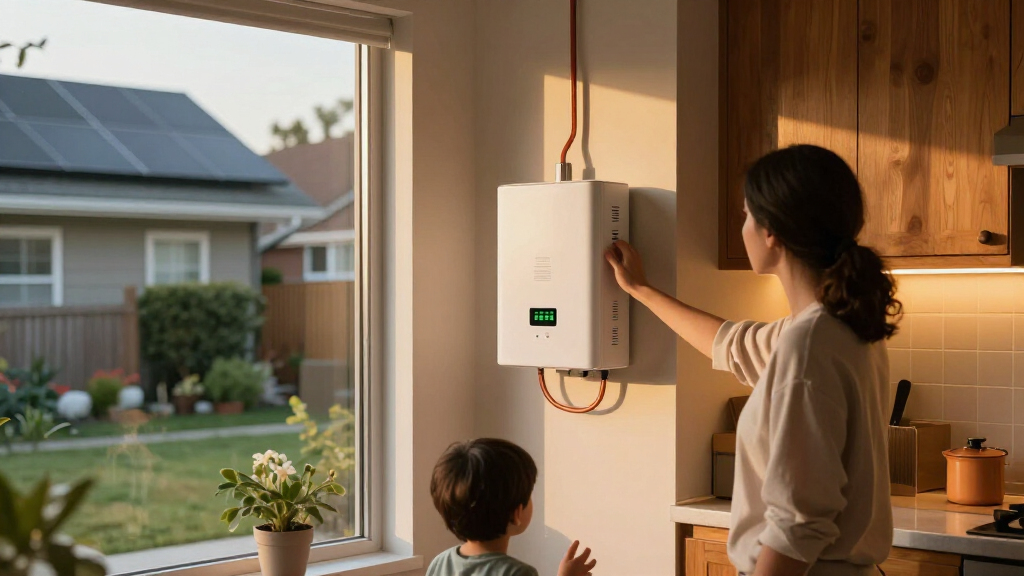
I ranked these options by how directly they can support a whole-house backup plan, not by battery capacity alone. I weighed listed energy storage, inverter or power-station output, solar input, expandability, and whether the product is presented as an integrated system or as a battery that needs other equipment. A larger battery can keep more energy available, but it cannot run household loads without suitable conversion equipment and a compatible backup connection.
The ranking also reflects installation demands and buyer effort. Integrated backup systems and power stations are easier to understand as complete products, while bare batteries and off-grid kits require closer review of voltage, inverter pairing, transfer equipment, panel sizing, and electrical work. I gave more weight to clearly stated system components and a plausible path to home backup, while noting where specifications or system contents should be confirmed with the manufacturer or a qualified installer. The products are not interchangeable: portable units, batteries, and solar kits serve different roles, so their ranking reflects fit for home backup rather than a direct capacity-only contest.
Factors to Consider When Choosing Whole House Solar Battery Backups
Choosing a backup system starts with defining what “whole house” means for your home. A system that keeps lights, refrigeration, and communications running may not also support electric heating, cooking, or vehicle charging. I would work through these questions before choosing between an integrated unit, modular battery bank, or portable power station.
Decide Which Loads Must Stay On
List the circuits you need during an outage rather than assuming every appliance must run at once. Refrigerators, pumps, and HVAC equipment can have starting demands that exceed their normal running draw, so check both figures when available. A backup system may support essential circuits through a dedicated panel even when it cannot power the whole home at full use. Common mistake: estimating needs from monthly electricity use alone, which does not show peak demand or simultaneous appliance use. If you want central air, an electric range, or a well pump, have an electrician review those loads before you select a system. That load plan will help determine whether to prioritize higher inverter output, more stored energy, or both.
Separate Battery Capacity From Power Output
Battery capacity, usually stated in kWh, describes how much energy is stored; inverter output, stated in watts or kW, describes how much power can be supplied at one time. A large battery bank can still fail to start a high-demand appliance if its inverter cannot meet the surge. Conversely, a powerful inverter may serve several loads briefly but run out of stored energy quickly. Check continuous output, surge output, and the loads’ starting requirements rather than comparing capacity figures in isolation. Ask how much usable capacity remains after reserve settings and conversion losses. These checks matter especially when comparing battery-only listings with complete power stations.
Verify the Backup Connection and Installation Path
A battery does not automatically connect safely to a home’s electrical panel. Depending on the system, home backup can require a transfer switch, backed-up-loads panel, gateway, or other approved equipment, along with professional electrical work. Before buying, confirm which components are included and which must be sourced separately. Battery voltage and inverter compatibility matter for modular systems, as do permitted operating configurations and expansion limits. Do not assume a portable outlet can feed household wiring without an approved transfer arrangement. Getting an installer’s input early can prevent a battery purchase that cannot be integrated as planned.
Match Solar Input to Your Recharge Plan
Solar input ratings and panel bundles tell only part of the recharging story. Check the system’s supported voltage and current range, the number of panels it can accept, and whether the listed panels are enough for your expected daily use. Two 200W panels may help recharge a portable unit, but that bundle should not be mistaken for a large rooftop array. Shade, roof orientation, season, and local weather all affect production. If you need backup across several cloudy days, size storage and solar generation around that scenario rather than the best-case panel rating. A grid connection or generator may also be part of a practical recharge plan.
Choose Between Integrated and Modular Equipment
Integrated systems package more of the backup function together, which can make equipment matching simpler and support a more coordinated installation. Modular batteries can offer flexibility in storage size, but the buyer must confirm inverter pairing, communications, protection, and expansion rules. A low component count is not always the lowest-effort route if the system needs custom design or additional hardware. Conversely, an all-in-one unit may limit future changes or require a specific ecosystem. Ask what can be expanded later, whether the same components remain compatible, and what happens if one part needs service. Pay more for integration when reducing setup complexity matters; choose modular gear when you have a clear design and qualified support.
Plan for Safety, Siting, and Ongoing Support
Battery placement affects safety, usable space, noise, and access for service. Check the manufacturer’s temperature limits, indoor or outdoor rating, ventilation requirements, clearance rules, and local code requirements before choosing a location. Also review warranty terms, cycle or throughput limits, monitoring features, and the availability of replacement parts or technical support. A system intended for permanent home backup deserves a more careful service plan than a portable unit used occasionally. Confirm who handles installation and commissioning, since warranty coverage may depend on approved setup. These practical details can matter as much as headline capacity over the life of the system.
Frequently Asked Questions
Can a battery listed with 10 or 16 kWh power my whole house by itself?
No. A battery’s kWh figure describes stored energy, not the equipment needed to supply household power or connect to home circuits. You also need a compatible inverter with enough continuous and surge output, plus an approved way to isolate and back up the home wiring. Runtime depends on which loads are operating and how much usable capacity the system allows. Before buying a battery-only product, ask an installer to confirm the complete parts list and design.
How do I know whether a portable power station can connect to my home panel?
Check the exact model’s approved home integration method, output limits, and required accessories; do not infer panel compatibility from the presence of AC outlets. Some setups can serve selected circuits through manufacturer-approved equipment, while others are intended for appliances plugged directly into the unit. Feeding a home panel requires an approved transfer arrangement and must not create a backfeed hazard. Have a qualified electrician confirm the configuration, local requirements, and the loads it can support before relying on it for an outage.
Is a larger battery or a higher-output inverter more important?
It depends on the outage plan, and many homes need a balance of both. More kWh can extend runtime for modest loads, while more inverter output can run several appliances at once or handle motor startup. If the inverter is undersized, stored energy may be inaccessible to high-demand appliances; if storage is small, a powerful inverter may drain it quickly. Build a load list that includes starting demand and expected hours of use, then size the system around that profile.
Can the included solar panels recharge these systems fast enough during an outage?
Not necessarily. Panel wattage is a rated peak, and actual production changes with sunlight, season, shade, and panel placement. A small included panel bundle may help maintain a portable station but may not replace energy used by household appliances each day. Compare the system’s solar input limits with the total panel capacity you expect to install, and ask for realistic production estimates for your location. For multi-day outages, plan for low-sun conditions and consider whether grid or generator charging is available.
Should I buy a battery-only system now and add an inverter later?
That can work if the battery’s voltage, communications, protection requirements, and expansion rules match a compatible inverter you can source later. The risk is buying a battery that appears suitable by capacity but is not approved or supported with the inverter you choose. Confirm the manufacturer’s compatibility documentation and warranty conditions before purchasing, and price out the full system rather than the battery alone. If a home outage plan is time-sensitive, selecting a complete, installer-reviewed configuration first can reduce delays and mismatched components.
Conclusion
For the strongest fit to a coordinated home backup setup, I would start with the Anker SOLIX E10 as best overall, while confirming that its storage and output suit the home’s loads. The best value for a planned modular build is the GROWATT ALP 5.0L-E2 4-pack, provided you already have—or are budgeting for—a compatible inverter and installation. For a best premium, expandable power-station approach, compare the EF ECOFLOW DELTA Pro Ultra with the Anker E10 based on the home connection and expansion path you need. The best choice for beginners is an integrated system or portable station with a clearly documented home backup method, rather than a battery-only listing. For specific needs, choose the ECO-WORTHY off-grid kit for a system-oriented off-grid package, a Jackery bundle for portable backup with included panels, or a Dawnice/Growatt battery bank when a qualified installer has confirmed the rest of the system. Match the equipment to your actual circuits, installation plan, and recharge needs before deciding.