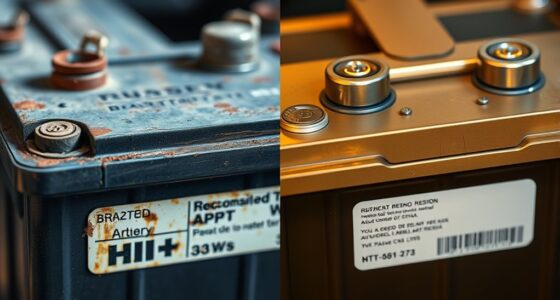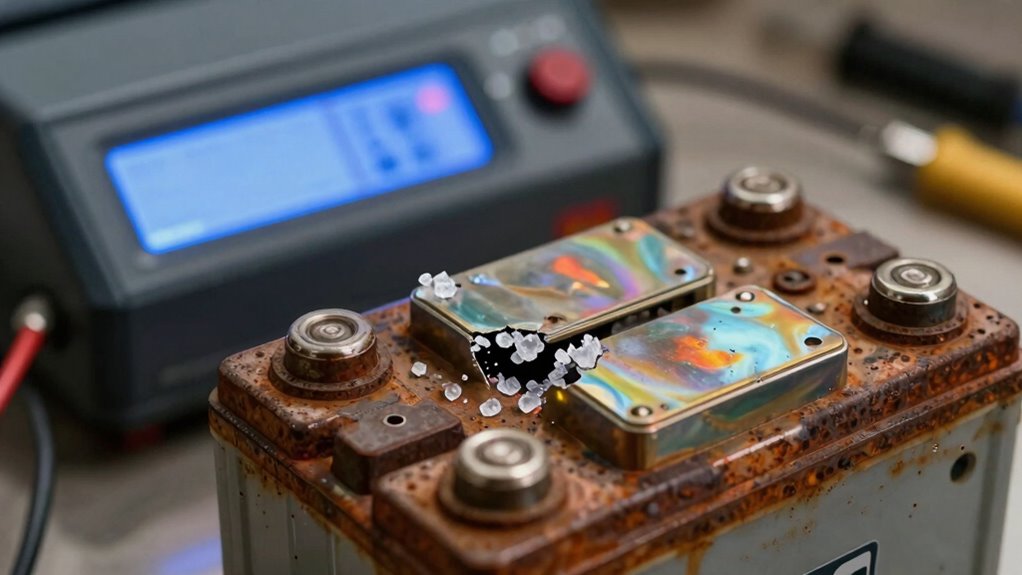

Desulfation can help older batteries by breaking down lead sulfate crystals, which improves their performance and may restore some lost capacity. While it won’t guarantee a complete fix, you can expect a noticeable boost if your battery’s condition is mild. This process is particularly beneficial if you catch sulfation early and maintain proper charging habits afterward. Interested in how to choose the right equipment for the best results? There’s more to discover about effective desulfation strategies.
Key Takeaways
- Desulfation can partially restore capacity in older batteries but may not fully reverse severe sulfation effects.
- Effectiveness is influenced by the battery’s age, condition, and the extent of sulfation present.
- Regular maintenance and proper charging habits are crucial for maximizing desulfation benefits.
- Desulfation should be viewed as a temporary solution, not a permanent fix for battery issues.
- Early intervention with desulfation can extend the usable life of mildly sulfated batteries.
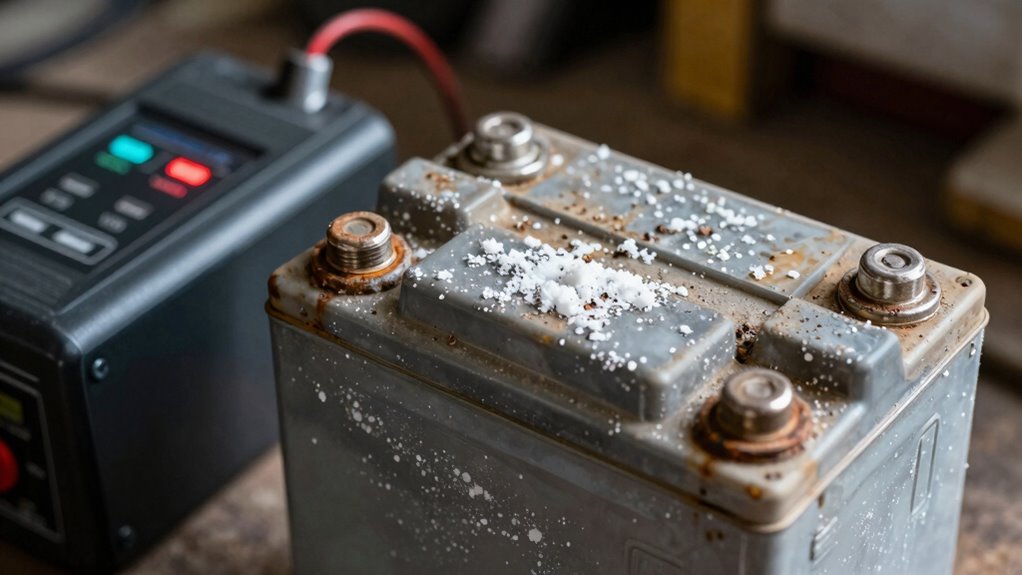
As your older battery starts to show signs of decline, you might wonder if there’s a way to restore its performance. You may have heard about the desulfation process and its potential benefits for aging batteries. This technique aims to reverse the buildup of lead sulfate crystals that form on the battery plates, which can greatly hinder its efficiency. Understanding how this process works and what it can realistically do for your battery can help you decide if it’s worth pursuing.
When a battery sits idle or isn’t fully charged, lead sulfate crystals develop, reducing its capacity and overall performance. The desulfation process uses specialized chargers or devices to apply a controlled pulse or high-frequency current. This approach can break down those stubborn sulfate deposits, allowing the battery to regain some of its lost capacity. While it might sound like a magic fix, the reality is a bit more nuanced.
You should know that desulfation isn’t a guaranteed solution for every battery. The effectiveness largely depends on the battery’s age, condition, and the extent of sulfation. If your battery is severely degraded, the desulfation process may only yield minimal improvements. However, if your battery shows early signs of sulfation, you could experience a noticeable boost in performance, extending its battery longevity. Additionally, understanding the sulfation process can help you better evaluate its potential benefits for your specific situation.
It’s essential to manage your expectations. While desulfation can help restore a degree of functionality, it’s not a permanent fix. Regular maintenance and proper charging habits play a considerable role in prolonging battery life. After undergoing desulfation, you’ll still need to be mindful of how you use and charge your battery to keep it in good shape.
In practical terms, if you decide to explore the desulfation process, make sure you use a reputable device designed for this purpose. Cheap alternatives may not deliver the results you’re looking for and could even damage the battery further. Always prioritize safety and follow the manufacturer’s guidelines to minimize risks.
Ultimately, the desulfation process can serve as a useful tool in your battery maintenance arsenal. It’s certainly worth considering for older batteries that are beginning to falter. By addressing sulfation issues proactively, you can breathe new life into your battery, allowing it to serve you a little longer before it’s time to look for a replacement.

MOTOPOWER MP00205A 12V 800mA Automatic Battery Charger, Maintainer, Trickle and Desulfator
- Versatile Battery Charger: Charges, maintains, desulfates 12V batteries
- Automatic Sulfation Detection: Detects and desulfates batteries automatically
- Energy Efficient & Safe: Zero standby power, spark-proof connection
As an affiliate, we earn on qualifying purchases.
As an affiliate, we earn on qualifying purchases.
Frequently Asked Questions
How Long Does the Desulfation Process Take?
The desulfation process typically takes anywhere from a few hours to a couple of days, depending on the battery’s condition. You’ll want to monitor it closely. For better battery lifespan, consider incorporating maintenance tips like regular charging and avoiding deep discharges. This will help keep your battery in good shape and maximize the benefits of desulfation. Remember, patience is key during the process for the best results!
Can Desulfation Damage the Battery Further?
Desulfation can potentially damage your battery further, especially if it’s already near the end of its lifespan. Studies show that sulfation causes about 50% of battery failures. If you push the desulfation process too aggressively, you might exacerbate existing issues, leading to reduced capacity or even complete failure. It’s vital to monitor your battery’s condition and approach desulfation carefully to avoid worsening its state. Always weigh the risks against potential benefits.
What Tools Are Needed for Desulfation?
To perform desulfation, you’ll need a few essential tools. A battery charger with a desulfation mode is vital, as it helps break down sulfate crystals. You might also want a multimeter to check voltage levels and a hydrometer to measure electrolyte specific gravity. Additionally, consider using a battery desulfator, which employs specific desulfation techniques. Regular battery maintenance, including cleaning terminals, will enhance overall battery performance and longevity.
How Often Can I Desulfate a Battery?
You can desulfate a battery every few months, depending on its condition. Regular battery maintenance helps prevent sulfation, so check your battery’s performance regularly. If you notice reduced capacity or slow charging, it might be time for desulfation. Just remember, overdoing it can harm the battery, so aim for a balanced approach. By keeping an eye on your battery, you’ll extend its life and improve overall performance.
Are There Specific Battery Types That Desulfation Works Best On?
Desulfation works best on lead acid batteries, particularly deep cycle batteries. These types often accumulate sulfate crystals, which desulfation can help break down. If you’ve got a lead acid or deep cycle battery showing signs of sulfation, using a desulfation charger may improve its performance and lifespan. However, keep in mind that results can vary, and it won’t bring a dead battery back to life every time. Regular maintenance is key!
Conclusion
To summarize, desulfation can greatly extend the life of older batteries, revitalizing their performance and saving you money. For instance, a study showed that after desulfation, a 5-year-old lead-acid battery regained 80% of its original capacity, allowing the owner to use their equipment without the expense of a new battery. By investing time in this process, you not only enhance battery efficiency but also contribute to a more sustainable approach to energy use.