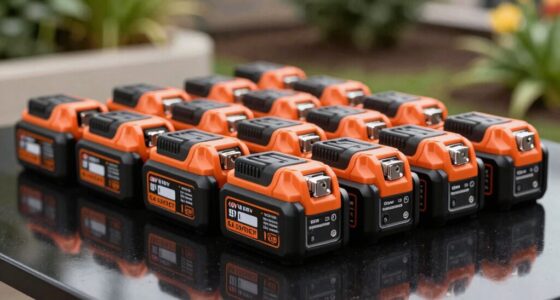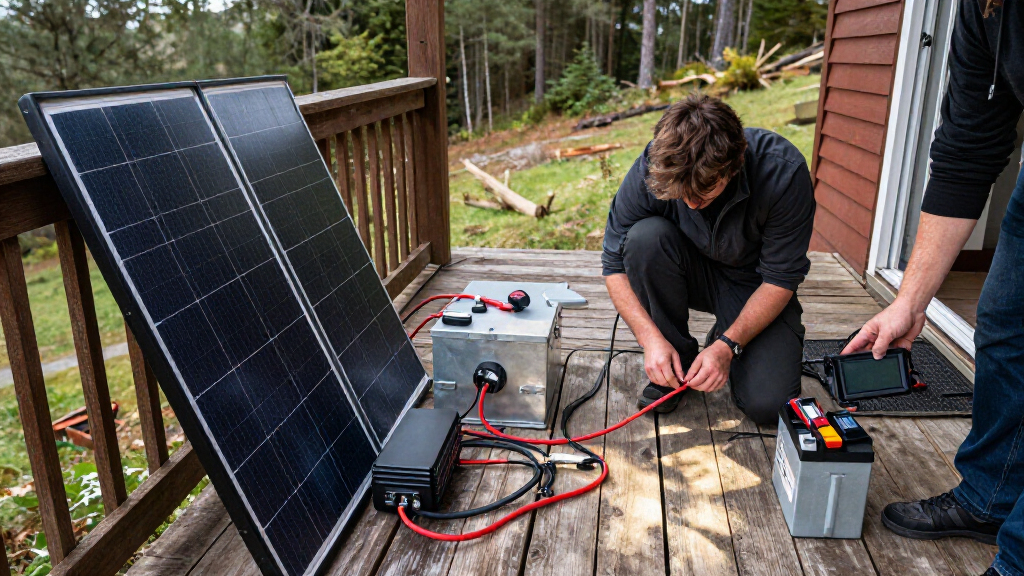

This checklist is for anyone assembling an off-grid power setup from solar panels, batteries, and power-management components. It can help you review the main equipment slots before choosing a system that fits your own loads and installation.

Get backup power and energy gear delivered free with Prime
- Fast, free delivery on millions of items
- Prime Video, Amazon Music and more included
- Member-only deals all year
The sections follow the path from solar collection through charge control and storage to power conversion, circuit isolation, and battery monitoring. Each pick is listed under its component type so you can compare what belongs in each part of the setup.
Use the notes to check product specifications against your system plan, especially voltage and current compatibility, wiring, and installation requirements. Confirm that connected components are designed to work together before purchasing or wiring them.
Portable solar panels
Solar panels provide the energy input for a setup that relies on sunlight, so this slot matters when you are planning how to recharge your battery system. The listed pick is a Jackery HomePower 3600 Plus with two 200W solar panels. Its name also gives a capacity figure of 3584 Wh and a 3600 designation, but the supplied product name does not establish the full system specifications or compatibility details.
A common buying mistake is treating a panel’s wattage or a product’s capacity as proof that it will connect directly to the rest of the system. Check the panel output, connection type, and charging requirements against the power station or charge controller you intend to use. Confirm the included panel count and ratings, and make sure the arrangement suits your available installation space and expected use. If you plan to combine this pick with separately selected components, verify that the manufacturer supports that configuration and that the voltage and input limits align.
What to look for:
- Panel wattage and included panel count
- Output connectors and cable requirements
- Charging input limits of the intended equipment
- Available mounting or placement space
- Compatibility with the rest of the system
Jackery HomePower 3600 Plus with 2 x 200W Solar Panels – 3584 Wh, 3600 W AC Outp

The Jackery HomePower 3600 Plus is a high‑capacity portable power station delivering up to 3600 W (7200 W in parallel) and 3584 Wh of energy, expandable to 21 kWh per unit. It offers rapid charging—full charge in as little as 2 hours via hybrid AC/DC—and comes with wheels and a telescopic handle for easy mobility.
Pros:
- High continuous power output (3600 W) suitable for heavy appliances.
- Fast charging capability – full charge in as little as 2 hours.
- Portable design with wheels and telescopic handle for easy transport.
- Long battery lifespan with 6,000 cycles and robust thermal safety.
Cons:
- Heavy unit weight (77 lb) may limit portability for some users.
- Solar panels are shipped separately, requiring additional purchase or coordination.
Best for: buyers considering the listed Jackery bundle
Not ideal for: systems that need independently verified component matching
Bottom line: Check the bundle’s connections and charging limits against the equipment you plan to use.
MPPT charge controller
A charge controller manages the connection between solar input and a battery bank, making compatibility central to this slot. The Renogy Rover listing specifies MPPT and support for 12, 24, 36, and 48V systems, along with a 100A designation. Those details are useful starting points, but they do not by themselves establish suitability for every panel arrangement or battery.
A frequent mistake is matching only the controller’s nominal battery voltage while overlooking solar input limits, current capacity, and configuration requirements. Before choosing it, compare the controller documentation with the panels’ electrical characteristics and the battery bank’s voltage and charging requirements. Check any limits for series or parallel panel arrangements, wiring, and protective equipment. If the system voltage may change later, verify that the controller supports the intended configuration and that all connected components remain compatible. Follow the installation guidance for cable sizing and protection rather than inferring those details from the product title.
What to look for:
- Supported battery voltages
- Solar input voltage and current limits
- Battery chemistry and charging settings
- Panel arrangement requirements
- Wiring and protection guidance
Renogy Rover MPPT Solar Charge Controller 100A 12/24/36/48V

The Renogy Rover MPPT Solar Charge Controller offers up to 99.9% efficiency, supporting 12V to 48V systems with advanced charging technology for lead-acid and lithium batteries. It features waterproof housing, lightning protection, remote monitoring via Bluetooth, and automatic system detection, making it suitable for RVs, marine, and off-grid applications.
Pros:
- High efficiency MPPT technology maximizes power harvest
- Supports multiple battery types including lithium and lead-acid
- Remote monitoring via Bluetooth app
- Robust waterproof and vibration-resistant design
Cons:
- Bluetooth module sold separately
- Complex setup may require technical knowledge
- Relatively high cost compared to basic controllers
Best for: systems designed around a supported battery voltage
Not ideal for: setups whose panel limits have not been checked
Bottom line: Match the controller’s documented limits to both the solar array and battery.
Pure sine wave inverter
An inverter converts battery power into AC power for compatible equipment, so its output and connection requirements affect what a system can run. The listed Renogy pick is described as a 3000W pure sine wave inverter with a UPS transfer switch. Those labels point to features to verify in the documentation; they do not specify every operating limit or installation requirement.
A common mistake is assuming the headline wattage alone determines whether an inverter will handle a particular appliance. Check continuous and surge output ratings against the loads you expect to run, including any startup demand. Confirm the AC output, battery voltage requirements, and transfer-switch behavior suit your application. Also review wiring, overcurrent protection, grounding, and ventilation guidance for the planned installation. If the inverter is intended to work with the listed 48V battery, confirm that exact model’s supported input range and required connections before pairing them. Use the manufacturer’s instructions to verify the complete system design.
What to look for:
- Continuous and surge output ratings
- Battery input voltage range
- AC output and transfer-switch behavior
- Load startup requirements
- Installation and protection instructions
Renogy 3000W Pure Sine Wave Power Inverter with UPS Transfer Switch and Bluetoot

This 12V inverter converts battery power to 120V AC and provides 3000W output with up to 6000W surge power. It includes an automatic transfer switch, Bluetooth app monitoring, and a wired remote, with built-in voltage, current, and short-circuit protections.
Pros:
- Automatic transfer between utility AC and inverter power
- Bluetooth app monitoring and wired remote control
- Pure sine wave output with over 92% efficiency
- Includes voltage, current, and short-circuit protections
Cons:
- Requires a 12V DC power source
- Has only one AC outlet
Best for: buyers who need an inverter with a stated transfer switch
Not ideal for: loads whose startup demands exceed the documented output
Bottom line: Compare appliance demands and battery requirements with the inverter specifications.
Deep cycle battery
The battery stores energy for use when solar input is unavailable, so its voltage, capacity, and charging requirements shape the rest of the system. The supplied pick is named as a 48V 100Ah lithium LiFePO4 battery and states 5.12 kWh. These figures provide a basis for comparison, but usable capacity, discharge limits, and supported charging settings should be confirmed from the product documentation.
A common buying mistake is selecting a battery by capacity alone without checking whether the controller and inverter support its voltage and chemistry. Confirm the exact battery model’s operating limits, charging profile, and any requirements for parallel or series connections. Check current limits against the inverter and charge controller, and verify that the intended system design uses the battery within the manufacturer’s guidance. For sizing, estimate the loads and desired runtime rather than assuming the stated capacity translates directly into available energy for every use. Review physical dimensions and connection details for the planned installation space.
What to look for:
- Nominal voltage and stated capacity
- LiFePO4 charging profile and limits
- Continuous and peak discharge current
- Permitted battery configurations
- Dimensions and connection requirements
48V 100Ah Lithium LiFePO4 Battery – 5.12kWh High-Capacity Home Energy Storage wi

This 48V 100Ah LiFePO4 battery offers 5.12kWh of reliable energy, ideal for solar systems, home backup, and off-grid applications. It features advanced safety protections, smart connectivity, and scalability for expanding energy needs, making it suitable for residential energy storage.
Pros:
- High-capacity 5.12kWh energy storage suitable for solar and backup power
- Long-lasting with over 6000 deep cycles
- Smart BMS provides comprehensive safety and system protection
- Expandable system supporting up to 16 units for larger energy needs
Cons:
- Requires compatible inverter for optimal performance
- Installation may require technical expertise
- Price not specified
Best for: systems planned around a compatible 48V battery
Not ideal for: setups that have not confirmed current and charging limits
Bottom line: Verify the battery’s documented limits against the controller, inverter, and loads.
DC circuit breaker
A DC disconnect or breaker provides a way to isolate a circuit and may also provide overcurrent protection when the device is correctly selected and installed. The listed product name describes a 400 Amp, three-pole circuit breaker with a knife switch and references backup generators. The name alone does not establish its ratings for a particular DC voltage, interrupt capacity, or intended circuit.
A serious selection mistake is choosing a breaker by its ampere designation without confirming voltage rating, fault-current capability, conductor size, and application. Check the manufacturer’s specifications for DC use and the exact system voltage, as well as whether the poles and switching arrangement suit the wiring plan. Confirm that the device is intended for the circuit’s current and installation environment, and that the required protection coordination is addressed. Follow applicable electrical requirements and manufacturer instructions; high-current battery circuits warrant careful component selection and installation.
What to look for:
- DC voltage rating for the intended circuit
- Interrupt and fault-current ratings
- Pole configuration and switching method
- Conductor and terminal compatibility
- Installation and protection requirements
400 Amp Disconnect Knife Switch 3-Pole Circuit Breaker Backup Generator

This 400A 3-pole knife switch features two positions with 9 terminals, suitable for AC or DC applications. It provides a reliable disconnect solution for backup generators and electrical systems.
Pros:
- High current capacity suitable for heavy-duty applications
- Versatile for AC and DC systems
- Reliable disconnect switch for backup generators
Cons:
- Limited information on durability and material quality
- No detailed installation instructions provided
Best for: buyers whose system matches its verified ratings
Not ideal for: circuits without confirmed voltage and fault-current data
Bottom line: Confirm DC ratings and circuit suitability before selecting this disconnect.
Battery monitor shunt
A battery monitor shunt measures current flowing into and out of a battery system, helping users track system activity. The LiTime listing states 500A Bluetooth monitoring for 8V–120V systems. Those range and current figures are useful details to compare, but the product documentation should confirm the exact measurement functions, display or app behavior, and installation requirements.
A common buying mistake is assuming a monitor’s voltage range and current rating guarantee compatibility with any battery bank. Check the shunt’s maximum continuous and peak current limits against the system, and verify that its voltage range covers the battery configuration. Confirm how the monitor connects to the battery and whether the supplied components support the planned installation. Review setup instructions for calibration and configuration so readings correspond to the actual battery capacity and system wiring. Bluetooth features may depend on a phone or app, so verify the supported setup if remote viewing matters.
What to look for:
- Supported voltage range
- Continuous and peak current limits
- Shunt wiring and included hardware
- Setup and capacity configuration
- Bluetooth and app requirements
LiTime 500A Bluetooth Battery Monitor for 8V-120V Systems

The LiTime 500A Bluetooth Battery Monitor allows real-time tracking of battery parameters via a mobile app, supporting various battery types and voltages. It offers customizable alerts, historical data analysis, and reliable protection features for RV, marine, and backup systems.
Pros:
- Real-time monitoring via mobile app
- Supports multiple battery types and voltages
- Customizable alerts for early issue detection
- Provides historical data for performance analysis
Cons:
- Requires smartphone app for full functionality
- Limited to 1-year warranty
Best for: buyers seeking a shunt monitor for a compatible system
Not ideal for: installations above its verified voltage or current limits
Bottom line: Match the shunt rating and setup requirements to the battery system.
Build the setup one connection at a time, checking each component’s specifications and installation instructions as you go. With careful matching and a clear plan, this checklist can help you make informed choices for your off-grid power project.
Halloween Picks

MGparty 14.5 ft Halloween Inflatable Walk-In Pumpkin House with LED Lights

JOYIN 5-Foot Halloween Animatronic Drinking Skeleton

Gemmy Bluey Family Halloween Inflatable Scene, 5.5 ft Lighted Yard Decoration
As an affiliate, we earn on qualifying purchases.