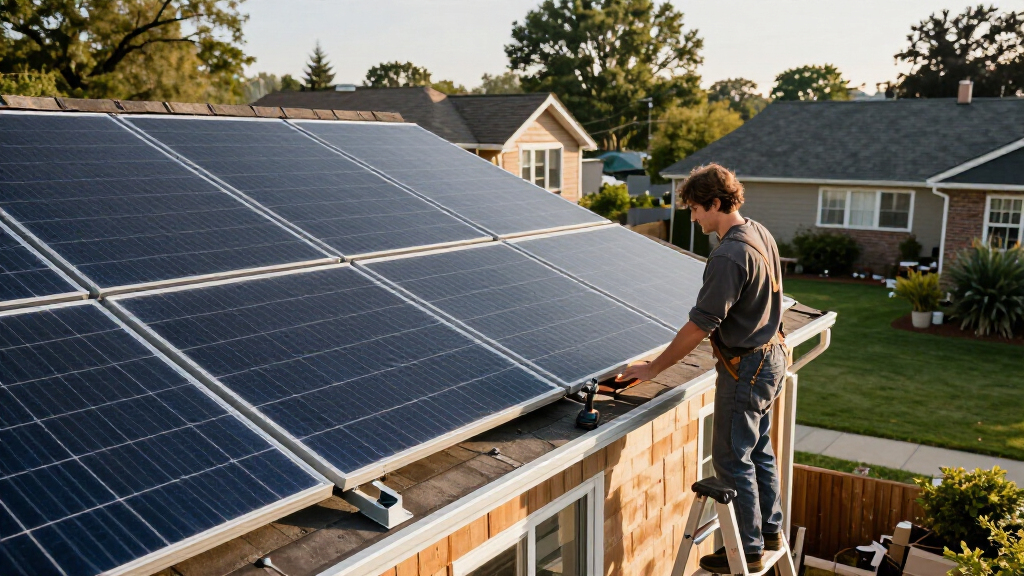
Choosing a solar panel kit for a home comes down to more than the inverter’s headline wattage: the panels determine how much energy you can collect, the batteries determine how much you can store, and the installation determines whether the system fits your property and electrical needs. I’ve ranked these four kits by how clearly their panel, storage, and inverter capacities match a practical home use case. The ECO-WORTHY 10.62kW kit leads for households seeking substantial generation and storage, while the 10kW kit with a 16.1kWh battery is a more restrained whole-home-oriented option. For a smaller off-grid setup, the 1200W kit offers a more approachable scale. The central tradeoff is straightforward: larger systems provide more capacity but bring heavier equipment, more involved installation, and greater planning demands.
Key Takeaways
- The 10.62kW-panel kit pairs the largest stated PV capacity with 32.2kWh of storage, making it the strongest match here for substantial off-grid household demand.
- The 2950W-panel kit has the same 10kW inverter class as the largest system but half its stated battery storage, a useful distinction for buyers balancing runtime and system scale.
- The 2340W-panel kit combines a 10kW inverter with two 48V 100Ah batteries; its inverter rating should not be mistaken for the amount of energy its panels can produce.
- The 1200W kit is the smallest system in this lineup and suits modest loads better than a whole-home plan, despite its 3500W inverter.
- All four are off-grid systems, so buyers should plan around sunlight, usable battery capacity, electrical compatibility, and professional installation rather than assuming a simple grid-tied replacement.
| ECO-WORTHY 10kW Off-Grid Solar Panel Kit with 48V 314Ah Battery and 10kW Inverter |  | Best Overall for High-Demand Off-Grid Homes | Total PV capacity: 10,620W | Battery capacity: Two 48V 314Ah lithium batteries; 32.2kWh total stated | Inverter: 10,000W continuous; 20,000W peak listed | VIEW LATEST PRICE | See Our Full Breakdown |
| ECO WORTHY 10kW Off-Grid Solar Panel Kit for Home with 48V 314Ah Battery and 10kW Inverter |  | Best for a 10kW Inverter Without the Largest Array | Maximum panel power: 2950W | Battery capacity: 48V 314Ah; 16.1kWh | Inverter: 10,000W continuous; 20,000W peak | VIEW LATEST PRICE | See Our Full Breakdown |
| ECO-WORTHY 10KW Off-Grid Solar System Kit with 2340W Solar Panels, 10KW Inverter, and Lithium Batteries |  | Best for Buyers Prioritizing Inverter Headroom | Total panel power: 2340W | Panel type: Bifacial monocrystalline | Inverter: 10kW | VIEW LATEST PRICE | See Our Full Breakdown |
| ECO-WORTHY 4.68KWH Solar Power Complete Kit 1200W 48V with Lithium Battery and Inverter |  | Best for Smaller Off-Grid Setups | Maximum panel power: 1200W | Battery: 48V 50Ah LiFePO4 | Inverter: 3500W | VIEW LATEST PRICE | See Our Full Breakdown |
| solar panel kits for home | Inverter | Panel dimensions | Battery capacity | Maximum panel power |
|---|---|---|---|---|
| ECO-WORTHY 10kW Off-Grid Solar | 10,000W continuous; 20,000W peak listed | — | Two 48V 314Ah lithium batteries; 32.2kWh total stated | — |
| ECO WORTHY 10kW Off-Grid Solar | 10,000W continuous; 20,000W peak | 89.69 × 44.65 × 1.18 inches | 48V 314Ah; 16.1kWh | 2950W |
| ECO-WORTHY 10KW Off-Grid Solar | 10kW | 58.86 × 26.18 × 1.18 inches | — | — |
| ECO-WORTHY 4.68KWH Solar Power | 3500W | 58.86 × 26.18 × 1.18 inches | — | 1200W |
More Details on Our Top Picks
ECO-WORTHY 10kW Off-Grid Solar Panel Kit with 48V 314Ah Battery and 10kW Inverter
I rank this kit first because it is the only option here that combines 10,620W of stated PV capacity with 32.2kWh of battery storage and a 10kW split-phase inverter. That mix is more persuasive for a home with substantial energy needs than an impressive inverter rating paired with a comparatively modest panel array. Its 18 monocrystalline 590W panels give the system the greatest stated collection capacity in this group, while two 48V 314Ah batteries provide far more stored energy than the other listed configurations.
Compared with the ECO-WORTHY 2950W-panel kit, this is a much larger generation and storage package, not merely a different panel count. It is better suited to buyers seeking a broad off-grid foundation and willing to plan around the physical scale of the equipment. The tradeoff is that a large array needs appropriate roof or ground-mount space, electrical design, and delivery planning. Although the inverter is rated for 10,000W continuous output with 20,000W peak listed in the related configuration details, a household still needs to match its loads and wiring to the system’s documented limits.
I would choose this over the 2340W-panel kit when the priority is more solar input and battery reserve, rather than a lower-capacity array paired with a large inverter. The 1200W kit is a very different, smaller-scale proposition and is easier to imagine for selected loads, but it cannot match this package’s stated generation or storage. Professional installation is strongly worth planning for; this is not a casual plug-in backup unit. I would also confirm the exact included components, mounting hardware, permits, and warranty terms before committing, since those details are not fully established in the supplied specifications.
Pros:- Largest stated solar-array capacity in this comparison at 10,620W.
- 32.2kWh of stated battery storage provides the greatest storage capacity listed here.
- 10kW inverter supports 120V/240V split-phase output for compatible home electrical needs.
- Bluetooth, Wi-Fi, and PC monitoring plus parallel battery expansion support system management and growth.
Cons:- Eighteen large panels and substantial battery equipment demand space and careful delivery planning.
- Professional design and installation may add time and complexity.
- High system capacity makes it a poor fit for modest loads or buyers who do not need extensive off-grid storage.
Best for: Households planning a substantial off-grid system that have room for 18 panels, need significant battery storage, and can arrange qualified installation.
Not ideal for: Small homes, renters, buyers with limited mounting space, or anyone seeking a simple portable or grid-tied kit with minimal electrical planning.
- Total PV capacity:10,620W
- Battery capacity:Two 48V 314Ah lithium batteries; 32.2kWh total stated
- Inverter:10,000W continuous; 20,000W peak listed
- Output:120V and 240V split-phase
- Maximum voltage:500V
- Amperage capacity:100A
Our verdict“I’d choose this as the strongest all-round home option in the group when the property and project plan can support its large array and 32.2kWh battery bank.”
ECO WORTHY 10kW Off-Grid Solar Panel Kit for Home with 48V 314Ah Battery and 10kW Inverter
This package keeps the same broad inverter class as the top-ranked kit but scales back the solar collection and storage: it lists five 590W panels, or 2950W total, and one 16.1kWh 48V 314Ah battery. That distinction is central to the buying decision. A 10kW inverter can serve compatible high-power loads within its limits, but the 2950W panel array is much smaller than the 10,620W array in the first-place kit. Buyers should not read the inverter rating as a promise of comparable daily energy production.
I see this as a better fit for someone who values a substantial inverter and split-phase 120V/240V output but has a more limited solar-field plan or expects to expand the system over time. It also has less stated storage than the 32.2kWh kit, so overnight runtime and cloudy-day reserve require closer attention to actual household consumption. Compared with the 2340W-panel, dual-battery package, this one supplies somewhat more PV capacity and a clearly stated 16.1kWh battery, while keeping the same 10kW inverter class. The 1200W kit is smaller still and is more appropriate for selected loads than broad household demand.
The stated monitoring options—Bluetooth, Wi-Fi, and PC connectivity—can help an owner follow system activity, and battery expansion is listed as supporting up to 15 units in parallel. Those features are useful only if the owner confirms compatibility and plans the electrical system correctly. This is still a sizable off-grid installation with heavy components, and I would not treat the five-panel configuration as an automatic whole-home solution. I’d compare expected daily energy use, local sun exposure, and required backup duration against its panel and battery figures before choosing it over the larger-array leader.
Pros:- 10,000W continuous inverter output with 20,000W peak listed.
- One 48V 314Ah battery provides 16.1kWh of stated storage.
- Five 590W monocrystalline panels offer more stated PV capacity than the 2340W-panel kit.
- Bluetooth, Wi-Fi, PC monitoring, and listed parallel battery expansion.
Cons:- The 2950W panel array is much smaller than the 10,620W array in the top-ranked kit.
- One battery provides half the stated storage of the two-battery 32.2kWh option.
- Professional installation and logistics for large components may be needed.
Best for: A buyer who wants a 10kW-class inverter and 120V/240V split-phase output but does not need the largest panel array or 32.2kWh battery package.
Not ideal for: Households that need the maximum stated solar generation or battery reserve in this lineup, and buyers who expect a 10kW inverter alone to cover any home load indefinitely.
- Maximum panel power:2950W
- Battery capacity:48V 314Ah; 16.1kWh
- Inverter:10,000W continuous; 20,000W peak
- Output voltage:120V/240V
- Panel dimensions:89.69 × 44.65 × 1.18 inches
- Panel materials:Monocrystalline silicon, tempered glass, polymer, and aluminum
Our verdict“I’d pick this when a 10kW split-phase inverter and 16.1kWh of storage suit the plan better than the larger kit’s extra panels and battery capacity.”
ECO-WORTHY 10KW Off-Grid Solar System Kit with 2340W Solar Panels, 10KW Inverter, and Lithium Batteries
This kit pairs a 10kW inverter with 12 bifacial 195W panels totaling 2340W and two 48V 100Ah lithium batteries. Its defining feature is the gap between the inverter’s power rating and the solar array’s much smaller capacity. That can make sense when a household needs the inverter to handle brief or simultaneous loads, but it does not mean the system will collect enough solar energy to run those loads continuously. The description estimates up to 9.36kWh of daily output under optimal sunlight; actual generation depends on location, orientation, shading, and weather.
Compared with the 2950W-panel kit, this system has 610W less stated panel capacity, while both carry a 10kW inverter rating. The two 48V 100Ah batteries are also a different storage configuration from the 16.1kWh battery in that kit; the supplied details do not state the total kWh for these batteries, so I would verify usable storage and compatibility before making a runtime comparison. Against the 10,620W-panel leader, it is a far smaller array and battery package, despite the same headline inverter class.
The 12 bifacial panels and app-based battery monitoring give it a clear place for buyers who care about monitoring and inverter headroom more than maximizing panel capacity. Parallel support for the inverter is listed, with expansion up to 60kW, but expansion plans should be checked against the full system configuration and electrical requirements. I would skip it if the primary goal is high daily household energy production: the panel array is the limiting figure to focus on. The product details also leave warranty information unspecified, and professional setup may be sensible because the system combines a high-power inverter with battery equipment.
Pros:- 10kW inverter rating with 120V/240V output.
- Twelve bifacial panels provide 2340W of stated PV capacity.
- Two 48V 100Ah lithium batteries are included.
- Bluetooth and Wi-Fi app monitoring, with listed inverter parallel support.
Cons:- The 2340W array is smaller than both 2950W and 10,620W alternatives in this lineup.
- Battery capacity is stated in amp-hours, but total kWh and usable storage are not supplied.
- Warranty details and full installation requirements are not specified in the provided information.
Best for: A technically prepared off-grid buyer who values a 10kW inverter, monitoring, and a modular system while accepting a 2340W solar array.
Not ideal for: Anyone shopping primarily for the largest solar generation capacity or clearly stated battery-energy reserve, or buyers unwilling to verify battery specifications before purchase.
- Total panel power:2340W
- Panel type:Bifacial monocrystalline
- Inverter:10kW
- Inverter output voltage:120V/240V
- Battery configuration:Two 48V 100Ah lithium batteries
- Estimated daily energy:Up to 9.36kWh under optimal sunlight, per product description
- Panel dimensions:58.86 × 26.18 × 1.18 inches
Our verdict“I’d consider this for inverter headroom and monitoring, but I would verify its usable battery energy and accept that its 2340W array trails the larger-panel options.”
ECO-WORTHY 4.68KWH Solar Power Complete Kit 1200W 48V with Lithium Battery and Inverter
This is the clear small-system pick in the group: it supplies 1200W of solar panels, a 3500W inverter, and a 48V 50Ah LiFePO4 battery. The product description estimates roughly 4.68kWh per day under optimal sunlight, which makes it a more plausible match for selected household circuits, a small cabin, or modest off-grid use than for running an entire home. Its lower panel capacity is the key constraint; the 3500W inverter can deliver power to compatible loads, but it cannot make up for limited energy collection or storage.
Compared with the two 10kW-inverter kits, this package is more compact in overall ambition and avoids presenting a large inverter as a stand-in for a full household energy plan. It also has less stated battery capacity than the 16.1kWh and 32.2kWh options. The benefit is a more manageable scale for buyers who want to serve specific loads and have a smaller installation area. Six 195W bifacial panels with N-type cells are listed, and the LiFePO4 battery is described as having over 4000 cycles, though day-to-day output still depends on sun, placement, and system setup.
The 3500W inverter includes Wi-Fi monitoring and supports parallel connection, which offers some room for system planning. I would still check the intended loads against the battery’s energy capacity and the inverter’s surge limits before treating it as household backup. This kit needs installation knowledge too; “smaller” does not mean wiring and battery configuration can be ignored. For buyers who need a broad off-grid home supply, I’d move up to one of the higher-capacity panel and battery packages. For modest requirements, this is the most focused entry in the lineup, with a distinctly lower ceiling on sustained energy.
Pros:- Six bifacial 195W panels provide 1200W total stated panel power.
- 48V 50Ah LiFePO4 battery is described as supporting over 4000 cycles.
- 3500W inverter includes Wi-Fi monitoring and parallel connection support.
- Smaller system scale suits selected loads better than the 10kW-inverter packages.
Cons:- 1200W of panel capacity and 48V 50Ah storage limit sustained household use.
- Estimated daily generation depends on optimal sunlight and will vary by site conditions.
- Installation and setup still require technical care despite the smaller system scale.
Best for: Owners of small homes, cabins, workshops, or selected household circuits who need a modest off-grid system and can plan loads around limited storage.
Not ideal for: A household seeking whole-home off-grid operation, long backup duration, or high daily energy production from a larger panel array.
- Maximum panel power:1200W
- Battery:48V 50Ah LiFePO4
- Inverter:3500W
- Estimated daily generation:Approximately 4.68kWh under optimal sunlight, per product description
- Output voltage:48V system
- Number of cells:18 listed
- Panel dimensions:58.86 × 26.18 × 1.18 inches
Our verdict“I’d choose this for modest off-grid loads and a smaller system plan, not as a substitute for the higher-generation, higher-storage kits above it.”
How We Picked
I compared these kits as home-oriented off-grid systems, rather than ranking them by a single large wattage figure. I gave the most weight to the balance between solar-panel capacity, stated battery storage, and inverter output, since those components answer different questions: how much power the system may collect, how much energy it can hold, and what loads it can serve at a given moment. A high inverter rating alone does not mean a kit can supply a large household through the night or replenish its battery quickly.
I also looked at whether the supplied details make the intended use clear. Split-phase 120V/240V output matters for households with compatible equipment, while monitoring and parallel expansion can help owners manage or grow a system. I distinguished the products by their actual stated configurations: the two kits with 590W panels are not the same package, and the 2340W-panel system should not be confused with a 10kW solar array simply because its inverter is rated at 10kW.
Finally, I treated installation effort and information gaps as real buying factors. These kits involve substantial electrical equipment and batteries, so professional planning may be appropriate; I did not assume a homeowner can install them without checking local rules and system instructions. Where the supplied product details do not state a specification, I avoid filling it in. The order favors the most complete match for higher household demand, then separates lower-scale and specialized options by who is likely to benefit from their particular panel-to-storage balance.
Factors to Consider When Choosing Solar Panel Kits For Homes
I would choose among these kits by working from household energy needs outward, rather than starting with the biggest inverter number. The four options span a small 1200W panel kit to a 10,620W array with 32.2kWh of storage, so they serve very different projects. The details below help separate panel generation, battery runtime, inverter capacity, and installation fit.
Start with the energy your home uses
List the appliances and circuits you intend to run, then estimate their energy use over a full day. A device’s running wattage describes power at a moment; daily energy, usually expressed in kilowatt-hours, describes how much electricity it consumes over time. These are not interchangeable. A large inverter can handle a high instantaneous load if the system supports it, but a small solar array may not replenish the battery fast enough to serve that load for long.
That distinction separates the 10kW-inverter packages from the 1200W kit. The 10kW rating may be relevant to simultaneous or high-power loads, while the 1200W kit is better framed around selected circuits and modest use. I would use appliance start-up demands, daily energy needs, and backup duration to set a target before comparing packages. For a whole-home plan, an electrician or solar installer can help account for loads that are easy to miss, such as pumps, heating equipment, and cooking appliances.
Compare panel capacity with battery storage
Panel capacity affects how much electricity a system may collect in good conditions; battery capacity affects how much energy it can store for later. In this comparison, the 10,620W kit has both the largest listed array and the largest stated battery bank at 32.2kWh. The 2950W-panel kit has 16.1kWh of stated storage, while the 2340W kit lists two 48V 100Ah batteries but does not provide a total kWh figure. The 1200W kit lists a 48V 50Ah battery.
Do not assume panels will operate at their nameplate capacity throughout the day or that every listed battery kilowatt-hour is usable. Sun angle, shade, weather, panel direction, conversion losses, battery limits, and reserve settings all affect real output. Ask how much battery energy is usable and what charging conditions the estimate assumes. The 2340W kit’s stated daily output estimate is explicitly tied to optimal sunlight, so it should not be treated as a guaranteed daily yield.
Match inverter output to your electrical service
Inverter power helps determine which loads can operate at once, while voltage and phase determine whether the output matches the equipment and wiring in your home. The two 590W-panel ECO-WORTHY systems list 120V/240V split-phase output, and the 2340W-panel kit also lists 120V/240V output. Verify the exact inverter configuration and supported loads with the manufacturer and a qualified installer rather than assuming every appliance is compatible.
Check continuous output, surge or peak output, and the starting demand of motors and compressors. A peak figure is typically not the same as power the inverter can supply continuously. Buyers comparing the 10kW models should also look beyond the shared inverter class: the arrays and battery capacity differ sharply. A larger inverter does not erase those differences or guarantee all household circuits can run at once.
Plan for installation, space, and local requirements
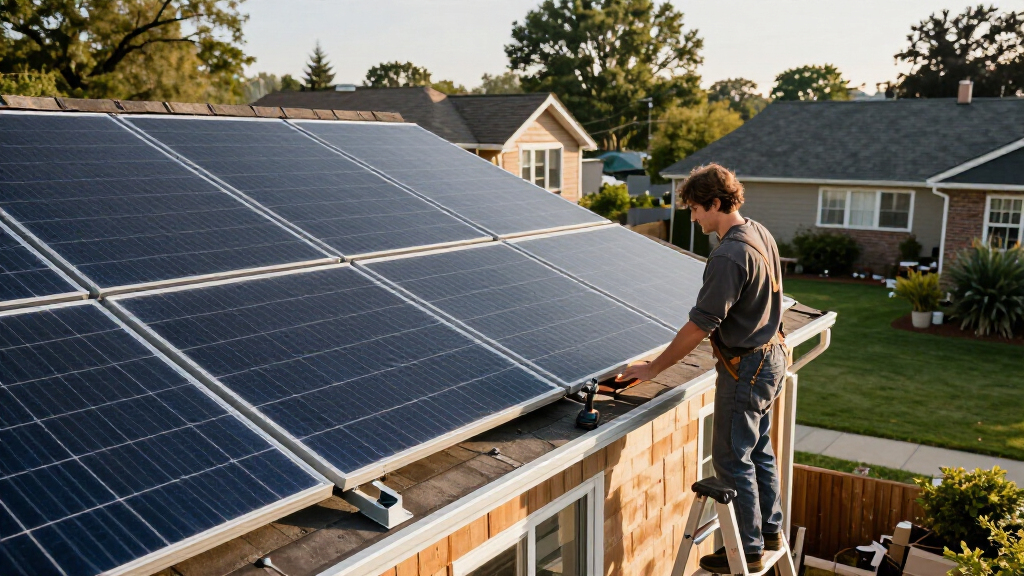
These are off-grid kits with panels, batteries, and inverters—not simply panels that plug into an outlet. Plan where panels will go, how cables will be routed, where batteries and inverter equipment can be installed, and how the system will be protected and serviced. The 18-panel, 10,620W kit requires considerably more panel area and equipment planning than the six-panel, 1200W kit. Roof structure, shading, ground-mount options, delivery access, and battery placement can change which package is practical.
Electrical permits, inspections, building rules, and utility requirements vary by location and project. I would confirm local rules and installation instructions before ordering and use a qualified professional for system design and wiring where appropriate. Also verify what is included in the kit—such as mounting hardware, cables, protection equipment, and documentation—because the supplied product information does not establish every installation detail. Request written warranty terms and support information before purchase, especially for a large system intended to serve a home.
Choose monitoring and expansion for a real plan
Bluetooth, Wi-Fi, PC, and app monitoring can make it easier to follow battery status and system performance, but monitoring does not increase production or storage. Its value depends on what information the system reports and whether the connection works where the equipment will be installed. Ask which measurements and alerts are available, and whether a network connection is required for the features you expect to use.
Parallel expansion can help a system grow, but compatibility, wiring, inverter limits, and battery matching matter. The two 590W-panel products list support for additional batteries, while the 2340W-panel kit lists inverter parallel support. Treat those claims as planning options to verify, not as a guarantee that any added component will work. If future expansion is important, confirm the permitted configurations and whether the additional equipment must match the original system.
Frequently Asked Questions
Can these solar panel kits run an entire home?
They may support some or many household loads, but the answer depends on the home’s energy use, appliance starting demands, panel production, battery storage, and electrical design. The two 10kW-inverter systems have higher inverter output than the 1200W kit, yet their panel and battery configurations differ substantially. I would have a qualified installer compare the intended circuits and daily energy use with the system’s documented continuous output and usable storage before treating any kit as whole-home power.
What is the difference between inverter watts and solar panel watts?
Inverter watts describe the power the inverter can deliver to loads, subject to its operating limits. Panel watts describe the solar array’s rated power under specified test conditions. A 10kW inverter paired with a 2340W or 2950W array does not collect solar energy like a 10kW array; it can still have value for serving certain loads, but available energy is limited by solar production and battery storage. I compare all three figures—panel capacity, inverter output, and battery energy—rather than judging a kit by one rating.
How much battery storage should I look for?
Size storage around the loads you want to run after sunlight fades, the number of hours or days of backup you need, and the reserve you want to keep. The 10,620W kit lists 32.2kWh, the 2950W-panel kit lists 16.1kWh, and the smaller kits provide lower or less fully specified storage. Ask the supplier for usable battery energy, discharge limits, and recommended reserve settings; a stated battery capacity alone does not tell you how much energy will be available to your appliances.
Are these kits suitable for a grid-connected home?
The products are described as off-grid systems, so I would not assume they can connect to a utility grid or operate as grid-interactive backup without the correct equipment, approvals, and configuration. Grid connection can involve interconnection rules, anti-islanding protections, inspections, and utility approval. Confirm the intended operating mode with the manufacturer and a local qualified installer before buying, especially if you want to export electricity or keep grid service as backup.
Should I install a home solar kit myself?
Installation involves electrical work, batteries, inverter configuration, panel mounting, and local code requirements. The larger kits in this lineup are specifically described as better suited to professional installation, and even the smaller kit needs careful setup. I would check local permit rules and the manufacturer’s instructions, then use a qualified solar or electrical professional when the work exceeds your training or local requirements. Confirm the scope of included components and warranty conditions before arranging installation.
Conclusion
For a household planning a substantial off-grid system with room for a large array, I’d choose the 10,620W ECO-WORTHY kit for its combination of 32.2kWh of stated battery storage and the largest panel capacity in this group. If a 10kW inverter and 16.1kWh of storage are a better fit than the largest package, the 2950W-panel kit offers a more limited array and battery bank. Buyers who prioritize inverter headroom and monitoring, while accepting a smaller 2340W array and verifying battery energy, may prefer the 12-panel kit. For cabins, workshops, or selected home circuits, I’d start with the 1200W kit and keep expectations aligned with its modest generation and storage. In every case, match the kit to actual loads, site conditions, and installation requirements before deciding.