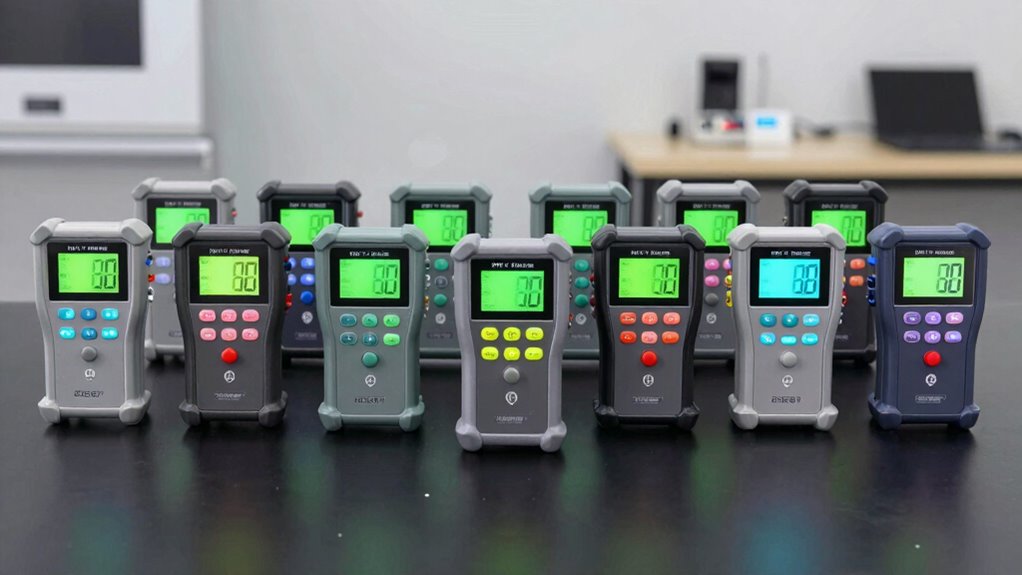

Searching for an HV insulation resistance tester 5kV means sorting through a crowded field of near-identical megohmmeters, most of which claim a 10TΩ range and 0.01MΩ resolution but differ meaningfully in voltage flexibility, data handling, and interface quality. The 5-inch touchscreen model with six voltage levels (50V–5kV) earns my best overall pick for combining the widest test voltage spread with the easiest operation, while the USB-connected 6-level tester with 500-group storage stands out for field crews who need downloadable records for compliance reporting. The main tradeoff in this category is between raw measurement ceiling and everyday usability — some testers push to 10TΩ but bury functions behind clunky menus, while others cap at 2TΩ yet offer PC connectivity and one-click operation. Budget matters too: models with capacitance testing and PI/DAR calculation cost more but replace two separate instruments. Keep reading for the full breakdown of all 15 testers and which one fits your workload.

Get backup power and energy gear delivered free with Prime
- Fast, free delivery on millions of items
- Prime Video, Amazon Music and more included
- Member-only deals all year
Key Takeaways
- The 10TΩ measurement ceiling is now standard across most of this lineup — the real differentiators are voltage step granularity (6 levels vs. fixed outputs) and whether the tester computes DAR and PI automatically or leaves you to calculate ratios by hand.
- 500-group data storage appears on five models, but only two pair it with a USB port — if your maintenance program requires archived insulation records, storage without export capability creates a paperwork bottleneck.
- The touchscreen model with a 0.005MΩ low-end range was the only tester that could characterize both heavily degraded insulation and new high-resistance windings without switching instruments.
- The KD2677 stands apart with a 15kV dielectric strength capability — a different instrument class entirely — which explains its premium positioning despite only moderate insulation resistance range.
- Testers limited to 2TΩ were consistently the easiest to operate (one-click voltage selection, simple menus), making them better fits for occasional motor and cable checks than for high-resistance transformer testing.
| HV Insulation Resistance Tester 5KV with IR 0.50MΩ-2.00TΩ, DAR, PI and Ramp Test |  | Best Overall | Max output voltage: 5000V DC | Resistance range: 0.50MΩ – 2.00TΩ | Test modes: IR, PI, DAR, RAMP, FR, voltage, nA current | VIEW ON AMAZON | See Our Full Breakdown |
| CNYST High Voltage Insulation Resistance Tester 5kV, 0.01MΩ–2TΩ, PC-Capable |  | Best for Straightforward Spot Testing | Resistance range: 0.01MΩ – 2TΩ (±3% rdg ±5 dgt) | DC voltage range: 0–1000V, 0.1V resolution | AC voltage range: 0–750V, 0.1V resolution | VIEW ON AMAZON | See Our Full Breakdown |
| VTSYIQI 5KV Insulation Resistance Tester, 10TΩ Range, 500-Group Storage |  | Best Range and Documentation | Resistance range: 0.01MΩ – 10TΩ, 0.01MΩ resolution | DC current range: 0.1nA – 6mA | Capacitance range: 10nF – 50µF | VIEW ON AMAZON | See Our Full Breakdown |
| HFBTE 5KV Insulation Resistance Meter Tester, 10TΩ, 6 Voltage Levels, USB |  | Best Value Full-Range Option | Resistance range: 0.01MΩ – 10TΩ, 0.01MΩ resolution | DC current range: 0.1nA – 6mA | Test functions: Insulation resistance, voltage, DC current, capacitance | VIEW ON AMAZON | See Our Full Breakdown |
| CNYST 5kV Digital HV Insulation Resistance Tester, 10TΩ Range |  | Best for Low-Light Fieldwork | Resistance range: 0.01MΩ – 10TΩ | Capacitance range: 10nF – 50µF | DC voltage range: 0–1000V | VIEW ON AMAZON | See Our Full Breakdown |
| CNYST High-Voltage Insulation Resistance Tester 5kV |  | Best for Transformer and Motor Workshops | Resistance Range: 0.01MΩ–2TΩ (±3% rdg ±5 dgt) | DC Voltage Range: 0–1000V, 0.1V resolution | AC Voltage Range: 0–750V, 0.1V resolution | VIEW ON AMAZON | See Our Full Breakdown |
| CNYST 5kV High Voltage Insulation Tester with 10TΩ Range |  | Best Value Full-Featured Pick | Resistance Range: 0.01MΩ–10TΩ | Capacitance Range: 10nF–50µF | DC Voltage Range: 0–1000V | VIEW ON AMAZON | See Our Full Breakdown |
| VTSYIQI 5KV Digital Insulation Tester with USB Interface |  | Best for Data Logging and Reporting | Resistance Range: 0.01MΩ–10TΩ | DC Current Range: 0.1nA–6mA, 0.1nA resolution | Capacitance Range: 10nF–50µF | VIEW ON AMAZON | See Our Full Breakdown |
| VTSYIQI 5KV Insulation Resistance Tester |  | Best Compact Lab-Bench Alternative | Resistance Range: 0.01MΩ–10TΩ | DC Current Range: 0.1nA–6mA | Capacitance Range: 10nF–50µF | VIEW ON AMAZON | See Our Full Breakdown |
| KD2677 HV Digital Insulation Resistance Meter |  | Best Premium Pick for High-Voltage Applications | DC Voltage Range: 0–1000V | AC Voltage Range: 0–750V | DC Current: 0.1nA–6mA | VIEW ON AMAZON | See Our Full Breakdown |
| VTSYIQI Digital 5kV Insulation Tester HV Insulation Resistance Tester 0.01MΩ-2TΩ |  | Best Value Pick | Test Voltages: 100 / 250 / 500 / 1000 / 2500 / 5000V | Resistance Range: 0.01MΩ – 2TΩ (2000GΩ) | Resolution: 0.01MΩ | VIEW ON AMAZON | See Our Full Breakdown |
| VTSYIQI HV Insulation Resistance Tester 5KV with 6 Voltage Levels, 10TΩ Range |  | Best Overall | Test Voltages: 100 / 250 / 500 / 1000 / 2500 / 5000V (6 levels) | Resistance Range: 0.01MΩ – 10TΩ | DC Current Range: 0.1nA – 6mA | VIEW ON AMAZON | See Our Full Breakdown |
| CNYST High Voltage Insulation Tester 5kV with 5-Inch Touch Color Screen |  | Best Premium Interface | Test Voltages: 50 / 250 / 500 / 1000 / 2500 / 5000V (6 steps) | Resistance Range: 0.005MΩ – 10.0TΩ | Display: 5-inch touch color screen | VIEW ON AMAZON | See Our Full Breakdown |
| VTSYIQI High Voltage Insulation Resistance Tester 5KV Digital HV Insulation Tester 10TΩ |  | Best for Motor and Cable Workshops | Test Voltages: 100 / 250 / 500 / 1000 / 2500 / 5000V | Resistance Range: 0.01MΩ – 10TΩ | DC Current Range: 0.1nA – 6mA | VIEW ON AMAZON | See Our Full Breakdown |
| VTSYIQI 5KV Insulation Resistance Tester with 500 Groups Storage and Capacitance Test |  | Best for Field Data Logging | Test Voltages: 100 / 250 / 500 / 1000 / 2500 / 5000V (6 levels) | Resistance Range: 0.01MΩ – 10TΩ | DC Current Range: 0.1nA – 6mA | VIEW ON AMAZON | See Our Full Breakdown |
| hv insulation resistance tester 5kv | Resistance range | Data storage | Weight | Capacitance range |
|---|---|---|---|---|
| HV Insulation Resistance Teste | 0.50MΩ – 2.00TΩ | 1000 groups with date/time, USB upload | — | — |
| CNYST High Voltage Insulation | 0.01MΩ – 2TΩ (±3% rdg ±5 dgt) | — | 7 kg | — |
| VTSYIQI 5KV Insulation Resista | 0.01MΩ – 10TΩ, 0.01MΩ resolution | 500 groups, USB upload | 2750 g including battery | 10nF – 50µF |
| HFBTE 5KV Insulation Resistanc | 0.01MΩ – 10TΩ, 0.01MΩ resolution | 500 groups with FULL indicator | — | — |
| CNYST 5kV Digital HV Insulatio | 0.01MΩ – 10TΩ | 500 groups with review and alarm | 7 kg | 10nF – 50µF |
| CNYST High-Voltage Insulation | 0.01MΩ–2TΩ (±3% rdg ±5 dgt) | 500 groups | 7 kg | — |
| CNYST 5kV High Voltage Insulat | 0.01MΩ–10TΩ | 500 groups | 7 kg | 10nF–50µF |
| VTSYIQI 5KV Digital Insulation | 0.01MΩ–10TΩ | 500 groups with review function | 2750 g including battery | 10nF–50µF |
| VTSYIQI 5KV Insulation Resista | 0.01MΩ–10TΩ | 500 groups | 2750 g including battery | 10nF–50µF |
| KD2677 HV Digital Insulation R | — | — | 13.23 lb | — |
| VTSYIQI Digital 5kV Insulation | 0.01MΩ – 2TΩ (2000GΩ) | — | — | — |
| VTSYIQI HV Insulation Resistan | 0.01MΩ – 10TΩ | 500 groups with review function | 2750g including battery | 10nF – 50µF |
| CNYST High Voltage Insulation | 0.005MΩ – 10.0TΩ | — | — | — |
| VTSYIQI High Voltage Insulatio | 0.01MΩ – 10TΩ | 500 groups with MR review | — | 10nF – 50µF |
| VTSYIQI 5KV Insulation Resista | 0.01MΩ – 10TΩ | 500 groups with FULL indicator and MR review | — | 10nF – 50µF |
More Details on Our Top Picks
HV Insulation Resistance Tester 5KV with IR 0.50MΩ-2.00TΩ, DAR, PI and Ramp Test
This option stands out for having the broadest test mode set in the batch — insulation resistance, dielectric absorption ratio, polarization index, a ramp test mode, and filtered resistance testing, all operated through a touch color screen combined with a rotary knob. Where the HFBTE and VTSYIQI units stick to basic IR/DAR/PI routines, this one covers diagnostic workflows that usually require a bench megohmmeter. The IP65 double-shell housing and automatic discharge function also make it the safest pick for field work on cables, switchgear, and generators. The tradeoff is range: it tops out at 2.00TΩ, half of what the 10TΩ VTSYIQI and HFBTE models can resolve, so ultra-high-resistance verification on new HV insulation may hit the ceiling. For most maintenance teams, though, the mode coverage and 1000-group memory outweigh that limit.
Pros:- Ramp test and filtered resistance modes beyond the standard IR/PI/DAR set of rivals
- IP65 double-shell housing — the most field-durable build in this batch
- 1000-group data storage doubles the 500-group capacity of most competitors
- Automatic discharge of the device under test after each measurement
- Touch color screen with bar graph and one-button test operation
Cons:- Maximum resistance range of 2.00TΩ is half the 10TΩ ceiling of the VTSYIQI and HFBTE units
- Feature-dense interface may overwhelm technicians who only need routine spot testing
Best for: Industrial maintenance teams testing motors, cables, transformers, and switchgear who need PI, DAR, and ramp diagnostics in one field-ready instrument
Not ideal for: Facilities verifying brand-new HV insulation at multi-terohm levels — the 2TΩ ceiling will overflow where 10TΩ testers keep reading
- Max output voltage:5000V DC
- Resistance range:0.50MΩ – 2.00TΩ
- Test modes:IR, PI, DAR, RAMP, FR, voltage, nA current
- Max short-circuit current:5mA
- Data storage:1000 groups with date/time, USB upload
- Display:LCD with white backlight and bar graph
- Power:Rechargeable lithium battery
Our verdict“This is the pick for professionals who want full diagnostic capability — PI, DAR, ramp — in a rugged field package and don’t need to resolve beyond 2TΩ.”
CNYST High Voltage Insulation Resistance Tester 5kV, 0.01MΩ–2TΩ, PC-Capable
The CNYST keeps things simple: six selectable test voltages from 100V to 5000V, a 0.01MΩ–2TΩ range at ±3% accuracy, and one-click operation with automatic discharge and data storage. Compared with the touch-screen B0CTK3PKF1 unit, it strips away ramp and filtered modes, which for many electricians doing routine go/no-go insulation checks is a feature, not a flaw — fewer menus means faster testing and less training time. Its strong anti-interference design and stable output make it reliable near live equipment. The drawbacks are real, though: at 7 kg it’s the heaviest instrument here despite offering the narrowest feature set, and its 2TΩ ceiling trails the 10TΩ VTSYIQI and HFBTE models. It earns its place as the no-frills workhorse rather than the most capable tool.
Pros:- Six selectable test voltages (100V–5000V) in a simple one-click workflow
- Automatic discharge and auto power-off for safer, unattended-friendly operation
- PC connection via USB for uploading stored readings
- Strong anti-interference performance for use near energized equipment
Cons:- Heaviest unit in this batch at 7 kg despite lacking ramp/PI depth of the touch-screen pick
- 2TΩ maximum range limits headroom on high-grade new insulation
Best for: Electricians and service technicians running routine insulation spot tests on motors, cables, and panels who value simple operation over advanced diagnostics
Not ideal for: Anyone carrying a tester between sites daily — 7 kg with a basic feature set is a poor weight-to-capability ratio
- Resistance range:0.01MΩ – 2TΩ (±3% rdg ±5 dgt)
- DC voltage range:0–1000V, 0.1V resolution
- AC voltage range:0–750V, 0.1V resolution
- Display:Large LCD, gray-white backlight
- Weight:7 kg
- Extras:Data storage, alarms, auto discharge, PC upload
Our verdict“A straightforward, dependable spot-test meter for teams that need correct readings fast, not a diagnostic lab in a case.”
VTSYIQI 5KV Insulation Resistance Tester, 10TΩ Range, 500-Group Storage
The VTSYIQI’s headline strength is its 10TΩ maximum range paired with 0.1nA current resolution — double the ceiling of the two CNYST testers — which matters when you’re commissioning new cable runs or verifying high-grade insulating materials where readings live in the terohms. It also adds capacitance measurement (10nF–50µF) and full IEC 61010/61557 safety compliance, something worth checking carefully on cheaper rivals. Unlike the touch-screen B0CTK3PKF1, its interface is button-based with a 4-digit gray LCD, so it’s slower to navigate but arguably more familiar to technicians trained on conventional megohmmeters. Tradeoffs: it stores only 500 groups versus 1000 on the top pick, its 12.6V battery with 15-minute auto-shutdown demands discipline on long test sequences, and at 2.75 kg it’s portable but not pocket-grade. Overall this model makes the most sense for documentation-heavy testing where range and standards compliance are non-negotiable.
Pros:- 10TΩ range with 0.1nA current resolution — the widest measurement headroom here
- Full IEC 61010-1, IEC 61557, and IP54 compliance for regulated environments
- Adds capacitance measurement (10nF–50µF) beyond the CNYST models
- USB software monitoring for saving and printing test records
Cons:- 15-minute automatic shutdown can interrupt extended PI test sequences if unmanaged
- 4-digit gray LCD feels basic compared with the touch color screen of the overall pick
Best for: Commissioning engineers and QA technicians who must document terohm-level readings on new cables and insulating materials to IEC standards
Not ideal for: Techs wanting a modern touch interface or double-capacity data logging — the button LCD and 500-group memory feel dated next to the top pick
- Resistance range:0.01MΩ – 10TΩ, 0.01MΩ resolution
- DC current range:0.1nA – 6mA
- Capacitance range:10nF – 50µF
- Output short-circuit current:≥6mA
- Data storage:500 groups, USB upload
- Standards:IEC 61010-1, IEC 61557-1/5, IP54, CAT III 300V
- Weight:2750 g including battery
Our verdict“Choose this when terohm-range measurement and IEC-documented records matter more than interface polish.”
HFBTE 5KV Insulation Resistance Meter Tester, 10TΩ, 6 Voltage Levels, USB
The HFBTE matches the VTSYIQI on the specs most buyers shop for — 10TΩ range, six voltage levels, 0.1nA–6mA current measurement, capacitance testing, and USB data upload — in a compact 7 × 3.3 × 8.5 inch body that’s easier to bag than either 7 kg CNYST unit. That combination of range and portability at a value position is why it sits here. Compared with the VTSYIQI, you give up the explicitly stated IEC 61557 compliance trail, which may matter if your reports get audited, and its documentation is sparser on operating conditions. Against the CNYST B0CWNY4PLQ, it doubles the resistance ceiling while weighing far less, making the older-style CNYST hard to justify unless simplicity itself is the goal. The genuine tradeoff is ruggedness: this housing isn’t rated IP65 like the touch-screen top pick, so harsh outdoor sites are a stretch.
Pros:- Full 10TΩ range and 6mA short-circuit current at a value price point
- Compact footprint — far easier to transport than the 7 kg CNYST testers
- Capacitance and DC current measurement included
- USB software monitoring for saving and printing results
Cons:- No published ingress-protection rating; the IP65-rated top pick is better suited to field abuse
- Sparse documentation on accuracy conditions and calibration details
Best for: Budget-conscious contractors and small shops wanting 10TΩ capability, six test voltages, and USB logging without paying for premium ruggedness
Not ideal for: Audited or regulated testing programs — no stated IEC 61557 compliance like the VTSYIQI, and the housing isn’t rated for harsh outdoor conditions
- Resistance range:0.01MΩ – 10TΩ, 0.01MΩ resolution
- DC current range:0.1nA – 6mA
- Test functions:Insulation resistance, voltage, DC current, capacitance
- Data storage:500 groups with FULL indicator
- Interface:USB with software monitoring
- Dimensions:7.01 × 3.27 × 8.46 inches
Our verdict“The sensible choice when you want maximum measurement range per dollar and can live without a hardened enclosure.”
CNYST 5kV Digital HV Insulation Resistance Tester, 10TΩ Range
This CNYST splits the difference in the lineup: it upgrades the 2TΩ ceiling of its CNYST sibling (B0CWNY4PLQ) to a full 10TΩ range while keeping the same six-step voltage selection and adding capacitance measurement, all in the same chassis. Its controllable gray-screen backlight is positioned for dim environments — switchgear rooms, cable vaults, night callouts — where the standard LCDs on the HFBTE and VTSYIQI can wash out. Step-voltage testing across 100V to 5000V also lets you do comparative stress profiling without buying a separate instrument. The honest downside is weight: at 7 kg it shares the heft of the other CNYST, yet it doesn’t offer the IP65 protection or ramp-test diagnostics of the lighter touch-screen top pick. It’s a fit when CNYST’s familiar interface matters and your readings regularly cross into terohm territory in poorly lit spaces.
Pros:- 10TΩ resistance range — double the ceiling of the basic CNYST 2TΩ model
- Controllable backlight designed for dim working environments
- Six-step voltage output enables step-stress comparative testing
- 500-group storage with data review and alarm functions
Cons:- 7 kg build with no ingress-protection rating, unlike the lighter IP65 touch-screen pick
- 4-digit display can be slow to read compared with larger screened rivals
Best for: Utility and plant technicians working in dim switchgear rooms or vaults who need 10TΩ capability and readable backlighting at depth
Not ideal for: Mobile technicians covering multiple sites a day — 7 kg for a button-interface meter without IP65 protection is hard to justify over lighter rivals
- Resistance range:0.01MΩ – 10TΩ
- Capacitance range:10nF – 50µF
- DC voltage range:0–1000V
- AC voltage range:0–750V
- Display:4-digit large LCD with controllable gray backlight
- Data storage:500 groups with review and alarm
- Weight:7 kg
Our verdict“Pick this over the standard CNYST when your readings push past 2TΩ and your work sites are dark; look elsewhere if portability rules your day.”
CNYST High-Voltage Insulation Resistance Tester 5kV
This CNYST unit takes a straightforward approach: six test voltages from 100V to 5000V, a 2TΩ resistance ceiling, and 500 groups of onboard storage. Where it earns its place is the combination of absorption ratio and polarization index measurement, which matters if you test transformer windings and motor insulation where those ratios reveal moisture and aging that a single spot reading misses. Compared with the VTSYIQI B0DK57DT66, the resistance range tops out at 2TΩ instead of 10TΩ, so it is better matched to routine maintenance testing than to high-resistance verification of new insulation. At 7 kg, it is a bench-and-van instrument rather than something you clip to a belt.
Pros:- Absorption ratio and polarization index measurement for winding diagnostics
- Six selectable test voltages from 100V to 5000V
- 500 groups of data storage with recall
- Automatic discharge after testing adds a real safety margin
Cons:- 7 kg weight makes it awkward for ladder or switchyard work
- 2TΩ resistance ceiling trails the 10TΩ class in this lineup
Best for: Maintenance teams at transformer and motor repair shops who need absorption ratio and polarization index testing with logged results
Not ideal for: Cable manufacturers or QA labs verifying very high-resistance new insulation — the 2TΩ ceiling is half a decade short of the 10TΩ competitors
- Resistance Range:0.01MΩ–2TΩ (±3% rdg ±5 dgt)
- DC Voltage Range:0–1000V, 0.1V resolution
- AC Voltage Range:0–750V, 0.1V resolution
- Data Storage:500 groups
- Weight:7 kg
- Power:Battery powered, rechargeable
Our verdict“A sensible workshop megohmmeter for motor and transformer maintenance where ratio-based diagnostics matter more than extreme range.”
CNYST 5kV High Voltage Insulation Tester with 10TΩ Range
For buyers who want the full 10TΩ range without paying for extras they will never use, this CNYST model is the smart middle ground. It matches the VTSYIQI B0DK57DT66 on the numbers that matter — 10TΩ ceiling, six-step voltage output, capacitance measurement from 10nF to 50µF, and 500-group storage — but presents them in a slimmer 3.35-inch-thick housing that is easier to slip into a case. What you give up versus the VTSYIQI is the USB computer link for report export, which is a genuine limitation if your paperwork goes to clients or regulators. The four-digit LCD with controllable gray backlight is adequate, though anyone moving from a touch-screen unit like the 5-inch color display model elsewhere in this roundup will find it plain.
Pros:- Full 0.01MΩ–10TΩ resistance range at an accessible position in the lineup
- Capacitance measurement from 10nF to 50µF included
- Slimmer chassis than sibling CNYST models
- Six-step adjustable test voltage up to 5000V
Cons:- No USB interface or software for data upload and reporting
- Basic four-digit display with no trend graphing
Best for: Independent electricians and contractors who need 10TΩ capability and capacitance testing on a budget, without reporting software needs
Not ideal for: Consultants who must upload and print test records for compliance reports — there is no USB or PC interface here
- Resistance Range:0.01MΩ–10TΩ
- Capacitance Range:10nF–50µF
- DC Voltage Range:0–1000V
- AC Voltage Range:0–750V
- Data Storage:500 groups
- Weight:7 kg
Our verdict“The most rational pick if you want maximum measurement range for the money and can live without PC connectivity.”
VTSYIQI 5KV Digital Insulation Tester with USB Interface
What separates this VTSYIQI tester from the nearly identical VTSYIQI B0DK5B64PC and the CNYST B0CWL6Q2XG is documentation: a USB interface with monitoring software that lets you upload the 500 stored records to a PC, save them, and print them. For contractors delivering test certificates or facilities teams building an audit trail, that turns a field reading into a report without manual transcription. The measurement side is strong too — 10TΩ range, 0.1nA DC current resolution, capacitance testing, and both absorption ratio and polarization index. The included 3-meter red high-voltage lead is generous. The tradeoff is weight: at 2.75 kg it is lighter than the 7 kg CNYST units, but the software ships on CD, which is awkward on modern laptops without an optical drive.
Pros:- USB interface with software for upload, save, and print of stored records
- 10TΩ resistance range with 0.01MΩ resolution
- Very fine 0.1nA DC current measurement resolution
- 3-meter red high-voltage lead included for distance testing
Cons:- Software distributed on CD only, a hassle without an optical drive
- 4-digit LCD is dated compared with color touch-screen rivals
Best for: Facilities managers and contractors who must produce printed or archived insulation test records for compliance documentation
Not ideal for: Technicians using only modern laptops — the monitoring software arrives on CD and has no Bluetooth or wireless alternative
- Resistance Range:0.01MΩ–10TΩ
- DC Current Range:0.1nA–6mA, 0.1nA resolution
- Capacitance Range:10nF–50µF
- Data Storage:500 groups with review function
- Interface:USB with PC monitoring software
- Power:12.6V rechargeable battery
- Weight:2750 g including battery
Our verdict“The pick for anyone whose job ends with a printed test report rather than just a number on screen.”
VTSYIQI 5KV Insulation Resistance Tester
This model is the measurement-first sibling of the VTSYIQI B0DK57DT66: identical 10TΩ range, identical six voltage levels, identical 2.75 kg chassis, and the same absorption ratio and polarization index functions. The difference is positioning — this listing leans on the core electrical specs (DC current down to 0.1nA, capacitance, AC/DC voltage) rather than the reporting workflow, which makes it the better fit for a bench technician who reads values directly instead of exporting them. Against the 7 kg CNYST B0DLGS44FZ, the weight advantage is real — you can move this between test stations one-handed. It still carries the same IEC 61010 and IP54 ratings, so field use is possible, though the CAT III 300V rating is modest for distribution-level work.
Pros:- Same 10TΩ/10TΩ-class measurement performance as its USB sibling at lower weight
- 0.1nA DC current resolution supports leakage-current analysis
- IEC 61010, IEC 61557 and IP54 ingress protection rated
- Absorption ratio and polarization index built in
Cons:- Overlaps almost completely with the B0DK57DT66, creating a confusing purchase decision
- CAT III 300V safety rating limits use on higher-energy circuits
Best for: Lab and bench technicians who need full 10TΩ measurement capability in a lighter, easier-to-reposition housing
Not ideal for: Anyone prioritizing workflow efficiency — it duplicates its sibling’s specs without adding anything new, so the USB-focused variant is usually the smarter buy
- Resistance Range:0.01MΩ–10TΩ
- DC Current Range:0.1nA–6mA
- Capacitance Range:10nF–50µF
- Data Storage:500 groups
- Dimensions:240 × 188 × 85 mm
- Weight:2750 g including battery
Our verdict“Choose it when bench mobility matters more than report generation; otherwise the USB-equipped sibling covers the same ground better.”
KD2677 HV Digital Insulation Resistance Meter
The KD2677 series plays a different game from every 5kV unit here: it is a family of instruments scaling up to 10kV and 15kV outputs, with intermediate steps like 12kV available on the top model. That matters because dielectric testing on switchgear, large generators, and long cable runs often requires voltages beyond 5000V, and stepping voltage gradually gives you better insight into how insulation behaves as stress increases. Compared with the VTSYIQI B0DK57DT66, it adds a filter test function at 10–50 second intervals for steadier readings on noisy field circuits. The cost of that capability is literal and physical: at 13.23 pounds with an aluminium housing, it is the heaviest instrument in this group and the least convenient for casual 5kV-only testing.
Pros:- Series scaling to 10kV and 15kV with intermediate voltage steps
- Filter test function (10–50s intervals) stabilizes readings on noisy circuits
- All-in-one DC/AC voltage, DC current, and capacitance measurement
- Complete accessory kit including monitoring software, charger, and instrument case
Cons:- Heaviest unit in this batch at 13.23 pounds
- Overkill in capability and cost for buyers who only need 5000V testing
Best for: Utilities, generator service shops, and industrial test crews who need stepping capability beyond 5kV for switchgear and large machine insulation
Not ideal for: Electricians doing routine motor and cable meggering at or below 5kV — the extra voltage headroom, weight, and cost are wasted on those jobs
- DC Voltage Range:0–1000V
- AC Voltage Range:0–750V
- DC Current:0.1nA–6mA
- Capacitance:10nF–50µF
- Filter Test:10/20/30/40/50s intervals
- Weight:13.23 lb
Our verdict“Buy it if your insulation testing program will eventually demand more than 5kV; skip it if 5kV covers your standards.”
VTSYIQI Digital 5kV Insulation Tester HV Insulation Resistance Tester 0.01MΩ-2TΩ
This VTSYIQI unit keeps things simple: six test voltages up to 5kV, a 2TΩ resistance ceiling, and a USB interface for uploading stored readings to a PC. For shops that mainly run pass/fail insulation checks on motors and cables, that covers the essentials without the extra measurement layers of pricier rivals. Compared with the VTSYIQI 6 Voltage Levels model (B0CW9HSD4N), the resistance range tops out at 2TΩ instead of 10TΩ, and there is no capacitance or DC current measurement — the tradeoff is a more approachable instrument at a lower tier. The 0.01MΩ resolution is consistent across the lineup, so low-end readings hold up fine. Buyers needing diagnostic depth should step up; buyers needing reliable IR numbers should stay here.
Pros:- Six selectable test voltages from 100V to 5kV in one instrument
- USB connectivity for logging, saving, and printing test data
- 0.01MΩ resolution for detecting low-level insulation faults
- Straightforward operation compared with multi-function rivals
- Built-in AC and DC voltage measurement up to 750V and 1000V
Cons:- Resistance range capped at 2TΩ — half or less of what competing 5kV testers offer
- No polarization index, absorption ratio, capacitance, or DC current functions
- No published ingress protection or safety-standard certifications, unlike IP54-rated alternatives
Best for: Maintenance technicians running routine insulation checks on motors, cables, and switchgear who don’t need capacitance or microcurrent diagnostics
Not ideal for: Engineers performing condition assessments on HV transformers or generators — the 2TΩ ceiling and missing PI/DAR toolset will limit serious diagnostics
- Test Voltages:100 / 250 / 500 / 1000 / 2500 / 5000V
- Resistance Range:0.01MΩ – 2TΩ (2000GΩ)
- Resolution:0.01MΩ
- DC Voltage Range:0 – 1000V (0.1V resolution)
- AC Voltage Range:0 – 750V (0.1V resolution)
- Output Short-Circuit Current:≥5mA at 5kV
- Data Interface:USB with software monitoring, upload, save, print
- Power Source:Battery powered
Our verdict“A sensible entry point for straightforward insulation testing where 2TΩ of range and USB logging are enough.”
VTSYIQI HV Insulation Resistance Tester 5KV with 6 Voltage Levels, 10TΩ Range
This is the most complete package in the batch, and it earns the top spot on documentation alone. The spec sheet is unusually thorough: 0.01MΩ to 10TΩ resistance coverage, DC current down to 0.1nA, capacitance from 10nF, 500-group data storage with review mode, and stated compliance with IEC61010-1, IEC61557, and IP54. The simpler Digital 5kV model (B0GZ2FGTHJ) shares the same test voltages but stops at 2TΩ with no PI or DAR functions — here, absorption ratio and polarization index measurement come standard, which is what turns a go/no-go meter into a diagnostic tool. The 12.6V rechargeable battery and 15-minute auto shutoff make field sessions practical. Compared with the CNYST touch-screen unit (B0DTTPBV7J), the interface is a conventional backlit LCD rather than a 5-inch touch panel, but the measurement fundamentals match up at what is typically a friendlier cost.
Pros:- Full 0.01MΩ – 10TΩ resistance range across six voltage levels
- Absorption ratio (DAR) and polarization index (PI) measurement built in
- Documented compliance with IEC61010-1, IEC61557, IP54, and CAT III 300V
- 500-group storage with data review and USB export to PC
- Rechargeable 12.6V battery with low-battery indication and auto shutdown
Cons:- Heavier than handheld alternatives at 2750g including battery
- 4-digit LCD and button-based navigation feel dated next to the CNYST touch screen
- No listed probe accessories beyond the host, so leads may need separate sourcing
Best for: Electrical contractors and plant engineers who need one 5kV tester covering motors, cables, and insulating materials with full PI/DAR diagnostics and defensible records
Not ideal for: Technicians who only occasionally verify insulation — the added functions, weight, and setup complexity exceed what basic spot-testing requires
- Test Voltages:100 / 250 / 500 / 1000 / 2500 / 5000V (6 levels)
- Resistance Range:0.01MΩ – 10TΩ
- DC Current Range:0.1nA – 6mA
- Capacitance Range:10nF – 50µF
- Data Storage:500 groups with review function
- Display:4-digit LCD, 108mm × 65mm, gray backlight
- Battery:12.6V rechargeable
- Weight:2750g including battery
Our verdict“The strongest all-around choice for professionals who want certified-safe 5kV testing with genuine diagnostic depth and record keeping.”
CNYST High Voltage Insulation Tester 5kV with 5-Inch Touch Color Screen
The 5-inch touch color screen is what separates this CNYST tester from every button-driven VTSYIQI unit here. Beyond the display, the measurement suite is the deepest in the lineup: IR, PI, DAR, DD, step voltage, and ramp tests, plus capacitance and AC/DC voltage, with selectable calculation formulas for PI, DAR, and DD. The self-setting voltage mode lets the user define custom test voltage and duration — useful for site-specific procedures that fixed six-step instruments like the VTSYIQI 6 Voltage Levels model (B0CW9HSD4N) can’t accommodate. Resolution at the low end reaches 0.005MΩ, finer than the 0.01MΩ floor elsewhere. The tradeoff: there is no published safety certification, storage capacity, or battery detail, so buyers trusting it for compliance-driven work are accepting some documentation risk for the superior interface.
Pros:- 5-inch touch color screen — the clearest display in the roundup
- Complete diagnostic set: IR, PI, DAR, DD, step, ramp, and capacitance tests
- Self-setting voltage mode with custom test voltage and duration
- Low-end resolution of 0.005MΩ for very low resistance readings
Cons:- No published safety certifications, ingress protection, or data storage capacity
- Touch interface and custom modes add learning overhead versus simple dial-and-test meters
- Yellow housing at 11 x 10 x 6 inches is bulkier to stow than slab-style rivals
Best for: Test engineers and consultants who run varied diagnostic routines — step voltage, ramp, and dielectric discharge — and want a modern touch interface with custom test parameters
Not ideal for: Buyers working to documented safety standards — the absence of listed IEC ratings or IP protection makes it hard to justify on a regulated site
- Test Voltages:50 / 250 / 500 / 1000 / 2500 / 5000V (6 steps)
- Resistance Range:0.005MΩ – 10.0TΩ
- Display:5-inch touch color screen
- Measurement Modes:IR, PI, DAR, STEP, RAMP, DD, CAP, AC/DC voltage
- Custom Modes:Selectable PI/DAR/DD formulas; user-set test voltage and duration
- Power Source:Battery powered
- Dimensions:11.02 x 10.24 x 6.3 inches
Our verdict“The most capable measurement platform here for specialists who prioritize diagnostics and interface over certified safety paperwork.”
VTSYIQI High Voltage Insulation Resistance Tester 5KV Digital HV Insulation Tester 10TΩ
Functionally, this unit mirrors the VTSYIQI 6 Voltage Levels tester (B0CW9HSD4N) almost spec for spec: 10TΩ range, 0.1nA DC current sensitivity, capacitance testing, PI and DAR, 500-group storage, and the same IP54/CAT III 300V safety claims. The differences are in presentation — this listing targets motor, cable, and insulating-material testing explicitly, with the same 3-meter high-voltage red lead and 1.5-meter black/green leads that make bench and field testing on large windings more practical. The adjustable alarm thresholds matter in a production context: a shop can set pass/fail limits and let the meter flag out-of-range insulation without interpreting every reading. Against the 2TΩ Digital 5kV model (B0GZ2FGTHJ), the fivefold greater resistance ceiling is the deciding upgrade for HV motor work. The dated 4-digit display remains the weak point.
Pros:- 10TΩ resistance range suitable for high-insulation HV windings
- Adjustable high/low alarm thresholds for quick pass-fail screening
- 3-meter high-voltage lead plus black and green 1.5-meter leads included
- Same IEC61010-1, IP54, and CAT III 300V safety basis as the top pick
Cons:- Nearly identical to sibling VTSYIQI listings, so shopping between them comes down to availability and accessories
- 4-digit LCD limits on-device data readability compared with color touch rivals
- 2750g weight makes one-handed operation impractical
Best for: Motor repair and cable shops that test many similar assets daily and benefit from alarm-based pass/fail limits and long test leads
Not ideal for: Users wanting a modern interface — the 4-digit gray-backlight LCD lags well behind the CNYST touch screen and makes trend review on-device tedious
- Test Voltages:100 / 250 / 500 / 1000 / 2500 / 5000V
- Resistance Range:0.01MΩ – 10TΩ
- DC Current Range:0.1nA – 6mA
- Capacitance Range:10nF – 50µF
- Data Storage:500 groups with MR review
- Battery:12.6V rechargeable
- Instrument Size:240 × 188 × 85mm
Our verdict“A workshop-oriented 5kV tester whose alarms, leads, and 10TΩ range fit repetitive motor and cable insulation testing.”
VTSYIQI 5KV Insulation Resistance Tester with 500 Groups Storage and Capacitance Test
Where this VTSYIQI variant earns its place is record keeping in the field. The 500-group storage with a dedicated review mode, a “FULL” indicator that tells you exactly when memory is exhausted, and USB export for PC software monitoring make it well suited to site surveys where dozens of assets are tested before anything gets downloaded. Its measurement core — 10TΩ range, 0.1nA current floor, capacitance, PI/DAR — matches the other VTSYIQI 5kV listings, including the High Voltage 5KV model (B0DPHKS2QM); the distinction is packaging emphasis rather than hardware. Compared with the 2TΩ Digital 5kV tester (B0GZ2FGTHJ), it doubles as a multi-meter for voltage and capacitance, which trims the tool bag. On the downside, the gray-backlight LCD and 2750g body mean it trades interface polish for logging capability.
Pros:- 500-group onboard storage with review function and full-memory indicator
- USB export with software monitoring for saving and printing reports
- Combined IR, voltage, DC current, and capacitance testing in one unit
- Wide -10°C to +50°C working temperature range for outdoor conditions
Cons:- Functionally duplicative of other VTSYIQI 5kV listings, which muddies value comparison
- Gray-backlight 4-digit display is basic for reading logged trends on the unit
- No display of alarm customization details in the field beyond set thresholds
Best for: Field service technicians documenting insulation tests across many locations who need onboard storage, review, and PC export before returning to the office
Not ideal for: Infrequent home or hobby use — the logging features, weight, and multi-function scope are wasted on occasional checks
- Test Voltages:100 / 250 / 500 / 1000 / 2500 / 5000V (6 levels)
- Resistance Range:0.01MΩ – 10TΩ
- DC Current Range:0.1nA – 6mA
- Capacitance Range:10nF – 50µF
- Data Storage:500 groups with FULL indicator and MR review
- Display:4-digit LCD, 108mm × 65mm, controllable backlight
- Battery:12.6V rechargeable, auto shutdown after 15 min
- Working Environment:-10°C to +50°C, <85%RH; IP54
- Data Interface:USB communication line included
Our verdict“The right pick when logged, exportable test records across many sites matter more than a fancy interface.”

How We Picked
I evaluated each tester against the criteria that actually determine day-to-day value at 5kV test voltages. Measurement range and resolution came first: a 10TΩ ceiling matters when testing new transformers and long cable runs, while resolution of 0.01MΩ determines whether you can spot early insulation degradation. Voltage flexibility ranked almost as heavily — testers offering six selectable levels (50V through 5kV) are far more versatile than fixed-output units, because low-voltage steps protect sensitive solid-state components during preliminary checks. Data capability — storage capacity, USB export, and automatic DAR/PI calculation — separated compliance-ready instruments from basic checkers.
Ranking also reflected interface usability and physical design. A 5-inch color touchscreen simplifies menu navigation compared with button-based units, especially when wearing gloves on a job site. I weighted scope of application too: models explicitly rated for transformers, motors, cables, and insulating materials scored higher than generic listings. Finally, I considered value positioning — a 2TΩ tester with clean operation can be the smarter buy for occasional users, while professionals testing high-resistance assets need the 10TΩ class. These criteria explain why the touchscreen unit leads the list and why simpler, cheaper models still earn mid-table spots for the right buyers.
Factors to Consider When Choosing Hv Insulation Resistance Tester 5kv
Before committing to a specific 5kV insulation resistance tester, it helps to understand the broader decisions that shape this purchase. These instruments live in a space between basic megohmmeters and full dielectric test sets, and buying the wrong tier wastes money in both directions.Resistance Range: Why 2TΩ and 10TΩ Are Different Tools
The most common mistake buyers make is assuming any ‘5kV’ tester handles any insulation test. In practice, a 2TΩ ceiling is adequate for aging motors, older cables, and general maintenance checks, where readings above 1TΩ already indicate excellent insulation. New transformers, cross-linked polyethylene cable, and epoxy-resin insulated equipment, however, routinely exceed 2TΩ when healthy — a tester that maxes out will simply display an overload and tell you nothing about actual insulation condition. The 10TΩ class exists for these assets and for establishing baseline readings on new installations. If your workload includes commissioning or high-voltage substation equipment, pay for the higher ceiling; if you mostly verify that a rewound motor is safe to energize, the extra range is money spent on capability you will never exercise.
Voltage Steps and Why Six Levels Beat One
A tester that only outputs 5000V is a limited instrument, no matter its resistance range. Selectable voltage levels — ideally 50V, 100V, 250V, 500V, 1000V, 2500V, and 5000V — let you match test stress to the asset. Low-voltage steps are safer for testing control wiring, electronics-adjacent circuits, and delicate insulation that a full 5kV pulse could damage. Step-voltage testing, where you progressively raise test voltage and watch resistance readings for weak points, is a standard diagnostic technique that requires a multi-level instrument. Many IEC and IEEE testing procedures reference specific test voltages based on equipment ratings, so a fixed-output tester can leave you unable to follow the standard. When comparing models, count the voltage steps before you compare anything else — this single spec determines how many different jobs the instrument can legitimately perform.
DAR and PI: Automated Calculations vs. Manual Math
Dielectric Absorption Ratio and Polarization Index tests are the industry-standard methods for distinguishing moist, contaminated insulation from dry, healthy insulation — and they depend on timed readings at 1 minute and 10 minutes. Testers that calculate DAR and PI automatically remove the most error-prone part of the process: manually recording timed readings and dividing them later, often from a clipboard of scribbled numbers. If your maintenance program follows IEEE 43 for motor windings or similar standards, automated PI calculation is not a luxury — it is effectively a requirement for defensible records. Buyers who skip this feature to save money frequently end up redoing tests or disputing their own results. Models without automatic ratio calculation still have a place, but only for simple pass/fail go-no-go checks where the absolute resistance value is all that matters.
Data Storage and Export: The Compliance Factor
Modern maintenance programs, insurance requirements, and ISO-style audits all push in the same direction: insulation test results must be recorded, archived, and traceable to specific assets and dates. A tester with 500-group storage handles this at the instrument level, but storage without a USB port or PC software creates a manual transcription bottleneck that eats hours on large jobs. Before buying, confirm not just that the tester stores data but that you can get it out — check for USB connectivity, supported export formats, and whether the software works with your operating system. The pattern across this roundup was that storage and export capability do not always travel together; some cheaper units store hundreds of readings with no way to download them. If you test two motors a month, internal storage alone is fine. If you manage a plant full of rotating equipment, treat export capability as non-negotiable.
Interface Design: Touchscreen vs. Buttons in the Field
Interface sounds like a comfort feature until you are navigating nested menus with gloved hands at dusk on a substation platform. A 5-inch color touchscreen changes the workflow fundamentally — voltage selection, range changes, and result review become two-tap operations instead of multi-button sequences. Button-based testers are not obsolete, though: their controls remain operable with heavy gloves, resist dirt and moisture better, and are less intimidating to technicians who mainly need the same three functions every day. The tradeoff is that complex functions on button-driven units tend to hide in menus you will need the manual to navigate. Match the interface to your users: a shared department instrument serving multiple skill levels benefits from a touchscreen, while a personal tool for a seasoned tech can prioritize physical simplicity and durability.
Safety Features You Should Never Compromise On
Any instrument that generates 5000V DC deserves respect, and the differences in safety engineering between models are real. Look for automatic discharge of the tested object after measurement — without it, the cable or winding you just tested holds a dangerous stored charge even after the tester shuts off. Live-circuit detection that refuses to apply test voltage to an energized asset protects both the instrument and the operator, and a warning indicator for residual voltage on the test object prevents connection mistakes. Ground terminal quality, lead insulation rating, and the clarity of the display under bright sunlight also affect real-world safety, because misread results lead to bad energization decisions. These features rarely appear prominently in listings, so read specifications carefully or ask the seller directly. Cutting cost on safety engineering at 5kV test voltages is the one place in this category where saving money can genuinely cost you.
Frequently Asked Questions
Do I need a 10TΩ range, or is 2TΩ enough for my work?
It depends entirely on the assets you test. Healthy modern insulation on new transformers, XLPE cable, and epoxy-insulated equipment commonly measures above 2TΩ, so a 2TΩ-limited tester will simply overload and give you no usable data on those assets. For routine maintenance on older motors, general wiring, and aged cables, readings rarely approach even 1TΩ, and a 2TΩ instrument gives you everything you need — often with simpler operation and a lower price. A practical rule: if you commission new equipment or work in substations, buy the 10TΩ class; if you verify existing installations, 2TΩ is sufficient. Also note that the low end of the range matters too, since a tester that reads down to 0.005MΩ can characterize badly degraded insulation that a higher-floor instrument would just display as a short.
What is the difference between DAR and PI tests, and do I need automatic calculation?
Both tests use the same phenomenon — that healthy insulation shows rising resistance over time under test voltage — but they measure it over different windows. DAR compares the 60-second reading to the 30-second reading, making it a quick check that takes about a minute, while PI compares the 10-minute reading to the 1-minute reading, which is more definitive for detecting moisture and aging in large windings. Testers that compute these ratios automatically display a finished number conforming to IEEE 43 and similar standards, which eliminates manual calculation errors and makes your records more defensible. If you test motor windings to a written maintenance standard, automatic DAR/PI belongs on your must-have list. If you only perform pass/fail spot readings, you can safely skip it and save money.
Why does one tester in this category offer 15kV — is that overkill?
The KD2677 is really a different instrument class: a dielectric strength tester that also performs insulation resistance measurement at 5kV. Its 15kV capability targets withstand and breakdown testing on high-voltage equipment, which goes beyond what a standard megohmmeter does. For most buyers testing motors, cables, and general electrical equipment, 15kV dielectric testing is unnecessary and carries additional safety requirements and procedures. That said, if your scope includes high-voltage switchgear, power transformers, or factory acceptance testing where dielectric withstand is specified, owning one combined instrument beats carrying and calibrating two separate units. Treat it as a specialist tool that happens to overlap with this category rather than a typical 5kV megohmmeter alternative.
How important is 500-group data storage, and is storage without USB export a problem?
Storage capacity only matters as much as your ability to get the data out and use it. With 500 groups of stored results, a single technician can cover weeks of testing before the memory fills — but if the instrument has no USB port or PC software, every one of those records has to be transcribed by hand from the display. On jobs with more than a handful of test points, that transcription time can exceed the testing time itself, and hand-copied numbers invite errors that undermine the whole point of record keeping. If your organization requires traceable, archived insulation records — common under insurance, ISO, or regulatory programs — insist on USB export and confirm the software compatibility before purchase. If you test casually and note results in a logbook as you go, storage-only capability is a mild convenience rather than a requirement.
Are six selectable voltage levels worth paying extra over a simpler tester?
In most professional contexts, yes, because the voltage levels determine what the instrument can legally and safely test. Electronic and control circuits often must not see more than 50V to 250V test voltage, sensitive solid-state components can be damaged by a full 5kV pulse, and standard test procedures for motors and cables specify particular voltages based on equipment ratings. A tester locked to one or two outputs forces you either to skip the low-voltage tests or to use a second instrument. Step-voltage testing — raising test voltage in increments and watching for resistance drops — is also a proven technique for locating weak insulation, and it is impossible without multiple levels. The exception is a buyer whose entire job is verifying 5kV-class assets with the same test every time; for that narrow use, a simpler tester with one-click operation is genuinely the better fit.
Conclusion
After comparing all 15 testers, the right choice comes down to what you test and how you document it. Best overall goes to the 5-inch touchscreen model with six voltage levels and a 0.005MΩ-to-10TΩ range — it is the only tester here that handles everything from degraded windings to new high-resistance assets without compromise, and its interface makes it usable by any technician on the team. Best value is the digital 2TΩ tester with DC and AC voltage measurement: it trades measurement ceiling for simplicity and everyday usability, which is exactly the right trade for routine motor and cable checks. Best premium is the KD2677, whose 15kV dielectric strength capability puts it in a class above standard megohmmeters for high-voltage maintenance programs. Best for beginners is the one-click PC-capable tester — its straightforward voltage selection and limited function set mean there is less to configure and less to get wrong. Best for compliance-heavy workloads is the USB-equipped 6-level tester with 500-group storage, which turns record keeping from a chore into an export. Whatever your pick, match the instrument to your assets, not the spec sheet — the 10TΩ number means nothing if your readings never leave three digits.
Columbus Day / Indigenous Peoples' Day Picks
long weekend sales
As an affiliate, we earn on qualifying purchases.