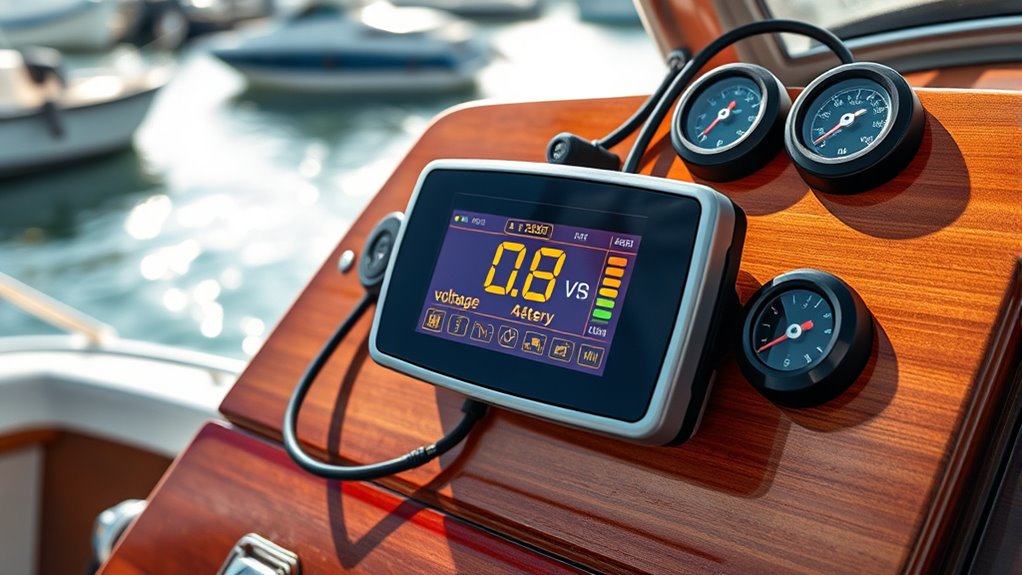

A boat battery monitor does one job that matters on the water: it tells you exactly how much charge you have left before your house bank runs dry. My top pick overall is the Victron Energy Smart Battery Shunt, which pairs a precision 500A shunt with a mature Bluetooth app and a track record of reliability that budget monitors can’t match. For value, the LiTime 500A Bluetooth monitor delivers true state-of-charge tracking at a fraction of the price, while the ANCEL BM1000 splits the difference with a 400A smart shunt built for RV and marine banks. The main tradeoff in this category is simple: cheap voltmeter-style gauges tell you voltage only, which is a rough guess at best, while shunt-based monitors track actual amp-hours consumed — but cost more and require wiring at the battery. There’s also a waterproofing divide, since not every display survives a bilge or open-cockpit install. Keep reading for the full breakdown of all fifteen options and which one fits your boat.

Get backup power and energy gear delivered free with Prime
- Fast, free delivery on millions of items
- Prime Video, Amazon Music and more included
- Member-only deals all year
Key Takeaways
- Shunt-based monitors (Victron, LiTime, ANCEL BM1000, Renogy, LNEX, BINTA) dominated the top spots because they measure actual current flow, while voltmeter gauges only estimate charge from voltage — a difference that matters most with lithium batteries.
- The Victron Smart Battery Shunt stood out for app maturity and accuracy, but it has no display screen of its own, so boaters who want panel-mounted readouts should lean toward the Renogy 500A or LNEX 3.5-inch color screen instead.
- Bluetooth-only monitors (ANCEL BM300 Pro, BM200, LiTime) are the easiest to install on small boats, but they become a liability offshore where you want data visible without pulling out a phone.
- Waterproofing claims varied wildly — the IP68 LCD capacity meter and IPX7 alarm monitor are genuinely splash-ready, while several ‘marine’ labeled voltmeters are better suited to protected helm installations.
- Sub-$20 LED segment indicators and round voltmeter gauges (DaierTek, the 5-segment LED) have a real place as backup voltage checks on trolling motors and golf-cart-style banks, but none of them can replace a true state-of-charge monitor.
| LNEX 500A Battery Monitor with Shunt, 3.5″ Color Screen |  | Best Display for Fixed Helm Installation | Max Current: 500A | Screen Size: 3.5 inches | Screen Type: Color backlit LCD | VIEW ON AMAZON | See Our Full Breakdown |
| LiTime 500A Bluetooth Battery Monitor, 8V-120V Smart Shunt M8 |  | Best App-Based Monitoring | Max Current: 500A | Connectivity: Bluetooth app monitoring | Voltage Range: 8V-120V (12V/24V/36V/48V) | VIEW ON AMAZON | See Our Full Breakdown |
| IPX7 Waterproof 7-100V Battery Monitor with Bracket, Temp & Buzzer Alarm |  | Best for Exposed Marine Mounting | Voltage Range: 7V-100V (12V-84V systems) | Compatible Battery Types: Ternary lithium, lead-acid, AGM, LiFePO4 | Alarm Features: High/low voltage buzzer alarm | VIEW ON AMAZON | See Our Full Breakdown |
| ANCEL BM300 Pro Bluetooth Battery Monitor for 6V, 12V and 24V Systems |  | Best for Multi-Battery Boats | Voltage Range: 6V, 12V, 24V systems | Batteries Monitored: Up to 4 simultaneously | Connectivity: Bluetooth 5.3 | VIEW ON AMAZON | See Our Full Breakdown |
| 12V Battery Meter Lead-Acid Indicator with 5-Segment LED Display |  | Best Budget Quick-Check Gauge | Voltage Range: 12V only | Compatible Battery Types: 12V lead-acid (AGM, GEL, SLA, EFB, VRLA, WET, Calcium, MF) | Display: 5-segment LED (10%-100%) | VIEW ON AMAZON | See Our Full Breakdown |
| ANCEL BM200 Bluetooth Battery Monitor, 12V Automotive Battery Tester |  | Best for Starter Battery Health | Voltage: 12V | Compatibility: Lead-acid and lithium batteries | Connectivity: Bluetooth 4.2, iOS and Android | VIEW ON AMAZON | See Our Full Breakdown |
| BINTA Battery Monitor with Shunt, 8-120V 0-500A Voltmeter Ammeter |  | Best Budget Shunt Monitor | Voltage Range: 8-120V | Current Range: 0-500A (350A continuous) | Max Capacity Display: 999Ah | VIEW ON AMAZON | See Our Full Breakdown |
| DROK Waterproof Battery Monitor 8-100V Capacity Tester LCD Display |  | Best Compact Panel Meter | Working Voltage: 8-100V (12V/24V/36V/48V/72V/84V) | Operating Current: 15mA or less | Display: Color LCD with backlight | VIEW ON AMAZON | See Our Full Breakdown |
| ANCEL BM1000 Bluetooth Battery Monitor, 400A Smart Shunt |  | Best App-Based House Bank Monitor | Voltage Range: 10-120V | Battery Types: LiFePO4, lithium, AGM, lead-acid | System Voltages: 12V, 24V, 36V, 48V | VIEW ON AMAZON | See Our Full Breakdown |
| Battery Capacity Voltage Meter, 12V-84V IP68 Waterproof LCD Monitor with Low-Voltage Alarm |  | Best for Exposed Installations | Voltage Range: 12V-84V (custom mode DC 7-100V) | Supported Batteries: Lithium, lithium-iron, lead-acid 12V-84V | Display: LCD with blue backlight | VIEW ON AMAZON | See Our Full Breakdown |
| Waterproof DC 12V Voltage Meter with 3-Color LED Display | 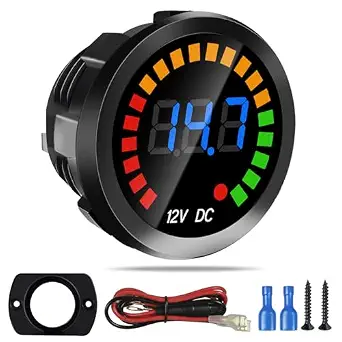 | Best Glance-and-Go Voltage Gauge | Measuring Range: DC 5-36V | Accuracy: ±0.1V | Display: 3-color LED (Red below 11.8V, Orange 11.9-12.4V, Green 12.5-15.2V) | VIEW ON AMAZON | See Our Full Breakdown |
| DaierTek Battery Voltage Meter Waterproof DC 12V 24V LED Voltmeter Panel |  | Best Budget Panel Meter for Dual-Voltage Boats | Measuring Range: DC 8-48V | Compatible Systems: 12V / 24V / 36V | Accuracy: 0.1V | VIEW ON AMAZON | See Our Full Breakdown |
| Victron Energy Smart Battery Shunt – Battery Monitor 6.5V-70V, 500A |  | Best Premium Smart Monitor | Voltage Range: 6.5V-70V | Connectivity: Bluetooth via VictronConnect app | Measured Data: State of charge, time remaining, voltage, current, amp-hours, charge cycles, discharge history | VIEW ON AMAZON | See Our Full Breakdown |
| ANCEL BM300 12V Battery Monitor with Charging & Cranking Test |  | Best for Engine Starting Batteries | Compatibility: 12V 100-2000CCA batteries (flooded, AGM, GEL, EFB) | Connectivity: Bluetooth, approx. 33 ft range | Tests: Voltage, cranking system, charging system, 30-day history | VIEW ON AMAZON | See Our Full Breakdown |
| Renogy 500A Battery Monitor with Shunt |  | Best Wired Display for Multi-Chemistry Systems | Measurement Accuracy: 1% | Compatible Voltages: 12V / 24V / 48V | Battery Types: Lead Acid (AGM, GEL), LiFePO4, Lithium-ion, NiMH | VIEW ON AMAZON | See Our Full Breakdown |
| boat battery monitor | Voltage Range |
|---|---|
| LNEX 500A Battery Monitor with | 8V-120V |
| LiTime 500A Bluetooth Battery | 8V-120V (12V/24V/36V/48V) |
| IPX7 Waterproof 7-100V Battery | 7V-100V (12V-84V systems) |
| ANCEL BM300 Pro Bluetooth Batt | 6V, 12V, 24V systems |
| 12V Battery Meter Lead-Acid In | 12V only |
| ANCEL BM200 Bluetooth Battery | — |
| BINTA Battery Monitor with Shu | 8-120V |
| DROK Waterproof Battery Monito | — |
| ANCEL BM1000 Bluetooth Battery | 10-120V |
| Battery Capacity Voltage Meter | 12V-84V (custom mode DC 7-100V) |
| Waterproof DC 12V Voltage Mete | — |
| DaierTek Battery Voltage Meter | — |
| Victron Energy Smart Battery S | 6.5V-70V |
| ANCEL BM300 12V Battery Monito | — |
| Renogy 500A Battery Monitor wi | — |
More Details on Our Top Picks
LNEX 500A Battery Monitor with Shunt, 3.5″ Color Screen
Most shunt-based monitors make you squint at a small monochrome readout, but the LNEX 500A pairs its high-precision shunt with a 3.5-inch color screen that shows voltage, state of charge, current flow, and estimated remaining time all at once. That matters on a boat: a glance at the helm tells you whether the house bank will survive the weekend anchor-out. Compared with the LiTime Bluetooth shunt, which pushes the same data to your phone, LNEX keeps everything on a permanently mounted display — better when you want readings without pulling out a device. The tradeoff is installation: wiring a shunt into the negative lead is more involved than clip-on options like the ANCEL BM300 Pro, and the 16-foot cable is overkill for a compact console.
Pros:- High-precision shunt delivers true state-of-charge accuracy that voltage-only meters can’t match
- Large color screen with adjustable brightness shows SOC, current, and remaining-time estimates simultaneously
- Programmable high/low voltage alarms protect lithium and lead-acid banks from over-discharge
- Broad 8V-120V compatibility covers 12V through 48V boat systems and all common battery chemistries
Cons:- Shunt installation requires breaking the main negative cable, which challenges less experienced DIY installers
- No Bluetooth or app connectivity, so all data lives on the mounted screen
- 16-foot cable is excessive and hard to hide in small boats
Best for: Boat owners who want a permanently visible, at-a-glance readout at the helm or battery compartment rather than phone-dependent monitoring
Not ideal for: Anyone unwilling to wire a shunt into the main negative lead, or sailors with tiny consoles where the 3.5-inch screen and long cable create clutter
- Max Current:500A
- Screen Size:3.5 inches
- Screen Type:Color backlit LCD
- Cable Length:16 ft
- Voltage Range:8V-120V
- Compatible Battery Types:Lead Acid, LiFePO4, Lithium-ion, Gel, Flooded, Nickel-metal hybrid
- Alarm Features:Programmable high/low voltage alarms
- Power Source:Battery-powered
Our verdict“This pick makes the most sense for boaters who want a full-color, always-on dashboard for their battery bank and don’t mind a shunt install.”
LiTime 500A Bluetooth Battery Monitor, 8V-120V Smart Shunt M8
The LiTime 500A smart shunt takes the opposite approach from the LNEX color-screen monitor: there’s no dash display at all, just a compact shunt that streams voltage, current, power, and state of charge to your phone over Bluetooth. On a boat, that means checking the house bank from the cockpit, the bunk, or the dock without walking to the battery bay. Its adjustable alerts for low capacity, over/under-voltage, over-current, and temperature go beyond what the basic IPX7 wired monitor offers, catching problems before they strand you. The tradeoff is dependency — if your phone dies or the app misbehaves, there’s no fallback screen, and like all shunt monitors it still requires cutting into the negative cable during installation.
Pros:- Bluetooth app delivers real-time SOC, current, voltage, and power readings anywhere aboard
- Adjustable alarms for capacity, temperature, voltage extremes, and over-current flag issues early
- Historical data logging of cycles, discharge capacity, and voltage highs/lows aids troubleshooting
- Covers 8V-120V systems across lithium, LiFePO4, flooded, AGM, and gel batteries
Cons:- No standalone display — a dead phone means no readings
- Shunt installation is still required despite the wireless interface
- 1-year warranty is shorter than what some competitors back their monitors with
Best for: Tech-comfortable boaters and RV owners who prefer checking battery data on their phone and want early warning alerts for abnormal conditions
Not ideal for: Anyone who wants a physical gauge at the helm, or who dislikes relying solely on an app for battery data
- Max Current:500A
- Connectivity:Bluetooth app monitoring
- Voltage Range:8V-120V (12V/24V/36V/48V)
- Shunt Type:Smart shunt with M8 terminals
- Compatible Battery Types:Lithium-ion, LiFePO4, Flooded, AGM, Gel
- Alarm Features:Low capacity, temperature, over/under-voltage, over-current
- Warranty:1 year
Our verdict“The right choice for boaters who live on their phones and want full shunt-level accuracy with remote alerts and no dash clutter.”
IPX7 Waterproof 7-100V Battery Monitor with Bracket, Temp & Buzzer Alarm
Where most monitors in this lineup assume a protected cabin install, this one is built for the wet stuff. Its fully sealed IPX7 housing shrugs off spray, rain, and even submersion — exactly what an open cockpit, jon boat, or kayak outfitter needs. Compared with the DROK waterproof monitor elsewhere in this roundup, this model adds a temperature readout and buzzer alarm, so you hear trouble rather than having to look for it. It’s a voltage-based percentage estimate, though, not a true shunt-measured state of charge like the LiTime or LNEX, so expect rougher accuracy as batteries age. Setup also demands attention: skip the initial battery-type configuration and the display stubbornly reads 100 percent.
Pros:- IPX7 sealed shell withstands sustained spray and submersion for genuinely exposed installs
- Audible high/low voltage buzzer alerts you without looking at a screen
- Built-in temperature display adds a useful engine-bay or battery-compartment check
- Includes bracket, adhesive, and screws plus reverse-connection protection for simple mounting
Cons:- Voltage-derived percentage is far less accurate than shunt-based monitoring
- Requires careful initial configuration or the SOC display stays stuck at 100%
- Short 23.6-inch wires limit mounting distance from the battery
Best for: Boaters who need a monitor visible in open, spray-exposed locations like cockpits, T-tops, or center consoles where sound alarms matter
Not ideal for: Owners who need precise state-of-charge tracking on lithium banks — voltage-based estimation can’t match a true shunt monitor
- Voltage Range:7V-100V (12V-84V systems)
- Compatible Battery Types:Ternary lithium, lead-acid, AGM, LiFePO4
- Alarm Features:High/low voltage buzzer alarm
- Display Data:Voltage, capacity percentage, temperature (Celsius)
- Wire Length:23.62 inches (60 cm)
- Memory:Power-off settings retention
Our verdict“The pick for wet, open-boat installs where waterproofing and an audible alarm beat precision data.”
ANCEL BM300 Pro Bluetooth Battery Monitor for 6V, 12V and 24V Systems
If your boat runs a starting battery plus a house bank — or a dual-battery offshore rig — the ANCEL BM300 Pro stands out for tracking up to four batteries simultaneously from one app. That’s a capability none of the single-shunt options like the LiTime smart shunt or LNEX monitor can match without buying multiple units. Bluetooth 5.3 gives it a longer, steadier connection than the ANCEL BM200 in this roundup, so you can check cranking health from home while the boat sits on its trailer. The catch: it tops out at 24V and uses voltage-and-trend analysis rather than a shunt, so state-of-charge estimates on heavily cycled lithium banks will be less precise than a dedicated 500A shunt system. It also needs proximity to your phone for live data rather than logging independently.
Pros:- Monitors up to 4 batteries from one app, ideal for boats with starting and house banks
- Instant phone alerts for voltage drops, charging failures, and weak cranking
- 72-day trend analytics reveal battery aging and help plan replacements
- 1mA standby draw and IP67 sealed composite housing suit long-term unattended installation
Cons:- Limited to 6V/12V/24V systems — no 36V or 48V support
- No shunt, so SOC accuracy falls short of true coulomb-counting monitors
- 6V mode supports voltage and SOC monitoring only
Best for: Owners of dual- and multi-battery boats who want to watch starting and house banks together and catch weak cranking before launch day
Not ideal for: 48V lithium systems or boaters who need shunt-grade state-of-charge precision — neither is in this product’s vocabulary
- Voltage Range:6V, 12V, 24V systems
- Batteries Monitored:Up to 4 simultaneously
- Connectivity:Bluetooth 5.3
- Compatible Battery Types:Flooded, AGM, Gel, EFB lead-acid; Lithium-ion
- Power Consumption:~1mA standby
- Data History:72-day trend analytics
Our verdict“The clear choice for boaters managing multiple batteries who value early alerts and long-term trend data over raw measurement precision.”
12V Battery Meter Lead-Acid Indicator with 5-Segment LED Display
Sometimes you don’t need state-of-charge math — you just need to know whether the trolling motor battery is okay before heading out. This five-segment LED gauge answers that in one glance, lighting bars from 10 to 100 percent and flashing when capacity drops below 20 percent. Compared with everything else here, it’s radically simpler than the LNEX shunt system: two wires, a one-button wake, and an IP65 splash-resistant face suitable for dash mounting. The compromises are real, though. It estimates from voltage alone, so its accuracy sags under load, and it works only with 12V lead-acid chemistry — lithium boat owners should pass in favor of a proper shunt monitor like the Renogy 500A elsewhere in this guide.
Pros:- Dead-simple two-wire installation with reverse polarity protection
- Flashing low-battery warning at 20% and 10% gives a clear recharge cue
- IP65 water resistance handles dash and console exposure
- Auto-sleep after 30 seconds prevents parasitic battery drain
Cons:- Voltage-based LED estimate is coarse and unreliable under load
- 12V lead-acid only — no lithium or higher-voltage system support
- Five segments offer no current, power, or historical data
Best for: Budget-conscious owners of small boats, golf carts, or ATVs running a single 12V lead-acid battery who just need a rough charge check
Not ideal for: Lithium battery owners or anyone wanting accurate state-of-charge data — voltage-based LED bars can’t deliver either
- Voltage Range:12V only
- Compatible Battery Types:12V lead-acid (AGM, GEL, SLA, EFB, VRLA, WET, Calcium, MF)
- Display:5-segment LED (10%-100%)
- Dimensions:1.65 x 0.87 x 0.43 inches
- Sleep Mode:Auto after 30 seconds idle
- Warranty:5 years
Our verdict“A cheap, honest quick-check gauge for single 12V lead-acid setups — nothing more, and that’s the point.”
ANCEL BM200 Bluetooth Battery Monitor, 12V Automotive Battery Tester
The BM200 carves out a niche most shunt-based monitors ignore: starting-battery diagnostics. While the ANCEL BM1000 focuses on house-bank state of charge, the BM200 adds cranking and charging system tests, which matter on a boat where a weak cranking battery can leave you stranded at the dock. Its 1.5mA standby draw is among the lowest here, so it can live on the battery year-round without contributing to the slow drain it’s meant to catch. The app records data every two minutes and stores 70 days of history, longer than the BM1000’s 30-day log. The tradeoff is fundamental: it reads voltage trends, not true amp-hour consumption, so it won’t tell you how much capacity remains in a house bank under load. The IP67 casing and adhesive mount suit engine bays, but Bluetooth-only readouts mean no helm display.
Pros:- Cranking and charging system tests diagnose starter and alternator health
- 70-day data history recorded every 2 minutes
- 1.5mA power draw allows permanent installation
- IP67 waterproof housing with reverse polarity and short-circuit protection
Cons:- Voltage-based monitoring cannot measure true amp-hour consumption
- No physical display — requires phone app within Bluetooth range
Best for: Boat owners who want to track a starting battery’s health and cranking performance from their phone
Not ideal for: Owners monitoring large house battery banks who need true state-of-charge and amp-hour tracking
- Voltage:12V
- Compatibility:Lead-acid and lithium batteries
- Connectivity:Bluetooth 4.2, iOS and Android
- Range:Approx. 15-30 ft
- Data Logging:Every 2 minutes, 70 days history
- Power Draw:1.5mA
- Protection:Reverse polarity, short circuit, IP67 waterproof
- Multi-Vehicle:Monitors up to 4 devices
Our verdict“A smart pick if your priority is catching a failing cranking battery before it strands you, not tracking house-bank capacity.”
BINTA Battery Monitor with Shunt, 8-120V 0-500A Voltmeter Ammeter
The BINTA delivers what a serious boat monitor needs — a true shunt-based reading of amps in and out — at a price point well below the Victron Smart Shunt or Renogy 500A. Its 8-120V range covers 12V, 24V, and 48V banks plus lithium chemistries, so it fits nearly any marine electrical system. Compared with the ANCEL BM1000, you get a physical backlit display at the helm instead of phone-only readings, which is genuinely useful offshore where Bluetooth range through metal bulkheads gets flaky. The 999Ah capacity ceiling handles large house banks. Tradeoffs are real though: the round screen is small and basic next to the LNEX 3.5-inch color panel, initial parameter setup is manual, and the 350A continuous rating limits high-draw inverter setups. It’s a capable workhorse, not a polished one.
Pros:- True shunt measurement of state of charge, current, and remaining capacity up to 999Ah
- Wide 8-120V compatibility across lead-acid, LiFePO4, and lithium-ion
- Backlit physical display works without a phone or connectivity
- Auto-save memory retains settings and readings through shutdowns
Cons:- 350A continuous current limit may clip on high-draw inverter systems
- Manual battery parameter setup required at first install
- Small circular display with no app or remote viewing option
Best for: Cost-conscious boaters who want accurate amp-hour monitoring with a helm-mounted display
Not ideal for: Boats running large inverters that surge past 350A continuous, or anyone wanting app-based remote monitoring
- Voltage Range:8-120V
- Current Range:0-500A (350A continuous)
- Max Capacity Display:999Ah
- Battery Types:Lead-acid, LiFePO4, lithium-ion
- Display:Circular backlit LCD with touch buttons
- Cable Length:3m shielded cable + 1m positive wire
- Sleep Current:Under 50mA
Our verdict“A solid no-frills shunt monitor for boaters who want real amp-hour data on a budget and don’t need Bluetooth.”
DROK Waterproof Battery Monitor 8-100V Capacity Tester LCD Display
The DROK takes a simpler approach than the BINTA or ANCEL BM1000: no shunt, no app, just a panel-mounted LCD showing voltage and capacity percentage on one screen with no interface switching. That single-glance layout is exactly what many skippers want at the helm, and the 8-100V range covers 12V through 72V systems. A rear voltage calibration potentiometer lets you fine-tune accuracy against a trusted multimeter — a thoughtful touch most budget meters omit. The waterproof panel construction suits exposed helm installations. The catch is precision: because it estimates capacity from voltage rather than counting amps through a shunt, readings drift under load or with aging batteries, and lithium flat discharge curves make percentage estimates rougher still. Think of it as a dashboard gauge, not a battery accountant.
Pros:- Voltage and capacity percentage shown simultaneously on one screen
- Wide 8-100V compatibility across 12V to 72V lithium and lead-acid systems
- Rear calibration potentiometer allows user accuracy tuning
- Waterproof panel with reverse polarity protection and low voltage alarm
Cons:- No shunt, so capacity estimates are voltage-derived and inaccurate under load
- Small panel cutout installation and no data logging or connectivity
Best for: Boaters who want a simple, always-visible voltage and charge gauge at the helm without wiring complexity
Not ideal for: Anyone who needs precise state-of-charge data under varying loads — voltage-based estimates will mislead
- Working Voltage:8-100V (12V/24V/36V/48V/72V/84V)
- Operating Current:15mA or less
- Display:Color LCD with backlight
- Protections:Waterproof, reverse polarity, auto-save on power outage, low voltage alarm
- Panel Size:61.3 x 33.3 x 13.5mm
- Cutout Size:58.5 x 28.5mm
Our verdict“A dependable glance-and-go helm gauge for voltage awareness, as long as you don’t expect true amp-hour accounting.”
ANCEL BM1000 Bluetooth Battery Monitor, 400A Smart Shunt
Where the BM200 watches your starter battery, the BM1000 is the house-bank counterpart: a true 400A smart shunt tracking SOC, voltage, current, power, and remaining capacity across 10-120V systems — LiFePO4, AGM, lead-acid. Compared with the LiTime 500A Bluetooth shunt, the ANCEL deliberately sizes its shunt for the 100-300A loads typical of real boats and RVs, which translates to steadier readings and less heat rather than headline amperage you’ll never use. The 30-day energy history in the app helps you spot parasitic drains and understand consumption habits between trips. Installation is friendlier than most: wrong-proof ports, clear point-to-point wiring, and reverse polarity protection reduce DIY mistakes in cramped battery compartments. The limitations are Bluetooth’s — roughly 10m range that shrinks through fiberglass and metal, no dedicated display, and no starter-battery diagnostics.
Pros:- True shunt-based SOC, current, power, and remaining capacity tracking
- Broad 10-120V compatibility across 12V, 24V, 36V, and 48V battery chemistries
- 30-day energy history reveals abnormal drain and usage patterns
- Wrong-proof ports and reverse polarity protection ease DIY installation
Cons:- Bluetooth-only viewing with roughly 10m range, reduced by bulkheads
- 400A rating caps very high-draw inverter banks
- No cranking or starter-battery diagnostics (unlike the BM200)
Best for: RV and boat owners with lithium or AGM house banks who prefer phone-based monitoring with usage history
Not ideal for: Anyone wanting a permanent helm display, since Bluetooth range and metal compartments limit where you can read it
- Voltage Range:10-120V
- Battery Types:LiFePO4, lithium, AGM, lead-acid
- System Voltages:12V, 24V, 36V, 48V
- Connectivity:Bluetooth app, approx. 10m open-area range
- Data History:30 days of energy trends
- Protections:Reverse polarity and overload protection
Our verdict“The right choice for monitoring a house bank from your phone, provided you don’t need a fixed display or starter diagnostics.”
Battery Capacity Voltage Meter, 12V-84V IP68 Waterproof LCD Monitor with Low-Voltage Alarm
This meter’s standout feature is its IP68 waterproof rating with an acrylic cover — a step above the DROK’s panel waterproofing and enough to survive an open console or exposed transom mount. Like the DROK, it’s a voltage-and-percentage meter rather than a shunt, showing both values simultaneously on a blue-backlit LCD across 12V to 84V battery packs, with a custom mode stretching to 7-100V for unusual setups. Its power-saving mode drops draw below 1mA, the lowest in this lineup, which matters on seasonal boats left in storage. The sub-10% flashing alarm is a useful warning, though triggering that late can be hard on lead-acid batteries that shouldn’t be discharged that deeply. Chemistry-specific profiles (lithium, lithium-iron, lead-acid) improve percentage accuracy over generic meters, but it still can’t count amp-hours like the BINTA.
Pros:- IP68 waterproof with durable acrylic cover for exposed mounting
- Chemistry-specific profiles for lithium, lithium-iron, and lead-acid packs
- Under 1mA draw in power-saving mode suits stored vehicles
- Simultaneous voltage and capacity display with settings retained after power-off
Cons:- Low-voltage alarm only fires at 10%, risking deep discharge damage
- Backlight can drain the battery if left on continuously
- No shunt, so capacity is estimated rather than measured
Best for: Boaters and golf-cart owners needing a genuinely waterproof, always-on gauge in exposed or outdoor locations
Not ideal for: Anyone who wants early low-battery warnings — the 10% alarm threshold comes late for deep-cycle batteries
- Voltage Range:12V-84V (custom mode DC 7-100V)
- Supported Batteries:Lithium, lithium-iron, lead-acid 12V-84V
- Display:LCD with blue backlight
- Low Voltage Alarm:Flashes below 10% capacity
- Power Consumption:Under 15mA normal, under 1mA power-saving
- Memory:Saves settings on power-off
Our verdict“A fit-and-forget waterproof gauge for wet or exposed spots, best paired with conservative charging habits given its late alarm.”
Waterproof DC 12V Voltage Meter with 3-Color LED Display
For boaters who just want to glance at a gauge and know instantly whether the battery is healthy, this round panel meter does the job with minimal fuss. The standout feature is its three-color LED system: green means you’re fine, orange means caution, red means act now. That color coding beats the DaierTek blue-display meter further down this list for quick decisions at the helm, since you don’t have to read digits at all. The included 10A fuse, insulated terminals, and reverse polarity protection also make it more forgiving to install than bare-wire competitors. The tradeoff is depth: like other simple voltmeters, it only reads voltage, so it won’t tell you state of charge or amp-hours the way the Renogy shunt-based monitor will.
Pros:- Three-color LED instantly communicates battery condition without reading numbers
- IP65 waterproof housing resists rain and splash exposure
- Reverse polarity protection prevents damage from wiring mistakes
- Complete install kit includes panel, fused wires, terminals, and screws
Cons:- Voltage-only readings can’t show true state of charge or remaining capacity
- Color thresholds are fixed and tuned for 12V systems, limiting flexibility
Best for: Boaters who want a zero-effort, color-coded voltage check at the dash without apps or wiring complexity
Not ideal for: Anyone managing house banks or lithium systems who needs state-of-charge and amp-hour data rather than a raw voltage reading
- Measuring Range:DC 5-36V
- Accuracy:±0.1V
- Display:3-color LED (Red below 11.8V, Orange 11.9-12.4V, Green 12.5-15.2V)
- Mounting Hole:29mm diameter
- Protection:Built-in 10A fuse, reverse polarity protection
- Housing:High-grade ABS plastic
Our verdict“A solid pick if you want the simplest possible at-a-glance battery status indicator for a 12V boat system.”
DaierTek Battery Voltage Meter Waterproof DC 12V 24V LED Voltmeter Panel
The DaierTek covers the middle ground between the basic 12V-only gauge and full shunt monitors. Its 8-48V measuring range means it works on 12V, 24V, and even 36V systems, which matters if your boat runs a 24V trolling or house bank — the three-color gauge above simply can’t do that. The blue LED display is bright and readable at night, and the included panel, nylon nut, screws, and wiring make installation approachable for a first-time DIYer. Compared with the DROK LCD monitor elsewhere in this roundup, it trades capacity readings for simplicity and a lower barrier to entry. What you give up is interpretation: it shows a number, not a diagnosis, so you’ll need to know what voltage is acceptable for your battery type yourself.
Pros:- Wide DC 8-48V range supports 12V, 24V, and 36V systems
- Bright blue LED stays readable in darkness
- Waterproof design suitable for marine environments
- Complete mounting hardware and wiring included
Cons:- No color-coded alerts or low-voltage alarm to flag problems
- Single blue display gives no context — you must interpret the voltage yourself
Best for: Owners of 24V or mixed-voltage boats who want an inexpensive, always-visible digital readout
Not ideal for: Boaters who want alarms, state-of-charge tracking, or any alert when voltage drops too low
- Measuring Range:DC 8-48V
- Compatible Systems:12V / 24V / 36V
- Accuracy:0.1V
- Display:3-digit blue LED
- Mounting Hole:29mm diameter
- Includes:Panel, nylon nut, screws, wire set
Our verdict“The sensible low-cost choice if you run a 24V system and just need reliable voltage numbers on the dash.”
Victron Energy Smart Battery Shunt – Battery Monitor 6.5V-70V, 500A
This is where the category stops being a gauge and becomes a full battery management brain. The SmartShunt measures actual current flow through a precision shunt, so it calculates state of charge, time remaining, amp-hours, and charge cycle history — data no panel voltmeter in this roundup can touch. Everything appears in the VictronConnect app with instant readout and alarm notifications, and the aux connection even supports a second battery, midpoint monitoring, or a temperature sensor. Compared with the Renogy 500A monitor, the Victron gives up a dedicated display screen but gains ecosystem integration: if you run Victron chargers or inverters, VE.Smart Networking lets devices share data to optimize charging automatically. The cost and the reliance on your phone as the display are the real tradeoffs, and setup requires configuring battery capacity correctly.
Pros:- Precision shunt measurement with true state of charge and time-remaining calculations
- Detailed app data including charge cycles, deepest discharge, and voltage history
- VE.Smart Networking shares data with other Victron devices to optimize charging
- Aux connection supports second battery, midpoint, or temperature monitoring
Cons:- No physical display — you need your phone for every reading
- Premium price point and setup requires correct battery capacity programming
Best for: Boaters building or upgrading a serious electrical system, especially with other Victron gear, who want true state-of-charge data
Not ideal for: Casual users who just want a visible number on the dash — there’s no screen, and the price buys capability they’ll never use
- Voltage Range:6.5V-70V
- Connectivity:Bluetooth via VictronConnect app
- Measured Data:State of charge, time remaining, voltage, current, amp-hours, charge cycles, discharge history
- Networking:VE.Smart Networking, VRM remote management, DVCC support
- Aux Connection:Second battery, midpoint, or temperature sensor
- Installation:Shunt-based, retrofit-friendly
Our verdict“If you want the most capable and expandable battery monitor for a modern boat electrical system, this is the ceiling.”
ANCEL BM300 12V Battery Monitor with Charging & Cranking Test
The BM300 targets a different question than most picks here: not ‘how full is my house bank’ but ‘will my engine start, and is my alternator charging properly’. Mounted permanently on the battery, it tracks voltage continuously and runs cranking and charging system tests, then pushes alarm notifications to your phone from up to 33 feet away. That makes it more useful for a starting battery than either panel gauge in this roundup, and friendlier for non-technical owners than the Renogy shunt, since there’s no shunt to install — it clamps on with ring terminals. It covers all common 12V battery chemistries from 100-2000CCA. The limitations are real, though: it’s 12V only, tracks a single battery at a time, and Bluetooth range can suffer in cold weather or through bulkheads — a common complaint in metal-hull boats.
Pros:- Dedicated cranking and charging system tests catch failing starters and alternators
- Bluetooth monitoring from up to 33 feet with app alarms
- Ultra-low 1.5mA draw won’t drain the battery it’s monitoring
- Overload breaker, reverse polarity protection, and fire-resistant housing
Cons:- 12V-only and single-battery monitoring limits use on larger electrical systems
- Bluetooth range degrades in extreme cold or around obstructions
Best for: Boat owners focused on starting-battery health who want cranking tests and phone alerts without shunt installation
Not ideal for: Anyone monitoring 24V/48V house banks or multiple batteries — it’s 12V-only and tracks a single battery at a time
- Compatibility:12V 100-2000CCA batteries (flooded, AGM, GEL, EFB)
- Connectivity:Bluetooth, approx. 33 ft range
- Tests:Voltage, cranking system, charging system, 30-day history
- Power Consumption:Approx. 1.5mA average
- Weight:3.2 oz
- Safety:Overload circuit breaker, reverse polarity protection, fire-resistant housing
- Accuracy:Over 99.5% via smart chip and copper connector
Our verdict“The right pick for protecting a 12V starting battery, provided your monitoring needs don’t extend to house banks.”
Renogy 500A Battery Monitor with Shunt
If the Victron SmartShunt is the app-first option, the Renogy is its screen-first counterpart: a shunt-based monitor with a dedicated backlit display you can read from across the cabin, no phone required. Its 1% measurement accuracy comes from the same shunt principle as the Victron and LNEX options, so you get real voltage and current data rather than the estimates of the panel gauges above. The broad chemistry support — AGM, GEL, LiFePO4, Li-ion, NiMH — across 12V, 24V, and 48V systems makes it a natural fit for lithium upgrades and off-grid boat setups, and high/low capacity alarms flash the backlight when you’re over-discharging. The 20-foot shielded cable allows flexible display placement. The main drawback is installation: wiring the shunt into the negative bus is genuinely more involved than bolting on the ANCEL BM300, and there’s no Bluetooth or remote app access at all.
Pros:- 1% accurate shunt-based measurement of voltage and current
- Supports 12V/24V/48V and AGM, GEL, LiFePO4, Li-ion, NiMH chemistries
- High/low capacity alarms with flashing backlit HD display
- 20 ft shielded cable and transparent shunt holder simplify placement
Cons:- Shunt installation can be intimidating for first-time DIYers
- No Bluetooth or app connectivity — display is your only window into the data
Best for: Boaters with lithium or multi-chemistry banks at 12-48V who want an always-visible dedicated display with alarms
Not ideal for: Beginners uncomfortable with shunt wiring, or anyone who wants phone-based monitoring and remote alerts
- Measurement Accuracy:1%
- Compatible Voltages:12V / 24V / 48V
- Battery Types:Lead Acid (AGM, GEL), LiFePO4, Lithium-ion, NiMH
- Display:High-definition backlit display
- Alarms:High and low capacity alarm
- Cable Length:20 ft shielded cable
Our verdict“The best fit when you want Victron-level accuracy with a physical display instead of an app, at a mid-tier price.”

How We Picked
I ranked these fifteen monitors around one question: how confidently can a boater trust the number on screen when they’re a mile from the dock? That pushed shunt-based accuracy to the top of the criteria stack, because a monitor that measures current flowing in and out of the bank — rather than inferring state of charge from voltage — is the only style that stays trustworthy on lithium batteries and partial charging cycles. From there I weighed display quality and readability in sunlight, waterproof rating for exposed cockpits and bilges, install complexity including cable length and shunt mounting, and connectivity in the form of Bluetooth apps and alarm functions.
The ranking logic is deliberately tiered. Full-featured smart shunts with proven ecosystems (Victron, LiTime, ANCEL BM1000, Renogy) sit at the top because they solve the actual problem of battery management on a boat. Mid-tier picks (LNEX, BINTA, the IPX7 alarm monitor, DROK) trade some polish for screens, alarms, or price. Simple voltmeters and LED gauges fill the bottom tier honestly — they’re cheap, useful voltage checks, and I only recommend them as complements or minimal-budget fixes, not as true battery monitors.
Factors to Consider When Choosing Boat Battery Monitor
Before you pick a monitor, it helps to understand what actually separates a useful marine battery monitor from a dashboard gadget. These are the factors I weighed hardest, and the mistakes I’d avoid when buying.Shunt vs. Voltage-Only Monitoring
This is the single biggest decision, and it’s where most buyers go wrong. A voltmeter-style gauge reads battery voltage and guesses at charge level, which works acceptably on a rested lead-acid battery — but the moment loads switch on, or you switch to lithium, voltage barely moves until the battery is nearly empty. A shunt-based monitor sits on the negative terminal and counts every amp-hour in and out, giving you a true remaining-capacity percentage. If you run a fridge, lights, and electronics overnight at anchor, voltage-only monitoring will betray you. The mistake to avoid: buying a cheap gauge, seeing ‘12.4V,’ and assuming you have half a tank when the sag under load is lying to you.
Waterproof Rating and Mounting Location
Boats are wet, and a monitor rated for a car dashboard can die in a single sloppy weekend. Look for IP67 or IP68 ratings if the display will live in an open cockpit, near a hatch, or anywhere spray reaches — and treat ‘marine’ in a product title as marketing until you see the actual rating number. Panel-mounted gauges behind a protected helm can get away with less. Also think about the shunt itself: it must mount at the battery, often in a bilge or battery box, so corrosion-resistant construction and sealed connections matter as much as the display. A common regret is installing a great monitor in a bad spot and losing it to humidity within a season.
System Voltage and Battery Chemistry
Check the voltage range before buying, because not every monitor covers every bank. Many shunt monitors handle 8V–120V, which safely spans 12V, 24V, and 48V systems, while simpler voltmeters are locked to 12V or a limited band. Chemistry matters even more: lithium batteries hold a flat voltage curve that defeats voltage-based estimation entirely, so a programmable shunt monitor with capacity settings is close to mandatory. Lead-acid and AGM banks are more forgiving, but they benefit from charge-cycle tracking that tells you when your alternator or solar isn’t keeping up. Match the monitor to the bank you have now, not the one you might upgrade to — unless the range covers both for free.
Screen vs. App — and Why Offshore Boaters Want Both
Bluetooth-only monitors are genuinely convenient: no hole-drilling, data on your phone, logging for later. But phones die, screens wash out in sunlight, and pulling a phone out to check the house bank at 2 a.m. gets old fast. A physical display at the helm or electrical panel gives you glanceable data with no pairing or connectivity fuss. The best setups use both — a screen for real-time awareness plus an app for trends and history. If you day-trip on a small lake boat, app-only is a reasonable cost saving. If you cruise, anchor overnight, or run critical equipment, I’d treat a hard-mounted display as non-negotiable.
Alarms and Low-Voltage Protection
A monitor that only shows numbers relies on you checking it; a monitor with a programmable low-voltage alarm tells you when a bank is sagging before damage occurs. Deeply discharging lead-acid batteries shortens their life dramatically, and some monitors — like the IPX7 alarm model in this lineup — include buzzers and temperature warnings on top of voltage alerts. Think about what you’re protecting: a starter battery that must crank an engine tomorrow deserves an alarm more than a running-light circuit does. This is also where the cheap end of the market cuts corners, so if alarms matter to you, verify the feature exists and is adjustable rather than fixed at one threshold.
Current Rating and Cable Length
Shunts are rated for continuous current — commonly 500A in this lineup — and undersizing one means inaccurate readings or burned hardware if you run windlasses, inverters, or big amplifiers. Add up your worst-case simultaneous draws and leave headroom. Cable length matters more than buyers expect: the display needs to reach from the battery compartment to wherever you want to read it, and 16-foot cables (like the LNEX includes) make a mid-size boat install painless where shorter harnesses force extension splices. Finally, confirm the shunt fits your battery terminals — an M8 bolt pattern is common but not universal, and adapters in a marine environment are just another corrosion point.
Frequently Asked Questions
Do I really need a shunt, or is a voltmeter enough for my boat?
It depends on how you use your boat. If you run a single starter battery, take short trips, and recharge after every outing, a quality voltmeter gives you enough warning to catch a weak charging system. But if you have a house bank that runs overnight loads, the answer changes completely: voltage under load is misleading, and lead-acid sag can make a half-full bank look nearly dead. Shunt monitors count actual amp-hours, so they stay accurate regardless of what’s running. With lithium, voltage-based estimation is close to useless because the discharge curve is nearly flat — a shunt isn’t optional there, it’s the only reliable method.
Can a boat battery monitor tell me if my alternator or charger is failing?
Indirectly, yes — and that’s one of their best hidden functions. A shunt monitor shows current flowing into the battery, so if your alternator should be delivering 50 amps and you see 5, you’ve caught a charging problem before you’re stranded. The ANCEL BM300 and BM300 Pro go further with dedicated charging-system and cranking tests that evaluate starter health and charging voltage directly. Voltage-only gauges can flag a failing charger too, but only after the problem is severe enough to move the resting voltage. For early detection, current measurement is far more sensitive than voltage alone.
Are Bluetooth battery monitors reliable on the water?
For the wireless link itself, yes — Bluetooth works fine across a boat’s typical dimensions, and shunt-to-phone range of 20–30 feet covers most cockpits from the battery compartment. The real limitations are elsewhere: bright sunlight can wash out phone screens, wet hands and touchscreens don’t mix, and your phone battery becomes part of your monitoring system. Bluetooth monitors also pair with one device at a time on most models, which is awkward if two people want to check the bank. My honest take is that Bluetooth works best as a supplement to a mounted display for anyone cruising beyond day trips, and as a primary interface it’s perfectly fine for smaller day boats.
How hard is it to install a shunt-based battery monitor myself?
Moderately easy if you’re comfortable with basic DC wiring, and the job typically takes an afternoon. The shunt goes on the main negative cable between the battery and everything else — including chassis grounds — which is the step people get wrong; any load that bypasses the shunt is invisible to the monitor. You’ll also run a small sense wire to the battery positive and the display cable to wherever you mount the screen. On a boat, add diligence about sealed connections and corrosion-resistant terminals, since bilge humidity kills sloppy installs. If your battery compartment is cramped or your wiring is a mystery, an hour with a marine electrician is money well spent.
Will one monitor work on both my starting and house batteries?
Generally no — a shunt monitors one battery bank, because it physically counts current through a single negative cable. Some monitors support adding a second input for voltage-only readings of a second bank, but that second reading gets the same accuracy limitations as any voltmeter. Boaters with start-plus-house setups usually either monitor just the house bank (where deep discharge risk lives) or run two monitors. The ANCEL BM300-style clip-on monitors are a popular cheap complement for watching the starter battery while a shunt handles the house bank. Budget for the architecture you actually have before choosing a single-unit solution.
Conclusion
After comparing all fifteen, the right choice comes down to what your boat asks of its electrical system. Best overall goes to the Victron Energy Smart Battery Shunt for its accuracy and app ecosystem — ideal if your boat already speaks Victron or you want the most trustworthy data available. Best value is the LiTime 500A Bluetooth monitor, which delivers genuine state-of-charge tracking without the premium price. For best mid-range with a screen, the Renogy 500A and LNEX 3.5-inch color monitor put real-time numbers at your panel, with the ANCEL BM1000 as the stronger pick for larger 24V-and-up banks. Beginners should start with the ANCEL BM300 Pro — clip it on, read the app, no wiring required. And for specific needs: the IP68 LCD capacity meter and IPX7 alarm model for wet installations, and the DaierTek or 5-segment LED gauges as cheap voltage spot-checks on trolling motors and secondary banks. Whatever you choose, the upgrade from guessing to measuring is the one that changes how confidently you spend a day on the water.
Fall Picks
fall essentials
As an affiliate, we earn on qualifying purchases.