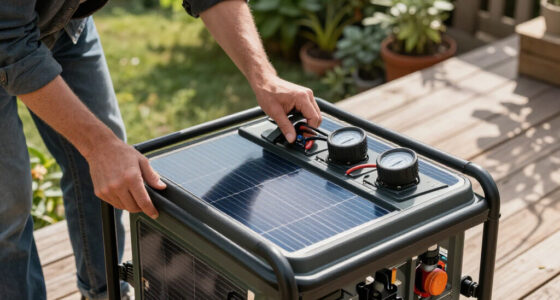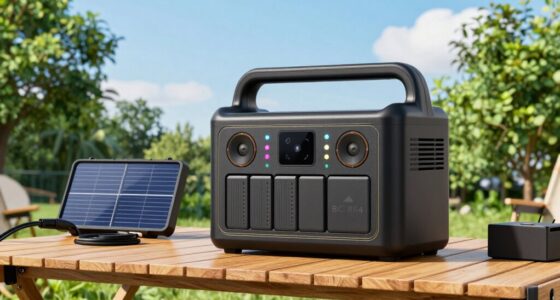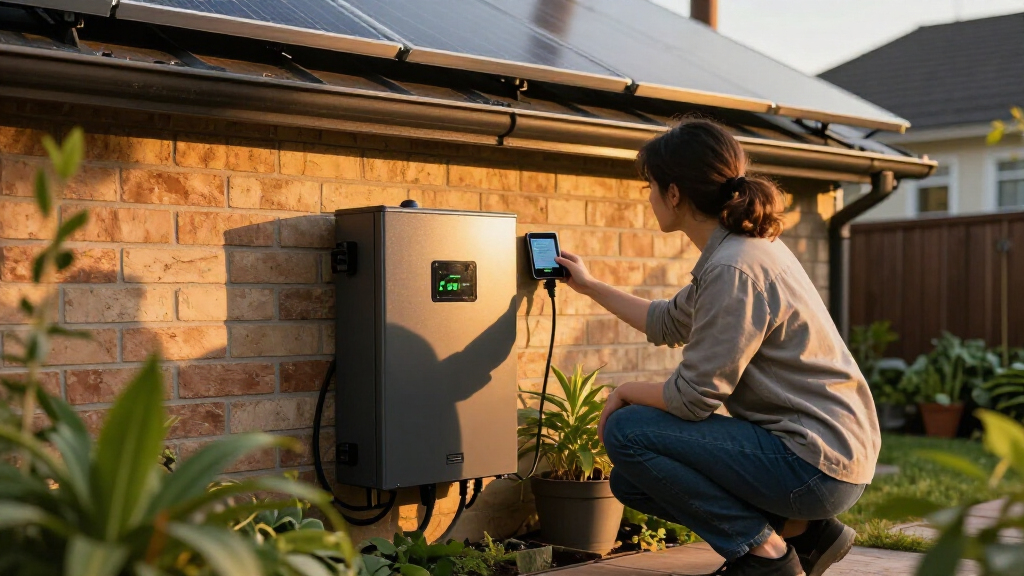
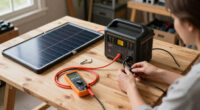
Solar battery chargers for homes fall into two very different camps: small trickle maintainers that keep a car, boat, or backup battery topped off, and portable power stations with solar panels that can actually run appliances during an outage. The Jackery Explorer 300 with 40W panel stands out as the best overall pick for most homes because it balances usable capacity, panel output, and dependable build. If you just need to keep a 12V battery alive, the SUNER POWER 12W maintainer does that job for a fraction of the complexity, while the ZeroKor 300W bundle offers the most included solar wattage per dollar. The main tradeoff you’ll face is capacity versus portability versus price — a small trickle charger can’t power your fridge, and a power station can’t sit on a dashboard for months unattended. Read on for the full breakdown, including who each option suits and who should skip it.

Get backup power and energy gear delivered free with Prime
- Fast, free delivery on millions of items
- Prime Video, Amazon Music and more included
- Member-only deals all year
Complete the kit


Key Takeaways
- The lineup splits cleanly into two categories — 5–20W trickle maintainers (POWOXI, SUNER POWER, SOLPERK) and 88–292Wh power station kits (MARBERO, ZeroKor, Jackery, Daran) — and the right choice depends on which job you actually need done, not on which product is ‘better’ overall.
- The Jackery Explorer 300 with 40W panel earns the top spot because its 292Wh capacity and brand-proven battery management make it the most realistic option for actual home backup, not just gadget charging.
- Among trickle maintainers, the SOLPERK 20W kit separates itself by including a charge controller — the POWOXI 7.5W and SUNER POWER 12W units rely on simpler regulation, which matters if your battery will sit unattended for long stretches.
- The Daran 89.6Wh unit is the only LiFePO4 option in the group, giving it a clear long-term durability edge over the lithium-ion units at similar capacity, though it doesn’t ship with a panel.
- Bundle value varied widely: the ZeroKor kit includes a 60W panel (the largest in the roundup), while several power stations ship panel-less, quietly shifting the true cost of going solar onto the buyer.
| MARBERO M82 Portable Power Station, 88Wh |  | Best Compact Backup | Capacity: 88Wh (24,000mAh) | Output wattage: 80W (120W surge) | Output ports: 8, including AC, USB-A, USB-C PD, and car DC | VIEW LATEST PRICE | See Our Full Breakdown |
| POWOXI 7.5W 12V Solar Battery Charger and Trickle Maintainer |  | Best Budget Trickle Maintainer | Power: 7.5W | Voltage: 12V | Panel efficiency: 25–30% | VIEW LATEST PRICE | See Our Full Breakdown |
| ZeroKor 300W Portable Power Station with 60W Solar Panel | 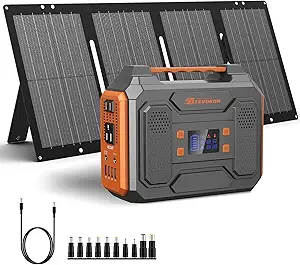 | Best Complete Solar Kit Under 300W | Output limit: 300W (2 AC outlets) | Included panel: 60W monocrystalline foldable, 20.5% conversion efficiency | DC output: 9V–12.6V, 10A max | VIEW LATEST PRICE | See Our Full Breakdown |
| SUNER POWER 12W 12V Waterproof Solar Battery Charger and Maintainer |  | Best Smart Battery Maintainer | Power: 12W | Voltage: 12V | Controller: MPPT, up to 99% tracking efficiency | VIEW LATEST PRICE | See Our Full Breakdown |
| Jackery Explorer 300 Portable Power Station with 40W Solar Panel |  | Best Long-Term Reliability | Capacity: 292Wh | Battery chemistry: LiFePO4 | Battery lifespan: Over 4,000 charge cycles to 70% capacity | VIEW LATEST PRICE | See Our Full Breakdown |
| Daran 89.6Wh LiFePO4 Portable Power Station |  | Best Compact Grab-and-Go Backup | Battery capacity: 89.6Wh | Battery type: LiFePO4 | AC output: 100W (200W peak) | VIEW LATEST PRICE | See Our Full Breakdown |
| Jackery Explorer 300 Portable Power Station, 292Wh |  | Best Midsize All-Rounder | Capacity: 292Wh | Ports: 2 AC, 1 USB-C PD (100W), 2 USB-A, 1 car port | Charge time: About 4 hours AC | VIEW LATEST PRICE | See Our Full Breakdown |
| SOLPERK 20W 12V Solar Battery Charger Kit with Controller |  | Best for Maintaining 12V Batteries | Power: 20 watts | Output voltage: 12 volts | Controller: 8A, three-stage charging protection | VIEW LATEST PRICE | See Our Full Breakdown |
| solar battery chargers for home | Weight |
|---|---|
| MARBERO M82 Portable Power Sta | 3.2 lbs (1.04 kg) |
| POWOXI 7.5W 12V Solar Battery | — |
| ZeroKor 300W Portable Power St | — |
| SUNER POWER 12W 12V Waterproof | — |
| Jackery Explorer 300 Portable | 7.5 lbs |
| Daran 89.6Wh LiFePO4 Portable | 2.54 lbs |
| Jackery Explorer 300 Portable | 7.5 lbs |
| SOLPERK 20W 12V Solar Battery | 3 lbs |
More Details on Our Top Picks
MARBERO M82 Portable Power Station, 88Wh
Not every home needs a generator-sized battery — sometimes you just want a grab-and-go power brick for a bedside table or an emergency kit. The MARBERO M82 fills that niche better than anything else in this lineup because it weighs just 3.2 lbs, roughly half the weight of the Jackery Explorer 300, while still offering eight output ports. That port count beats the ZeroKor 300W despite the MARBERO’s smaller footprint.
The tradeoff is raw power: with an 80W output ceiling, this station runs phones, tablets, routers, and LED lights, but it will not run a mini fridge or blender the way the ZeroKor or Jackery can. Think of it as outage insurance for small devices, not whole-room backup. Solar charging works only with compatible MARBERO panels, which is a real limitation if you already own third-party gear.
Pros:- Eight output ports let you charge several small devices at once
- At 3.2 lbs with a carry handle, it is the most portable power station in this roundup
- Built-in LED light with SOS mode doubles as an emergency lamp
- Battery management system guards against overheating, overload, and short circuits
Cons:- 80W output cannot power appliances or anything with a motor
- Solar charging only works with compatible MARBERO panels, so it is not flexible with third-party gear
Best for: Apartment dwellers and renters who want a lightweight emergency charger for phones, routers, and lights during short outages
Not ideal for: Households wanting to run appliances like refrigerators or fans — the 80W limit rules out anything beyond small electronics
- Capacity:88Wh (24,000mAh)
- Output wattage:80W (120W surge)
- Output ports:8, including AC, USB-A, USB-C PD, and car DC
- Weight:3.2 lbs (1.04 kg)
- Charging methods:AC adapter or compatible 30W/60W solar panel
- Recharge time:0 to 80% in 2 hours via AC
- Extras:Three-level LED light with SOS mode
Our verdict“A pocket-sized insurance policy for device charging during brief outages — skip it if you need real appliance power.”
POWOXI 7.5W 12V Solar Battery Charger and Trickle Maintainer
This is the cheapest way into solar battery maintenance, and it does the one job most buyers actually need: keeping a parked vehicle or backup 12V battery from slowly dying. Unlike the portable power stations in this roundup, the POWOXI does not store energy itself — it feeds a trickle charge straight into your battery. Its tempered glass panel and ABS+PC frame feel more durable than the price suggests, and it holds up outdoors.
Compared with the SUNER POWER 12W, this panel lacks an MPPT controller and three-stage charging, so it is a simpler, less precise maintainer. The 7.5W output is also modest next to the SOLPERK 20W kit. For a car sitting in a driveway, that difference barely matters; for a large battery that needs regular top-ups, it does.
Pros:- Smart protection against overcharging, overvoltage, and short circuits
- Weatherproof tempered glass and ABS+PC construction survives outdoor placement
- Two connection options: vehicle power outlet or direct alligator clips to the battery
- Simple two-color LED confirms sunlight capture and charging status
Cons:- 7.5W is only enough to maintain a charge, not to revive a drained battery
- No charge controller or staged charging, unlike the SUNER POWER 12W, so it is less precise for long-term battery health
Best for: Owners of occasionally driven cars, boats, or motorcycles who want an affordable set-and-forget battery maintainer
Not ideal for: Anyone maintaining large or deeply discharged batteries — 7.5W is maintenance-level power only, not recovery power
- Power:7.5W
- Voltage:12V
- Panel efficiency:25–30%
- Panel material:Low-iron tempered glass
- Frame:ABS+PC
- Connections:Vehicle power outlet or alligator clips
- Certifications:CE, RoHS
Our verdict“The low-effort, low-cost choice for keeping a parked vehicle’s 12V battery alive — not a tool for serious charging work.”
ZeroKor 300W Portable Power Station with 60W Solar Panel
This is the only option here that arrives as a ready-to-run solar generator kit — station, foldable 60W panel, and every cable in one box. That matters for beginners who do not want to match panels to stations or worry about connector compatibility, which is exactly the friction you hit with the MARBERO M82 and its proprietary panel requirement. With 300W of output across two AC outlets, three USB-A ports, and quick-charge USB, it handles fans, CPAP machines, laptops, and small kitchen devices.
The catch: its included 60W panel outclasses the Jackery’s 40W in charging speed, but the station’s own battery chemistry and cycle life are less clearly documented than Jackery’s LiFePO4 cells. Also, the panel’s junction box is not waterproof, so you cannot leave it outside permanently the way you could a POWOXI or SUNER POWER maintainer.
Pros:- Bundled 60W monocrystalline panel charges faster than the Jackery kit’s 40W panel
- Full spread of outputs: 2 AC outlets, DC, 3 USB-A, and quick-charge USB
- Three charging sources — AC outlet, car socket, or solar — give flexibility in and out of the house
- Flashlight with reading and SOS modes adds utility for camping and emergencies
Cons:- 300W ceiling rules out kettles, microwaves, and most kitchen appliances
- Solar panel junction box is not waterproof, limiting outdoor durability
- Storage guidance requires maintaining 60–80% charge, which demands occasional attention
Best for: First-time buyers who want a matched power station and solar panel bundle for camping or basic home backup without researching components separately
Not ideal for: Anyone wanting permanently installed outdoor solar — the panel’s junction box is not waterproof, and the station needs 60–80% charge maintenance during storage
- Output limit:300W (2 AC outlets)
- Included panel:60W monocrystalline foldable, 20.5% conversion efficiency
- DC output:9V–12.6V, 10A max
- USB:3x USB-A (5V/3A) plus quick-charge port (9V/2A)
- Panel outputs:USB-A, USB-C up to 15V/2A, and DC 18V/3.3A (60W max)
- Charging methods:AC, 12V car outlet, or compatible solar panel
- Safety:Short-circuit, over-current, over-voltage, overload, and overheating protection
Our verdict“The most complete plug-and-play solar kit in this batch for buyers who value convenience over raw battery quality.”
SUNER POWER 12W 12V Waterproof Solar Battery Charger and Maintainer
Where the POWOXI 7.5W is a simple trickle feeder, the SUNER POWER 12W behaves like a proper charging system. Its MPPT controller with up to 99% tracking efficiency squeezes more usable power out of limited sunlight, and the three-stage bulk/absorption/float process means the panel can stay connected indefinitely — it shuts off when the battery is full and resumes when voltage drops. For a battery sitting in a shed or RV for months, that automatic stop-start behavior is the difference between maintenance and slow damage.
Battery compatibility is unusually broad: flooded, gel, AGM, SLA, maintenance-free, and LiFePO4 are all supported, which the POWOXI cannot match. The honest limitations are that it is 12V-only, and at 12W it maintains rather than fast-charges — the SOLPERK 20W kit will outpace it when sunlight is weak.
Pros:- MPPT controller with up to 99% tracking efficiency maximizes harvest in weak light
- Three-stage charging with automatic stop and resume protects long-term battery health
- Supports six lead-acid types plus LiFePO4 — broader than most maintainers here
- Waterproof, spark-proof build rated for permanent outdoor exposure
Cons:- 12V batteries only — no support for higher-voltage banks
- 12W output maintains rather than charges, so a deeply drained battery will take a very long time to recover
Best for: RV, boat, and off-grid shed owners who want a fit-and-forget maintainer that can safely stay connected year-round across many battery types
Not ideal for: Anyone with a 24V or 48V battery bank, or who expects meaningful charging speed from a 12W panel
- Power:12W
- Voltage:12V
- Controller:MPPT, up to 99% tracking efficiency
- Charging stages:Bulk, Absorption, Float
- Supported batteries:Flooded, gel, AGM, SLA, maintenance-free, LiFePO4
- Protection:Waterproof, spark-proof, automatic charging and maintenance
- Mounting:Suction cups and plug-and-play cables included
Our verdict“The smartest small maintainer in this roundup for anyone leaving a battery unattended for months at a time.”
Jackery Explorer 300 Portable Power Station with 40W Solar Panel
If you measure value over years rather than out of the box, this kit’s LiFePO4 battery rated for 4,000+ cycles is the standout feature in the entire roundup. The ZeroKor 300W matches its output and includes a bigger panel, but Jackery’s cell chemistry and documented cycle life mean this station should still be holding 70% capacity after a decade of regular use — the kind of longevity that justifies paying attention beyond the spec sheet. Six ports, including a 100W USB-C PD, cover modern laptop and device charging without adapters.
The compromise is solar patience: the included 40W panel needs roughly 7.5 hours of good sun to reach 80%, slower than the ZeroKor’s 60W panel on a comparable station. And unlike the SUNER POWER maintainer, this panel is not meant for permanent outdoor installation. At 7.5 lbs it is also more than double the MARBERO M82’s weight.
Pros:- LiFePO4 battery rated for over 4,000 cycles to 70% capacity — the longest documented lifespan in this roundup
- Six ports including a 100W USB-C PD port handle laptops and modern devices without extra adapters
- 300W rated output with 600W surge covers small appliances the MARBERO cannot touch
- Lightweight 7.5 lb build with integrated handle stays travel-friendly
Cons:- Included 40W panel takes about 7.5 hours of sun to reach 80%, slower than the ZeroKor bundle
- Station and solar panel may arrive in separate shipments, complicating gifting or immediate use
Best for: Buyers who plan to use their power station regularly for years — campers, home-office backup users, and anyone prioritizing battery lifespan over charging speed
Not ideal for: Anyone needing fast solar recharges — the 40W panel’s 7.5-hour recharge time will frustrate off-grid users who cycle the battery daily
- Capacity:292Wh
- Battery chemistry:LiFePO4
- Battery lifespan:Over 4,000 charge cycles to 70% capacity
- Ports:2 AC, 1x 100W USB-C PD, 2 USB-A, 1x 120W car port
- Included panel:40W portable solar panel
- Solar recharge time:Approximately 7.5 hours to 80%
- Weight:7.5 lbs
Our verdict“The pick for buyers who want a buy-once power station that outlives cheaper alternatives — provided slow solar recharging does not bother you.”
Daran 89.6Wh LiFePO4 Portable Power Station
This option stands out for buyers who want quiet, pocketable emergency power rather than big capacity. At 2.54 pounds and roughly the size of a thick hardcover book, it disappears into a drawer or go-bag, and its silent fanless design makes it far better suited to a bedside table or office shelf than the Jackery Explorer 300, which weighs nearly three times as much. The LiFePO4 chemistry with a stated 3500+ cycle life is a genuine advantage over older lithium-ion units in this size class. The tradeoff is raw power: with a 100W AC ceiling, it runs phones, tablets, routers, and LED lights happily but will refuse anything with a heating element or motor. Unlike the SOLPERK 20W kit, it’s a complete power source out of the box — though solar charging requires buying a panel separately.
Pros:- Very light at 2.54 lbs with a genuinely compact footprint
- LiFePO4 chemistry rated for 3500+ cycles — more durable than standard lithium-ion in this class
- Seven output ports covering AC, USB-C, USB-A, and DC devices
- Completely silent fanless operation, plus a built-in flashlight with SOS mode
Cons:- 100W AC limit excludes most kitchen appliances and power tools
- Solar panel and cable sold separately, so off-grid charging costs extra
- 89.6Wh capacity drains quickly under sustained loads like a laptop plus lights
Best for: Apartment dwellers and renters who want a small, silent backup for phones, laptops, and Wi-Fi gear during short outages
Not ideal for: Households expecting to run a fridge, CPAP machine, or any appliance over 100W — this unit simply doesn’t have the output or capacity
- Battery capacity:89.6Wh
- Battery type:LiFePO4
- AC output:100W (200W peak)
- Output ports:7 (2 AC, 2 USB-C, 2 USB-A, 1 DC5521)
- Charging methods:AC, USB-C PD, car, optional solar
- Battery life:3500+ cycles
- Weight:2.54 lbs
- Dimensions:6.5 × 3.3 × 4 inches
Our verdict“This pick makes the most sense for buyers prioritizing portability and quiet operation for small-device backup, not whole-room power.”
Jackery Explorer 300 Portable Power Station, 292Wh
Sitting between the tiny Daran 89.6Wh unit and larger home-backup units, the Explorer 300 hits a practical middle ground for home use. Its 292Wh capacity can keep a router, a few phones, and a laptop alive through most evening outages — roughly three times the runtime of the Daran — and the 600W surge rating handles startup spikes the smaller unit can’t. The 100W USB-C PD port is a standout for fast-charging modern laptops without touching the AC outlets at all. Compared with the bundled Jackery Explorer 300 with 40W panel, buying the station alone lets you pair it with a larger panel later instead of being locked into a modest 40W setup. The honest tradeoff: at 7.5 pounds it’s no longer grab-and-go, and it still won’t run a microwave or full-size refrigerator.
Pros:- 292Wh capacity covers a full evening of electronics use, far beyond sub-100Wh rivals
- 300W rated output with 600W surge handles demanding devices and motor startups
- 100W USB-C PD port fast-charges laptops directly without an AC outlet
- Integrated handle and solar input with roughly 80% recharge in 2.8 hours via a 100W panel
Cons:- Solar panel not included, adding real cost if off-grid charging is the goal
- At 7.5 pounds, it’s noticeably heavier and less portable than small-capacity units
- Capacity still falls short for refrigerators or sustained appliance loads during extended outages
Best for: Homeowners who want meaningful outage coverage for electronics — laptops, modem, router, TV, fans — without the cost of a full-size station
Not ideal for: Anyone planning to power kitchen appliances or high-wattage tools; the 300W rated output won’t support them
- Capacity:292Wh
- Ports:2 AC, 1 USB-C PD (100W), 2 USB-A, 1 car port
- Charge time:About 4 hours AC
- Solar charging:About 80% in 2.8 hours with a 100W panel
- Charge cycles:Over 4,000 cycles to 70% capacity
- Weight:7.5 lbs
Our verdict“The strongest pick for buyers who need enough power for real outage scenarios but don’t want to pay for — or carry — a large home battery.”
SOLPERK 20W 12V Solar Battery Charger Kit with Controller
This kit solves a different problem than the Daran or Jackery stations. Instead of storing power in its own battery, it feeds sunlight directly into an existing 12V battery — a car, boat, RV, gate opener, or backup battery bank — keeping it topped off through weeks of disuse. The included 8A controller with three-stage charging is the real differentiator here: compared with trickle-only maintainers like the POWOXI 7.5W or SUNER POWER 12W, it charges faster and protects against overcharge. The waterproof, rustproof aluminum build and adjustable bracket mean it can live outdoors year-round, something no portable power station is designed to do. The limitation is inherent to the category: 20 watts maintains and slowly charges, it doesn’t power your home, and output swings with cloud cover and panel angle.
Pros:- Works with LiFePO4, lithium-ion, AGM, and SLA 12V batteries for broad compatibility
- Included 8A controller adds three-stage charging protection most budget maintainers lack
- Weatherproof aluminum construction rated for permanent outdoor mounting
- Plug-and-play SAE connections with alligator clips, O-rings, and bracket included
Cons:- 20W output only maintains or slowly charges — expect days, not hours, to revive a drained battery
- Charging speed varies heavily with sunlight, weather, and panel positioning
- Not a power station replacement; it has no inverter or device outlets
Best for: Owners of vehicles, boats, RVs, or off-grid 12V systems who need a set-and-forget battery maintainer that survives outdoors
Not ideal for: Buyers wanting to charge phones or run household devices — this kit only feeds 12V batteries and includes no AC outlets or USB ports
- Power:20 watts
- Output voltage:12 volts
- Controller:8A, three-stage charging protection
- Cell efficiency:21%–30%
- Connector:SAE
- Construction:Aluminum frame, monocrystalline silicon, waterproof and rustproof
- Weight:3 lbs
- Dimensions:15 × 13.2 × 0.7 inches
Our verdict“The right choice if your goal is keeping an existing 12V battery alive outdoors — skip it entirely if you want stored power for household gadgets.”

How We Picked
My ranking logic starts with a simple question: what job is this product actually meant to do? Trickle maintainers were judged on weatherproofing, included safety features like charge controllers and reverse-current protection, and how realistically they can offset parasitic drain on a stored battery. Power stations were judged on usable capacity in watt-hours, inverter output, battery chemistry, and whether a solar panel is included — because a “solar charger” without a panel is only half a product, and the true cost of going solar changes dramatically once you add one.
From there, I weighted reliability factors over raw specs: battery management systems, cell quality, weather sealing ratings, and the long-term ownership story (cycle life, warranty support, replacement panel compatibility). I also penalized products whose marketing capacity doesn’t match usable output — a common problem in this category. The final order reflects a mix of capability and fit: products that solve a home-relevant problem credibly rank above those that are merely cheap or merely powerful, and each pick was assigned a distinct role so you can match it to your situation rather than comparing apples to oranges.
Factors to Consider When Choosing Solar Battery Chargers For Homes
Before you commit to any of the eight picks above, step back and think about the job you’re hiring this product to do. These are the factors that most often make or break a solar charging purchase for home use.Trickle Maintainer or Power Station: Know Which Problem You’re Solving
This is the single biggest decision, and getting it wrong wastes money in both directions. A 5–20W trickle maintainer exists to offset slow drain — it keeps a car battery, gate-opener battery, or backup 12V battery from dying over weeks of disuse. It cannot charge a dead battery quickly and it absolutely cannot power household devices; 20 watts is roughly a laptop charger’s worth of energy. A power station with a panel solves the opposite problem: storing enough energy to run lights, a router, a CPAP machine, or a small fridge during an outage. A common mistake is buying a small maintainer expecting backup power, then discovering it takes days of sun to move the needle. Ask yourself whether you’re preserving a battery or powering your home — the answer determines which half of this roundup applies to you.
Watt-Hours vs. Wattage: Don’t Confuse Tank Size With Fill Rate
Shoppers routinely mix up two numbers that measure different things. Watt-hours (Wh) is your fuel tank — an 88Wh unit will run a 40W device for roughly two hours, while a 292Wh unit runs it three times longer. Panel wattage is your fuel pump — a 40W panel in good sun adds about 30Wh per hour at realistic efficiency, meaning a full recharge of a 292Wh station takes the better part of a sunny day. A big station with a tiny panel means slow refill; a small station with a big panel means fast refill but limited runtime. Also watch for the gap between rated capacity and usable capacity, since inverters and battery management eat 10–15% of stored energy. Do the runtime math on your actual must-run devices before buying anything.
Battery Chemistry and Cycle Life
Most budget power stations use standard lithium-ion (NMC) cells, which typically deliver 500–800 charge cycles before capacity noticeably degrades — fine for occasional outage use, less ideal for daily cycling. LiFePO4 chemistry, like the Daran uses, typically lasts several thousand cycles and handles heat better, which matters if the unit lives in a garage or shed. For trickle maintainers, chemistry matters differently: the panel itself has no cycle limit, but the quality of the diode and controller determines whether it overcharges your battery over months of unattended use. If you plan to cycle your station weekly — say, for van-adjacent use or daily outdoor work — the chemistry premium pays for itself. If it sits in a closet for emergencies, standard lithium-ion is a perfectly reasonable choice.
Solar Panel Inclusion and Expandability
Some products in this category ship as complete kits (ZeroKor’s 60W bundle, Jackery’s 40W bundle), while others are station-only, which makes price comparisons misleading. A quality 40–100W panel typically adds meaningful cost on its own, so a “cheaper” station without a panel often isn’t cheaper once solar-ready. Check the input wattage limit on any station you buy — some 300Wh-class units cap solar input around 60–100W, so buying a 200W panel gains you nothing. Also verify connector compatibility; proprietary input ports lock you into one panel ecosystem, while standard MC4 or DC inputs let you shop around. My advice: decide your target recharge time first, then buy the panel that achieves it, not the other way around.
Weatherproofing and Installation Realities
Trickle maintainers live outdoors permanently, so IP65-or-better sealing, UV-resistant housings, and properly glanded cables separate durable units from ones that crack within a season or two. Mounting angle matters more than most buyers expect — a panel laid flat on a dashboard or deck produces noticeably less than one angled toward the sun, and shading from even a single leaf or rail can cut output dramatically on small panels. For power stations, the opposite rule applies: the battery unit stays indoors, and only the panel goes outside, so check cable length before you buy. A 10-foot panel cable forces awkward placement in many homes. Finally, consider how you’ll route the cable into the house or shed — the best panel in the world is useless if the cord won’t reach the battery it’s charging.
Safety Features for Unattended Operation
The riskiest way to use these products is exactly how most people use them: plugged in and forgotten for months. A quality trickle maintainer should include, at minimum, blocking diodes to prevent overnight battery drain, overcharge protection, and ideally a proper charge controller — which is why the SOLPERK kit with its included controller ranks above bare panels for long-term setups. For power stations, look for built-in battery management systems covering overcharge, over-discharge, temperature, and short-circuit protection; every station in this roundup has one, but implementation quality varies by brand. Avoid the temptation to cheap out on extension cables and connectors, since most solar-related failures happen at cheap adapters, not at the panel or battery itself. Unattended operation is where brand track record genuinely matters.
Frequently Asked Questions
Can a small trickle maintainer like the POWOXI 7.5W actually keep my car battery alive through winter?
Yes, for a healthy battery in typical conditions — that’s exactly the job these 5–10W units are engineered for. A car battery loses a few percent of charge per week from self-discharge and alarm systems, and a 7.5W panel in decent winter sun generates enough daily energy to offset that. The limits appear with older batteries, extreme cold, or heavy parasitic loads like dash cams and trackers, where a marginal panel can fall behind. Position matters too: a dashboard-mounted panel through tinted glass can lose over half its output. If your battery will sit unattended for an entire winter, I’d step up to the SOLPERK 20W kit with its charge controller, which has more headroom and safer long-term regulation.
Is 300Wh enough capacity for a home power outage?
It depends entirely on what you define as essential. A 292Wh station like the Jackery Explorer 300 will run LED lights for dozens of hours, keep a router and modem alive for most of a day, charge phones many times over, and run a CPAP machine through a night or two. It will not run a refrigerator for long — a typical fridge draws 100–200W in bursts, giving you only a few hours — and it won’t touch heating, air conditioning, or an electric kettle. For most households, the realistic role of a 300Wh station is communications, lighting, and medical devices, not whole-home comfort. If fridge runtime is your priority, you need to move up to the 1,000Wh+ class entirely, which is a different budget conversation.
Why does one roundup include both $30 trickle chargers and $300 power station kits?
Because the search term “solar battery chargers for homes” pulls in two completely different buyer intentions, and pretending otherwise would mislead people. Someone keeping a backup 12V battery charged for a sump pump or gate opener needs a $20–40 maintainer and would be wasting money on a power station. Someone preparing for outages needs a power station with a panel and would be disappointed by a trickle charger’s tiny output. The honest answer is to figure out which of those two people you are before comparing prices, because the products aren’t substitutes — they’re tools for unrelated jobs that happen to share a keyword. This roundup ranks within each category and then explains which category fits which household.
Do I need a charge controller with a small solar maintainer?
At 5–7.5W, most manufacturers argue a controller is unnecessary because the panel’s output is low enough relative to a full-size car battery that overcharging is unlikely — the POWOXI falls into this camp. Between 10W and 20W, the math gets murkier, especially with smaller batteries (motorcycles, lawn tractors) or long unattended periods, where sustained trickle current can gradually overcharge and dry out a battery. That’s the gap the SOLPERK 20W kit fills by including a proper controller, making it the safer choice for set-and-forget installations. My rule of thumb: below 10W into a full-size battery, skip the controller; at 10W or above, or into any small battery, use one. The cost difference is trivial compared to replacing a cooked battery.
Is LiFePO4 worth choosing over standard lithium-ion for a home backup unit?
It depends on how often you’ll cycle it. The Daran’s LiFePO4 cells typically last 2,000+ cycles versus roughly 500–800 for the lithium-ion packs in the Jackery, MARBERO, and ZeroKor units, and they tolerate heat and long storage better — genuine advantages for a unit living in a hot garage. But for a station that sits charged in a closet and only wakes up during outages, cycle count barely matters over a decade of ownership, and the lithium-ion options often deliver more features per dollar. Where LiFePO4 really earns its premium is daily or weekly use — camping seasons, work sites, or pairing with panels for regular off-grid duty. One more nuance: LiFePO4 holds its rated capacity longer over its life, so a “smaller” LiFePO4 unit may out-deliver a bigger NMC unit after a few years of use.
Conclusion
Match the pick to the buyer, not the spec sheet. For best overall, the Jackery Explorer 300 with 40W panel is the most complete package for home backup — enough capacity for real essentials, a proper panel included, and a brand with a proven support track record. The best value pick is the SOLPERK 20W kit, which brings controller-equipped, weatherproof solar maintenance at a price that makes multi-battery setups affordable. Best premium goes to the Jackery Explorer 300 standalone if you already own panels or plan to expand, thanks to its ecosystem and resale staying power. For beginners, the POWOXI 7.5W is the lowest-risk way to learn how solar maintainers behave before spending more, while the Daran LiFePO4 earns best for long-term durability for anyone planning to cycle their station regularly. And if your priority is outage readiness on a tight budget, the ZeroKor 300W with its 60W panel delivers the most included solar harvesting per dollar of anything here. Whatever you choose, buy for the job you actually have — that’s the decision that separates a satisfying purchase from a dusty one.
Halloween Picks
halloween
As an affiliate, we earn on qualifying purchases.